Whether a Maltipoo Gets Its Color From the Maltese
It's incredibly common for new Maltipoo parents, or those just dreaming of bringing one home, to wonder about the stunning array of colors these little dogs display. Many people see the Maltese side and naturally assume that the white coat is a significant genetic contributor to all Maltipoo colors, perhaps expecting a certain amount of white in every pup. However, the reality of Maltipoo color genetics is a fascinating dance between its two parent breeds, often leading to surprising and beautiful outcomes that aren't always what you'd first expect. This guide will unravel the mystery, explaining exactly where your Maltipoo gets its unique color palette from.
The Maltese Influence: A Sea of White
When you look at a purebred Maltese, you see a vision of pristine white. It’s their defining characteristic, a standard that breeders strive for, and it often leads people to believe that this pure white will somehow dilute or lighten any color it's crossed with. While the Maltese does contribute to the Maltipoo's genetic makeup, its role in determining the variety of colors is much more limited than many might initially think.
The Unchanging White
The Maltese breed standard dictates that they must be pure white. This isn't just a preference; it's deeply ingrained in their genetic code. They carry genes that essentially "mask" or prevent the expression of other color pigments in their fur, resulting in that iconic snow-white coat. So, when a Maltese is bred, it's pretty much a guarantee that it's passing on those "white" genes.
However, here's the crucial point: "white" isn't a color in the same way black or brown is. It's often the absence of color or the extreme dilution of other colors. In the context of a crossbreed like the Maltipoo, this means the Maltese parent primarily contributes its specific genetic markers for a non-pigmented coat. It's not so much that it gives a "white gene" as it provides a genetic blank slate, ready to be colored by the other parent. Think of it like adding water to a paint mixture – the water itself has no color, but it changes the concentration of the colors you do add. For a deeper dive into the Maltese contribution, you might want to read What the Maltese Puts Into a Maltipoo's Character.
Beyond Just White: Pigment Genes
Even though a Maltese appears entirely white, they still carry underlying pigment genes. These aren't expressed in their fur, but they are crucial for other parts of their appearance, such as their black nose, dark paw pads, and often dark eye rims. These are known as points. A Maltese will consistently pass on genes for rich, dark pigment in these areas.
When these genes combine with the Poodle's genes, they can influence the overall appearance of the Maltipoo. For example, a Maltipoo puppy from a Maltese parent will almost always have a black nose, even if its coat is apricot or cream. It’s these subtle, non-coat-related pigment contributions that the Maltese brings to the table, ensuring that even the lightest Maltipoos have those lovely dark eyes and noses that really make their faces pop.
The Poodle's Palette: A Kaleidoscope of Possibilities
Now, let's turn our attention to the other half of the Maltipoo equation: the Poodle. If you're wondering Why a Maltipoo Comes in Colors a Maltese Never Does, the Poodle is your answer. This breed is truly the artist of the canine world when it comes to coat colors, offering an astonishing array that directly translates into the diverse and beautiful coats of Maltipoos. This is where the magic happens for color variation.
The Poodle's Wide Color Spectrum
Poodles, whether they are Toy, Miniature, or Standard, come in an incredible spectrum of colors. We're talking about solid blacks, rich browns, vibrant reds, soft apricots, creamy whites, silvers, blues, and even more complex patterns like phantoms and partis. Each of these colors is governed by specific genes, and Poodles carry a wide variety of these color alleles (versions of a gene).
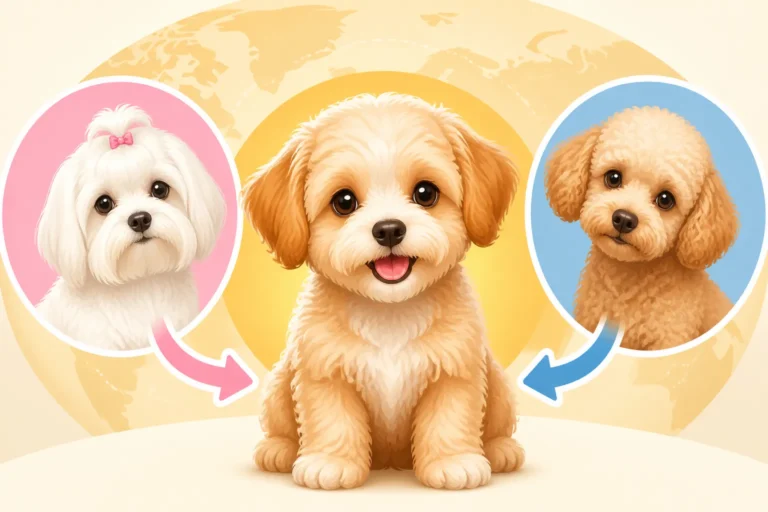
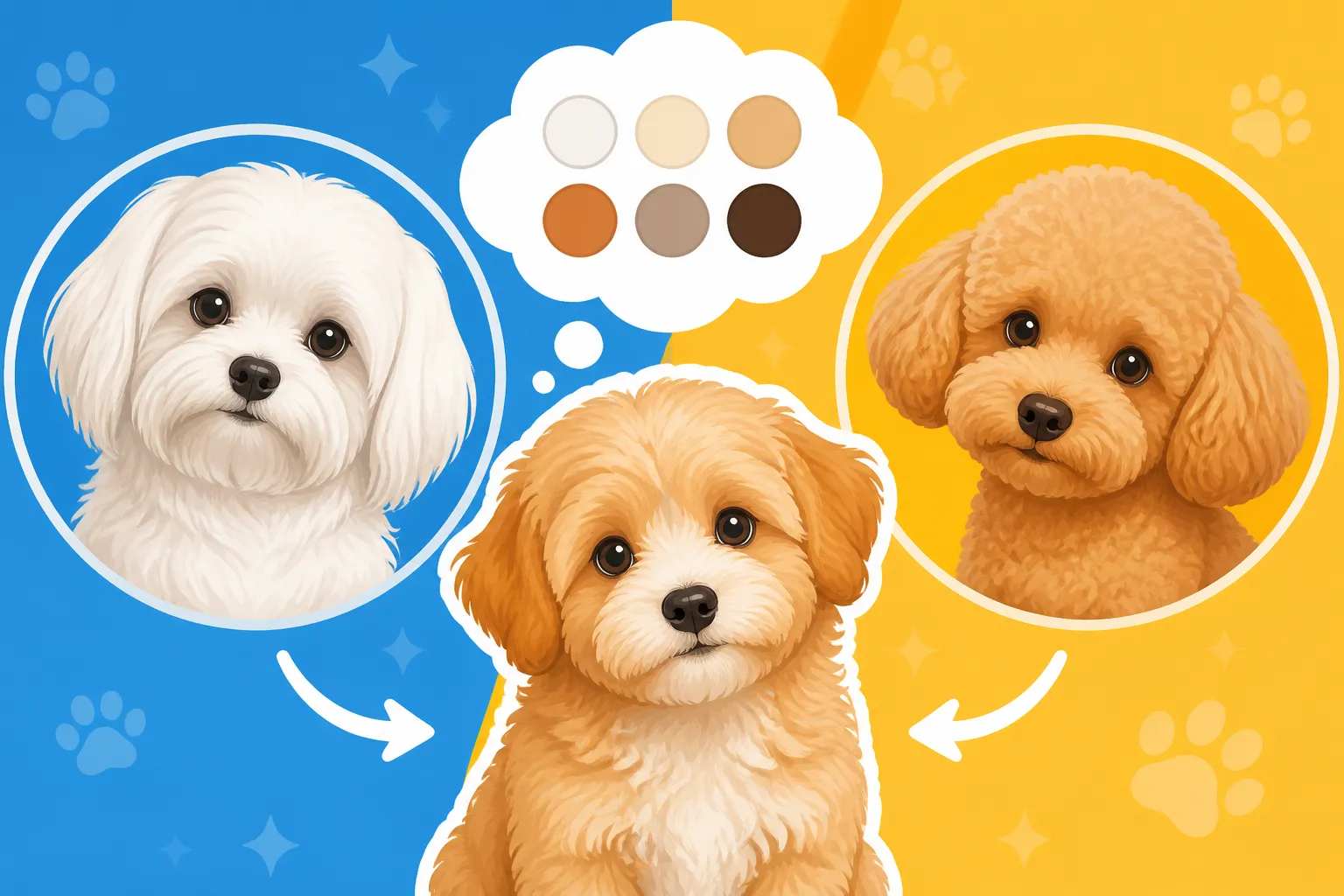
This genetic diversity in the Poodle parent is the primary reason why Maltipoos can be so many different shades. When you cross a solid white Maltese with a Poodle of any color, those Poodle color genes are introduced into the mix. It's like having a canvas (the Maltese's genetic white) and then throwing a whole box of crayons (the Poodle's colors) at it. The resulting picture can be anything but plain white. You can see how this leads to unique appearances, often explored in topics like The Wavy Maltipoo Coat and The Curly Maltipoo Coat.
The Dominant Poodle Genes
Many of the Poodle's color genes are dominant, meaning they tend to express themselves even if only one copy of the gene is inherited. For example, black is a dominant color in Poodles. If a Maltese (genetically white) is bred with a black Poodle, the resulting Maltipoo puppies are very likely to be black, or at least a very dark color. The Poodle's dominant color genes effectively "override" the Maltese's white genes, allowing the Poodle's color to shine through.
This dominance is why you see so many Maltipoos in shades like apricot, red, black, and cream – colors that are strongly associated with Poodles. The Maltese's contribution, while genetically present, often takes a backseat in terms of visible coat color. It's a fascinating example of Mendelian genetics at play in the animal kingdom, where certain traits have a stronger likelihood of appearing in offspring.
The Blending of Genes: Why Maltipoos are so Diverse
The true beauty of the Maltipoo's coat colors lies in the genetic blend between the two parent breeds. It's not just a simple mix; it's a complex interplay of dominant and recessive genes, pigment modifiers, and sometimes, even unexpected surprises that can emerge over time. Understanding this blend helps you appreciate the uniqueness of each Maltipoo and why What Color Most Maltipoo Puppies Are can be quite varied even within the same litter.
First Generation F1 Maltipoos
An F1 Maltipoo is a direct cross between a purebred Maltese and a purebred Poodle. In this initial generation, the Poodle's genetic contribution to color is usually very evident. If the Poodle parent is, for example, a red Toy Poodle, many of the F1 Maltipoo puppies will likely inherit a variation of red or apricot. The Maltese's dominant white effectively acts as a recessive trait when paired with a strong Poodle color gene, allowing the Poodle's color to show through.
However, the Maltese does contribute to the texture and overall quality of the coat. While the Poodle gives the curl and color, the Maltese often lends that silky softness, which is why a Maltipoo rarely has the coarse texture some Poodles can exhibit. You might still get some white markings from the Maltese side, even on a colored F1 Maltipoo, perhaps on the chest or paws, adding a lovely contrast.
Subsequent Generations F1b, F2, Multigen
The genetic possibilities become even more intricate when you move beyond the F1 generation.
- F1b Maltipoos: This refers to a Maltipoo that is backcrossed to one of the parent breeds, usually a Poodle (e.g., F1 Maltipoo x Poodle). This generation is often sought after for specific traits, particularly a curlier coat that is more reliably non-shedding, and it also tends to solidify the Poodle's color influence. If an F1 Maltipoo (let's say apricot) is bred with a red Poodle, the F1b puppies will likely be even richer in red or apricot hues, with less chance of inheriting the Maltese's pure white dominance. This is also where you might explore if An F1b Maltipoo Looks More Poodle.
- F2 and Multigen Maltipoos: When two Maltipoos are bred together (F2) or subsequent generations are bred (Multigen), the genetic pool becomes much more diverse. Recessive genes that were hidden in the F1 generation can now combine and express themselves. This means you might see a wider variety of colors within a single litter, sometimes even unexpected ones! Two apricot Maltipoos could, theoretically, produce a white or cream puppy if both carry recessive white genes from their Maltese ancestry.
This generational blending explains why predicting the exact color of a Multigen Maltipoo can be harder, making each litter a delightful surprise.
Unexpected Color Surprises
One of the most charming aspects of Maltipoo genetics is the occasional unexpected color. This can happen due to recessive genes that have been carried silently through generations, only to appear when two parents both contribute that specific recessive gene. For instance, two seemingly solid colored Maltipoos might produce a parti-colored puppy if both carry the recessive gene for the parti pattern.
Another common "surprise" is color fading. Many Maltipoos, particularly those in shades of apricot and red, can experience fading as they mature. A deep red puppy might soften to a lighter apricot or even a cream as an adult. This is due to a gene known as the "fading gene" or "greying gene," common in Poodles, which dilutes pigment over time. It's a natural process, and while it might be a bit different from the vibrant puppy color, it creates beautiful soft tones. If you're interested in this phenomenon, check out Whether an Apricot Maltipoo Fades or Whether a Maltipoo's Color Changes as It Grows. You'll often find specific shampoos and conditioners, sometimes even on sites like Chewy, designed to enhance or protect specific coat colors, though they won't stop genetic fading.
Common Maltipoo Colors and Their Origins
Let's break down some of the most common Maltipoo colors you'll encounter and definitively trace their origins back to the Poodle parent. It's important to remember that the Maltese, while providing the foundation, isn't the source of these diverse hues.
Apricot, Cream, and Red
These are arguably some of the most popular Maltipoo colors, ranging from a pale, creamy off-white to a rich, deep reddish-brown.
- Origin: These colors are almost exclusively inherited from the Poodle parent. Poodles have distinct genes for red and apricot pigmentation.
- Apricot: This is a warm, golden-orange hue, often seen as a softer version of red. Many apricot Maltipoos will lighten over time, a common trait inherited from their Poodle side.
- Cream: This is a very light, dilute apricot, often mistaken for white. A cream Maltipoo might appear almost white but will have warmer undertones.
- Red: A truly deep, vibrant red Maltipoo is stunning and highly sought after. This intense color comes from strong red genes in the Poodle parent. While often coveted, be aware that many "red" puppies can soften to apricot or cream as they mature due to those fading genes. For more on this specific color, refer to The Red Maltipoo and How Rare It Is.
- Maltese Contribution: The Maltese's white genes might contribute to the paleness of some cream Maltipoos, or help create a soft, even background for these colors, but they don't create the apricot, cream, or red pigment itself.
Black, Silver, and Blue
While many people associate Maltipoos with lighter colors, these darker shades are also beautiful and entirely Poodle-derived.
- Origin: These darker, richer colors are also purely from the Poodle lineage.
- Black: A truly solid black Maltipoo is quite striking. The gene for black is dominant in Poodles, so a black Poodle parent is very likely to produce black Maltipoo puppies. The black should be a deep, uniform color from nose to tail.
- Silver: Silver Poodles are born black and gradually clear to silver as they mature, often a stunning transformation. A silver Maltipoo would inherit this gene and similarly change from a dark puppy coat to a beautiful silver as it grows. This clearing process can take up to two years.
- Blue: Blue is a diluted black, often appearing as a deep, smoky grey. Like silver, a blue Maltipoo would be born darker and clear to its characteristic bluish-grey shade. The gene for blue is recessive, so both Poodle parents (or the Poodle and the F1 Maltipoo in an F1b cross) would need to carry it.
- Maltese Contribution: The Maltese's pigment genes contribute to the strong black points (nose, eye rims, paw pads) which complement these darker coats beautifully, but the coat color itself originates from the Poodle.
Parti and Phantom
These are more complex coat patterns, and they are exclusively from the Poodle's genetic background. The Maltese has no genetic contribution to these patterns.
- Origin: These patterns are entirely Poodle-derived.
- Parti: A parti-colored Maltipoo has a white base coat with distinct patches of another color (e.g., black and white, apricot and white). The word "parti" simply means "particolored." This striking pattern comes from the Poodle's genetic ability to express both color and white patches. The placement and size of the patches can vary wildly, making each parti Maltipoo unique. You can learn more about this distinctive look by reading The Parti Maltipoo.
- Phantom: Phantom Poodles display a specific pattern of two colors with defined markings, similar to a Doberman or Rottweiler. They have a primary body color (e.g., black) with contrasting markings in a lighter color (e.g., tan, cream, apricot) on their muzzle, above their eyes, on their chest, and on their legs. A phantom Maltipoo will inherit this same elegant, two-toned pattern directly from its Poodle parent. More details on this can be found in The Phantom Maltipoo.
- Maltese Contribution: The Maltese, being solid white, does not carry the genes for parti or phantom patterns. Any Maltipoo exhibiting these patterns has inherited them purely from the Poodle side of its family tree.
To summarize the fascinating inheritance of color in Maltipoos, here's a quick reference:
| Feature | Maltese Contribution | Poodle Contribution | Maltipoo Outcome (Typically) |
|---|---|---|---|
| Base Coat Color | Always white; often acts as recessive | Wide spectrum (black, red, apricot, etc.) | Diverse colors, largely reflective of Poodle's color |
| Pigment (Nose, Pads) | Strong genes for black pigment | Strong genes for black or liver pigment | Generally dark nose/pads, even with light coats |
| Patterns | None | Parti, Phantom, Sable, etc. | Can inherit these complex patterns from the Poodle |
| Fading Genes | None | Common in reds/apricots | Many reds/apricots will soften in color over time |
| Coat Texture | Silky, soft | Curly, fine to coarse | Soft, wavy to curly (depending on Poodle influence) |
In essence, while the Maltese lends its wonderful temperament, that silky, non-shedding coat, and those sweet dark points, the vibrant and varied color palette of your beloved Maltipoo is almost entirely a gift from its Poodle lineage. This unique genetic blending is what makes each Maltipoo such a visually interesting and individual companion.
Disclaimer
This article is for general informational purposes only and does not constitute professional advice. Laws, prices and regulations vary by location and change over time. Consult a qualified professional for guidance on your specific situation.