Whether the Maltipoo Should Be Recognized
A Maltipoo can have a familiar look and a devoted following, yet still be treated differently from a recognized purebred dog. That can leave prospective owners wondering whether formal recognition would improve the breed—or simply create new rules around a cross whose appearance and temperament naturally vary. This guide explains what recognition means, what it could change, and what it cannot guarantee.
What recognition would mean for a Maltipoo
Recognition is a registry decision, not a verdict on a dog’s worth
When people ask whether the Maltipoo should be recognized, they often mean whether a major kennel organization should treat it as an established breed with a written standard and a formal route for registration. That is different from saying Maltipoos are real, lovable dogs, or that their owners should be proud of them. A dog does not need a registry’s approval to be a companion animal.
Breed recognition generally involves more than choosing a name and agreeing that a type of dog is popular. A registry may look for a stable, documented breeding population, consistent traits, organized breeder participation, and a process for maintaining a written standard. Requirements differ between organizations, and recognition by one group does not automatically mean recognition by every other group.
The distinction matters because “registered” can mean several things. A registry might record a dog’s ancestry or participation in a program without treating it as a fully recognized breed. Registration paperwork can document a dog’s background, but it does not by itself prove the dog is healthy, well-bred, or a good fit for a particular household. For a closer look at the difference, see Whether the Maltipoo Counts as a Breed Yet and Whether Any Body Will Register a Maltipoo.
The Maltipoo’s mixed ancestry makes consistency part of the debate
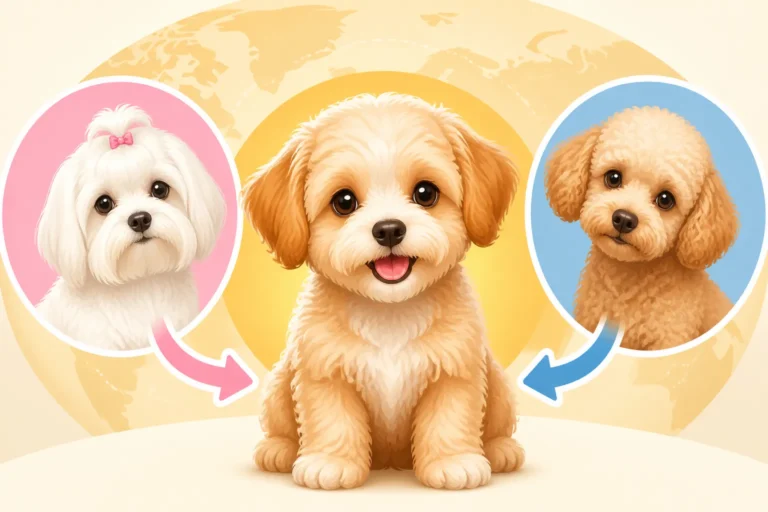
A Maltipoo is a cross between a Maltese and a Poodle. Even when both parents are Maltipoos, puppies can differ in coat texture, size, coloring, facial shape, and behavior. One puppy may have loose waves and a relaxed lap-dog manner; a littermate may have tighter curls, more energy, or a different build. Those differences are not necessarily signs that either dog is “less Maltipoo.” They reflect the variation that can occur when traits from two breeds combine.
That variation is central to the recognition question. A breed standard usually describes the traits breeders are expected to preserve, such as a general size range, proportions, coat, and temperament. If Maltipoos vary widely, deciding which traits define the breed—and which are acceptable variations—can be difficult. A standard might bring breeders together around shared goals, but it could also narrow the range of dogs considered desirable.
It is also important to distinguish appearance from health. A dog that looks very consistent with a proposed standard is not automatically healthier than one with a less predictable coat or shape. A serious breeding program would need to consider health, temperament, and sound structure alongside looks. Understanding the two parent breeds helps explain why these questions are complicated; The Maltese and the Poodle Behind Every Maltipoo explores the ancestry behind the cross.
Arguments for recognizing the Maltipoo
A clear standard could give responsible breeders common goals
Supporters of recognition may argue that a written standard would help create a shared definition of the Maltipoo. Without one, sellers can use the label for dogs with very different backgrounds, sizes, and appearances. A carefully developed standard could make it easier for buyers to understand what breeders are aiming to produce and could encourage more consistent recordkeeping.
In the best case, recognition would be part of a broader effort to improve breeding practices—not a certificate that makes every puppy responsible or well-bred. A standard could encourage breeders to discuss health screening, temperament, and the long-term suitability of their breeding dogs. It might also give participating breeders a reason to share records and make breeding decisions with the future of the population in mind.
The careful phrase here is “could encourage.” Recognition alone cannot force every breeder to follow best practices, and it cannot guarantee that a puppy will grow to a specific size, develop a particular coat, or avoid inherited illness. Buyers would still need to ask about the parents, health testing, veterinary care, and the breeder’s plans for puppies that need to be rehomed. Whether Anyone Has Written a Maltipoo Standard looks more closely at the role a standard could play.
Recognition might make the Maltipoo easier to describe and find
Formal recognition can offer a clearer vocabulary for talking about a dog type. If a registry sets out a standard and a defined breeding population, owners and breeders may have a shared reference point when discussing what counts as a Maltipoo. That could reduce some confusion caused by inconsistent labels in advertisements.
Recognition might also make certain organized activities more accessible, depending on the registry and its rules. However, a dog does not need to be recognized as a separate breed to learn, train, and take part in many dog activities. Eligibility depends on the organization and event, so owners should check the relevant rules rather than assume recognition is the only route.
For buyers, the practical value would depend on what the recognition program actually requires. A registry that records names but does not require meaningful documentation may offer little protection from misleading claims. A program with clear rules could make certain details easier to verify, but it would still be wise to evaluate each breeder and puppy individually. What Recognition Would Change for Maltipoo Buyers is a useful companion topic when weighing these possible benefits.
Concerns about formal recognition
A standard could narrow the idea of what a Maltipoo should look like
A written standard can help define a breed, but it also draws boundaries. If a particular size, coat, or appearance becomes the ideal, breeders may feel pressure to prioritize those features. That could reduce natural variety, especially if buyers begin treating one look as the only “correct” Maltipoo.
This is not an argument that standards are inherently harmful. Standards can give breeders a common framework, and clear expectations may help prevent some misleading marketing. The concern is that appearance can become the easiest thing to select for, while harder-to-measure traits—such as stable temperament, sound movement, and health—receive less attention.
It is also possible for buyers to interpret recognition as a health guarantee. It is not one. A recognized dog can still develop health problems, and an unrecognized cross can be responsibly bred. Prospective owners should focus on the health information and care provided for the individual dog, not treat a registry label as a substitute for due diligence.
Recognition could affect the parent breeds and the wider breeding population
Some people worry that creating a formal Maltipoo breed might change demand for Maltese and Poodles, or encourage breeding choices that focus on producing a particular cross rather than protecting the health of the parent breeds. Others argue that crossbreeding can be conducted responsibly and that a structured program could make breeding practices more transparent. Neither position is settled simply by the word “recognition.”
The real question is what the breeding program would prioritize and how it would manage its population over time. A responsible effort would need to consider the health of the parent dogs, genetic diversity, temperament, and the welfare of puppies—not only the popularity of a certain size or coat. It would also need to be candid about which traits are predictable and which are not.
There can be reasonable disagreement about whether a crossbreed should be formalized as a separate breed. For a fuller discussion of possible effects on one parent breed, see Whether the Maltipoo Hurt Maltese Registrations. The broader context matters: recognition is not just a label for puppies already being born; it can influence what future breeders choose to produce.
How to think about recognition as a Maltipoo buyer or owner
Compare the practical differences
The table below separates what formal recognition might change from what it cannot promise. The details depend on the specific registry and the rules it adopts, so it is worth examining the actual program rather than relying on a breeder’s use of the word “registered.”
| Question | What recognition might offer | What recognition cannot guarantee |
|---|---|---|
| Does the dog have a shared definition? | A written standard may describe the traits breeders aim to preserve | Every Maltipoo will look or behave alike |
| Can a buyer learn about a dog’s background? | A registry may provide a recordkeeping structure | Complete, accurate ancestry or responsible breeding |
| Does recognition improve health? | A program could encourage health-focused breeding requirements | That an individual dog will be free from inherited or acquired conditions |
| Does recognition prove a breeder is responsible? | Participation may signal involvement in a defined program | Good care, ethical practices, or a suitable home match |
| Does recognition make activities possible? | Certain registry-specific events may become available | That recognition is needed for training or every dog activity |
| Does recognition settle the breed debate? | It can establish a formal position within a particular organization | Agreement among all owners, breeders, or registries |
If you are choosing a puppy, ask what the paperwork actually records. Does it identify the puppy’s parents? Does it document health screening, or is it simply a registration certificate? What support does the breeder offer if the dog has a serious health or temperament issue? Clear answers are more useful than a broad claim that a dog is “official.”
It also helps to consider what you want from a Maltipoo. If you are hoping for a certain adult size, coat type, or energy level, remember that a standard cannot make every puppy predictable. Ask about both parents and previous litters, while recognizing that even those details cannot guarantee an individual puppy’s adult traits. Whether a Maltipoo Paperwork Is Worth Anything can help you evaluate what documents do—and do not—tell you.
Support the practices you want to see, with or without recognition
Whether or not a registry recognizes the Maltipoo, buyers can support responsible breeding by asking thoughtful questions and taking time to assess the answers. Ask how the breeder evaluates the health and temperament of breeding dogs, what veterinary care puppies receive, and how the breeder stays involved after a puppy goes home. Be cautious if questions are dismissed, if health claims come without documentation, or if a seller promises exact adult traits that cannot reasonably be guaranteed.
Consider the individual dog rather than buying solely for a label or a fashionable description. Terms such as “teacup” or “perfectly hypoallergenic” can create expectations that no registry can reliably fulfill. A Maltipoo may suit your household wonderfully, but coat care, training needs, size-related safety, and veterinary planning deserve attention whether the dog is formally recognized or not.
For existing Maltipoo owners, recognition does not change the bond you have with your dog or the care your dog needs. You can enjoy activities, training, and community without waiting for an organization to settle the breed question. If you want to understand the different organizations and their approaches, The Registries That Will Take a Maltipoo offers a related starting point.
Ultimately, recognition could bring a useful framework if it is built around transparent records, responsible breeding, health, and welfare. It could also become little more than a label if those priorities are missing. The most meaningful measure is not whether the Maltipoo receives a particular status, but whether people breeding, selling, and caring for Maltipoos make decisions that put the dogs first.
Disclaimer
This article is for general informational purposes only and does not constitute professional advice. Laws, prices and regulations vary by location and change over time. Consult a qualified professional for guidance on your specific situation.