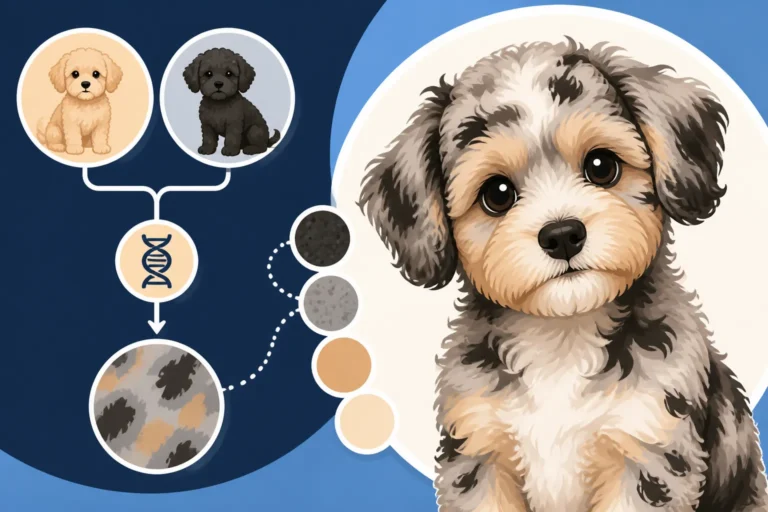
Whether a Chocolate Maltipoo Exists
It’s a common daydream for many aspiring Maltipoo parents: picturing a cuddly companion with a rich, velvety coat, perhaps in a deep chocolate hue. But then a question pops up – are chocolate Maltipoos even real, or is it just a term people use loosely? This guide is going to dive deep into the fascinating world of Maltipoo genetics and colors, helping you understand exactly where these beautiful brown shades come from and what you can expect when looking for a "chocolate" Maltipoo.
Understanding Maltipoo Color Genetics: The Parents' Influence
When you’re talking about a Maltipoo, you're essentially talking about a delightful blend of two distinct breeds: the Maltese and the Poodle. Each parent brings its own unique genetic blueprint to the table, and this is especially true when it comes to coat color. Understanding these foundational genetics is key to knowing why certain colors, like chocolate, are possible and why they might not always be what you initially imagine.
The Maltese Contribution to Color
Let's start with the Maltese. If you've ever seen a purebred Maltese, you know they are almost exclusively white. It’s their hallmark! While some might have slight cream or lemon markings, the breed standard calls for a pure white coat. This means that, from the Maltese side, there’s not a lot of color diversity being passed down. They carry genes that strongly promote white or very light coloration. So, if your Maltipoo had a Maltese parent, that side of the family is heavily pushing for a light coat.
This consistent white genetic background from the Maltese is a major reason why many Maltipoos tend to be lighter in color, often white, cream, or light apricot. It's a dominant trait that influences the final look of the puppy. Even if the Poodle parent carries darker genes, the Maltese influence can still lighten the overall coat significantly. It’s like pouring a drop of dark paint into a gallon of white – it'll take a lot more dark paint to make a truly rich color. For more on their genetic makeup, you might find What the Maltese Contributes to a Maltipoo interesting.
The Poodle's Diverse Palette
Now, let's turn to the Poodle, which is a kaleidoscope of colors compared to the Maltese. Poodles come in a vast array of solid colors, including black, white, cream, apricot, red, blue, silver, and yes, various shades of brown, often referred to as chocolate or liver. Poodles also carry genes for parti (two-toned) and phantom (specific marking patterns) coats, which further expands the possibilities. It's the Poodle parent that introduces almost all the non-white colors into the Maltipoo genetic pool.
The specific shade of brown or chocolate in a Poodle can vary from a light café au lait to a deep, rich dark chocolate. These colors are determined by a recessive gene. This means that both parents need to contribute this gene for a true brown coat to express itself. If only one parent carries it, and the other (like the Maltese) doesn't, the puppy might not end up with that distinct chocolate hue. This is where the "coin flip" of genetics truly comes into play for a Maltipoo, creating a huge spectrum of potential appearances. Why a Maltipoo Comes in Colors a Maltese Never Does delves deeper into these variations.
The Genetic Interaction: F1, F1b, and Beyond
The specific generation of your Maltipoo also plays a huge role in its potential color.
- F1 Maltipoo: This is a first-generation cross, meaning one parent is a purebred Maltese and the other is a purebred Poodle. In this scenario, if the Poodle parent is chocolate, there's a good chance the F1 puppies will inherit some brown genes. However, because the Maltese parent is predominantly white, the brown might be diluted, resulting in lighter browns, creams, or apricots that can sometimes be mistaken for faded chocolate.
- F1b Maltipoo: This refers to a Maltipoo bred back to a Poodle (75% Poodle, 25% Maltese). If the F1 Maltipoo is bred to a chocolate Poodle, the chances of getting a richer, more defined chocolate coat increase significantly because there's a stronger Poodle genetic influence. This higher percentage of Poodle genetics can lead to more predictable coat characteristics, including color. Whether an F1b Maltipoo Looks More Poodle explains how this works.
- Multigen Maltipoo: When two Maltipoos are bred together, or an F1b is bred to another Maltipoo, you get multigen puppies. With these generations, the genetic pool is much more mixed, and predicting color becomes even more complex. You can see a wider range of colors, including chocolate, depending on the hidden recessive genes carried by both Maltipoo parents.
Ultimately, whether a Maltipoo puppy will be chocolate comes down to the precise genetic lottery of its parents. A chocolate Poodle parent significantly increases the likelihood, but the Maltese's strong white genetic line will always be a factor in how that color ultimately manifests.
What "Chocolate" Really Means in Maltipoos
When people ask if "chocolate Maltipoos exist," they often have a very specific image in their mind – a rich, dark brown, much like a chocolate Labrador or a deep brown Poodle. However, the term "chocolate" can be a bit more nuanced and sometimes misleading in the Maltipoo world. It’s important to understand the different shades and what truly defines a genetic brown.
True Genetic Brown vs. Dark Apricot or Red
A true genetic chocolate or brown coat in dogs is caused by the "b" locus gene. This gene basically changes black pigment to brown. If a dog has two copies of the recessive 'b' allele (bb), then any black in its coat or on its nose, paw pads, and eye rims will appear brown instead. This is why a true chocolate Maltipoo will have a brown nose, brown paw pads, and often amber-colored eyes, rather than black.
This is a critical distinction, because many Maltipoos that are called "chocolate" are actually very dark apricot or red. Apricot and red coats are caused by different genes (the "e" locus) and are variations of yellow pigment. A dark red Maltipoo can look very brown in certain lighting, but if you look closely at its nose and paw pads, they will still be black. This is the tell-tale sign of an apricot or red dog, not a true chocolate one. It can be quite frustrating to think you're getting one thing and end up with another, so always check those pigment points! The Red Maltipoo and How Rare It Is covers this color in more detail.
The Range of Brown Shades
Even within true genetic browns, there’s a spectrum of shades:
- Liver: This is often a lighter, reddish-brown, sometimes seen in dogs that carry the brown gene.
- Café au Lait: A lighter, milky brown, very common in Poodles and therefore possible in Maltipoos. This color can sometimes be mistaken for a darker cream or fawn.
- Milk Chocolate: A medium brown, reminiscent of a classic chocolate bar.
- Dark Chocolate: This is the deepest brown, almost black in some lighting, and often what people envision when they ask for a "chocolate" Maltipoo.
It’s essential to remember that like many Poodle colors, a Maltipoo’s brown coat can fade over time. A puppy that starts out as a deep, rich chocolate might lighten to a café au lait or even a silvery brown as it matures. This is a common phenomenon in Poodles and their crosses, known as "progressive graying" or "fading." So, that dark chocolate puppy might not stay that way, which can be a surprise for new owners.
Finding and Caring for a Chocolate Maltipoo
If a chocolate Maltipoo is your dream dog, it's absolutely possible to find one, but it requires patience and due diligence. You'll need to be savvy about genetics and communicate clearly with breeders.
What to Look For in a Breeder
When seeking a chocolate Maltipoo, the most important thing is to work with a reputable breeder who understands canine genetics. Don't just rely on pictures or a breeder's description of "chocolate" without verification.
Here’s what to look for:
- See the Parents: Ask to see both the Poodle parent and the Maltese parent (or Maltipoo parents if multigen). If the Poodle parent is a true chocolate, you'll see a brown coat, brown nose, and brown paw pads. This greatly increases your chances of a chocolate puppy. If the Poodle is black or another color, then a chocolate puppy is highly unlikely unless the Maltese parent (or previous generations) carries the recessive brown gene – which is rare for Maltese.
- Examine Puppy Pigment: A true chocolate Maltipoo puppy, even at a young age, should have brown paw pads, a brown nose, and brown eye rims. If these are black, the puppy is likely a dark apricot or red, not a chocolate. Don't be shy about asking to inspect these details.
- Ask About Genetics Testing: Reputable breeders often do genetic testing on their breeding stock. While less common for color genes alone, some might test for specific color loci. This can offer a more definitive answer regarding the genetic potential for chocolate. The Four Certificates a Maltipoo Breeder Should Show explains what else to look for.
- Beware of "Rare" Claims: While specific shades can be less common, some unscrupulous breeders might charge exorbitant prices for "rare chocolate" Maltipoos, especially if they are actually just dark reds. Understand that genetic brown is a known Poodle color, not a mystical rarity that warrants an extreme price premium. What a Chocolate Maltipoo Sells For might be a good read to set your expectations regarding pricing.
Potential Health Considerations and Care
Beyond color, it's always critical to consider the overall health of your Maltipoo. Regardless of coat color, Maltipoos can be prone to certain health issues common in small breeds and their parent breeds. Liver shunts, patellar luxation (slipping kneecaps), and dental disease are all important considerations. A good breeder will be transparent about health testing. The Liver Shunt a Maltipoo Can Inherit From the Maltese and Slipping Kneecaps in a Maltipoo are excellent resources for understanding these risks.
Caring for a darker-coated Maltipoo isn't dramatically different from caring for a lighter one, but here are a few considerations:
- Fading: Be prepared for potential fading as mentioned earlier. If maintaining a deep brown is important to you, discuss this with the breeder. Some specific nutritional supplements are advertised to enhance coat color, but their effectiveness can vary.
- Sun Protection: While darker coats might absorb more heat, regular grooming and ensuring your Maltipoo doesn't overheat during summer walks (especially on hot pavement) are important for all Maltipoos. Whether a Maltipoo Overheats in Summer provides useful tips.
- Grooming: All Maltipoos need regular grooming to prevent matting, regardless of color. A good slicker brush and comb are essential. You can find a great selection of grooming supplies on platforms like Chewy. Regular brushing helps keep their coat healthy and minimizes tangles, which can be harder to spot on a very dark coat. How Many Times a Week a Maltipoo Needs Combing offers practical advice.
- Dental Care: Dental health is paramount for all Maltipoos due to their small mouths. Daily brushing with a dog-specific toothpaste is highly recommended. You can pick up doggy toothbrushes and toothpaste easily from Chewy to make this routine a breeze. Brushing a Maltipoo's Teeth Every Single Day emphasizes the importance of this.
| Feature | True Chocolate Maltipoo | Dark Apricot/Red Maltipoo |
|---|---|---|
| Nose Color | Brown (liver) | Black |
| Paw Pad Color | Brown | Black |
| Eye Rim Color | Brown | Black |
| Coat Color Range | Medium to Dark Brown | Deep Orange to Red-Brown |
| Genetic Basis | 'bb' recessive gene | 'e' locus variations |
| Fading Potential | Yes, can lighten over time | Yes, can lighten or dull |
In conclusion, yes, chocolate Maltipoos do exist! They get their beautiful brown coats primarily from their Poodle heritage, and a true chocolate will be identifiable by its brown pigmentation (nose, pads, eye rims). Be thorough in your search for a reputable breeder, ask plenty of questions, and be ready for the delightful possibility of a fading coat, which is just another part of their unique charm. With the right care and understanding, a chocolate Maltipoo can be a wonderful, loving addition to your family.
Disclaimer
This article is for general informational purposes only and does not constitute professional advice. Laws, prices and regulations vary by location and change over time. Consult a qualified professional for guidance on your specific situation.