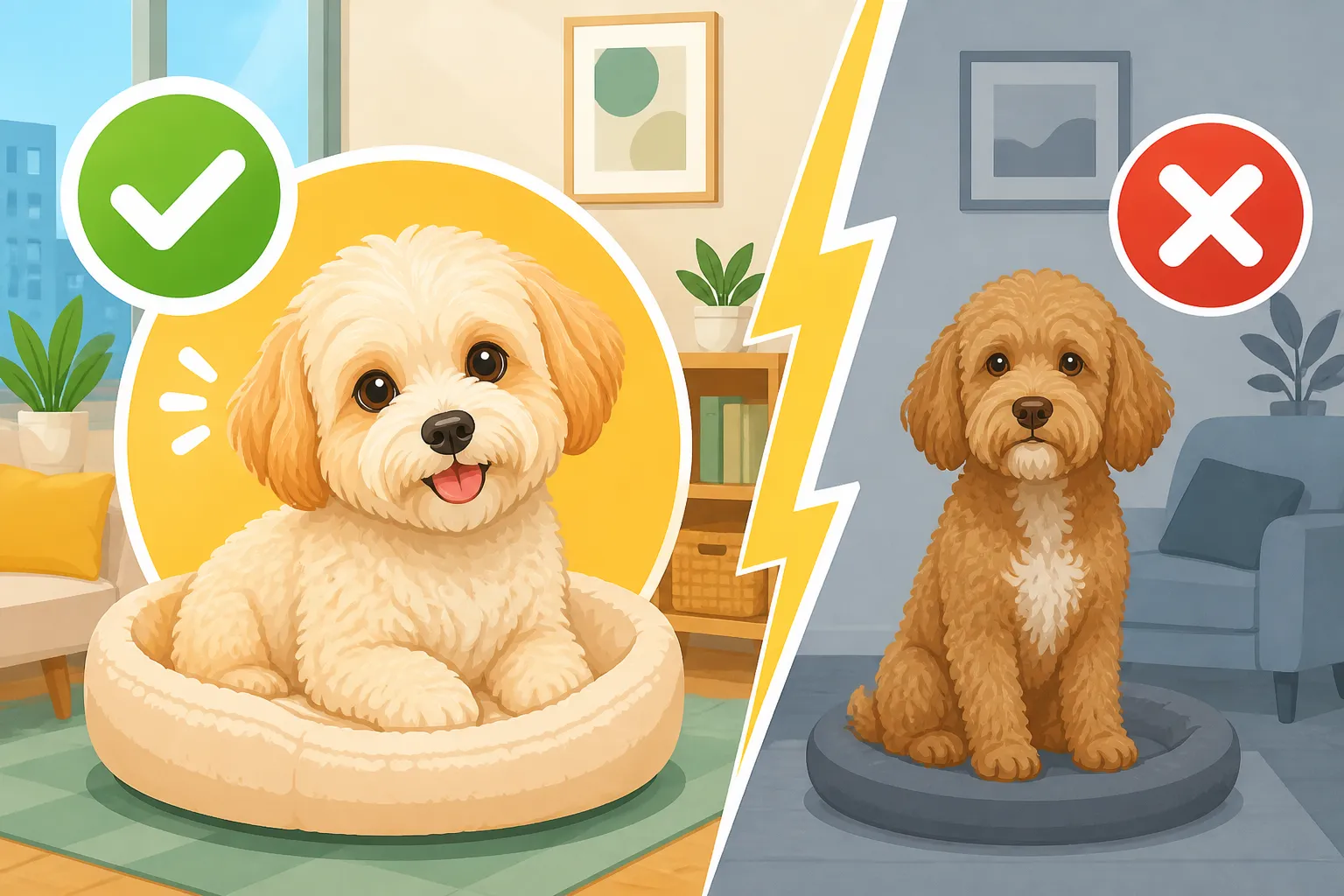
Maltipoo or Cockapoo for a Small Apartment
A small apartment can suit either a Maltipoo or a Cockapoo, but a compact body alone does not make a dog easy to live with. Barking, time alone, toilet training, exercise, and coat care matter just as much. This guide compares the two mixes so you can picture the daily routine each one may need before choosing.
Maltipoo and Cockapoo basics for apartment living
Size is only one part of the fit
Maltipoos are crosses between Maltese and Poodles, while Cockapoos are crosses between Cocker Spaniels and Poodles. Neither mix has a single guaranteed adult size or temperament. The size of the Poodle parent, the other parent, and the individual puppy all influence how a dog grows and behaves. A Maltipoo may often be the more compact choice, but it is still important to meet the parents when possible and ask about the puppy’s expected adult size.
Cockapoos can also vary considerably. Some are small enough to navigate a studio comfortably; others may be noticeably bigger and need more room to stretch out, play, and settle. In an apartment, that difference can affect practical details: the size of a crate or bed, how easily you can carry a tired puppy up stairs, and whether there is a clear path around furniture. Don’t assume the name of the mix tells you exactly how much space the adult dog will need.
Think about how your home functions, not just its square footage. A small apartment in Brooklyn with a nearby park and a reliable elevator can work better than a larger unit in a building where getting outside takes a long time. A Cockapoo or Maltipoo still needs daily walks, indoor enrichment, and a comfortable place to rest. For a broader look at the Maltipoo’s likely household fit, see The Household a Maltipoo Actually Suits.
Energy, play, and daily exercise
Both mixes can be affectionate and lively, and both may inherit a Poodle’s interest in learning and activity. Cockapoos may have more of the Cocker Spaniel’s enthusiasm for following scents, exploring, and staying busy. Maltipoos can be playful too, even when their small size makes their exercise needs look modest. Neither dog should be expected to meet its needs by wandering around an apartment.
A useful routine usually includes a few chances to go outside, relaxed sniffing walks, and short sessions of play or training. The exact amount depends on the dog’s age, health, and energy level. A puppy may need frequent toilet trips and short bursts of activity, while an adult may enjoy longer walks. In a Seattle apartment during a rainy week, for example, you may need to plan sheltered toilet breaks and indoor games rather than rely on one long walk.
Indoor activities can help on days when weather or a busy schedule makes outings harder. Food puzzles, gentle fetch in a clear hallway, and brief reward-based training sessions give a dog something to do without requiring a large living room. If you’re weighing how a Maltipoo’s needs translate into a real routine, The Walk a Six Pound Maltipoo Actually Needs offers a useful starting point. A yard is not a requirement for every dog, but regular outdoor access is; see Whether a Maltipoo Needs a Yard for more on that distinction.
| Apartment consideration | Maltipoo | Cockapoo |
|---|---|---|
| Likely size | Often compact, but varies with parent size and individual growth | Can range from small to noticeably larger, depending on parent size |
| Exercise | Daily walks, play, and mental activity | Daily walks, play, and mental activity; some may enjoy more exploring |
| Noise | May bark at hallway sounds or when seeking attention | May bark or vocalize; individual temperament and training matter |
| Grooming | Regular brushing and professional coat maintenance may be needed | Regular brushing and professional coat maintenance may be needed |
| Time alone | May struggle if left alone for long stretches without preparation | May also struggle with long periods alone; build independence gradually |
| Best apartment match | A household ready for close companionship and coat care | A household ready for activity, training, and coat care |
Noise and neighbors
In an apartment, barking can become a bigger concern than the dog’s physical size. A Maltipoo may alert to footsteps outside the door, a neighbor using the hallway, or a delivery at the lobby. A Cockapoo may also bark at sounds or become vocal when excited. Individual dogs vary, and no mix comes with a guarantee of quiet behavior.
You can reduce avoidable noise by helping a puppy get comfortable with normal building sounds in manageable steps. Reward calm behavior when the elevator dings or people pass the door. Provide a resting area away from the busiest window or shared wall, and avoid turning every hallway sound into an event by rushing to investigate it. If a dog is barking because it is frightened, under-stimulated, or distressed by being alone, simply telling it to stop may not solve the cause.
Before bringing home either mix, check your building’s pet rules and think through your neighbors’ routines. In a Chicago high-rise, frequent elevator rides may mean repeated close encounters with people and dogs. In a walk-up, carrying a small puppy may be convenient at first, but toilet trips still need to be practical as the dog grows. For specific considerations around Maltipoo noise in a flat, see Whether a Maltipoo Is Quiet Enough for an Apartment.
The day-to-day challenges that matter most
Housetraining without a yard
A puppy in an apartment may need to reach an outdoor toilet spot through a hallway, elevator, lobby, and front door. That journey can feel long when the puppy has just woken up or finished eating. Keep the leash, shoes, waste bags, and keys close to the exit so you can move quickly. If you live several floors up, carrying a young puppy to the designated toilet area may help prevent accidents on the way.
A consistent schedule matters more than having a private yard. Take the puppy out after sleeping, meals, drinking, and active play, and reward toileting in the right place as soon as it happens. Accidents are normal during learning; clean them thoroughly and return to the routine rather than scolding. If you use an indoor toilet or pad as a temporary option, make the intended setup clear and consistent. Switching between several toilet locations without a plan can make the lesson harder.
Maltipoos are often small, which can mean frequent toilet opportunities are especially important during puppyhood. Cockapoo puppies also need a predictable schedule, even if they grow larger. For a closer look at why owners can find the process frustrating, read Why Housetraining a Maltipoo Takes Longer Than You Expect. The same basic apartment-management principles apply to either mix: make outdoor trips easy to start, reward the behavior you want, and expect progress to take time.
Grooming in a small home
Both Maltipoos and Cockapoos may have coats that need frequent brushing and professional grooming. Their coats can vary from straighter to wavier or curlier, and mixed-breed dogs do not all inherit the same texture. Hair that looks soft and manageable after a bath can still tangle under the ears, around the legs, beneath a harness, and where the collar or bedding rubs.
In a compact apartment, grooming supplies can quickly take over a bathroom shelf or closet. Decide where you will brush the dog and keep the essentials together: a suitable comb and brush, dog-safe shampoo, towels, and a way to dry the coat thoroughly. Regular short brushing sessions are often less stressful than discovering a tight mat that needs urgent attention. If the coat repeatedly mats despite your efforts, ask a groomer to show you how to brush down to the skin without pulling.
A retailer such as Chewy can be one place to compare basic grooming tools or small-dog supplies, but the right choice depends on the dog’s coat and comfort. Ask a groomer or veterinarian if you are unsure which tool is appropriate, especially around the face and ears. To understand why a Maltipoo coat can surprise new owners, see The Coat a Maltipoo Gets From Two Non Shedding Parents. A low-shedding coat is not the same as a low-maintenance coat.
Being alone during a workday
A Maltipoo or Cockapoo may become strongly attached to people, so long stretches alone can be difficult, particularly before the dog has learned to settle independently. Puppies cannot be expected to manage an entire workday without toilet breaks and social contact. Adult dogs also need a realistic plan for breaks, exercise, and companionship.
Consider your actual weekly routine before choosing. If you commute from Queens into Manhattan, for example, the full time away may include the commute, errands, and delays—not just the hours on your work calendar. A trusted dog walker, neighbor, or midday visit may make the arrangement more workable. Start with short, positive periods alone and build gradually, rather than leaving a new dog for a full day immediately.
Watch how the dog behaves when you leave and return. Persistent distress, destructive behavior, or repeated barking can signal that the dog needs a different plan and possibly professional guidance. Don’t assume a second pet will automatically fix loneliness; the dogs may not keep each other comfortable, and both still need individual care. For more on this issue for Maltipoos, see Whether a Maltipoo Needs Company Most of the Day.
Choosing between the two mixes
Match the dog to your building and routine
A Maltipoo may appeal if you want a smaller companion and are prepared for frequent grooming, regular toilet trips, and close daily interaction. Its compact size can make navigating a narrow hallway or carrying a puppy easier, but it does not remove the need for exercise or training. A small dog can still be energetic, noisy, or unhappy when left alone.
A Cockapoo may be a good fit if you’re comfortable with some uncertainty around adult size and want a dog whose daily life includes active walks, play, and learning. Some Cockapoos may need more room simply because they grow larger, but the individual dog matters more than the label. A calm, well-adjusted Cockapoo can adapt to apartment living; a highly energetic Maltipoo that is bored and alone may find it difficult.
Make a practical checklist before meeting dogs. Consider the building’s stairs or elevators, nearby green space, the time it takes to reach a toilet area, your grooming budget and schedule, and who can provide a midday break. If the dog will share a home with a much larger resident dog, plan introductions carefully and provide safe places where a small dog can rest undisturbed. More on that concern appears in Whether a Maltipoo Is Safe Living With a Large Dog.
Questions to ask before bringing a puppy home
Ask about the parents’ adult size, temperament, health, and everyday behavior. A responsible breeder should be willing to talk openly about what is known and what cannot be predicted in a mixed-breed puppy. If you are considering a rescue dog, ask the foster caregiver how the dog reacts to apartment noises, how it behaves when alone, whether it is comfortable with elevators or stairs, and what is known about its toilet habits.
If possible, meet the puppy in a setting where you can observe how it responds to ordinary sounds and handling. Look for a puppy that can recover after a brief surprise, engage with people without seeming overwhelmed, and settle after play. These are clues, not promises. A puppy’s behavior can change as it matures and experiences a new home.
Don’t choose solely by appearance, advertised size, or claims that a dog is guaranteed to be quiet or hypoallergenic. A Maltipoo and a Cockapoo are both mixed breeds, and no coat or temperament description can remove the need for individual assessment. If you are still considering the Maltipoo, Seeing a Maltipoo Before You Commit can help you think through what to observe. The right apartment companion is the dog whose needs your household can meet consistently, not simply the one that takes up less floor space.
Making apartment life work after you choose
Set up the home before arrival
Create a quiet resting place away from the front door and the busiest windows. Keep food, water, and grooming supplies in a spot that is easy to clean, and remove tempting hazards such as loose cords, small objects, and accessible human food. Use a gate or pen if you need to limit a puppy’s access while it learns the home. A smaller safe area can make supervision easier, but it should not become a substitute for attention and exercise.
Plan the first weeks around gradual adjustment rather than a packed social calendar. New sounds, elevator rides, street traffic, visitors, and grooming can be a lot for a young dog at once. Introduce these experiences calmly and reward relaxed behavior. A dog that is comfortable with the routine is more likely to settle when the apartment is quiet and less likely to treat every hallway sound as an emergency.
For supplies, Chewy may be useful for comparing everyday items such as food puzzles, leashes, or cleaning products, while your veterinarian can guide food choices and health-related needs. Buy for the dog you have rather than filling a small apartment with equipment you may not use. A properly fitted harness, washable bedding, and a few engaging toys are often more useful than a long list of novelty accessories.
Build a routine you can maintain
Choose regular times for meals, walks, play, and quiet rest, adjusting them to your dog’s age and needs. A routine does not need to be rigid to be helpful. If a morning meeting runs late, having a backup walker or a trusted neighbor can prevent the whole day from becoming stressful for both you and the dog.
Include mental activity, not only physical exercise. A short training session in the kitchen can help a dog practice settling, coming when called, or waiting calmly before going through the apartment door. Rotate toys rather than leaving everything out all the time, and use simple sniffing games to make an ordinary indoor day more interesting. Keep sessions brief enough that the dog stays engaged instead of becoming frustrated.
Expect your needs and the dog’s needs to change over time. A puppy’s toilet schedule is different from an adult dog’s; a senior dog may need shorter outings and more help getting comfortable. If apartment life starts to feel harder than expected, look at the cause—noise, boredom, toileting logistics, grooming, or time alone—and adjust that part of the routine. Chewy can help you source practical supplies, but the most useful tool is a routine that fits the dog and the people sharing the home.
Disclaimer
This article is for general informational purposes only and does not constitute professional advice. Laws, prices and regulations vary by location and change over time. Consult a qualified professional for guidance on your specific situation.