Why Housetraining a Maltipoo Takes Longer Than You Expect
Bringing a Maltipoo puppy home is a dream come true for many, full of visions of cuddles, playful romps, and endless affection. But let's be real, a major speed bump quickly appears on that road to domestic bliss: housetraining. If you've found yourself staring at another puddle on the rug, wondering why your smart little Maltipoo just isn't "getting it" as fast as you expected, you're certainly not alone. This guide will dive deep into the specific reasons why housetraining a Maltipoo often becomes a longer, more involved journey than you might anticipate, and how to navigate it with patience and strategy.
Understanding the Maltipoo's Unique Blend for Housetraining
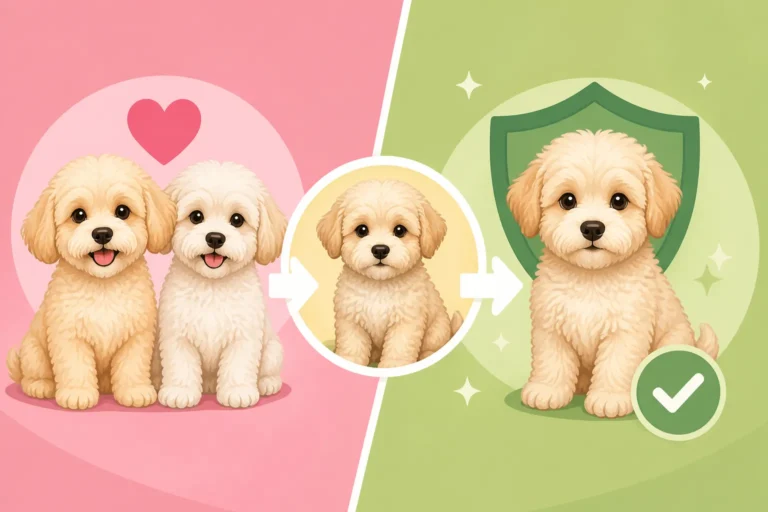
The Maltipoo isn't just a cute face; they're a fascinating mix of two distinct breeds, the Maltese and the Poodle, each contributing traits that can significantly influence their housetraining journey. Understanding this genetic "coin flip" is crucial to setting realistic expectations and tailoring your approach.
The Maltese Influence: Stubbornness and Small Bladders
Ah, the Maltese! While undeniably charming and affectionate, they're also known for a certain independent streak and, dare I say, a touch of stubbornness. This can manifest in housetraining as a reluctance to perform on command, especially if the conditions aren't just right. If your Maltipoo inherited a strong dose of Maltese personality, you might find yourself having to be extra persuasive and consistent. They might understand what you want, but they'll weigh it against what they want to do at that moment.
Beyond temperament, there's a purely physical aspect: the Maltese is a tiny breed, and tiny breeds often come with tiny bladders. This isn't a character flaw; it's simple physiology. A small bladder means more frequent urges to "go." Expecting a Maltipoo puppy to hold it for hours on end, especially overnight, is simply unrealistic and unfair. This inherent physical limitation means you're fighting an uphill battle if you don't adjust your schedule to accommodate their needs. They're just physically unable to wait for extended periods, and accidents aren't out of spite, but biological necessity.
The Poodle Intelligence: A Double-Edged Sword
On the other side of the genetic coin, we have the Poodle, renowned for its intelligence and eagerness to please. This sounds like a dream for training, right? And often, it is! Poodles are highly trainable and can pick up commands and routines quickly. A Maltipoo with strong Poodle traits might learn the concept of "outside to potty" quite fast. They understand patterns, and they love pleasing their people, especially when rewards are involved.
However, Poodle intelligence can sometimes be a double-edged sword. A smart dog can also be a clever dog, learning to manipulate situations or find loopholes. For instance, if they learn that barking at the door gets them attention, even if it's not a true potty urge, they might use it. Or, if they figure out that you'll eventually cave and let them relieve themselves indoors rather than facing the rain, they might hold out for that easier option. Their intelligence means they learn everything, not just what you intend to teach. This requires you to be equally smart and consistent in your own training methods to ensure you're always one step ahead. It's less about them being "difficult" and more about them being highly observant problem-solvers.
Genetics and Temperament: The Unpredictable Mix
The beauty and challenge of a Maltipoo lie in its hybrid vigor and unpredictable blend of traits. You might have a Maltipoo that leans heavily on the Maltese side for personality, or one that's a near carbon copy of a Poodle in temperament. More often, it's a delightful, sometimes perplexing, mix of both. This means that two Maltipoo littermates can actually train very differently from each other, making generalized advice sometimes difficult to apply without careful observation of your specific dog.
One Maltipoo might be highly sensitive, shutting down if corrected too harshly, while another might be incredibly resilient and persistent, needing a firmer, consistent hand. This makes the initial weeks a period of discovery, where you're not just teaching your puppy, but also learning about your puppy. The Coin Flip Inside Every Maltipoo Puppy truly illustrates this variability. It's vital to recognize that your Maltipoo's unique genetic inheritance will dictate much of their learning style and progress, and adapting your methods accordingly is key. Don't compare your Maltipoo to others you know, or even to a previous dog; embrace their individuality and learn what makes them tick.
The Physical Realities of a Small Dog's Bladder and Bowels
It's easy to forget that beneath all that fluffy cuteness is a tiny, still-developing physiology. The physical realities of a small dog, especially a puppy, play a much larger role in housetraining duration than many first-time Maltipoo owners realize.
Tiny Bladders, Frequent Urges
Let's reiterate this because it's paramount: Maltipoos are small dogs, and their bladders are correspondingly small. A Maltipoo puppy, particularly one under a pound or two, literally cannot hold its bladder for very long. We're talking about periods often measured in minutes, not hours. Expecting a small puppy, especially one at The Weight at Which a Maltipoo Puppy Is at Risk for other issues, to go from waking to eating to playing and hold it for more than 20-30 minutes at a stretch is often asking the impossible.
This isn't a training issue; it's a biological one. Their bodies are simply not equipped to store waste for long periods. As they grow, their bladder capacity will increase, but even adult Maltipoos need more frequent potty breaks than larger breeds. This means that you, the human, must be incredibly diligent about taking them out. It requires a constant vigilance, making sure they go out upon waking, after eating, after drinking, after playing, before bedtime, and at frequent intervals in between. Missing even one of these critical windows can result in an accident, not because they're being naughty, but because their body simply couldn't wait.
Smaller Stomachs, Faster Digestion
Just like their bladders, a Maltipoo's digestive system is compact and efficient, often leading to faster digestion. This means that what goes in often comes out relatively quickly. If your Maltipoo puppy is eating multiple small meals a day, which they often need to do to prevent conditions like hypoglycemia, their bowel movements will also be more frequent and less predictable than an adult dog eating one or two large meals. For insights into their feeding needs, consider How Often a Teacup Maltipoo Puppy Must Eat.
This fast-track digestive system requires you to be equally quick to respond. A puppy might eat, play for a few minutes, and then suddenly need to poop. If you're not anticipating this, another accident occurs. It underscores the need for a highly structured feeding and potty schedule, especially in the early months. Observing your Maltipoo's patterns will help you predict these urges, but expect them to be more frequent than you might be used to with a larger or older dog. It’s all part of managing their delicate systems.
Environmental Sensitivity: Temperature and Terrain
Imagine being a tiny, fluffy creature with very little body fat, suddenly stepping out into a brisk winter day or a driving rain. For many Maltipoos, especially those with delicate dispositions, the elements can be a major deterrent to doing their business outside. They shiver easily, feel cold intensely, and often despise getting their paws wet. Whether a Maltipoo Gets Cold Easily is a very real concern for these little ones, and it absolutely impacts housetraining.
Similarly, the terrain can be an issue. Freshly mown grass might feel great, but cold, icy pavement or muddy ground might be uncomfortable or even painful on their sensitive paws. Some Maltipoos will flat-out refuse to eliminate if the weather or ground conditions aren't to their liking. This isn't stubbornness in the traditional sense, but self-preservation and comfort-seeking. You might find yourself bundling them in a tiny sweater or carrying them to a sheltered, familiar patch of grass, just to encourage them to go. This sensitivity means you have to be extra patient and understanding, sometimes getting creative to make the outdoor potty experience as pleasant as possible for them. After all, if you wouldn't want to squat in a freezing downpour, why would your tiny pup?
Common Housetraining Mistakes That Prolong the Process
Housetraining is as much about the human's consistency and understanding as it is about the dog's learning. Unfortunately, many common mistakes, often made with the best of intentions, can inadvertently prolong the housetraining process for a Maltipoo.
Inconsistent Scheduling: The Enemy of Progress
One of the biggest culprits behind extended housetraining periods is an inconsistent schedule. Maltipoos, like all dogs, thrive on routine. They learn through repetition and prediction. If they don't know when their next potty break is coming, or if the times vary wildly each day, they'll struggle to internalize the pattern. Taking them out at 7 AM one day, 9 AM the next, and then 8 AM the day after, sends mixed signals.
Without a predictable routine for meals, water breaks, playtimes, and potty trips, your Maltipoo won't develop the internal clock that helps them hold it until the designated outdoor time. This inconsistency is not just confusing; it can be deeply frustrating for your puppy, leading to more accidents and making them seem like they're not learning, when in fact, the lessons aren't being delivered clearly enough. Think of it like trying to teach a child to read when you keep changing the alphabet; it just won't stick. A strict, predictable schedule is your best friend in housetraining, and any deviation, even a small one, can set you back.
Punishment and Negative Reinforcement: Creating Fear, Not Understanding
It's natural to feel frustrated when you step in a puddle for the fifth time. But resorting to punishment – yelling, rubbing their nose in it, or hitting them – is one of the most detrimental things you can do during housetraining. Maltipoos are often highly sensitive dogs. If you've ever wondered Whether a Maltipoo Is Too Soft for Correction, the answer is often yes. Harsh punishment can easily frighten them, making them associate the act of eliminating (anywhere, even outside) with fear and negative consequences.
Instead of teaching them where to go, punishment teaches them to be secretive. They might start hiding to pee or poop, often in secluded corners of the house or behind furniture, making it even harder to catch them in the act and redirect them. It damages the trust between you and your puppy and doesn't teach them the desired behavior. Housetraining is about teaching, guiding, and rewarding, not reprimanding. Your Maltipoo needs to feel safe to eliminate, and safe to approach you even after an accident. Focus on prevention and positive reinforcement, and you'll build a much stronger foundation for learning.
Over-reliance on Potty Pads: A Crutch, Not a Solution
Potty pads can seem like a godsend, especially for tiny Maltipoo puppies or for owners living in apartments without easy outdoor access. And in some cases, they can be a useful temporary tool. However, an over-reliance on potty pads can significantly prolong the transition to outdoor housetraining, becoming a crutch rather than a stepping stone.
The problem is that potty pads teach your Maltipoo that it's okay to eliminate inside the house. They don't differentiate between the pad and, say, a bathmat, a rug, or even a pile of laundry. You're essentially training them that soft, absorbent surfaces indoors are acceptable potty spots. When you then try to transition them to going exclusively outside, you're asking them to unlearn a deeply ingrained behavior. Many owners struggle to move a Maltipoo from pads to the yard because the dog has been successfully reinforced for going inside for weeks or months. If your ultimate goal is outdoor-only potty habits, limit pad use from the very beginning, or use them only in a designated, easily cleaned area, and always prioritize outdoor trips.
Creating an Effective Housetraining Strategy for Your Maltipoo
So, if inconsistent schedules and punishment are out, what does work? A solid, proactive strategy built on consistency, positive reinforcement, and intelligent management is your best bet for successfully housetraining your Maltipoo.
Setting a Consistent Schedule: Your Daily Blueprint
This is the cornerstone of successful housetraining, especially for a Maltipoo with a small bladder and quick digestion. Your daily blueprint should dictate when your puppy eats, drinks, plays, sleeps, and most importantly, goes potty.
- Wake Up & Potty Immediately: The very first thing you do when your Maltipoo wakes up (from overnight or a nap) is take them outside. They will almost certainly need to go.
- After Eating/Drinking: Within 5-15 minutes of finishing a meal or a significant drink of water, take them out again.
- After Playtime: Excitement and physical activity can stimulate the bladder and bowels. Take them out immediately after a play session.
- Before Bedtime: A final potty trip right before they settle down for the night is critical.
- Frequent Intervals: In between these key times, take your puppy out every 30-60 minutes. As they get older, you can gradually increase this interval, but start short.
- Record Keeping: Consider keeping a log for the first few weeks. Note when they ate, when they went potty (pee/poop, inside/outside), and any accidents. This helps you identify their individual patterns and adjust your schedule accordingly.
Sticking to this schedule religiously, even on weekends, will build the necessary habits and internal timing for your Maltipoo. How Long a Maltipoo Puppy Holds It Overnight is a common question, and a strict schedule is the answer.
Positive Reinforcement: Rewarding Success Every Time
When your Maltipoo successfully eliminates outside, it's time for a party! Positive reinforcement is incredibly powerful. As soon as they finish, immediately offer enthusiastic praise ("Good potty!"), a high-value treat, and a little celebratory fuss. The timing is crucial: the reward must happen within seconds of the desired behavior for your puppy to make the connection.
Avoid waiting until you're back inside. The praise and treat should be given right there, at the spot where they did their business. This reinforces the idea that "going potty here (outside) makes my human happy and gives me good things." High-value treats are small, soft, and easy for them to gobble down quickly. Rotate treats to keep them exciting! This positive association is what builds confidence and eagerness in your Maltipoo to do the right thing, rather than fearing punishment for making a mistake. Remember, for a small dog, even a tiny morsel can feel like a grand prize.
Crate Training: A Den, Not a Dungeon
Crate training can be an incredibly effective tool for housetraining a Maltipoo because it taps into a dog's natural instinct not to soil their sleeping area. When introduced properly, a crate becomes a safe, cozy den for your puppy, not a punishment chamber.
- Size Matters: The crate should be just large enough for your Maltipoo to stand up, turn around, and lie down comfortably. If it's too big, they might use one end as a bed and the other as a potty spot. For more on this, check out What Size Crate Suits a Maltipoo Puppy.
- Positive Association: Make the crate a positive place by feeding meals in it, placing favorite toys inside, and never using it for punishment.
- Short Stays, Frequent Breaks: When crated, your Maltipoo will generally try to hold their bladder. However, remember their small size! Don't leave a puppy crated for too long. A good rule of thumb is their age in months plus one hour (e.g., a 3-month-old puppy can hold it for about 4 hours during the day, less at night).
- Immediate Potty Break: As soon as your Maltipoo comes out of the crate, take them directly outside to their designated potty spot. Avoid play or distractions until they've done their business.
Used correctly, the crate helps teach bladder control and establishes a clear routine. Many Maltipoo owners wonder Whether Crate Training Speeds a Maltipoo Up, and for most, the answer is a resounding yes. It provides structure and predictability, which is exactly what a small puppy needs.
Navigating Specific Challenges: When Your Maltipoo Just Won't Get It
Even with the best intentions and a solid plan, housetraining can hit snags. Maltipoos, with their unique blend of sensitivities and intelligence, often present specific challenges that require tailored solutions.
Weather Woes: Training in Rain, Snow, and Extreme Cold
This is a big one for many Maltipoo owners. Your tiny pup, with its delicate paws and thin coat, often views rain, snow, or freezing temperatures as entirely unacceptable for outdoor activities. They might put on the brakes, shiver, or lift their paws in protest. If Whether a Maltipoo Refuses Wet Grass is a question on your mind, the answer is probably yes!
- Create a Sheltered Spot: If possible, designate a covered outdoor area, like under an awning or a patio cover, as their potty spot. This offers some protection from the elements.
- Gear Up: Invest in a good quality, well-fitting rain slicker or winter coat for your Maltipoo. Tiny dog boots can also protect sensitive paws from cold, ice, or hot pavement. Make it a routine to put these on before going out.
- Quick Trips: In inclement weather, don't expect a leisurely stroll. Get them out, encourage them to do their business promptly (use a consistent phrase like "Go potty!"), and then head straight back inside for warmth and praise.
- Carry Them Out: Sometimes, you might need to carry your Maltipoo directly to their spot to minimize their exposure to the unpleasant conditions until they're ready to go.
Consistency is still key. They need to learn that even when it's unpleasant, going outside is the rule, not the exception. Your perseverance will pay off.
Eliminating Scent Markers: Breaking the Cycle of Accidents
One accident can easily lead to another if the area isn't thoroughly cleaned. Dogs are driven by scent, and even if you can't smell it, your Maltipoo's powerful nose will detect residual urine odor. This scent acts as a beacon, telling them, "Hey, this is a good spot to pee!" This can lead to a frustrating cycle of repeat accidents in the same indoor locations.
- Enzyme Cleaners are Essential: Standard household cleaners often just mask the odor for human noses, leaving the canine scent markers intact. You need an enzymatic cleaner. These products contain special enzymes that break down the urine's organic matter, completely eliminating the odor at a molecular level. Products available on Amazon are often highly rated for this purpose.
- Thorough Application: Don't just dab. Saturate the soiled area, ensuring the cleaner penetrates as deeply as the urine did (e.g., into carpet padding, grout lines). Let it sit for the recommended time before blotting.
- Blacklight Inspection: For persistent problems, a UV blacklight flashlight can reveal old, dried urine spots that are invisible to the naked eye. This allows you to target every single "hot spot" and ensure Cleaning Up So a Maltipoo Does Not Return to the Spot is truly effective. This meticulous cleaning is vital to break the scent cycle and prevent future indoor accidents.
Regression: When a Trained Maltipoo Starts Having Accidents Again
It's disheartening when your previously well-housetrained Maltipoo suddenly starts having accidents indoors. This "regression" can be confusing and frustrating, but it's important to approach it systematically.
- Rule Out Medical Issues: The very first step is a vet visit. Urinary tract infections (UTIs), bladder stones, kidney issues, or even conditions like diabetes can cause a sudden increase in urination or loss of bladder control. Even something like The Honking Cough of a Maltipoo With a Bad Trachea might cause stress that manifests as accidents. Never assume it's behavioral without ruling out a physical cause first.
- Assess Stress/Anxiety: Changes in the household (new baby, new pet, new routine, moving), separation anxiety, or even fear of something outside (a new neighbor's dog, construction noise) can trigger accidents. Look for other signs of stress like changes in appetite, clinginess, or destructive behavior.
- Revisit the Basics: If medical issues and stress are ruled out, assume your Maltipoo needs a refresher course. Go back to basics: strict schedule, frequent outdoor trips, constant supervision, and lavish praise for outdoor success. Treat them like a puppy again for a week or two, and slowly loosen the reins as consistency returns.
Regression is often a signal that something is amiss, either physically or emotionally. Patience and investigation are key to resolving it.
Tools and Resources to Support Your Housetraining Journey
Having the right tools and knowing where to turn for extra help can make all the difference in your housetraining journey. While the process itself requires your dedication, these aids can simplify the task and keep you motivated.
Effective Cleaning Products: Erasing the Evidence
As mentioned earlier, good cleaning products are non-negotiable. Standard household cleaners simply aren't enough to eliminate the odor-causing bacteria and uric acid crystals that tell your Maltipoo, "This is a great place to go potty!" You need enzymatic cleaners that break down these organic compounds.
Look for brands specifically designed for pet accidents, often available on Amazon or at local pet stores. Keep a bottle in an easily accessible location for quick clean-ups. The faster you clean and neutralize the scent, the less likely your Maltipoo is to revisit the "scene of the crime." Having these on hand means you're always ready, turning a potential setback into a minor, forgettable incident for your pup.
Harnesses and Leashes: Safe and Comfortable Outings
For a small dog like a Maltipoo, a harness is almost always preferable to a collar, especially when you're frequently taking them outside for potty breaks. Collars can put pressure on their delicate trachea, which can be particularly sensitive for breeds prone to conditions like collapsing trachea. Even if your Maltipoo doesn't have Collapsing Trachea in a Maltipoo's Neck, it's best to err on the side of caution.
- Proper Fit: Ensure the harness fits snugly but comfortably, allowing full range of motion without chafing or restricting breathing. Many small dog harnesses are designed to distribute pressure across the chest.
- Lightweight Leash: A lightweight leash is easier for a small Maltipoo to manage and won't feel cumbersome.
- Convenience: Keep the harness and leash right by the door, ready to grab for immediate potty trips. Every second counts, especially with a young puppy.
These simple tools ensure that every outdoor trip is safe, comfortable, and efficient, which in turn makes your Maltipoo more willing to participate in their housetraining routine.
Online Training Programs and Community Support
Sometimes, you just need a little extra guidance or a fresh perspective. Online training programs can be incredibly valuable, offering structured lessons, video demonstrations, and often, access to trainers or community forums. One such well-regarded resource is BAXTER & Bella, which offers lifetime access to a comprehensive online program that covers everything from puppy basics to advanced training, including extensive housetraining modules. These programs allow you to learn at your own pace, from the comfort of your home, and often provide solutions to specific challenges you might encounter.
Beyond formal programs, tapping into online communities of Maltipoo owners can provide invaluable emotional support and practical tips. Hearing from others who have navigated similar struggles can be incredibly reassuring and offer creative solutions you hadn't considered. Just remember to always filter advice through common sense and consult your vet or a certified professional trainer for serious or persistent issues. Learning about What a Maltipoo Asks of a First Time Owner through shared experiences can be incredibly helpful.
The Long Haul: Patience, Persistence, and Perspective
Housetraining a Maltipoo can feel like an endurance race, not a sprint. It demands consistency, a sense of humor, and above all, boundless patience. Keeping the long-term goal in mind, while celebrating the small victories, will help you both cross the finish line successfully.
Celebrating Small Wins: Acknowledging Progress
When you're knee-deep in puppy accidents, it's easy to get discouraged and focus only on the setbacks. But every single successful potty trip outside is a huge win! Make a big deal about it. Enthusiastic praise, a special treat, a quick game of tug – whatever your Maltipoo loves, deliver it immediately. These consistent celebrations are what build positive associations and motivate your pup to repeat the desired behavior.
Don't wait for perfection. Celebrate when they ask to go out for the first time, even if it was a timid whine. Celebrate when they go outside in the rain without much fuss. Celebrate when they hold it a little longer than usual. Acknowledging and rewarding these small steps prevents frustration from setting in for both of you and reinforces their progress. It's not about being accident-free; it's about seeing a gradual reduction in accidents and an increase in successful outdoor potties.
Seeking Professional Guidance: When to Call in the Experts
If you've been consistent, used positive reinforcement, ruled out medical issues, and your Maltipoo is still having frequent accidents or you're feeling completely overwhelmed, it's okay – and wise – to seek professional help. A certified professional dog trainer or a veterinary behaviorist can observe your specific situation, identify underlying issues, and develop a tailored plan.
They can offer strategies for particular challenges, such as a Maltipoo that refuses to go in specific weather conditions, or one that has developed a habit of marking indoors. Sometimes, an objective third party can spot things you might be missing. Don't view calling a professional as a failure; view it as an investment in a happy, well-adjusted future with your Maltipoo. They can help you address specific issues, like Whether an Older Maltipoo Starts Having Accidents, and provide a fresh perspective.
The Joy of a Fully Housetrained Maltipoo
It might feel like an eternity now, but there will come a day when you realize you haven't cleaned up an accident in weeks. The moments of frustration will fade, replaced by the immense joy and relief of having a reliably housetrained companion. A fully housetrained Maltipoo means more freedom for both of you – fewer worries when visiting friends, easier travel, and a cleaner, more harmonious home.
The bond you build through this journey, even with its challenges, will be incredibly strong. Your Maltipoo learns to trust you, and you learn to understand their subtle cues. The effort you put in now is a foundational investment in the next The Twelve to Fifteen Years a Maltipoo Lives. When you look back, you'll see that every consistent potty break, every enzymatic spray, and every tiny treat was worth it for the loving, happy life you share with your precious Maltipoo.
Disclaimer
This article is for general informational purposes only and does not constitute professional advice. Laws, prices and regulations vary by location and change over time. Consult a qualified professional for guidance on your specific situation.