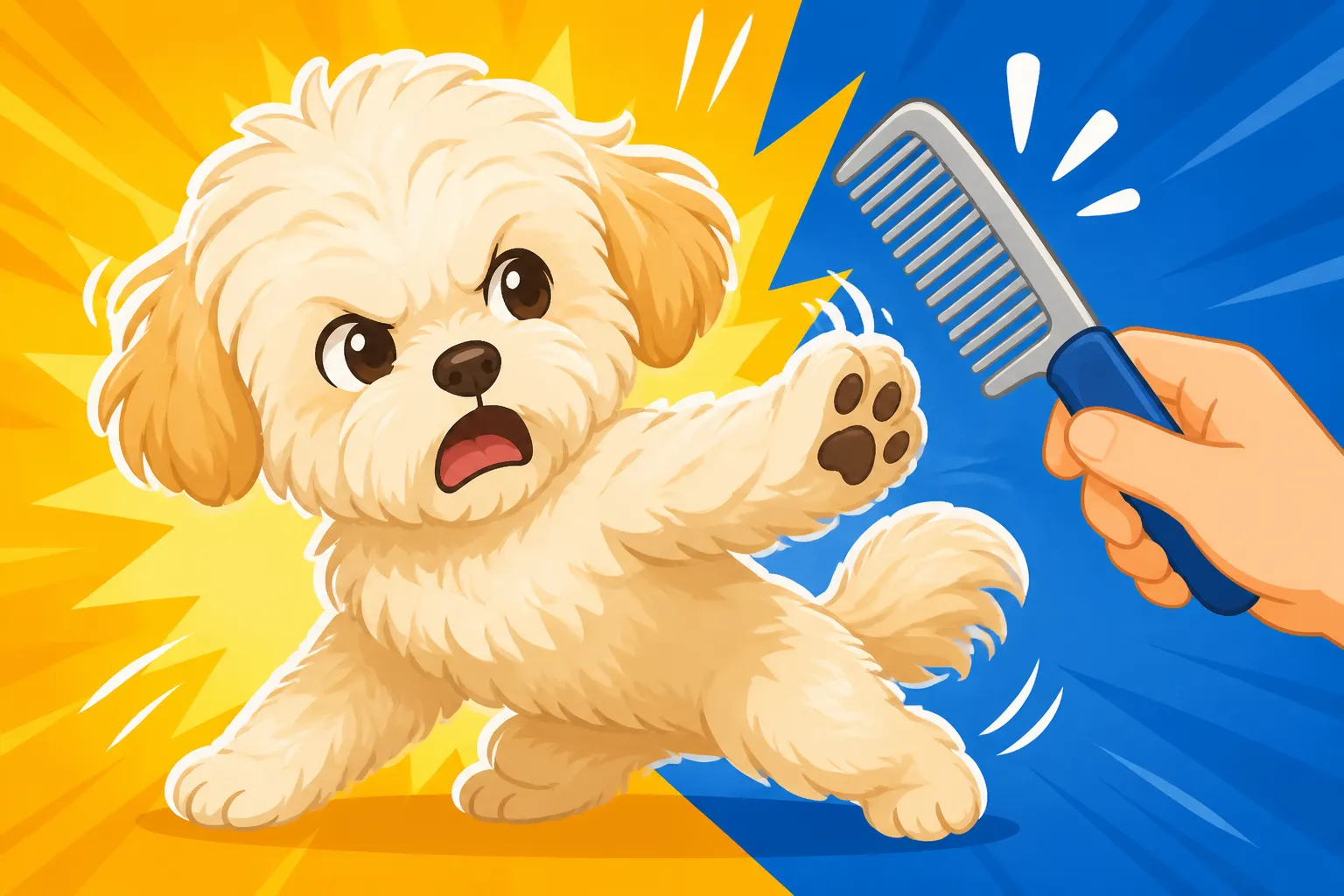
A Maltipoo That Fights the Comb
It's incredibly frustrating, isn't it? You just want to keep your sweet Maltipoo's coat healthy and beautiful, but the moment that comb comes out, it’s like you’re trying to wrangle a tiny, furry alligator. That struggle, the wiggling, the nipping, and the sheer defiance, can leave you feeling defeated and wondering if you're doing something wrong. This guide is here to unravel the mystery of why your Maltipoo might be fighting the comb and, more importantly, to give you actionable strategies to turn grooming time into a peaceful, even enjoyable, bonding experience.
Understanding Why Your Maltipoo Resists the Comb
When your Maltipoo acts like the comb is an instrument of torture, it’s rarely out of malice. There’s usually a very good reason behind their resistance, and understanding these underlying causes is the first step toward finding a solution. It's about seeing the world from their small, furry perspective.
Fear and Anxiety as Root Causes
Imagine a giant hand coming at you with a strange, bristly object. If you don't understand what's happening or haven't been taught to trust it, fear is a completely natural reaction. Many Maltipoos, especially if not properly socialized to grooming early on, view the comb and brush with immense suspicion.
For some Maltipoos, past experiences might be playing a huge role. Perhaps a previous owner or even a rushed groomer was a bit too rough, pulling on a mat or making the experience unpleasant. Dogs have long memories, especially when it comes to discomfort or fear. They might tense up just at the sight of the comb, associating it with pain or an unknown sensation. Their small size can also contribute to this anxiety; they feel vulnerable, easily overwhelmed by quick movements or the sensation of being held down. It's not uncommon for a Maltipoo to interpret being held firmly for grooming as a threat, triggering a fight-or-flight response. You might see them try to squirm away, tuck their tail, or even attempt a quick nip to make the scary thing stop. It’s their way of saying, "I'm scared, please make it stop!"
Pain or Discomfort from Tangled Hair
This is probably one of the most common reasons a Maltipoo will fight the comb, and it's completely understandable from their point of view. A Maltipoo’s beautiful, flowing coat is prone to matting. If there are tangles or mats already present, even a gentle comb can pull on their skin, causing real pain. Think about getting a knot out of your own hair – it hurts, right? Now imagine having that sensitivity all over your body.
Matted fur pulls at the skin, restricting movement and causing irritation. When you try to comb through these areas, the pain can be sharp and immediate. Your Maltipoo doesn't understand that you're trying to help; they only feel the discomfort. This can quickly create a negative association with grooming tools. Even if the matting isn't severe, just a few small tangles can be enough to make them wary. Areas like behind the ears, under the armpits, and on the tail are notorious for developing mats quickly. If you inadvertently hit one of these sensitive spots, it can undo weeks of positive reinforcement and make your Maltipoo even more resistant the next time. They might start to anticipate the pain, leading to frantic struggling before you even touch them.
Lack of Early Socialization and Handling
Puppyhood is a critical window for introducing new experiences, and grooming is no exception. If a Maltipoo puppy wasn't regularly handled, brushed, and exposed to grooming tools from a young age, they might simply not understand what's expected of them. They might not have learned that being still during grooming leads to positive outcomes.
Breeders have a role here, and a good one will introduce gentle handling and brushing. But once a puppy comes home, it's up to you. Many owners, understandably, focus on house training and basic commands, sometimes overlooking the importance of consistent grooming exposure. A Maltipoo needs to learn to tolerate, and eventually enjoy, being touched all over their body – paws, ears, tail, belly – even when no comb is involved. If they haven’t had this foundation, suddenly trying to brush them can feel invasive and overwhelming. Without this early, positive conditioning, grooming can become a battle of wills, where your Maltipoo hasn't developed the necessary patience or trust. This is where you might find yourself Teaching a Maltipoo to Be Handled Every Two Weeks not just for grooming, but for overall health checks as well.
Setting Up for Stress-Free Grooming Sessions
Before you even pick up a comb, it’s crucial to create an environment and gather the right tools that will make grooming as comfortable and positive as possible for your Maltipoo. Preparation is key to diffusing potential battles before they even begin.
Choosing the Right Comb and Brush for a Maltipoo
The tools you use make a huge difference in how your Maltipoo perceives grooming. Using the wrong brush can be ineffective, painful, or simply not do the job their unique coat requires.
A good grooming kit for a Maltipoo usually includes a few essentials:
- Pin Brush: This is often your go-to for daily brushing. Look for one with smooth, rounded pins that won't scratch your Maltipoo's delicate skin. It helps to separate the hair and get out loose fur without pulling too much.
- Slicker Brush: A slicker brush has fine, short wires packed closely together on a flat or curved surface. It's excellent for removing mats and tangles, but you need to use it gently. Always brush away from the skin, not directly into it, and be careful not to apply too much pressure. It's a lifesaver for getting through thicker patches, but overuse or improper technique can cause brush burn.
- Metal Comb (Greyhound Comb): This is perhaps the most critical tool for a Maltipoo. A good quality metal comb with both wide and narrow teeth is essential for checking your work and ensuring you've gotten all the way down to the skin. After you’ve brushed with a pin or slicker brush, always follow up with the metal comb. If the comb glides smoothly through the coat, you know you're mat-free. If it catches, you've got more work to do, and that's usually where the trouble starts if you don't address it gently. For really fine detangling around the face or behind the ears, a smaller, finer comb might also be helpful. You can find excellent options for all these on Amazon, often in sets designed for small, long-haired breeds.
| Tool Type | Primary Use | Best For Maltipoos | Caution |
|---|---|---|---|
| Pin Brush | General daily brushing, detangling, fluffing | All coat types, gentle enough for puppies. | Pins can bend or fall out over time, reducing effectiveness. |
| Slicker Brush | Removing mats, loosening undercoat, smoothing | Curly or wavy coats prone to matting. | Use with extreme caution; can cause brush burn if too harsh. |
| Metal Comb | Checking for mats, finishing, fine detangling | Essential for all Maltipoos to ensure mat-free coat. | Can pull painfully if forced through tangles; always detangle first. |
| Dematting Rake | Cutting through severe mats (last resort) | Only for severe, dense mats that cannot be brushed out. | Can cut skin if not used correctly; best left to professionals. |
Utilizing Grooming Sprays and Conditioners
A huge part of making combing comfortable is reducing friction and preventing static. Dry fur is much more likely to snag and pull, turning a routine brush-out into a painful ordeal. This is where grooming sprays and leave-in conditioners become your best friends.
Before you even start brushing, lightly mist your Maltipoo’s coat with a high-quality detangling spray or a leave-in conditioner designed for dogs. Don't drench them, just a light, even mist. This lubricates the hair shaft, making it easier for the comb to glide through any minor tangles and significantly reducing static electricity. Less friction means less pulling, less discomfort, and a much more pleasant experience for your dog. Some sprays also contain ingredients that help to loosen existing tangles, making them easier to work out with your fingers before you even bring the comb into play. For a Maltipoo, whose coat can develop mats almost overnight, these sprays are indispensable in your daily routine. They help keep the coat hydrated and manageable, which can greatly extend the time between full professional grooms. Using a good quality spray regularly is far more pleasant for your dog than having to painfully work out a deep-seated mat.
Creating a Safe and Comfortable Grooming Space
Where you groom your Maltipoo is almost as important as how you groom them. A wobbly surface or a noisy, distracting environment can amplify their anxiety and make them even more resistant.
Ideally, you want a dedicated grooming spot. This could be a small, sturdy table with a non-slip mat on top, or even just a designated spot on the floor with a thick bath mat. The key is stability. Your Maltipoo needs to feel secure; if they're constantly shifting their weight or feeling unstable, they'll be less likely to relax. The space should also be free from distractions. Turn off the TV, put away noisy toys, and ensure other pets or children won't interrupt. Dim the lights slightly if it helps create a calmer atmosphere. Think about a spa experience for your dog – calming, predictable, and safe. Having their favorite blanket or a special grooming towel can also provide a sense of familiarity and comfort. Some people even use a grooming arm with a gentle loop, not to restrain tightly, but just to keep a wiggly Maltipoo safely in one spot. Remember, the goal is to make this their special, calm place, not a torture chamber. Consistency in location also helps them understand the routine.
Step-by-Step Training for Comb Acceptance
It’s tempting to just grab the comb and get it over with, but that often leads to more resistance. The key to success is gradual introduction, positive reinforcement, and patience. Think of it as a series of tiny, achievable steps, not one giant leap.
Desensitization and Counter-Conditioning
This sounds fancy, but it’s really just about making your Maltipoo less sensitive to the comb and teaching them to associate it with good things. Start small, really small.
- Introduce the Comb Visually: First, just show your Maltipoo the comb. Don't even touch them with it. Let them sniff it. As soon as they look at it calmly, give them a high-value treat and praise. Repeat this a few times a day for a few days. The goal is for them to see the comb and think, "Oh, good things happen now!"
- Gentle Touch, Then Retreat: Next, lightly touch the comb to a non-sensitive part of their body, like their back or shoulder, for just a second. Immediately remove the comb and give a treat. Don't actually comb, just touch. If they're okay with that, gradually increase the duration of the touch. The moment they show any sign of discomfort (tensing, trying to pull away), stop, wait for them to relax, and then try again with a lighter touch. You're teaching them that they have control – if they're uncomfortable, you'll stop. This builds trust.
- Short, Gentle Strokes: Once they tolerate light touches, start with a single, very gentle stroke of the comb, followed by a treat. Focus on areas where they are least sensitive. Slowly increase the number of strokes, always pairing them with positive reinforcement. The mantra here is "touch, treat, repeat." This methodical approach, often called desensitization, slowly erodes their fear or aversion. It’s a process, not an event, and it might take days or even weeks of consistent, positive effort. Remember, consistency is more important than speed. If you rush, you'll undo your progress.
Short, Frequent Sessions
Trying to complete a full grooming session on a resistant Maltipoo is a recipe for disaster. Both you and your dog will end up frustrated and exhausted. Instead, break it down into very short, manageable sessions.
Think of it as micro-sessions, perhaps just 5-10 minutes long, multiple times a day. Maybe in the morning, you focus on their back. In the afternoon, you work on one leg. In the evening, you tackle another. The goal is to end each session before your Maltipoo gets stressed or starts to really fight. You want to finish on a positive note, with them still tolerating the comb. This helps prevent them from dreading the next session. If you try to force a long session, you risk solidifying their negative associations with grooming. By keeping it short, you’re preventing them from reaching their "breaking point" and reinforcing that grooming is a brief, pleasant interruption, not a drawn-out ordeal. This also makes it easier to fit into your busy schedule, ensuring that their coat doesn't get completely out of hand between longer professional grooms. This kind of routine is vital for their coat health, as a Maltipoo's hair can [Knot Overnight at Ten Months].
Rewarding Calm Behavior
Positive reinforcement is your most powerful tool in this entire process. Every time your Maltipoo exhibits even a tiny bit of calm, cooperative behavior during grooming, reward them!
This means treats – high-value treats that they absolutely love, something they don't get at any other time. It also means verbal praise ("Good boy!" or "Good girl!"), gentle petting, or a moment of play with their favorite toy. The reward needs to be immediate, so they connect their calm behavior directly with the good outcome. For example, if you manage a few calm strokes on their shoulder, immediately stop, give a treat, and praise. If they stand still for a paw trim, reward them. If they look at the comb without growling, reward them. Over time, your Maltipoo will learn that staying calm and allowing the comb to do its work leads to wonderful things. It reconditions their emotional response from fear to anticipation of a reward. Consider using a lick mat with some peanut butter (xylitol-free!) during grooming to keep them distracted and associating the experience with something delicious. This creates a strong positive association and helps them relax, making the entire process smoother. Even BAXTER & Bella, an online puppy training program, emphasizes positive reinforcement for handling and grooming, demonstrating how crucial this approach is for building a cooperative pet.
Troubleshooting Common Combing Challenges
Even with the best intentions and techniques, you might encounter specific hurdles when grooming your Maltipoo. It's important to have strategies for these common problems so you don't get discouraged.
Dealing with Extreme Matting
Sometimes, despite your best efforts, a Maltipoo's coat can become severely matted. This is a common issue, especially if there's been a lapse in grooming, a playful romp in the bushes, or even just during their coat change around the 8-10 month mark when their puppy fur transitions to adult fur, which can [Knot Overnight at Ten Months].
When faced with extreme matting, trying to comb it out yourself can be incredibly painful for your dog and risks damaging their skin. In these situations, your best course of action is almost always a professional groomer. They have specialized tools, techniques, and experience to safely remove mats, even if it means shaving the affected areas. It's far better to have a temporarily shorn Maltipoo than one suffering from the pain and skin irritation caused by tightly matted fur. Trying to force a comb through a deep mat will only cause distress and pain, further cementing your Maltipoo's aversion to grooming. A professional can often shave beneath the mat, leaving the skin unharmed, and then you can start fresh with a regular maintenance routine. This is also a good time to ask your groomer for tips on specific areas where your Maltipoo mats most, or for advice on grooming sprays and conditioners that work best with their coat type. Sometimes, the matting is so severe it can even hide skin infections, so professional intervention is crucial for your Maltipoo's health and comfort.
Addressing Nipping and Biting
If your Maltipoo is nipping or biting during grooming, it’s usually a clear sign they are either in pain, very scared, or both. They are communicating that they want you to stop, and they feel they have no other way to make you listen.
Never punish your Maltipoo for nipping during grooming, as this will only increase their fear and make them more likely to escalate their defensive behavior. Instead, stop the session immediately. This teaches them that a warning nip (or even just tensing up) makes the scary thing go away. Once they've calmed down, you can attempt to re-engage with extreme caution and a modified approach. For severe nipping, a professional positive reinforcement trainer can be invaluable. They can help you understand your Maltipoo's body language and teach you safe handling techniques. Introducing a soft muzzle, gradually and positively, for grooming sessions might be an option if nipping is a serious concern, but this should be done under the guidance of a professional to avoid further traumatizing your dog. Focus heavily on desensitization and counter-conditioning, as discussed earlier. Pair the comb with high-value treats, and ensure you are working in very short bursts, always ending on a positive note before the nipping begins. For more severe cases, Whether Sedation Is Ever Right for Grooming a Maltipoo is a conversation you might need to have with your vet, but it's generally a last resort.
Overcoming Resistance to Specific Areas
Many Maltipoos have particular "no-go" zones where they absolutely despise being combed. These commonly include the paws, ears, tail, and belly. These areas are often more sensitive or prone to matting.
To tackle these challenging spots, you need extra patience and a highly targeted approach.
- Paws: Start by just touching their paw with your hand, then treat. Gradually introduce the comb, just tapping it on a nail, then treating. Slowly work your way up to gently combing the fur on their paw. Many dogs dislike having their feet handled because it makes them feel off-balance or vulnerable.
- Ears: The hair behind a Maltipoo's ears is a magnet for mats. Be extremely gentle. Again, start with touch, then introduce the comb very slowly. Hold the base of the ear to prevent pulling on the skin. You might even use a very fine-toothed comb here.
- Tail: The tail can be highly sensitive. Support the tail at its base while you gently comb, working in small sections.
- Belly/Armpits: These are incredibly delicate areas where mats hide easily. Have your Maltipoo lie down if possible, or support them gently. Use your free hand to hold the skin taut around the area you're combing to minimize pulling.
For all these areas, use the "one stroke, treat" method. Give a treat for every single calm stroke in the sensitive zone. This high reward rate makes it worthwhile for them to tolerate the discomfort. You're building a new, positive association with these previously negative spots. Sometimes, simply changing the position can help, like having them lay on their side while you comb one flank and leg. It’s also crucial to ensure you're using a grooming spray to help the comb glide more easily, especially in these delicate areas.
Maintaining a Positive Grooming Routine
Getting your Maltipoo to tolerate the comb is a huge achievement, but the work doesn't stop there. Consistency and making grooming a positive, ongoing part of their life are essential for long-term success.
Consistency is Key: Daily Brushing and Regular Professional Grooms
A Maltipoo's coat is beautiful but demanding. It needs constant attention to stay mat-free and healthy. Sporadic grooming will only lead to more mats, more pain, and more resistance.
Daily brushing is non-negotiable for most Maltipoos, especially those with curlier or wavier coats. Just 5-10 minutes each day can prevent small tangles from becoming painful mats. This daily routine also reinforces the positive training you’ve done, keeping your Maltipoo accustomed to the comb and brush. Think of it as preventative medicine for their coat. If you only brush when they're already matted, grooming will always be associated with pain. Daily, gentle brushing, on the other hand, becomes a quick, pleasant routine. In addition to daily home care, regular professional grooming is crucial. Most Maltipoos need to see a professional groomer every 4-8 weeks for a full bath, trim, and thorough brush-out. This ensures their coat is managed effectively, prevents major matting, and keeps them comfortable. A good groomer can also spot potential skin issues or ear problems that you might miss. This combination of diligent home care and professional maintenance is the gold standard for a Maltipoo's coat health, ensuring that your Maltipoo can have a [Puppy Cut] or a [Teddy Bear Trim] and look fabulous.
Making Grooming a Positive Experience
Grooming shouldn't be a chore for either of you; it should be an extension of your bond. The goal is for your Maltipoo to not just tolerate grooming, but to genuinely enjoy or at least calmly accept it.
Infuse positive energy into every grooming session. Start with a calming voice, plenty of praise, and a happy attitude. Play some soothing music. Offer a favorite toy or a chew while you work. Make it a routine that ends with something fun, like a short play session, a walk, or a special treat. Never rush or get frustrated. If you feel your own patience wearing thin, it's better to end the session early on a positive note and try again later. Your emotions are contagious, and your Maltipoo will pick up on your stress. If you're tense, they'll be tense. Conversely, if you're calm and cheerful, they're more likely to relax. The idea is to build a history of positive interactions around grooming, making it another enjoyable part of their day. This positive association extends beyond just the comb; it helps with all forms of handling, from nail trims to vet visits. You'll find yourself Teaching a Maltipoo to Hold Still for Its Face with much less struggle if the overall experience is pleasant.
Knowing When to Seek Professional Help
There are times when despite your best efforts, you might feel completely overwhelmed or simply not able to achieve a breakthrough with your Maltipoo's grooming resistance. And that's perfectly okay.
If your Maltipoo's fear or aggression during grooming is escalating, if you're constantly battling severe matting, or if you simply can't get past a certain hurdle, it's time to call in the professionals. This could be a professional groomer who specializes in fearful or difficult dogs, or a certified professional dog trainer who uses positive reinforcement techniques. A professional groomer has the experience, the right tools, and often a calming touch that can work wonders. They can carefully work through mats you couldn't, or provide a necessary shave-down to get you both to a fresh start. A trainer, on the other hand, can help identify behavioral triggers and teach you advanced techniques for desensitization and counter-conditioning. They can help you understand your dog’s specific fear responses and tailor a plan. Don't view seeking professional help as a failure; view it as a responsible decision to ensure your Maltipoo's comfort and well-being. Sometimes, a fresh perspective and expert hands are exactly what's needed to turn the corner. They can show you The Kit Needed to Groom a Maltipoo at Home and how to use it safely and effectively.
Disclaimer
This article is for general informational purposes only and does not constitute professional advice. Laws, prices and regulations vary by location and change over time. Consult a qualified professional for guidance on your specific situation.