Whether the Maltipoo Started in America
The Maltipoo lacks a documented founder or birthplace because historical records do not name the first person to breed a Maltese and a Poodle.
Is this the right one for you?
Origins and temperament, size and coat, what living with one is actually like, and how it compares to the breeds people weigh against it.

The Maltipoo lacks a documented founder or birthplace because historical records do not name the first person to breed a Maltese and a Poodle.

The history of the Maltipoo clarifies whether the 1990s marked the first Maltese and Poodle breeding or simply a popular name.
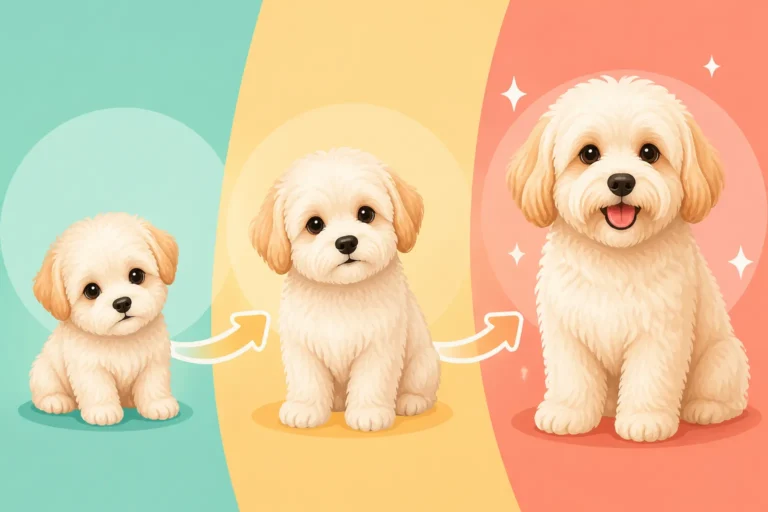
Maltipoo generation labels and ancestry offer clues about adult coat and appearance, but cannot guarantee traits.

F1b Maltipoo genetics and breeding ratios explain why adult puppies show dominant Poodle traits and appearance.

Maltipoo littermates often look different because varying genetics from Maltese and Poodle parents create diverse coat and color traits.

Maltipoo tail carriage genetics, parent breed influences, and common variations explain why some tails curl while others remain straight.

Maltipoo ear genetics explain why mixed puppies inherit floppy drop ears from both Maltese and Poodle parent breeds.

Maltipoo muzzle length varies because puppies inherit a genetic blend of traits from the short Maltese and the longer Poodle.

Maltipoo facial features depend on a genetic mix of Maltese and Poodle traits, creating unpredictable puppy looks.

Maltipoo eye color genetics explain why puppies can have temporary blue eyes while adults almost always have brown eyes.