Whether Two Maltipoo Littermates Look Alike
It’s a common misconception, especially with designer breeds like the Maltipoo, that if puppies come from the same litter, they’ll all be nearly identical. You might envision a litter of fluffy, white, perfect little clones. The reality, however, is often a charming surprise: two Maltipoo littermates can look strikingly different, both in appearance and even personality, and understanding why can save you a lot of confusion and help you appreciate their unique qualities from day one.
The Genetic "Crapshoot" of a Maltipoo's Appearance
Bringing home a Maltipoo puppy is an exciting time, but if you're picturing an identical twin of one you've seen online or even another puppy from the same litter, you might be in for a surprise. Unlike purebred dogs, where generations of selective breeding aim for a consistent look, Maltipoos are a blend, and that blend creates a wonderful, sometimes unpredictable, array of traits. It’s not uncommon to see siblings that barely resemble each other, which can be a bit of a shock if you’re expecting uniformity.
Understanding the Hybrid Vigor and Variety
The Maltipoo is a first-generation cross (or sometimes a later generation backcross, but the principle of variety remains) between a Maltese and a Poodle. What does this mean for their looks? Well, think about it: The Maltese and the Poodle Behind Every Maltipoo are two distinct breeds with very different appearances. The Maltese is typically small, with a long, straight, white coat, a domed skull, and a short muzzle. The Poodle, on the other hand, comes in several sizes (Toy, Miniature, Standard), a vast array of colors, and boasts a dense, curly, non-shedding coat. When you mix these two distinct genetic blueprints, you open the door to a wide spectrum of possibilities in their offspring. This is often referred to as "hybrid vigor," which can lead to healthier dogs, but it also means a greater chance of diverse traits showing up. One puppy might inherit more of the Maltese traits, while another leans heavily towards the Poodle side, or you might get a truly equal mix in a single litter. It's not like baking a cake from a rigid recipe; it's more like a genetic lottery where each puppy draws a different hand. This makes predicting the exact adult appearance a fun challenge, but not an exact science.
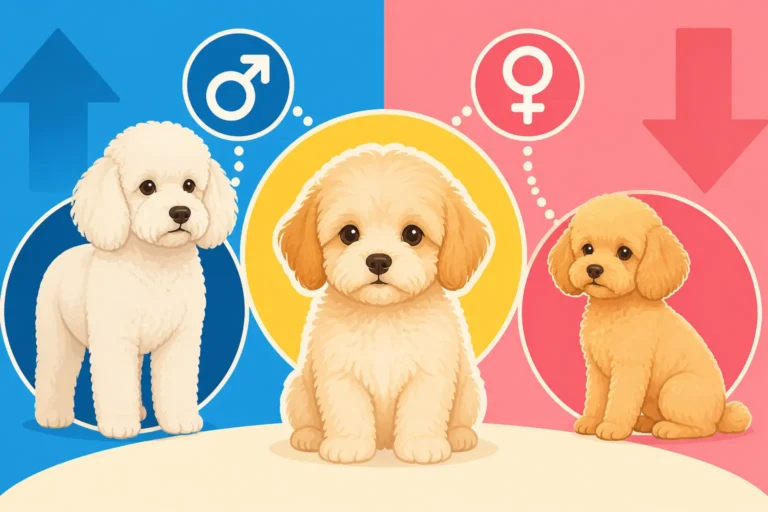
Imagine two puppies from the same litter, let's call them "Daisy" and "Buddy." Daisy might have the dainty, slightly flatter face of her Maltese grandparent, with a softer, wavier coat that's a creamy white. Buddy, however, could have a more pronounced Poodle-like muzzle, with tighter, denser curls and a lighter apricot color. Both are undeniably Maltipoos, but their individual genetic expressions make them unique. Breeders often try to give you an idea of what to expect, but even they can't make guarantees. The genetic combinations are complex, and even traits that seem straightforward can be influenced by multiple genes.
Why Coat Type and Color Are Unpredictable
The coat is probably the most obvious area where Maltipoo littermates can differ dramatically, and it’s often the trait prospective owners focus on the most. You might see a litter with puppies exhibiting everything from a straight, silky coat to a tight, curly one, and various shades in between. This is because the Poodle brings its iconic curl and a huge color palette, while the Maltese contributes its straight, single-layered white coat. These genes don't just blend like paint; they combine in more intricate ways, leading to a variety of outcomes even in siblings.
For instance, one puppy might inherit the curl genes strongly, resulting in The Curly Maltipoo Coat that requires extensive grooming to prevent matting. Another might get a mix of genes, ending up with The Wavy Maltipoo Coat, which is often described as the "classic" Maltipoo look – a good balance of softness and curl. And then, surprisingly, you might find a puppy with The Straight Coated Maltipoo that closely resembles the Maltese parent, despite having a Poodle parent in the mix. These differences mean that the grooming needs for each puppy can vary widely. If you have two littermates, you might be brushing one daily to manage its curls and another every other day for its wavier coat. This is one of those aspects that catches new owners off guard, especially if they’ve bought into the idea that all Maltipoos are uniform in their low-shedding, wavy glory. Why a Maltipoo Comes in Colors a Maltese Never Does is another fascinating aspect; while Maltese are exclusively white, Poodles come in nearly every color imaginable, allowing Maltipoos to inherit shades like apricot, red, black, cream, or even parti-colors. So, don’t be surprised if your litter includes a pure white puppy next to an apricot or a black one!
| Trait | Maltese Influence | Poodle Influence | Possible Littermate Variation (Maltipoo) |
|---|---|---|---|
| Coat Type | Long, straight, silky, single-layered | Dense, curly, coarse, non-shedding | Straight, wavy, curly, varying degrees of density |
| Coat Color | Pure white (occasionally light cream/lemon ear tips) | Wide range: white, black, apricot, red, cream, blue, silver, brown, parti | Any combination of Poodle colors, often fading, including white |
| Facial Shape | Shorter muzzle, rounder head, expressive eyes | Longer muzzle, distinct stop, intelligent expression | Varies from more Maltese-like to more Poodle-like |
| Body Build | Compact, delicate, well-proportioned | More athletic, refined bone structure | Can lean towards either parent, or a balanced mix |
Beyond the Visual: Temperament and Size Differences
It’s not just their looks that can surprise you when comparing Maltipoo littermates. While a shared upbringing will certainly influence them, the underlying genetic contributions from their diverse parentage mean that temperament and even eventual adult size can show significant variation. It's truly a testament to the marvel of genetics that such individuality can emerge from the same biological blueprint.
The Spectrum of Maltipoo Personalities in One Litter
Just like human siblings, Maltipoo littermates can have vastly different personalities. One puppy might be a brave explorer, running headfirst into new situations, while another is a cautious observer, preferring to assess before engaging. This often boils down to which parent breed's characteristics are more dominant in their individual genetic makeup. You might find one puppy that embodies the calm, sweet, and sometimes a bit stubborn nature of the Maltese, while another shows the intelligent, energetic, and eager-to-please traits of the Poodle. What the Maltese Puts Into a Maltipoo's Character can often manifest as a slightly more independent streak, perhaps a touch more vocal, or very affectionate with their chosen person. In contrast, What the Poodle Puts Into a Maltipoo's Character often translates to higher intelligence, a quicker grasp of training commands, and a playful, sometimes mischievous energy.
It's crucial not to generalize. Just because one sibling is a cuddly lap dog doesn't mean the other will be. You might have one that's incredibly confident and outgoing, meeting new people and dogs with gusto, while their sibling is more reserved, taking time to warm up. This is important to consider when choosing a puppy. Don't assume that because you loved the personality of one puppy in the litter, its sibling will be the same. Whether a Maltipoo Puppy's Character Shows at Eight Weeks is a question many ask, and while early signs are there, personality continues to develop. Spend time with each individual puppy, observe their interactions, and really get a feel for their unique disposition. A good breeder can often give you insights into each puppy's emerging personality, but ultimately, it's about connecting with the right fit for your home, regardless of how much they resemble their brothers and sisters.
For example, I once knew a family who adopted two Maltipoo littermates, a brother and sister, hoping for a matched pair. "Sunny" was a total Poodle clone in personality – bouncing off the walls, eager for training, and constantly nudging for a game of fetch. His sister, "Luna," was a Maltese soul through and through – preferring to nap on a warm lap, very particular about who she interacted with, and content to watch the world go by from a safe perch. They were raised in the same loving home, but their core temperaments were worlds apart. It highlights how important it is to treat each puppy as an individual, rather than expecting a carbon copy of their sibling.
Predicting Adult Size: A Breeder's Best Guess
Another significant area of difference among Maltipoo littermates can be their adult size. You might see a range of sizes even from the same parents, which can be perplexing if you're trying to gauge how big your puppy will ultimately get. While breeders can make educated guesses based on the size of the parent dogs (especially the Poodle parent, as Poodles come in distinct size varieties like Toy, Miniature, or Standard), it’s never a guarantee that all puppies in a litter will fall within a narrow weight range. This is especially true if one of the parent breeds has larger ancestors further back in its pedigree that might occasionally resurface.
It's entirely possible to have one sibling mature into a "Teacup" Maltipoo, weighing closer to What a Teacup Maltipoo Weighs Full Grown, perhaps only two to five pounds, while another sibling from the exact same litter might grow to be a "Toy" Maltipoo, reaching What a Toy Maltipoo Weighs Full Grown at five to ten pounds. This can be quite impactful for owners, as a two-pound dog has very different care needs, health risks (like Hypoglycemia and the Teacup Maltipoo Puppy or Whether a Maltipoo Under Four Pounds Survives Anesthesia), and even temperament considerations compared to a ten-pound dog. The "Teacup" label itself isn't a standardized size but rather a marketing term for the smallest pups, which can arise even from parents not specifically bred for extreme tininess.
Factors like genetics from generations back, individual growth spurts, and even minor differences in nutrient absorption during puppyhood can all play a role. A good breeder might offer an estimated adult weight range for each puppy based on its growth curve at a certain age, but even these are projections. For new owners, this means accepting that the size your puppy finishes at might be a surprise, even if you meet all the littermates. Whether a Maltipoo Breeder Can Predict a Maltipoo's Character is often asked, and size prediction is similarly challenging. Focus instead on ensuring the puppy is healthy and has good bone structure, rather than fixating on an exact final weight that may or may not materialize.
Managing Expectations and Appreciating Individuality
When you bring a Maltipoo puppy into your life, whether alone or with a sibling, it's a journey of discovery. The joy often lies in appreciating the unique quirks and qualities that each individual dog possesses, rather than expecting them to fit into a predefined mold. This is particularly true for crossbreeds like Maltipoos, where genetic diversity shines through.
Choosing a Maltipoo Puppy: Look Beyond the "Perfect Match"
When you're looking at a litter of Maltipoo puppies, it's easy to be drawn to the one that's the prettiest or the one that seems to have the "perfect" coat or color you envisioned. However, a crucial piece of advice is to look beyond just aesthetics. While one puppy might be a striking apricot and another a more understated cream, or one has the tight curls you adore and another boasts a wavy flow, these visual differences are just the surface. What truly matters is the puppy's health, its developing temperament, and how well it seems to fit into your lifestyle. Spend time interacting with each puppy. Watch how they play, how they respond to you, and how they interact with their littermates. Do they seem confident or a bit shy? Playful or more reserved? This will tell you far more about the dog you’re bringing home than its exact shade of white.
It's also important to remember that puppies change as they grow. That adorable fuzzy coat can transform significantly during the "coat change" phase around six to twelve months, becoming wavier, curlier, or denser than you initially expected. Their color might fade or darken. Whether an Apricot Maltipoo Fades is a common concern, for instance. So, while you might have an ideal image in your head, try to stay open-minded and fall in love with the puppy for who they are right now, and for the potential of who they will become. Reputable breeders understand these variations and will guide you to a puppy whose individual traits align with what you're looking for in a companion, even if that puppy doesn't perfectly match the image you had in mind for their littermate. When you're considering supplies, whether it's specific food or a particular brush for their evolving coat, a site like Chewy can be a great resource to find exactly what each unique pup needs.
Before making a final decision, take advantage of the opportunity to visit the puppies multiple times if possible. Seeing a Maltipoo Before You Commit is invaluable. Observe them at different times of the day – after a nap, during playtime, and while eating. This helps you get a more holistic view of their individual personalities, rather than just a snapshot of a moment. A puppy that's sleepy during your first visit might be a little firecracker when fully rested, and vice-versa. Understanding that littermates are distinct individuals, not merely copies, is the first step toward a fulfilling relationship with your new Maltipoo.
The Joy of a Unique Companion
Ultimately, the fact that two Maltipoo littermates can look and act differently isn't a drawback – it's part of the charm! Imagine if every dog was exactly the same; how boring would that be? The individuality inherent in a Maltipoo, stemming from its blended heritage, means you’re bringing home a truly one-of-a-kind companion. There will never be another dog exactly like yours, even if they shared a womb with several siblings. This uniqueness fosters a deeper bond, as you learn to understand and appreciate all the little quirks and traits that make your dog special.
Embrace the unexpected! Perhaps one littermate has those gorgeous, soulful Poodle eyes and an uncanny ability to learn new tricks, while the other possesses the sweet, almost regal demeanor of a Maltese and loves nothing more than a quiet cuddle session. These differences create a rich tapestry of personality within your home if you have multiple dogs, or provide endless delight if you have just one. It teaches us, as pet parents, to celebrate diversity and to see each animal as a sentient being with its own preferences, fears, joys, and ways of communicating. Whether they look like twins or barely like relatives, the love and companionship they offer are immeasurable. So, next time you see a litter of Maltipoo puppies, remember that beneath the fluff and wiggles, each one is a miniature marvel of genetic variation, ready to bring their own unique brand of joy into the world.
Disclaimer
This article is for general informational purposes only and does not constitute professional advice. Laws, prices and regulations vary by location and change over time. Consult a qualified professional for guidance on your specific situation.