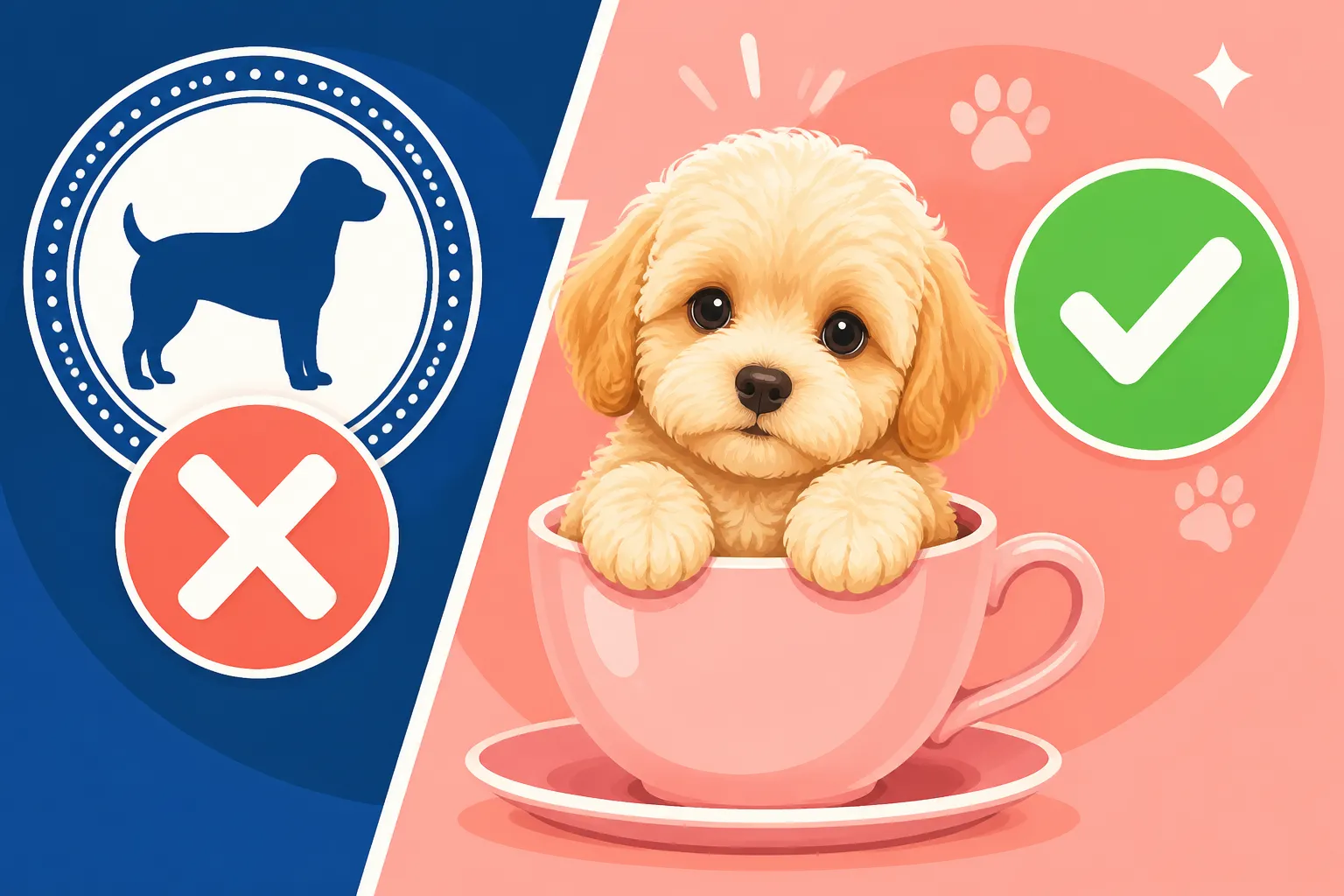
Whether the AKC Acknowledges a Teacup Maltipoo
It's incredibly common for new or aspiring Maltipoo owners to feel a little lost when it comes to understanding breed recognition, especially with terms like "Teacup" floating around. You hear about the AKC all the time for other breeds, and it's natural to wonder if your adorable Maltipoo, especially a tiny one, fits into that official world. This guide is here to clear up the confusion about whether the AKC acknowledges a Teacup Maltipoo and what that really means for you and your beloved companion.
The Official Stance: Why the AKC Doesn't "Acknowledge" a Teacup Maltipoo
Let's cut right to the chase: The American Kennel Club (AKC) does not officially recognize the Maltipoo as a distinct breed, and by extension, it certainly doesn't recognize a "Teacup Maltipoo." This can be a bit of a shock, especially if you've seen Maltipoos advertised with official-looking papers or come across breeders touting specific lineages. The key to understanding this lies in how organizations like the AKC define and categorize dog breeds.
Understanding the American Kennel Club's Definition of a Breed
The AKC is essentially a registry for purebred dogs in the United States. For a dog to be recognized as a distinct breed by the AKC, it must meet very specific criteria. This includes a documented history of consistent breeding, a stable population over many generations, and a well-defined breed standard that outlines precise physical traits, temperament, and health predispositions that are consistently passed down. Think about a Labrador Retriever or a German Shepherd – their appearance, size, and general characteristics are highly predictable because they've been bred selectively for centuries to fit a specific standard.
The process to gain AKC recognition is incredibly rigorous and can take decades, even centuries, for a new breed to achieve. It’s not simply about popularity; it’s about genetic consistency and predictability across the board. The AKC also hosts competitive events like dog shows, and these require adherence to those strict breed standards. Without a universally accepted standard that defines what a "Maltipoo" should look like, act like, and weigh, it simply doesn't fit into the purebred framework.
"Teacup" – A Term, Not a Classification
Adding to the confusion is the term "Teacup." This isn't an official breed size designation by any major kennel club. It's largely a marketing term used by breeders to describe dogs that are exceptionally small, often weighing under five pounds when fully grown. While it paints a cute picture of a tiny dog fitting into a teacup, it doesn't represent a recognized genetic line or a specific, standardized size category within the Maltipoo cross.
You might see "Teacup Maltipoo" advertised, but you won't find it listed in any official breed directory alongside "Toy Poodle" or "Standard Maltese." This distinction is crucial because the term "Teacup" often implies a certain fragility and can sometimes be associated with breeding practices that prioritize extreme smallness over robust health. This doesn't mean all small Maltipoos are unhealthy, but it does highlight the importance of understanding the terminology. If you're looking for more clarity on this, you might find What Teacup Actually Means on a Maltipoo helpful.
The Reality of Designer Dogs and Recognition
Maltipoos fall into the category known as "designer dogs" or "hybrid breeds." They are a cross between two recognized purebred parents: the Maltese and the Poodle. While the individual parent breeds (Maltese and Poodle) are indeed recognized by the AKC, their deliberate offspring, the Maltipoo, is not. This is similar to how a mule is the offspring of a horse and a donkey – both parents are recognized species, but the mule itself is not a distinct species that can reproduce predictably.
The appeal of designer dogs like the Maltipoo comes from combining desirable traits of two different breeds, such as the Maltese's gentle nature and the Poodle's intelligence and low-shedding coat. However, when you cross two breeds, the outcome can be much less predictable than purebred breeding. A litter of Maltipoo puppies can show a wide variety in size, coat type, and temperament, often taking more after one parent than the other, or being a true blend. This variability makes it impossible to establish a single, consistent "Maltipoo breed standard" that the AKC would require for recognition. If you're curious about other registries, you might want to read Whether Any Registry Recognizes a Teacup Maltipoo.
Understanding What "Teacup Maltipoo" Truly Means for Owners
So, if "Teacup Maltipoo" isn't an AKC-recognized term, what does that mean for you as an owner or prospective owner? It boils down to understanding the nature of your dog, the implications of its size, and how to navigate finding a responsible breeder or rescue.
The Components: Maltese and Poodle Recognition
While the Maltipoo itself isn't recognized, it's vital to remember that its parent breeds, the Maltese and the Poodle, are. Both are well-established purebreds with their own AKC standards and health clearances. A responsible Maltipoo breeder will ensure that the parent Maltese and Poodle dogs are themselves AKC registered (or registered with an equivalent recognized kennel club in their country) and have undergone appropriate health testing for conditions common to their respective breeds.
For instance, the Maltese is known for certain dental issues and patellar luxation, while Poodles can be prone to hip dysplasia and eye conditions. A good breeder will screen for these to minimize the chances of passing them on. Knowing that The Maltese and the Poodle Behind Every Maltipoo are recognized breeds helps you understand the genetic background and potential health considerations for your Maltipoo, even if the hybrid itself isn't.
The Marketing Behind the "Teacup" Label
The term "Teacup" is incredibly effective from a marketing standpoint. It conjures images of delicate, adorable puppies that can fit into a purse, appealing to a desire for a very small, portable companion. However, it's crucial to approach this term with a healthy dose of skepticism. Where the Teacup Maltipoo Label Came From is often rooted in popular culture and commercial demand rather than sound breeding practices.
Often, "Teacup" refers to the smallest puppies in a litter, which may sometimes be runts. While some tiny dogs can be perfectly healthy, breeding specifically for extreme smallness can inadvertently lead to a host of health issues. These can include fragile bones, difficulty regulating body temperature, and a higher risk of hypoglycemia (low blood sugar), especially in puppies. If you're considering a very small Maltipoo, be prepared for potentially higher veterinary bills and specific care needs. You can learn more about the costs in What Breeding Smaller Costs a Maltipoo.
Potential Health Implications of Extremely Small Size
It's not just about the cute factor; the "Teacup" size can carry significant health implications that every prospective owner needs to be aware of. Dogs weighing less than five pounds are inherently more delicate than their slightly larger counterparts. Their bones are more fragile, making them susceptible to injuries from falls, even from a sofa. Their tiny digestive systems mean they need to eat more frequently to maintain blood sugar levels, and Whether a Teacup Maltipoo Ever Stops Being at Risk for conditions like hypoglycemia is a serious concern.
Furthermore, these tiny dogs can have difficulty regulating their body temperature, making them prone to getting chilled easily. Anesthesia for routine procedures like spaying or neutering can also carry higher risks for extremely small dogs, requiring specialized veterinary care and monitoring. It's a sobering thought, but Whether a Teacup Maltipoo Lives as Long as a standard-sized Maltipoo is a valid question that requires careful consideration. Prioritizing extreme smallness above all else can be a risky endeavor. You'll want to discuss these concerns with your vet and potential breeder, ensuring they understand the unique needs of very small dogs.
| Term/Designation | AKC Recognition | Parent Breed Status | Description | Common Adult Weight Range (Approx.) |
|---|---|---|---|---|
| Maltese | Yes | Purebred | Recognized as a distinct breed | 4-7 pounds |
| Poodle (Toy) | Yes | Purebred | Recognized as a distinct breed | Up to 10 pounds |
| Maltipoo | No | Hybrid (Designer Dog) | Cross between Maltese and Poodle | 5-20 pounds |
| "Teacup" Maltipoo | No | Marketing Term | Term for exceptionally small Maltipoos | Under 5 pounds |
| Toy Maltipoo | No | Marketing Term | Term for small to medium Maltipoos | 5-10 pounds |
| Miniature Maltipoo | No | Marketing Term | Term for larger Maltipoos | 10-20 pounds |
Navigating the World Without AKC Recognition for Your Maltipoo
The lack of AKC recognition for Maltipoos, particularly the "Teacup" variety, doesn't diminish their wonderful qualities as companions. It simply means you, as an owner, need to be more informed and proactive in certain areas. It changes how you might think about breeding, showing, and especially how you choose your puppy.
What Lack of Recognition Means for Breeding and Showing
Because the Maltipoo isn't an AKC-recognized breed, there's no official AKC "pedigree" for a Maltipoo. Any papers you receive with your Maltipoo puppy from organizations claiming to "register" designer breeds are typically from smaller, private registries that do not hold the same authority or uphold the same strict standards as the AKC. These papers often have little to no real value in terms of verifying health or lineage in the way an AKC pedigree does for a purebred.
This also means that Maltipoos cannot compete in official AKC conformation dog shows, which are specifically for purebreds that meet a breed standard. However, this doesn't mean your Maltipoo can't participate in other fun and challenging activities! Many obedience, rally, agility, and therapy dog programs welcome mixed-breed dogs, often through organizations like the AKC Canine Partners program. So, while you won't be showing off your Maltipoo's perfect "teacup" proportions in the main ring, you absolutely can engage in enriching activities together. For those interested, exploring Whether a Maltipoo Can Enter AKC Events at All might provide more context.
Finding Reputable Breeders When There's No "Official" Standard
Without an AKC breed standard to adhere to, finding a truly reputable Maltipoo breeder requires extra diligence. Since there's no governing body like the AKC setting specific health testing requirements or breeding guidelines for Maltipoos, it falls to the individual breeder to maintain high standards. Look for breeders who:
- Prioritize Health Testing: They should be able to provide documentation of health clearances for both parent dogs (Maltese and Poodle) for conditions prevalent in those breeds. This includes OFA certifications for patellas (kneecaps), eye certifications from a veterinary ophthalmologist, and potentially genetic testing for conditions like progressive retinal atrophy (PRA) that Poodles can carry.
- Are Transparent: They should welcome questions, allow you to meet the puppy's mother (and ideally the father), and show you where the puppies are raised. They should also be upfront about potential health risks associated with the "Teacup" size.
- Focus on Temperament: A good breeder will emphasize temperament and socialization, not just size or color. They should be raising puppies in a home environment with early exposure to sights, sounds, and gentle handling.
- Offer a Health Guarantee: While no guarantee is foolproof, a reputable breeder will typically offer a limited health guarantee against certain genetic conditions, showing confidence in their breeding practices.
- Educate New Owners: They should be a resource for you, offering advice on feeding, grooming, and training, and be available for support even after you take your puppy home.
Avoid breeders who seem overly focused on the "Teacup" label, are vague about health testing, or won't let you visit their facility. Always remember that a higher price for a "Teacup" Maltipoo doesn't necessarily equate to better health or breeding practices; often, it simply reflects market demand. The Registries That Will Take a Maltipoo may vary, but none will have the comprehensive oversight of the AKC.
Focus on Health and Temperament Over Paperwork
Ultimately, when you choose a Maltipoo, especially a "Teacup" one, your focus should always be on the individual dog's health and temperament, not on non-existent AKC papers or the allure of a marketing term. A healthy, well-adjusted Maltipoo, regardless of its exact size, will bring immense joy and companionship to your life.
This means asking detailed questions, doing your research, and being prepared for the unique care needs that can come with a very small dog. Investing in quality food (Chewy offers a great selection of small-breed specific formulas and treats), regular veterinary care, and appropriate supplies like warm clothing and sturdy harnesses (again, Chewy can be a fantastic resource) will be far more beneficial than any "Teacup" designation. Prioritize a dog that is lively, alert, and appears robust for its size. Embrace the fact that your Maltipoo is a unique individual, a delightful blend of two wonderful breeds, and that its value as a family member far outweighs any official recognition status.
Disclaimer:
This article is for general informational purposes only and does not constitute professional advice. Laws, prices and regulations vary by location and change over time. Consult a qualified professional for guidance on your specific situation.