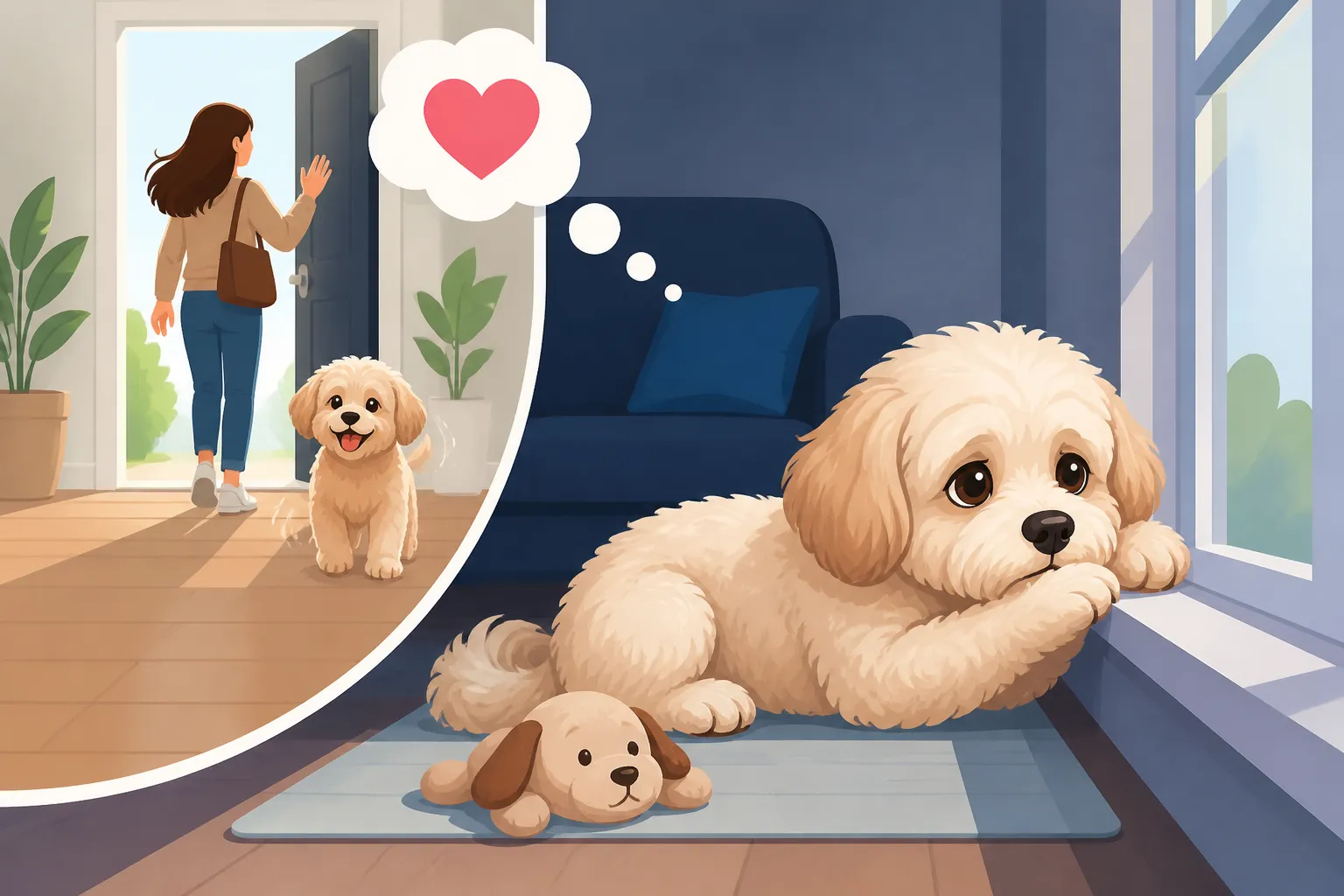
Whether a Maltipoo Copes With an Empty House
A Maltipoo may spend the workday watching the front door, barking at hallway noises, or having accidents even after house-training. Some settle comfortably alone; others find separation difficult because they’re people-focused and accustomed to company. This guide explains what a Maltipoo can realistically manage, how to build alone time gradually, and when distress calls for professional help.
Can a Maltipoo cope with being home alone
It depends on the individual dog
Maltipoos are a Maltese and Poodle mix, and many are affectionate, social dogs who like being close to their people. That doesn’t mean every Maltipoo will develop separation anxiety, or that none can learn to relax alone. Age, temperament, early experiences, daily routine, and the way alone time is introduced all matter.
A Maltipoo who naps while you take a shower may still struggle when you leave for several hours. Likewise, a dog who barks for a few minutes after you walk out may settle soon afterward. The important question isn’t simply whether your dog makes noise; it’s whether they can calm down and rest during your absence.
Some dogs need more companionship than their owners expected. If you’re still deciding whether this breed suits your schedule, Whether a Maltipoo Needs Company Most of the Day can help you think through the everyday commitment. It’s also worth considering whether a Maltipoo fits the rest of your household routine, not just your plans for a typical workday.
Puppies and adult dogs have different needs
A young puppy usually needs more frequent toilet breaks, meals, supervision, and reassurance than an adult dog. A small Maltipoo puppy may not be physically ready to hold its bladder through a long absence, even if it seems calm when left in a pen. Puppies also need gradual practice learning that a person leaving is ordinary and temporary.
An adult Maltipoo may be able to relax for longer stretches, especially if alone time has been built up over time. But age alone doesn’t guarantee comfort. An adult adopted from a busy home, foster setting, or rescue may have little experience being by themselves. A move, a change in work schedule, or the loss of a household member can also unsettle a dog who previously seemed fine.
Try to assess your own dog rather than relying on a breed-wide rule. A camera can show whether your Maltipoo settles after you leave or stays distressed. If you’re raising a puppy, the practical routines in The First Days With a Maltipoo Puppy may help you set up a gentler start.
How to tell whether your Maltipoo is distressed
Look for patterns, not one isolated moment
A Maltipoo who barks briefly when you leave and then curls up on the sofa may be reacting to the departure without experiencing prolonged distress. More concerning signs include persistent barking or howling, frantic pacing, heavy panting when the room isn’t hot, drooling, trembling, repeated attempts to escape, or destructive behavior focused around doors and windows.
Toilet accidents can also happen when a dog is distressed, but they don’t prove separation anxiety on their own. A puppy may simply need more frequent breaks; an adult dog may have a medical issue or a change in routine. If accidents are new, frequent, or accompanied by discomfort, speak with your veterinarian rather than assuming the cause is behavioral.
A useful first step is to record what happens after you leave. Note when the behavior begins, how long it lasts, and whether your dog eventually rests. This can prevent a common frustration: coming home to a chewed cushion and concluding that your Maltipoo was “being naughty.” Anxiety, boredom, unmet needs, and ordinary puppy exploration call for different responses.
| What you notice | What it may suggest | A sensible next step |
|---|---|---|
| Brief barking, then resting | A short reaction to your departure | Keep departures low-key and monitor whether settling continues |
| Repeated pacing, howling, or panting | Possible ongoing distress | Record the behavior and discuss it with a veterinarian or qualified behavior professional |
| Chewing a toy or resting calmly | The dog may be coping during that period | Continue a consistent routine and build absences gradually |
| Accidents despite recent toilet breaks | Could have several causes, including stress or a health problem | Review the schedule and contact your veterinarian if the change persists |
| Scratching at doors or trying to escape | Risk of injury as well as distress | Avoid leaving the dog in an unsafe setup and seek professional guidance |
Separate boredom, toilet needs, and separation-related distress
A dog who raids the laundry basket after a long, inactive day may need more activity and appropriate things to do. A puppy who soils the floor after several hours may need a more realistic toilet plan. A dog who becomes upset as soon as you prepare to leave, then remains unsettled throughout the absence, may be showing a different pattern.
These issues can overlap. A bored, under-exercised dog may also dislike being alone; a dog with separation-related distress can damage objects while trying to cope. Don’t punish your Maltipoo for what you find when you return. Your dog won’t connect a scolding after the fact with the earlier behavior, and punishment can make departures and reunions more worrying.
If you’re unsure whether the behavior is anxiety or something else, share your notes and recordings with your veterinarian. A professional can help rule out medical causes and recommend a behavior plan that matches your dog’s situation. For related context on the breed’s temperament, see What Maltipoo Owners Say They Were Not Told.
How to teach a Maltipoo to spend time alone
Start with absences small enough to succeed
Begin when your Maltipoo is calm, not already frantic or overtired. Practice ordinary separation within the home first: step behind a baby gate, go into another room briefly, or sit out of sight while your dog relaxes with a safe activity. Return before your dog becomes upset, then repeat in short, manageable sessions.
Once your Maltipoo is comfortable with those small steps, practice leaving the home for a very short time. Increase the duration gradually and vary the routine so every departure doesn’t become a dramatic event. If your dog starts barking continuously, scratching, or pacing, the practice may have moved too quickly. Go back to a shorter absence that your dog can handle.
The goal is not to make your Maltipoo “cry it out.” Repeatedly leaving a distressed dog to endure a long absence can make the experience harder, not teach calm independence. In the early stages, you may need help from a friend, family member, sitter, or dog walker to keep absences within your dog’s current comfort level.
Build a steady pre-departure routine
Before leaving, offer an appropriate toilet break and a little age-appropriate activity. A relaxed sniffing walk or a gentle play session can help, but avoid winding your dog up with intense play right before you go. Keep departures and returns calm and ordinary. Long, emotional goodbyes may make the exit feel like a major event.
Set up a safe, comfortable space where your Maltipoo can rest. Some dogs like a crate when they’ve been introduced to it positively; others do better in a pen or a dog-proofed room. A crate isn’t automatically the right answer for every dog, especially one that panics when confined. Watch your dog’s response and don’t use confinement to manage behavior that may be driven by anxiety.
Comfort items and enrichment can be useful, but they’re not a cure for serious distress. A food puzzle or a familiar chew may occupy a dog who is already able to settle. If you’re choosing an enrichment toy through a retailer such as Chewy, check that it’s suitable for your dog’s size, chewing style, and supervision needs. Start by offering it while you’re home so you can see how your Maltipoo uses it.
Make the plan fit your dog’s age and schedule
For a puppy, arrange supervision and toilet opportunities appropriate to their development rather than expecting them to manage a full workday alone. A midday visit can break up the day, but a quick visit may not be enough for a puppy who needs more frequent care or is showing distress. Consider your dog’s feeding schedule too; Training a Maltipoo Around Four Meals a Day offers related guidance for owners managing frequent puppy meals.
For an adult dog, think about how long they are actually alone, not just how long you are at work. Commute time, errands, and delays can turn an apparently manageable absence into a much longer one. A dog walker or sitter may be helpful for companionship, a toilet break, or a chance to stretch. If you use a camera or arrange a visit, pay attention to whether your Maltipoo rests afterward rather than assuming that any company automatically solves the problem.
Chewy may be one place owners look for food puzzles, gates, or other basic supplies, but no product can replace a gradual training plan or a suitable care arrangement. Keep purchases simple: choose safe, easy-to-clean items your dog has already tested while you’re present. For more on the broader daily needs that shape a Maltipoo’s routine, see The Daily Routine a Maltipoo Needs.
When to get extra help
Ask your veterinarian about persistent or severe signs
Contact your veterinarian if your Maltipoo’s behavior changes suddenly, if accidents begin after a period of reliable house-training, or if you notice signs such as repeated vomiting, loss of appetite, injury, or extreme agitation. A health issue can affect behavior, and a veterinarian can help decide whether medical evaluation is needed before treating the problem as separation-related.
Seek help promptly if your dog is injuring themselves trying to escape, chewing through barriers, or remaining distressed for much of your absence. A veterinarian may refer you to a qualified behavior professional. In some cases, a structured behavior plan and medical support may both be appropriate. The right approach depends on the dog, so avoid giving human medication or trying calming products without veterinary advice.
Make temporary arrangements while you work on the issue
Training progress is easier when a dog isn’t repeatedly pushed into an absence they can’t cope with. If possible, ask a trusted person to stay with your Maltipoo, arrange a sitter or walker, or adjust your schedule while you begin practice. Daycare suits some dogs but can be tiring or overwhelming for others, so judge it by your Maltipoo’s comfort rather than treating it as a universal fix.
If your dog is comfortable with a familiar person but not alone, companionship may be a practical short-term support. It still helps to keep building independence in small, positive steps. A Maltipoo can learn to settle, but that learning may take time, and there’s no shame in using help while you work through it.
There’s no single number of hours that every Maltipoo can manage happily. A calm adult with a history of comfortable alone time may do well with a different routine than a young puppy or a dog who panics at departure cues. Watch your individual dog, adjust the schedule honestly, and get help early if distress is persistent.
Disclaimer
This article is for general informational purposes only and does not constitute professional advice. Laws, prices and regulations vary by location and change over time. Consult a qualified professional for guidance on your specific situation.