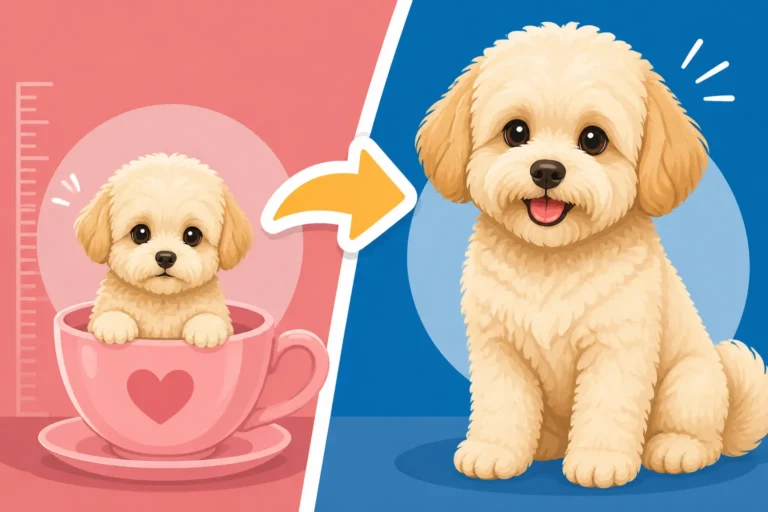
Whether Any Registry Recognizes a Teacup Maltipoo
It can be incredibly confusing and even heartbreaking when you’re searching for your perfect Maltipoo, only to discover that the adorable "Teacup Maltipoo" you’ve fallen in love with online isn't actually a recognized term in the dog world. Many prospective owners feel misled, wondering if they're buying into a marketing gimmick or if there are real medical differences. This guide will cut through the confusion, explaining why the "Teacup Maltipoo" isn't officially recognized by any major kennel club or registry and what that truly means for you and your future furry family member.
The Allure and Ambiguity of the "Teacup" Label
There's something undeniably captivating about tiny dogs. Their small stature evokes a sense of preciousness and vulnerability that many people find irresistible. When breeders use terms like "Teacup Maltipoo," they tap into this desire for something exceedingly small and often, by extension, seen as more unique or exclusive. But while the charm is real, the official status behind the "teacup" moniker is not.
Why "Teacup" Captivates Potential Owners
Let's be honest, those photos of Maltipoo puppies nestled in teacups or fitting into the palm of an adult's hand are incredibly effective. They create an immediate emotional connection and a vision of a tiny companion that can go anywhere and fit into any lifestyle. For many, a "teacup" size implies a dog that is perpetually a puppy, retaining that youthful innocence and compact portability. This appeal is particularly strong for individuals living in urban apartments or those who travel frequently and desire a discreet, easily managed pet. The idea of a dog small enough to carry in a purse or a specialized pet sling can seem incredibly convenient, leading many to specifically seek out these ultra-small variations. It's a powerful marketing tool that speaks to our desires for novelty, cuteness, and convenience.
The Marketing vs. Reality of Ultra-Small Sizes
Here's where the rubber meets the road: the term "teacup" for any dog breed, including Maltipoos, is a marketing invention, not a recognized size classification. There's no veterinary standard or breed club definition for a "teacup" Maltipoo. It's simply a descriptive word breeders use to indicate a dog that is expected to be on the smaller end of the spectrum, typically under five pounds. However, this lack of standardization means there's no agreed-upon weight range, height, or physical characteristics that consistently define a "teacup." One breeder's "teacup" might be another's "toy," leading to significant variations and potential disappointment for buyers. Without official recognition, there are no guidelines or regulations regarding the health or breeding practices specifically for "teacup" dogs, which can open the door to less scrupulous practices aimed solely at achieving extreme smallness, often at the expense of the puppy's long-term health. It's important to understand What Teacup Actually Means on a Maltipoo beyond the adorable images.
Understanding Official Breed Recognition and Hybrid Status
To truly grasp why "Teacup Maltipoo" isn't an official classification, we need to talk about how purebred dogs are recognized and how hybrid breeds fit into that structure. The Maltipoo, as wonderful as they are, exist in a different category than, say, a purebred Poodle or Maltese.
The Lack of Recognition for Designer Dogs
The Maltipoo is a hybrid, or "designer dog," a cross between a Maltese and a Poodle. While incredibly popular and cherished companions, they are not recognized as a distinct breed by major kennel clubs like the American Kennel Club (AKC) in the United States or The Kennel Club in the UK. These organizations have rigorous standards for breed recognition, requiring consistent physical traits, predictable temperaments over many generations, and a comprehensive breed standard that outlines everything from ear set to tail carriage. Since Maltipoos are a crossbreed, their traits can vary significantly, even within the same litter, depending on which parent's genetics are more dominant. This inherent variability means they don't meet the stringent criteria for purebred status. Therefore, if the Maltipoo itself isn't a recognized breed, it stands to reason that any size variant, like "teacup," also cannot be officially recognized. This is why Whether the Maltipoo Counts as a Breed Yet is a common question, and the answer is generally no, not by major registries.
Why Breed Clubs Don't Register Maltipoos by Size
Major breed clubs focus on preserving the integrity and health of established purebred lines. Their registration processes are tied to parentage, genetic health clearances, and adherence to specific breed standards. For example, a purebred Poodle might be registered as "Toy," "Miniature," or "Standard," but these are established size divisions with specific weight and height parameters, backed by generations of consistent breeding.
Maltipoo sizes, on the other hand, are often determined by the size of the Poodle parent (Toy or Miniature) and the Maltese parent, which is typically a smaller breed. The Three Maltipoo Sizes and Who Decides Them are usually described as Teacup (unofficial), Toy, and Miniature, with breeders deciding these categories based on their estimation of adult weight. When a breeder advertises a "Teacup Maltipoo," they are making an educated guess, or sometimes simply a marketing claim, about the puppy's eventual adult weight. There's no official body to verify these claims or ensure that a puppy sold as "teacup" will indeed remain within that tiny, unofficial weight bracket. Without a formal breed standard for Maltipoos, and certainly not for "teacup" Maltipoos, there is simply no framework for official size-based registration in the traditional sense.
Deconstructing Maltipoo Sizes: What's Real and What's Not
Navigating the various size descriptions for Maltipoos can feel like trying to solve a puzzle with missing pieces. While "teacup" is a popular term, it's crucial to understand the more widely accepted (though still informal) size categories that breeders and owners typically refer to.
The Unofficial "Teacup" Weight Range
When breeders refer to a "Teacup Maltipoo," they are generally describing a dog that is expected to weigh under 5 pounds as an adult. Some might even push this lower, aiming for dogs in the 2-4 pound range. It’s important to remember that this is an expected weight, and puppies can, and often do, surprise their owners by growing larger than anticipated. Factors like genetics, nutrition, and individual growth rates all play a role. A puppy that seems tiny at eight weeks might have a growth spurt later on. What a Teacup Maltipoo Weighs Full Grown is a common question, and the answer is often a hopeful estimation rather than a guarantee. Breeders sometimes select the smallest puppies from a litter, or even breed runts together, in an effort to achieve these ultra-small sizes. While the intention might be to cater to demand, this practice can sometimes inadvertently perpetuate health issues associated with extreme smallness. It's a delicate balance to strike, and ethical breeders will always prioritize health over size.
The More Common Toy and Miniature Designations
Beyond the "teacup" label, Maltipoos are more commonly categorized into "Toy" and "Miniature" sizes, reflecting the size variations of their Poodle parent.
-
Toy Maltipoo: These typically weigh between 5 and 10 pounds as adults. This is a very popular size for Maltipoos, offering a compact companion that is still robust enough for daily activities without being excessively fragile. They're often seen as a good balance for families or individuals who want a smaller dog but are concerned about the extreme delicacy of a truly tiny pet. The Maltese parent's average weight often falls within this range, and pairing them with a Toy Poodle often produces offspring in this size bracket.
-
Miniature Maltipoo: These are larger, generally weighing between 10 and 20 pounds. This size usually results from breeding a Maltese with a Miniature Poodle. While still considered small dogs, Miniature Maltipoos have a bit more substance and might be a better fit for active families or those with slightly older children, as they can often handle a bit more rough-and-tumble play.
It's vital for prospective owners to ask a breeder about the projected adult weight and size of both parents, as this is the best indicator of what a puppy might grow into. A responsible breeder will be transparent about these factors and discuss how they determine their sizing classifications, without making unrealistic "teacup" guarantees. For instance, reputable pet suppliers like Chewy offer products specifically designed for "Toy" or "Small" breed dogs, rather than using the unofficial "teacup" designation, reflecting a more practical approach to canine sizing.
Here's a quick overview of how these unofficial size terms generally compare:
| Unofficial Size Term | Typical Adult Weight Range (Approximate) | Poodle Parent Size Often Used | Common Perceptions & Risks |
|---|---|---|---|
| Teacup | Under 5 lbs (often 2-4 lbs) | Toy Poodle (small end), sometimes "runts" | Highly fragile, increased health risks (hypoglycemia, bone fractures), marketing-driven, not recognized. |
| Toy | 5 – 10 lbs | Toy Poodle | Common, good balance of small size and robustness, generally fewer risks than "teacup" if well-bred. |
| Miniature | 10 – 20 lbs | Miniature Poodle | Larger end of Maltipoo spectrum, sturdy, active, less fragile than smaller counterparts. |
This table helps illustrate the significant difference between a truly tiny "teacup" and the more common and generally healthier Toy and Miniature sizes.
The Serious Implications of Pursuing a "Teacup" Maltipoo
While the idea of a tiny, portable companion is charming, it's essential to understand that pursuing a "Teacup Maltipoo" specifically for its extreme smallness can come with a host of serious implications. These aren't just minor inconveniences; they can impact a dog's health, longevity, and your financial well-being.
Health Risks Associated with Extreme Smallness
When dogs are bred down to incredibly tiny sizes, it's not always done with their long-term health in mind. Many "teacup" Maltipoos are, in essence, the smallest members of a litter, sometimes even runts, intentionally bred for their diminutive stature. This can lead to a range of inherited and developmental health issues. One of the most significant concerns, especially in puppies, is Hypoglycemia and the Teacup Maltipoo Puppy. Their tiny bodies struggle to regulate blood sugar, and a missed meal or a stressful event can lead to a dangerous sugar crash. This is why understanding The Weight at Which a Maltipoo Puppy Is at Risk is paramount. Other common health issues for extremely small dogs include:
- Fragile Bones: Their delicate skeletal structure makes them highly susceptible to fractures from even minor falls or impacts. Jumping off a sofa can lead to a broken leg.
- Open Fontanels: Some "teacup" puppies may have an open fontanel (a soft spot on the skull), similar to a baby, which may never fully close, leaving their brain unprotected.
- Organ Fragility: Their internal organs are also proportionally smaller and can be more prone to various conditions, such as liver shunts, which are unfortunately not uncommon in the Maltese line. The Liver Shunt a Maltipoo Can Inherit From the Maltese is a significant concern for all Maltipoo owners, and can be more complicated in smaller dogs.
- Dental Crowding: Their tiny mouths often struggle to accommodate all 42 adult teeth, leading to severe dental crowding, early tooth loss, and significant dental disease.
- Temperature Regulation Issues: Tiny dogs have less body mass to retain heat and can get cold very easily, requiring extra care in cooler environments. Whether a Small Maltipoo Regulates Its Temperature is a question many owners face daily.
The aspiration for extreme smallness, unfortunately, often translates into a higher likelihood of significant veterinary bills and ongoing care needs. Whether Teacup Means Anything on a Maltipoo Medically is a question that, sadly, often points to a higher medical burden.
Navigating Breeder Claims and Guarantees
Because "teacup" is not an official size, there are no regulations governing its use by breeders. This means you need to be extra vigilant. A breeder might market a puppy as "teacup" based on parental size or the puppy's current weight, but without official standards, these are simply projections. It's difficult for any breeder to definitively Whether a Maltipoo Breeder Can Guarantee a Maltipoo's Weight, especially at a young age.
When looking for a Maltipoo, especially one marketed as "teacup," it's crucial to:
- Ask for Parent Information: Request to see both parent dogs, or at least detailed photos and information about their size, weight, and temperament.
- Seek Health Clearances: Inquire about health testing on the parent dogs, particularly for conditions common to Maltese and Poodles, such as patellar luxation, eye conditions, and liver shunts. A responsible breeder will provide this without hesitation.
- Understand Guarantees: Carefully read any health guarantee or contract. What a Maltipoo Health Guarantee Should Say is vital, as a good one will cover genetic conditions and be transparent about what happens if a puppy doesn't meet expected size or develops issues. Be wary of guarantees that are vague or overly restrictive.
- Visit in Person: If possible, visit the breeder's facility. Observe the puppies' living conditions, their energy levels, and their overall health. Are they clean, active, and well-socialized? Avoid breeders who refuse in-person visits or push for quick sales without transparency.
Remember, a higher price tag for a "teacup" doesn't necessarily mean better health or ethical breeding practices. Often, What You Pay for a Smaller Maltipoo and What It Costs Later can be a stark lesson in hidden medical expenses.
Long-Term Care and Financial Considerations
The decision to bring any dog into your life comes with financial responsibilities, but a "teacup" Maltipoo can often lead to significantly higher long-term costs. Due to their increased fragility and propensity for certain health issues, veterinary care can become a more frequent and expensive necessity. Emergency visits for hypoglycemia, orthopedic surgeries for patellar luxation or broken bones, specialized dental cleanings, and ongoing medication can quickly add up.
Many everyday items also need to be specifically chosen for a tiny dog. For example, a standard dog bowl might be too deep, or a leash too heavy. Pet supply retailers like Chewy offer a wide range of "extra small" or "puppy" specific items, from harnesses to toys, that are suitable for their delicate frames. However, the sheer cost of preventative care, coupled with potential emergency treatments, means that owners of "teacup" Maltipoos should be prepared for a substantial financial commitment over their dog's lifetime. It really does put a spotlight on Whether the Smallest Maltipoos Should Ever Be Bred, considering the potential health and financial burdens on both the dog and the owner.
What Registries Do Exist for Maltipoos?
Since major kennel clubs don't recognize Maltipoos as a distinct breed, much less a "teacup" size, prospective owners might wonder if there's any form of official documentation or recognition available. The answer is yes, but it comes from different types of organizations than traditional purebred registries.
The Role of Hybrid Registries and Pedigree Databases
While the AKC won't register a Maltipoo, there are several organizations dedicated to tracking and documenting hybrid or "designer" dogs. These are often referred to as hybrid registries or designer dog clubs. They don't typically enforce breed standards in the same way purebred clubs do, but they can provide a form of "paperwork" that documents a Maltipoo's parentage.
Examples of such registries might include:
- Designer Dogs Kennel Club (DDKC): This organization registers hybrid breeds and issues certificates of authenticity.
- American Canine Hybrid Club (ACHC): The ACHC aims to track and register designer dogs, often requiring information about the purebred parents.
- International Designer Canine Registry (IDCR): Another common registry for designer breeds, providing registration certificates and often a way to trace a dog's lineage back to its purebred parents.
These registries serve a different purpose. They primarily act as databases, tracking the lineage of hybrid dogs and sometimes providing basic certification. They typically require documentation of the purebred parents (e.g., AKC registration for the Maltese and Poodle parents) to issue papers for the Maltipoo offspring. However, it's critical to understand that inclusion in one of these hybrid registries does not equate to being a recognized breed, nor does it validate the "teacup" size designation. It simply confirms that the dog is indeed a cross between a Maltese and a Poodle, and provides a lineage record.
What Documentation You Can (and Should) Expect
When acquiring a Maltipoo, particularly if it's marketed with any size descriptor, you should always expect certain documentation from a responsible breeder. While "teacup" won't appear on any official papers from a breed club, here's what you should receive:
- Proof of Parentage: This is paramount. You should receive copies of the purebred registration papers for both the Maltese and Poodle parents (e.g., AKC papers). This is the only way to verify that your Maltipoo is indeed a first-generation (F1) cross or a subsequent generation (e.g., F1b, F2).
- Health Clearances for Parents: This includes official reports from veterinary specialists for genetic health screenings, such as OFA (Orthopedic Foundation for Animals) certifications for patellas, or CERF (Canine Eye Registry Foundation) results for eye health. These clearances significantly reduce the risk of your puppy inheriting certain common health conditions. Many reputable breeders will also provide documentation for DNA testing for diseases specific to the Maltese and Poodle breeds.
- Veterinary Records: Your puppy should come with a complete health record, including dates of vaccinations, deworming, and a recent vet check-up. This document confirms the puppy's initial health status before coming home.
- Sales Contract and Health Guarantee: This legally binding document should outline the terms of the sale, the breeder's responsibilities, and the health guarantee provided. It should specify the duration of the guarantee for genetic conditions and the procedures to follow if an issue arises.
- Microchip Information: Many reputable breeders will microchip puppies before they go to their new homes, and you should receive documentation to transfer ownership. Companies like Chewy even offer services that can help you register and manage your pet's microchip.
Even without traditional breed registration, this comprehensive documentation from a breeder demonstrates a commitment to health, transparency, and ethical breeding practices. It's your best defense against unscrupulous breeders and provides valuable information about your Maltipoo's background and potential future health needs.
Disclaimer
This article is for general informational purposes only and does not constitute professional advice. Laws, prices and regulations vary by location and change over time. Consult a qualified professional for guidance on your specific situation.