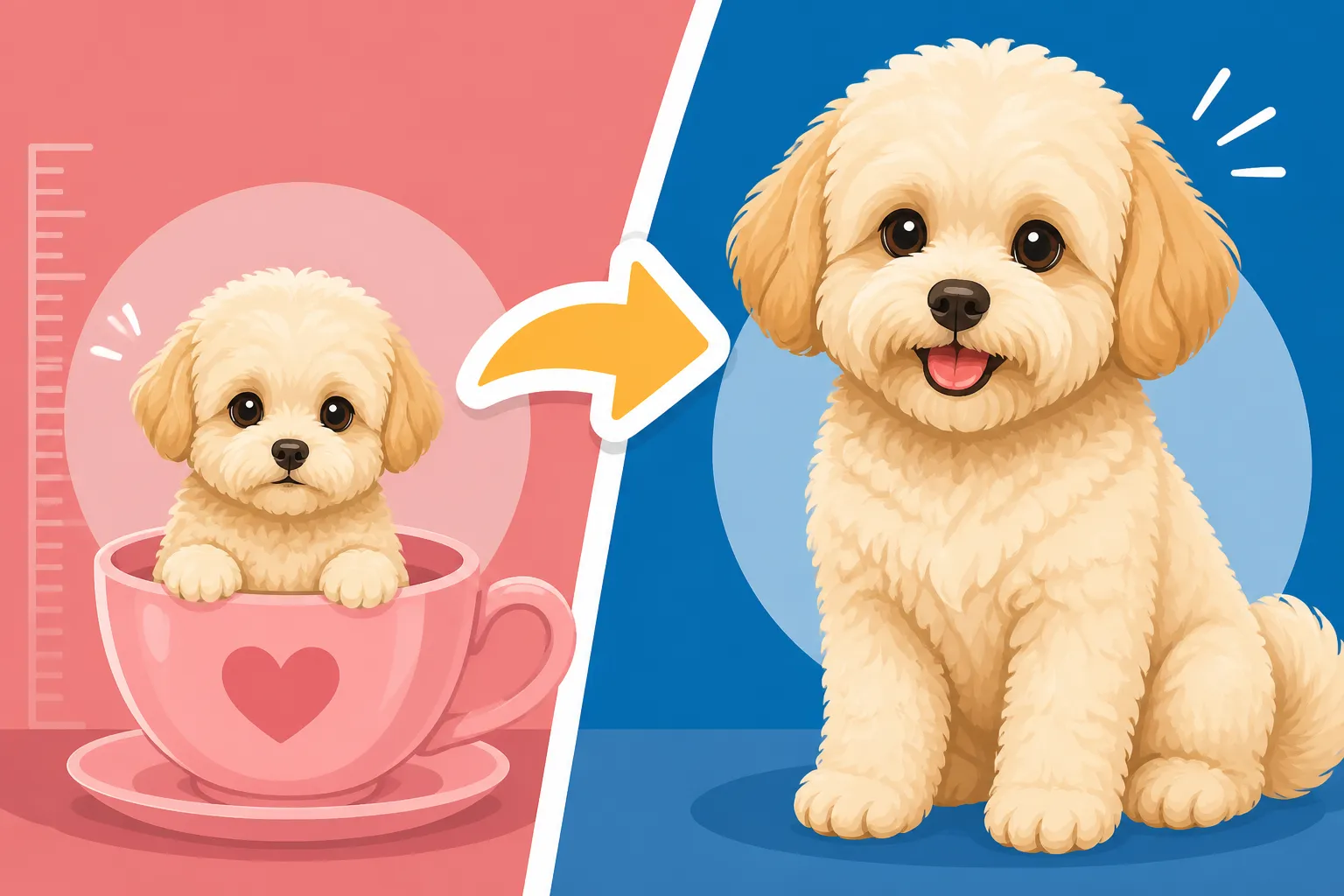
Whether a Maltipoo Outgrows the Teacup Label
It’s incredibly disheartening when you bring home a tiny Maltipoo puppy, convinced you’ve got a little teacup companion, only to watch them sprout far beyond the size you were led to expect. This common frustration often stems from misleading labels and a lack of clear information. This guide aims to clear up the confusion around the "teacup" designation and help you understand the realities of Maltipoo growth, so you can set realistic expectations for your furry family member.
The Elusive "Teacup" Label: What Does It Really Signify for a Maltipoo?
The term "teacup" has a magical ring to it, doesn't it? It conjures images of tiny, delicate pups that can literally fit into a teacup. But the reality, especially when it comes to Maltipoos, is often far less charming and can lead to significant disappointment or even health concerns. Many new owners, excited by the prospect of such a miniature companion, fall prey to the marketing hype without fully understanding what they're truly getting.
The Marketing Myth Versus Reality
Let's be blunt: "Teacup" is not an officially recognized size category for Maltipoos by any major kennel club or veterinary association. It's a marketing term, pure and simple, often used by breeders to describe puppies that are expected to mature at the very lowest end of the size spectrum. Unfortunately, this label can be slapped on any small puppy, regardless of its true genetic potential. It’s a way to command a higher price tag, tapping into the desire for the smallest, most adorable dog imaginable. There is no formal registry that acknowledges a "Teacup Maltipoo" as a distinct classification, unlike the clear distinctions between Toy, Miniature, or Standard Poodles, for instance. This lack of standardization means that one breeder's "teacup" might be another's small "toy" size, and the only consistency is the higher price tag.
The frustration this causes for new owners is entirely valid. You've invested time, emotion, and significant money into what you believed would be a certain size, only to have your expectations unmet. It's not your fault for believing a widely used term, but understanding its true nature is the first step in protecting yourself and your future pet.
The Typical Weight Range Associated with "Teacup"
Even among breeders who use the "teacup" moniker, there's no universally agreed-upon weight. Generally, it implies a full-grown adult weight of anywhere from two to five pounds. However, this range itself highlights the ambiguity. A dog that matures at five pounds is quite different in size and fragility from one that truly stays at two pounds. The aspiration to breed dogs this tiny can sometimes come at a severe cost to their health. Dogs bred to be extremely small can face a myriad of challenges, including delicate bone structures, difficulty regulating body temperature, and a heightened risk of conditions like hypoglycemia. In fact, many veterinarians express concerns about the viability of dogs consistently under four pounds. The question of Whether a Maltipoo Under Four Pounds Survives Anesthesia is a very real and serious consideration for these tiny pups, making routine procedures riskier.
A "teacup" designation can give a false sense of security, making owners believe their dog will stay within a certain miniature range, when in fact, healthy growth often means exceeding these arbitrary marketing boundaries.
Unraveling the Mystery: Why Maltipoo Size Prediction is a Roll of the Dice
When you get a Maltipoo, you're getting a delightful mix, but that very hybrid nature makes predicting their exact adult size more of an art than a science. Unlike purebred dogs where generations of selective breeding have established predictable size ranges, a Maltipoo's genetic blueprint is a fascinating blend, making precise predictions a bit like a lottery.
Genetics: The Poodle and Maltese Influence
A Maltipoo is a cross between a Maltese and a Poodle, and both breeds bring their own genetic quirks to the table. The Maltese is generally a smaller dog, typically weighing between 4 to 7 pounds. Poodles, however, come in various sizes: Toy Poodles are usually 4 to 6 pounds, Miniature Poodles range from 10 to 15 pounds, and Standards are much larger. Most Maltipoos come from Toy or Miniature Poodle parents.
The challenge lies in the combination. Even if both parent dogs are small (e.g., a 5-pound Maltese and a 6-pound Toy Poodle), their offspring can inherit a wider range of genetic traits. Recessive genes from generations back could surface, leading to a puppy that grows larger than either parent. It's simply not as straightforward as breeding two purebreds of a known size. You can get a good idea, certainly, but a firm guarantee is almost impossible. This is why when you ask Whether Parent Weights Predict a Maltipoo's Size, the answer is often "mostly, but not always definitively." There's always an element of surprise when you mix breeds.
Growth Spurts and Finishing Weight
Puppies, like children, don't grow at a perfectly steady rate. They often have growth spurts where they seem to shoot up overnight, followed by periods of slower growth. A Maltipoo puppy that appears incredibly tiny at eight weeks might simply be having a slower start, or it might be destined for a significant growth spurt later on. Many new owners see a small puppy and assume it will stay that way, but that little bundle of fluff has a lot of developing to do.
Generally, Maltipoos will do the majority of their growing in their first 6-9 months, though some might continue to fill out or add a little height until they are 12-18 months old. For a "teacup" contender, reaching its full mature size usually happens around the 9 to 12-month mark. So, if your tiny pup is still growing at six months, don't be surprised if they add a few more pounds before they completely stop. The Age Each Maltipoo Size Finishes Growing can vary, but typically, you'll have a good idea of their adult size once they hit their first birthday.
Managing Expectations and Embracing Your Growing Maltipoo
It's natural to feel a pang of disappointment or confusion if your little "teacup" starts tipping the scales at six, seven, or even ten pounds. You had a picture in your mind, a specific expectation. But it's crucial to pivot from that initial feeling and embrace the wonderful dog you have, regardless of a few extra pounds.
When Your "Teacup" Maltipoo Starts to Grow
Imagine you bring home a fluffy little Maltipoo, weighing a mere 2.5 pounds at three months old. The breeder assured you they'd be a "teacup," probably maxing out at 4 pounds. You've bought tiny collars, miniature beds, and even a special little carrier. Then, month by month, your pup keeps growing. By seven months, they're 6 pounds, and still seem to be filling out. This scenario is incredibly common, and it can leave owners feeling confused, frustrated, or even a bit cheated. You might wonder, "Is my dog unhealthy? Did I do something wrong?"
The answer, almost always, is no. Your dog is likely perfectly healthy; they're simply growing to their natural, genetically determined size, which often turns out to be a bit larger than the "teacup" label suggested. This growth isn't a flaw; it's a sign your Maltipoo is thriving. It's a testament to good nutrition and care, not a failure of your expectations. Sometimes, people even ask Whether a Maltipoo Sold Small and Grew Big Is Returnable, which underscores the depth of their disappointment when the size promise isn't met. However, responsible breeders typically do not offer refunds based on a puppy growing larger than a subjective "teacup" label.
The Benefits of a Slightly Larger Maltipoo
While the idea of a tiny "teacup" is undeniably cute, a slightly larger Maltipoo (say, in the 5-10 pound range) often comes with significant advantages. These aren't just aesthetic differences; they translate directly into a more robust and often healthier companion:
- Increased Hardiness: A Maltipoo that grows to 6-8 pounds is generally less fragile than one struggling to stay at 3 pounds. Their bones are typically stronger, making them less susceptible to injury from accidental falls or playful roughhousing. This means fewer worries about Whether a Maltipoo Is Too Fragile for a Toddler or Whether a Maltipoo Can Be Injured by a Fall.
- Better Temperature Regulation: Very small dogs often have a harder time regulating their body temperature, making them more prone to getting too cold. A slightly larger Maltipoo generally has an easier time staying warm, meaning less shivering indoors and less need for constant sweaters. This addresses concerns like Whether a Maltipoo Gets Cold Easily.
- Reduced Hypoglycemia Risk: The smaller a puppy, especially a Maltipoo puppy, the higher its risk of hypoglycemia (low blood sugar). A healthier, more robust size often means the dog can better manage its blood sugar levels, reducing the critical period of risk.
- More Energetic and Playful: A dog with a bit more substance often has more stamina for walks and play. They might be better suited for longer adventures or simply enjoy a more active lifestyle without immediate concerns about exhaustion or fragility.
- Less Anesthesia Risk: As mentioned earlier, very small dogs face increased risks with anesthesia due to their delicate systems and difficulty processing medications. A larger, healthier dog generally navigates surgical procedures with less complication.
Ultimately, a few extra pounds often mean a healthier, more active, and more resilient companion who will be with you for many happy years.
Practical Steps for Aspiring Maltipoo Owners
Armed with the knowledge that "teacup" is more of a marketing term than a medical reality, you can approach bringing a Maltipoo into your life with clear eyes and realistic expectations. The goal isn't to find the smallest dog, but the healthiest and most well-adjusted one.
Focusing on Health Over Size
When you're looking for a Maltipoo, make the puppy's health and the breeder's practices your absolute top priority, far above any promise of an ultra-tiny size. A responsible breeder will focus on producing healthy, well-socialized puppies, not on marketing a "teacup" size that might compromise their well-being.
- Ask About Parent Health: Inquire about the health testing performed on both the Maltese and Poodle parents. This should include screenings for common genetic issues like patellar luxation (slipping kneecaps), eye conditions, and liver shunts. Don't be shy about asking to see The Four Certificates a Maltipoo Breeder Should Show.
- Inquire About Parent Weights: Instead of fixating on the puppy's current weight, ask for the adult weights of both the dam (mother) and sire (father). While not a guarantee, it provides a much better indicator of the puppy's likely adult size than a vague "teacup" label.
- Observe the Puppies' Vigor: Look for puppies that are active, curious, and have a healthy appetite. Overly lethargic or frail-looking puppies, particularly those being advertised as extremely small, might be more prone to health issues.
- Don't Rush the Decision: Avoid breeders who pressure you into making a quick decision or demand large deposits without adequate information. A reputable breeder will encourage you to ask questions and take your time. Remember, the investment of What a Maltipoo Breeder Takes to Reserve a Puppy should come with transparency.
Reputable Breeders and Realistic Guarantees
An honest, ethical Maltipoo breeder will never guarantee an exact adult weight, especially not with the "teacup" label. They understand the genetic variability of crossbreeds and the nuances of puppy growth. What they will guarantee is the health of the puppy at the time of sale and, usually, offer a limited health guarantee against specific genetic defects for a certain period.
- Ask About the Health Guarantee: Understand what their health guarantee covers. Does it cover congenital conditions? For how long? Be wary of guarantees that are vague or overly restrictive.
- Visit in Person: If possible, visit the breeder's home. Observe the living conditions, meet the parent dogs, and interact with the puppies. This provides invaluable insight into their care and temperament.
- Be Skeptical of "Instant" Puppy Availability: Reputable breeders often have waiting lists because they breed judiciously. If a breeder always has "teacup" puppies available immediately, it could be a red flag.
- Check References: Ask for references from previous buyers or their veterinarian. A good breeder will be happy to provide them.
Many online retailers like Chewy are great for sourcing your food, toys, and grooming essentials, but the breeder selection process requires direct interaction and careful vetting.
Embracing Your Maltipoo's Unique Journey
Ultimately, whether your Maltipoo ends up being a sturdy 8 pounds or a delicate 4 pounds, their size will be a small part of their charm. The most rewarding aspect of having a Maltipoo is their bright personality, their loving nature, and the unique bond you'll share. Focus on providing them with the best possible care, which includes high-quality nutrition – you can find excellent small-breed kibble options at places like Chewy.
Remember, a dog's health and happiness are paramount. Regular vet check-ups, appropriate exercise, proper grooming, and a balanced diet are far more important than fitting a specific size category. Make sure you understand the nuances of Feeding a Six Pound Maltipoo by the Ounce, Not the Scoop to ensure proper nutrition. Your Maltipoo, regardless of whether they "outgrow" a marketing label, will bring boundless joy and companionship into your life. Embrace their individual journey, and you'll have a truly wonderful friend by your side.
Disclaimer
This article is for general informational purposes only and does not constitute professional advice. Laws, prices and regulations vary by location and change over time. Consult a qualified professional for guidance on your specific situation.