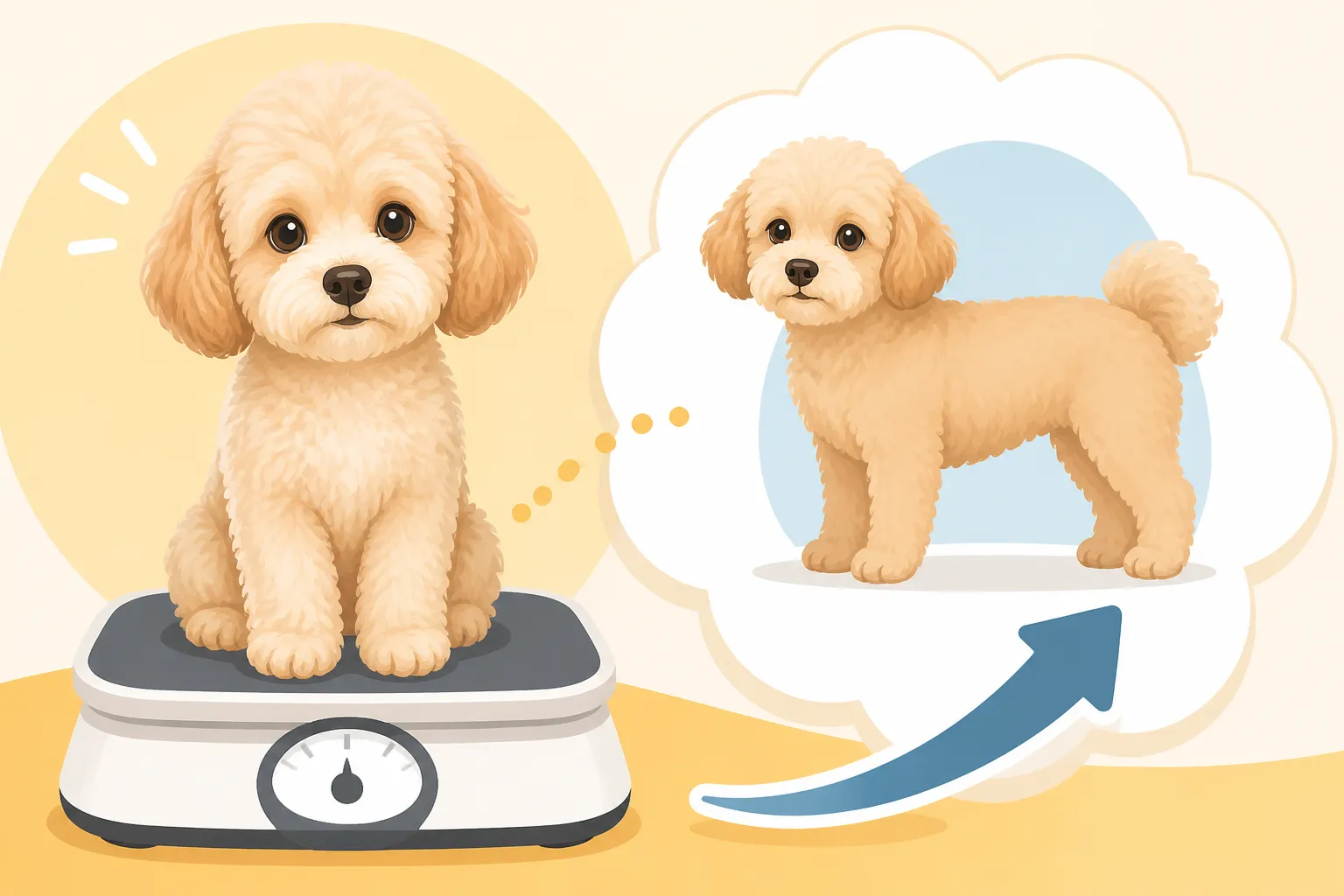
What a Toy Maltipoo Weighs Full Grown
It's incredibly common for new Maltipoo parents, and even those who've loved the breed for years, to feel a bit lost when trying to figure out just how big their furry companion will get. The world of Maltipoo sizing can be confusing, with different terms thrown around that don't always mean the same thing to everyone. This guide aims to clear up the mystery, specifically focusing on what you can expect a Toy Maltipoo to weigh once they're all grown up, and helping you understand the factors that really influence their adult size.
Understanding the "Toy" Designation in Maltipoos
When you hear the term "Toy Maltipoo," it often conjures up images of a tiny, adorable fluffball that fits perfectly in your lap. And while that image isn't wrong, it's important to understand that "Toy" isn't a standardized, official breed classification in the same way it is for purebred dogs like a Toy Poodle or a Maltese. For Maltipoos, which are a hybrid designer breed, these size designations are more like general categories or guidelines used by breeders and owners to describe expected adult weights.
What "Toy" Actually Means for a Maltipoo
Typically, when a breeder or owner refers to a "Toy Maltipoo," they are expecting the dog to fall into a certain weight range as an adult. This isn't etched in stone by any kennel club, but the most widely accepted range for a Toy Maltipoo is usually between 5 to 10 pounds (approximately 2.2 to 4.5 kg). This is a lovely size for many families, small enough to be portable and suitable for apartment living, but often a bit sturdier than their "Teacup" counterparts. It's a sweet spot that offers a good balance of cuddliness and resilience, making them less fragile for everyday interactions. You'll find that these general classifications help folks get a handle on what to expect, but remember, nature loves to surprise us sometimes! The Three Maltipoo Sizes and Who Decides Them delves deeper into these classifications.
The Maltese and Poodle Influence on Size
The Maltipoo's size, like so many of its charming traits, is a delightful blend inherited from its parent breeds: the Maltese and the Poodle. Both of these breeds contribute to the smaller stature of the Maltipoo, but their specific sizes can influence the outcome.
The Maltese is a consistently small dog, typically weighing between 4 to 7 pounds (1.8 to 3.2 kg). They are firmly within the "Toy" group themselves, known for their delicate build and luxurious white coat. The Poodle side, however, offers a bit more variety. While the Poodle parent for a Maltipoo is almost always a Toy Poodle, these can range from around 4 to 6 pounds up to about 9 or 10 pounds (1.8 to 4.5 kg). Sometimes, a Miniature Poodle (which can weigh between 10 to 15 pounds) might be used to produce a larger Maltipoo, though this would typically result in a "Miniature Maltipoo" rather than a "Toy." So, when you're looking at a Maltipoo puppy, understanding the size of both parents is absolutely key to getting an idea of their potential adult weight.
Why Predicting Adult Weight Can Be Tricky
Even with parent sizes in mind, predicting a Maltipoo's exact adult weight can feel like a bit of a guessing game. It’s not an exact science, and there are several reasons for this. First, genetics are complex. While a puppy usually inherits traits from both parents, sometimes a grandparent's genes might 'skip' a generation and influence size in unexpected ways. Second, breeders, despite their best intentions, can sometimes misjudge a puppy's adult size, especially with "Teacup" claims. It's common for breeders to give an estimate, but it's just that – an estimate. It’s always good to be cautious if someone guarantees an exact weight, as biology doesn't always follow a strict script. Whether a Maltipoo Breeder Can Guarantee a Maltipoo's Weight discusses this in more detail. Nutrition in early puppyhood can also play a subtle role, though proper feeding is more about healthy development than drastically altering a genetically determined size.
Typical Weight Range for a Full-Grown Toy Maltipoo
So, let's get down to the numbers. While every Maltipoo is unique, there are generally accepted parameters for what you can expect from a "Toy" sized adult. Knowing this range can help manage expectations and prepare you for the adorable companion joining your home.
The Generally Accepted Weight Parameters
As mentioned, a full-grown Toy Maltipoo typically weighs between 5 to 10 pounds. This is the sweet spot that many families look for, offering a small, manageable dog that isn't quite as fragile as the smallest "Teacup" variations. A Maltipoo in this range is often sturdy enough for gentle play, comfortable to carry, and generally thrives in a home environment where they can be a central part of the family without being easily underfoot or at risk of accidental injury.
To put this into perspective, here's a general table of how Maltipoo size categories typically break down by weight:
| Maltipoo Size Category | Approximate Adult Weight Range |
|---|---|
| Teacup | 2-5 pounds (0.9-2.2 kg) |
| Toy | 5-10 pounds (2.2-4.5 kg) |
| Miniature | 10-20 pounds (4.5-9.0 kg) |
Keep in mind these are approximations, and individual dogs can sometimes fall slightly outside these ranges. The most important thing is a healthy weight for their frame, not just hitting a specific number.
How to Estimate Your Puppy's Adult Weight
If you have a Maltipoo puppy and you're wondering where they'll land on that spectrum, there are a few methods people use to estimate adult weight, though none are foolproof:
- Parental Weights: This is often the most reliable indicator. If you know the weights of both the Maltese and Poodle parents, your puppy will most likely fall somewhere between their weights. For example, if both parents are 7 pounds, your puppy is very likely to mature around 7 pounds. If one parent is 5 pounds and the other is 8 pounds, your puppy could be anywhere in that range, or even slightly outside it due to recessive genes. Whether Parent Weights Predict a Maltipoo's Size offers more insights here.
- Puppy Weight Charts: Some breeders and vets use growth charts specifically for small breeds. These charts plot a puppy's current weight against their age to predict adult size. While helpful, these are still estimates, as individual growth rates can vary.
- The "Doubling Rule" (with caveats): A common, though often overly simplified, rule of thumb for small breeds is to double a puppy's weight at 12 weeks of age. For example, a 12-week-old puppy weighing 3 pounds might reach 6 pounds as an adult. However, this is far from exact and shouldn't be relied upon too heavily, especially with hybrid breeds. Maltipoos have varying growth spurts, and their metabolism can be quite unique.
When a Maltipoo Reaches Its Full Size
Most Toy breeds, including Maltipoos, tend to reach their full adult height and weight relatively quickly compared to larger dog breeds. Generally, a Maltipoo will be close to their full size by 10 to 12 months of age. While they might fill out a tiny bit more in muscle or body condition between 12 and 18 months, significant growth spurts after the first year are uncommon.
It's helpful to remember that physical maturity often precedes mental maturity. Your Maltipoo might be done growing in size, but they'll still be learning and developing their personality well into their second year. The Age Each Maltipoo Size Finishes Growing provides more information on this developmental timeline.
Factors That Can Influence a Toy Maltipoo's Adult Weight
While genetics lay the primary groundwork for your Maltipoo's adult weight, other factors can also play a role, from their early nutrition to their overall health. Understanding these can help you better anticipate and manage your Maltipoo's growth.
Genetics and Parental Size
Without a doubt, genetics are the biggest influencer on your Maltipoo's adult weight. The size of the parent dogs, particularly the Poodle parent, will heavily dictate the puppy's eventual size. If both parents are on the smaller end of their respective toy categories, you're more likely to have a Maltipoo that matures closer to the 5-pound mark. If one or both parents lean towards the larger end, or if a slightly larger Poodle (like a small Miniature Poodle) was part of the breeding, your Maltipoo might approach the 10-pound mark.
It's not just about the immediate parents, either. Sometimes, a trait from a grandparent or great-grandparent can reappear, leading to a "throwback" in size where a puppy is unexpectedly larger or smaller than anticipated based on the parents alone. This is less common but certainly possible in hybrid breeds where the gene pool is still somewhat diverse.
Nutrition and Feeding Habits
Proper nutrition, especially during puppyhood, is crucial for healthy development. While it won't fundamentally change a Maltipoo's genetically predetermined adult size, inappropriate feeding can certainly affect their achieved weight and overall health.
- Underfeeding: A severely underfed puppy might experience stunted growth and fail to reach their full genetic potential. However, this is rare in loving homes and usually associated with neglect.
- Overfeeding: More commonly, particularly with small breeds, overfeeding can lead to an overweight puppy and adult. While this makes them heavier, it doesn't mean they are bigger in stature. An overweight Maltipoo faces numerous health risks, including joint problems, heart issues, and diabetes. It’s absolutely vital to feed by the ounce, not the scoop, for a small dog like a Maltipoo. Feeding a Six Pound Maltipoo by the Ounce, Not the Scoop is an excellent resource on this topic. Products available at places like Chewy can help you measure out precise portions, including small breed-specific kibbles designed for their unique caloric needs.
Health and Medical Conditions
A Maltipoo's health status can also influence their weight. Chronic illnesses or significant health issues during their growth phase could potentially impact their ability to reach their full genetic size. Conversely, certain conditions might lead to fluid retention or other issues that make a dog appear heavier than they ideally should be.
For instance, conditions like internal parasites (worms) can cause a puppy to be underweight and fail to thrive. Severe cases of Hypoglycemia and the Teacup Maltipoo Puppy can also impact overall growth if not managed properly. Regular vet check-ups are essential to ensure your Maltipoo is growing appropriately and that any underlying health concerns are addressed promptly.
The Importance of a Healthy Weight, Not Just a "Toy" Weight
While everyone wants to know what their Maltipoo will weigh, the truly critical question is not just how much they weigh, but whether that weight is healthy for their individual frame. A "Toy" Maltipoo should be svelte and agile, not bony or chunky. Focusing on overall well-being ensures your companion leads a long, happy life.
Health Risks of Being Underweight or Overweight
Both extremes of weight pose significant health risks for a Maltipoo:
- Underweight: An underweight Maltipoo, especially a tiny one, is at higher risk for Hypoglycemia and the Teacup Maltipoo Puppy, a dangerous drop in blood sugar. They may also have a weakened immune system, less energy, and could be more susceptible to cold. Their delicate bones could also be more vulnerable to injury.
- Overweight: This is a more common issue in small companion breeds. An overweight Maltipoo puts undue stress on their joints, exacerbating conditions like Slipping Kneecaps in a Maltipoo. They are at increased risk for heart disease, diabetes, respiratory problems (especially if they have a tendency towards Collapsing Trachea in a Maltipoo's Neck), and a reduced lifespan. Even carrying an extra pound or two on a 7-pound dog is like a human carrying an extra 20-30 pounds – it makes a huge difference. Getting a pound off an overweight Maltipoo can be a challenge, but it's crucial for their health.
How to Maintain an Ideal Weight for Your Maltipoo
Maintaining an ideal weight for your Maltipoo involves consistency and attention to detail:
- Precise Portion Control: This is non-negotiable for small dogs. Invest in a small digital kitchen scale to weigh out their kibble or fresh food portions exactly. Measuring cups are notoriously inaccurate for tiny amounts. How Many Calories a Six Pound Maltipoo Needs explains why precision is so important.
- High-Quality Food: Choose a premium small-breed specific dog food. These are formulated with appropriate calorie densities and nutrient profiles for small dogs. Brands available on sites like Chewy often provide detailed feeding guidelines.
- Limit Treats: Treats should make up no more than 10% of your Maltipoo's daily caloric intake. It’s surprisingly easy to blow their entire daily allowance with just a few too many tasty morsels.
- Regular Exercise: Even a Toy Maltipoo needs daily activity. Short, regular walks and indoor play sessions are vital for burning calories and maintaining muscle tone.
- Routine Vet Check-ups: Your veterinarian is your best resource for monitoring your Maltipoo's weight and overall health. They can tell you if your dog is in ideal body condition and help you adjust their diet if needed. The yearly check-ups a Maltipoo should get will include a weight check and a body condition score.
Recognizing When Your Maltipoo Isn't at a Healthy Weight
It's not always about the number on the scale. Learning to assess your Maltipoo's body condition by sight and touch is incredibly valuable:
- Rib Check: Gently run your hands along your Maltipoo's sides. You should be able to easily feel their ribs, but they shouldn't be visibly protruding. If you can't feel their ribs at all without pressing, they might be overweight. If their ribs are extremely prominent and visible, they might be underweight.
- Waistline: When you look down at your Maltipoo from above, you should see a discernible waistline tucking in behind their ribs. If they have a straight "tube" shape or bulge out at the sides, they are likely overweight.
- Belly Tuck: From the side, their abdomen should tuck up slightly from their chest, not hang low or be distended.
- Energy Levels: A Maltipoo at a healthy weight typically has good energy levels for their age. Lethargy or difficulty with movement can sometimes be signs of unhealthy weight.
By paying close attention to these indicators, you can ensure your Toy Maltipoo remains in peak condition, living up to their full potential of playful companionship and boundless affection. The Liver Shunt a Maltipoo Can Inherit From the Maltese shows how health conditions are inherited and why vigilance is key.
Disclaimer
This article is for general informational purposes only and does not constitute professional advice. Laws, prices and regulations vary by location and change over time. Consult a qualified professional for guidance on your specific situation.