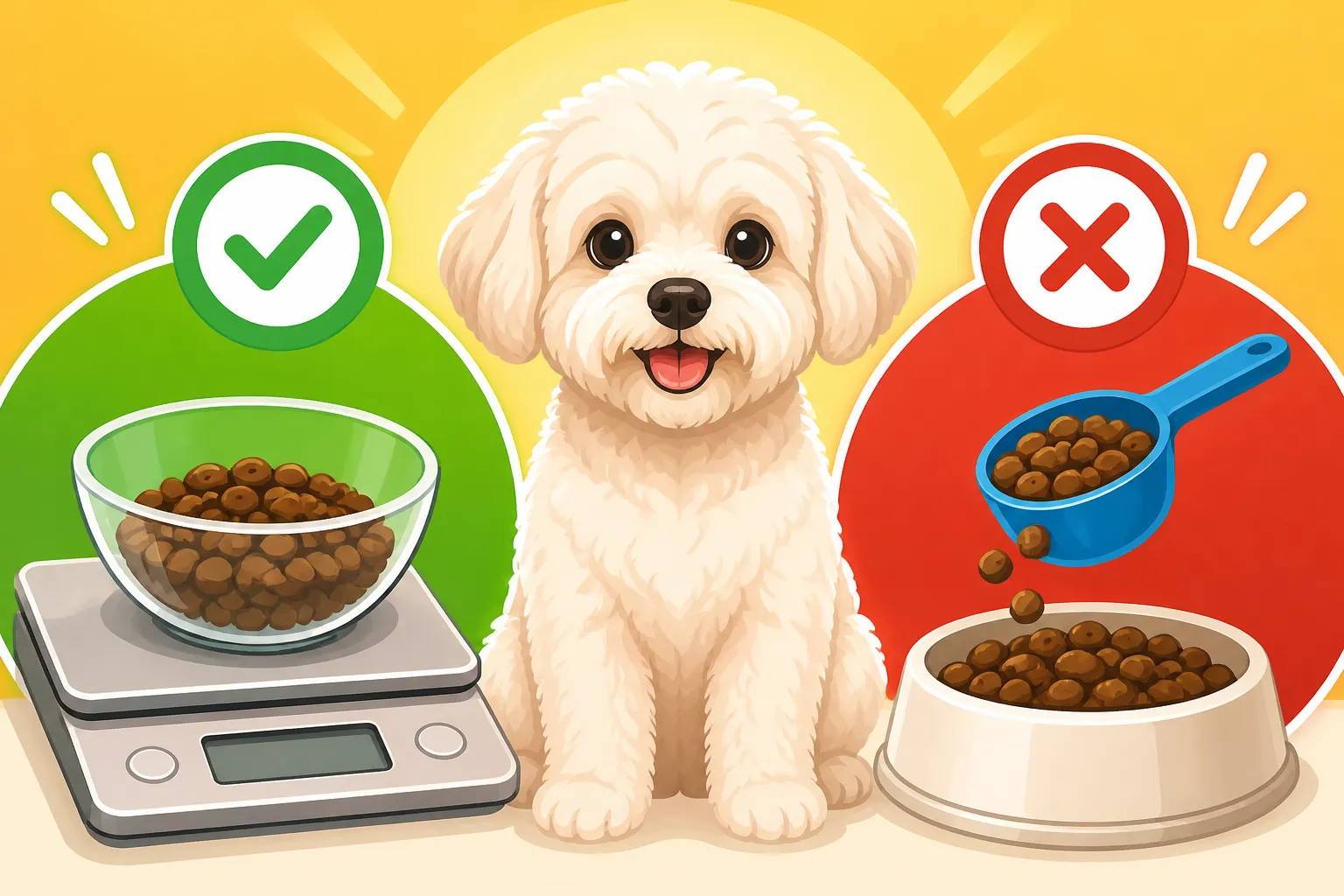
Feeding a Six Pound Maltipoo by the Ounce, Not the Scoop
It’s a common scenario: you’ve got this adorable, fluffy Maltipoo, probably a tiny little thing, and you’re doing your best to feed them right. You pull out the scoop that came with the kibble bag, or maybe that trusty old measuring cup from your kitchen, and you fill it up. Sounds sensible, right? But for our small breed friends like the Maltipoo, that seemingly innocent scoop can be a silent saboteur, leading to unnoticed weight gain, nutritional imbalances, and even serious health issues down the road. This guide is here to unravel the mysteries of feeding your six-pound Maltipoo, showing you why precision, measured in ounces, is the only way to truly ensure their optimal health and happiness.
The Hidden Danger of the "Scoop" for Your Maltipoo
We’ve all been there. You get a new bag of dog food, and it comes with a handy plastic scoop, or the bag tells you to feed "1/2 cup for dogs under 10 pounds." It feels intuitive, straightforward, and like the manufacturer has done all the hard work for you. But when you’re dealing with a little creature as delicate as a six-pound Maltipoo, that general guidance can be incredibly misleading, almost dangerously so. Their tiny bodies have entirely different needs and tolerances compared to even a slightly larger dog, and what seems like a negligible difference in volume can have huge repercussions for their health.
Why Generic Measuring Cups Fail Small Dogs
Think about it: a "cup" of kibble isn't a fixed measurement of nutrition. It’s a measurement of volume. The actual amount of calories, protein, or fat in that cup can vary wildly depending on the density, shape, and size of the individual kibble pieces. Imagine you have two different brands of dry dog food. One might be a light, airy kibble, while another is a dense, compact nugget. If you fill a standard measuring cup with both, the dense kibble will weigh significantly more and contain many more calories, even though the volume appears the same. For a Golden Retriever, a slight overage might not be a huge deal over a day or two. For a six-pound Maltipoo, however, just an extra half-ounce of dense kibble a day could mean dozens of unnecessary calories, quickly adding up to an unhealthy weight gain.
Many of us rely on the same measuring cups we use for our own baking, which aren't always accurate, or the generic plastic scoops from dog food brands. These scoops are designed for convenience, not precision, and often cater to a broad range of dog sizes. They certainly aren’t calibrated for the specific metabolic rate of a tiny Maltipoo. This lack of precision means you're essentially guessing, and when the stakes are your beloved companion’s health, guessing simply isn't good enough. It's a frustration many small dog owners face – they're following the instructions, yet their dog seems a little pudgy, or perhaps not as energetic as they should be. The culprit is often right there in the bowl, disguised by imprecise measurements.
The Metabolism of a Tiny Terror
Maltipoos, like many small breeds, have a remarkably fast metabolism. This means they burn through calories more quickly than larger dogs, requiring a diet that is both calorie-dense and delivered in smaller, more frequent meals. However, this fast metabolism is a double-edged sword. While they burn quickly, their tiny digestive systems and energy reserves are also very limited. An imbalance in their diet, either too many calories or too few, can have rapid and noticeable effects. Too many, and you’ll see weight gain, which puts strain on their delicate joints (think about Slipping Kneecaps in a Maltipoo or Legg Calve Perthes in a Maltipoo) and internal organs. Too few, and they risk Hypoglycemia and the Teacup Maltipoo Puppy, a dangerous drop in blood sugar that can be life-threatening, especially in puppies.
Their small stomach capacity also means they can't handle large meals. They need frequent, small portions to keep their blood sugar stable and their energy levels consistent throughout the day. This is particularly crucial for young puppies, whose risk of hypoglycemia is much higher. You can't just fill a bowl once or twice a day and expect their tiny bodies to manage. It's a delicate balancing act that requires a deep understanding of their unique physiology and a commitment to precise feeding. The idea that a dog will just "eat until they're full" is completely out the window with a Maltipoo; overfeeding or underfeeding can both lead to significant health complications.
The Domino Effect of Just a Few Extra Calories
For a six-pound Maltipoo, even a seemingly minuscule amount of extra food, day after day, can snowball into a significant weight problem. Let’s put it into perspective. If a human consumes an extra 100 calories a day, that can lead to gaining about 10 pounds in a year. For a Maltipoo, whose daily caloric needs might only be around 200-300 calories, an extra 20 calories a day—which could be a small dental chew, or just a few extra kibble pieces from an overfilled scoop—represents a huge percentage of their total intake. That 20 calories is like an extra 200-300 calories for a human, and that would absolutely lead to unhealthy weight gain.
This excess weight isn’t just about aesthetics; it has a profound impact on their quality of life and longevity. Obesity can exacerbate existing conditions like patellar luxation, increase the risk of diabetes, heart disease, and respiratory issues, and generally reduce their mobility and joy. Imagine the strain on tiny knees already prone to issues, or the extra work their little heart has to do. It also affects their overall energy levels, making them less inclined to play and exercise, further contributing to a sedentary lifestyle. It's a vicious cycle that starts with something as seemingly innocent as "just a little bit more" in the bowl. This is why getting feeding right from the start is paramount to setting your Maltipoo up for a long, healthy life.
Understanding Your Maltipoo's Caloric Needs
Pinpointing the exact number of calories your Maltipoo needs can feel like trying to hit a moving target. There’s no single, universal number that applies to all six-pound Maltipoos because so many factors come into play. It's not just about their weight, but also their age, activity level, whether they're spayed or neutered, and their overall health status. This is where a partnership with your veterinarian becomes absolutely invaluable, as they can help you tailor a feeding plan that's as unique as your furry friend.
Calculating the Right Amount: It's Not One-Size-Fits-All
The most common starting point for calculating a dog’s caloric needs is using a formula based on their Resting Energy Requirement (RER) and then applying a multiplier for their activity level. The RER is the energy required for basic bodily functions at rest. For a dog, a common RER formula is: RER in kcals/day = 70 * (body weight in kg)^0.75.
However, you don't need to be a math whiz to figure this out! Most veterinarians and reputable online calculators will do the heavy lifting for you. For a six-pound Maltipoo (approximately 2.7 kg), the RER would be around 140-150 calories per day.
Then, you apply a multiplier:
- Neutered/Spayed Adult: RER x 1.6
- Intact Adult: RER x 1.8
- Inactive/Obese-Prone: RER x 1.2 – 1.4
- Active: RER x 2.0 – 5.0 (depending on intensity)
- Puppies: RER x 2.0 – 3.0 (much higher due to rapid growth, but this decreases as they age, something to keep in mind as your The Age a Maltipoo Grows Out of Hypoglycemia Risk approaches)
So, a neutered, moderately active six-pound Maltipoo might need approximately 224-240 calories per day (140-150 calories RER x 1.6). This is an estimate. The crucial part is recognizing that this number is a starting point, not a definitive command written in stone. You'll need to monitor your Maltipoo’s body condition closely and adjust as needed. Remember, every dog is an individual, and their metabolism can vary. One six-pound Maltipoo might be a couch potato, while another is a little dynamo constantly zipping around the house.
Activity Levels and Life Stages: Adjusting the Numbers
Your Maltipoo's caloric needs will shift significantly throughout their life. A playful, growing puppy needs a denser, higher-calorie diet to fuel their development and boundless energy. As they mature into an adult, their growth slows, and their activity levels might stabilize, necessitating a reduction in calories to prevent weight gain. Then, as they enter their senior years, typically around eight to ten years old, their metabolism can slow down again, and they might become less active dueating to arthritis or other age-related issues. This often means another adjustment, usually a slight decrease in calories, to maintain a healthy weight.
It's not just age; their daily routine matters. Does your Maltipoo get long walks, or are they mostly content with indoor play? Do they have canine siblings they wrestle with, or are they an only dog often napping? A Maltipoo that spends hours romping at a dog park will naturally burn more calories than one who enjoys a more leisurely pace of life, perhaps content with short strolls around the block. You also need to factor in environmental temperature. A dog living in a colder climate might burn more calories to stay warm, while one in a very hot climate might be less active. Regularly assessing their activity and adjusting their food intake accordingly is a continuous process. You can't just set it and forget it for 15 years.
The Critical Role of Your Veterinarian
Frankly, your veterinarian is your best resource for determining your Maltipoo's ideal weight and caloric intake. During The Yearly Checks a Maltipoo Should Get, they will assess your dog's body condition score, which is a hands-on evaluation of fat coverage over their ribs, waist tuck, and abdominal fat pad. They can tell you if your Maltipoo is at a healthy weight, needs to lose a few ounces, or could stand to gain a bit. They'll consider any underlying health conditions, such as Whether a Maltipoo Gets Hypothyroidism or diabetes, which can directly impact their metabolism and dietary needs.
Your vet can provide specific recommendations for calorie intake, help you choose an appropriate high-quality small breed formula, and guide you through any dietary changes. Don't hesitate to bring your food bag to your vet visits so they can review the nutritional analysis. They can also advise on managing treats and supplements within the daily caloric budget. Think of your vet as your co-pilot in navigating your Maltipoo's nutritional journey. Their professional insight is invaluable in ensuring your furry friend receives precisely what they need, not just what the back of a bag suggests.
The Ounce Advantage: Precision Feeding in Practice
Now that we understand why precision is so vital for your Maltipoo, let's talk about how to achieve it. Ditching the scoop for a digital kitchen scale is the single most impactful change you can make to your Maltipoo's feeding routine. It eliminates the guesswork, standardizes portions, and gives you complete control over their caloric intake. This isn't about being obsessive; it's about being responsible and ensuring your tiny companion thrives.
Investing in a Digital Kitchen Scale (and how to use it)
A digital kitchen scale is going to be your new best friend. You can find reliable, inexpensive models on platforms like Amazon or Chewy that measure in grams and ounces. This isn't a bulky, complicated piece of equipment; it's usually compact and easy to store. Here's a simple step-by-step guide to using it:
- Place the Bowl: Put your Maltipoo’s empty food bowl on the scale.
- Zero Out: Press the "tare" or "zero" button. This will reset the scale to zero, so you’re only measuring the food, not the bowl.
- Add Food: Slowly add your Maltipoo’s kibble or wet food to the bowl until you reach the desired weight. If you've calculated your Maltipoo needs 230 calories a day, and your kibble has 350 calories per cup (which is typically 3.7 oz by weight for many kibbles, but always check your specific food's packaging for calories per gram or ounce), you'll need to do a little math. For example, if your food states 100g = 350 calories, and your Maltipoo needs 230 calories, then you would need (230/350)*100 = 65.7 grams of food per day. If your scale reads in ounces, convert grams to ounces (1 ounce ≈ 28.35 grams). So, 65.7 grams would be about 2.3 ounces.
- Divide Portions: If your Maltipoo eats multiple meals a day (which they almost certainly should), divide that total daily weight by the number of meals. So, if they need 2.3 ounces a day and you feed them three times, each meal would be roughly 0.77 ounces.
It might seem like a lot of steps at first, but it quickly becomes second nature. This method ensures that every single meal provides the exact caloric value you’ve determined is best for your Maltipoo. No more wondering if "half a cup" was too much or too little. It’s consistent, accurate, and truly tailored.
Dry Kibble: Weight vs. Volume
The crucial distinction here is between weight and volume. When a dog food bag says "1 cup," they mean 8 fluid ounces by volume, but the weight of that cup can fluctuate drastically. A common high-quality small breed kibble might weigh around 3.5 to 4 ounces per standard measuring cup. If you're scooping, and your scoop consistently gives you 0.5 ounces more than intended, over a year, that's a huge caloric surplus for a tiny dog.
By weighing your Maltipoo's dry kibble, you are ensuring that regardless of kibble density, shape, or how tightly packed it is in the scoop, they are receiving the precise amount of nutrients and calories that correspond to your calculations. This is especially important if you switch kibble brands, as caloric density can vary greatly. What was 300 calories per cup in one brand might be 400 calories in another, meaning your "same scoop" is suddenly overfeeding your dog by a significant margin. Weighing eliminates this problem entirely. It keeps you informed and in control, making sure every bite counts, especially when you consider Feeding a Six Pound Maltipoo by the Ounce, Not the Scoop.
Wet Food and Fresh Food Considerations
Precision feeding isn't just for kibble. If your Maltipoo eats wet food, fresh food, or a combination, the same principles apply. Wet food often has a higher moisture content, so while the volume might seem larger, the caloric density per ounce could be lower than kibble. Fresh food diets, like those offered by services such as Ollie, also come with very specific feeding instructions, often recommending portions by weight.
When feeding wet or fresh food, always check the caloric content provided by the manufacturer. They will usually list calories per can, per tray, or per certain weight (e.g., Kcal/kg or Kcal/ounce). Use your kitchen scale to weigh out the exact portion. For combination feeders, weigh both the kibble and the wet food components separately to ensure their total daily caloric intake matches your target. This level of detail might feel intense at first, but once it becomes part of your routine, you'll feel confident that your Maltipoo is getting exactly what their unique body needs.
Meal Frequency and Schedule for a Six-Pound Maltipoo
For such a small dog, when they eat is almost as important as what and how much. Their little bodies aren't designed to go long stretches without food, and establishing a consistent meal schedule is critical for maintaining stable blood sugar levels and preventing digestive upset. This is particularly true for Maltipoo puppies, who are at a higher risk for hypoglycemia.
Why Frequent Small Meals Are Non-Negotiable
As we touched on earlier, Maltipoos have a fast metabolism and tiny stomachs. This combination means they burn through their energy reserves quickly and can't consume enough food in one sitting to sustain them for extended periods. Trying to feed a six-pound Maltipoo only once or twice a day is a recipe for potential trouble. Their blood sugar can drop, leading to lethargy, weakness, and in severe cases, a hypoglycemic crisis. This is why Why a Two Pound Maltipoo Cannot Skip a Meal is so incredibly vital to understand, particularly for very small Maltipoos.
For most adult six-pound Maltipoos, three meals a day is ideal. This breaks their daily caloric intake into manageable portions, keeps their metabolism humming, and prevents sharp drops in blood sugar. For puppies, especially those under six months or those on the smaller side, four meals a day might be necessary. This also helps with digestion, as smaller meals are easier for their sensitive systems to process. Think of it as grazing rather than feasting; constant, gentle fueling of their little engines.
Transitioning from Puppy to Adult Feeding Schedules
Puppies typically start on four meals a day. This frequent feeding is crucial for their rapid growth and to mitigate the risk of hypoglycemia. As they grow, usually around six months of age, you can often begin transitioning them to three meals a day. This transition should be gradual. For a few days, you might reduce one meal slightly and redistribute those calories among the other three. Observe your Maltipoo closely during this time for any signs of hunger, lethargy, or digestive upset. If they seem to be struggling, slow down the transition or consult your vet.
Most adult Maltipoos (generally from 1 year old) can thrive on three meals a day. Trying to go down to two meals can be problematic for many small breeds. It puts too much strain on their digestive system to process a larger meal, and the gap between meals can be too long for their rapid metabolism, again increasing the risk of blood sugar dips. Consistency is key here. Try to feed them at roughly the same times each day to establish a routine. Dogs are creatures of habit, and knowing when their next meal is coming can reduce anxiety and digestive issues.
Dealing with Picky Eaters and Mealtime Routines
Ah, the picky Maltipoo – a story many of us know too well! Sometimes, their pickiness isn't about the food itself, but about the routine. If you're free-feeding or constantly changing meal times, your Maltipoo might become less enthusiastic about eating. Establishing a strict 15-20 minute meal window can help. If they don't eat within that time, pick up the bowl until the next scheduled meal. This teaches them that food is available at specific times, not on demand. It might feel tough at first, but a healthy dog won't starve themselves, and this approach can often solve pickiness issues.
Another factor could be the food itself. Some Maltipoos prefer wet food mixed in, or a particular texture. High-quality small breed kibble is usually designed to be palatable, but some dogs just have preferences. If your Maltipoo is genuinely refusing to eat for extended periods, or losing weight, it's always time for a vet visit to rule out any underlying medical issues. Sometimes, it’s not pickiness but discomfort, perhaps due to dental pain, which is a common problem in Maltipoos (check out The Forty Two Teeth Crowding a Maltipoo's Jaw). Once medical issues are ruled out, consistent routine and offering high-quality, appropriate food should help.
Navigating Treats and Supplements
Treats are an undeniable part of our relationship with our dogs. They're tools for training, expressions of love, and often just fun. But for a six-pound Maltipoo, treats, even tiny ones, can quickly become a significant source of extra calories, throwing off all your careful meal planning. Similarly, supplements, while potentially beneficial, need to be factored into their overall nutritional intake.
The Calorie Bomb in Tiny Treats
It’s shocking how many calories can be packed into even the smallest dog treat. A single biscuit or chew designed for a medium-sized dog can easily contain 30-50 calories. For a Maltipoo whose entire daily caloric intake might be around 230 calories, one such treat could represent over 20% of their daily needs! If you give several throughout the day, suddenly they’re getting a substantial portion of their calories from treats, leaving less room for their nutritionally balanced meals. This not only leads to weight gain but can also create nutritional deficiencies if their main diet is being cut back to compensate for treat calories.
Always read the label on all treats. Look for the caloric content per treat. If it’s not listed, assume it’s high and use them sparingly, or opt for treats specifically designed for very small breeds. When using treats for training, break them into the tiniest pieces imaginable – a pea-sized crumb is often more than enough for a Maltipoo. Your Maltipoo doesn't care about the size of the reward, but the frequency and excitement of receiving it. You can even use a few pieces of their regular kibble as treats to ensure you’re not adding extra calories.
Smart Snacking: Low-Calorie Options
The good news is that there are plenty of healthy, low-calorie treat options that won't derail your Maltipoo's diet. Many human foods, when prepared correctly and offered in tiny portions, make excellent and nutritious treats.
Consider these options:
- Plain cooked chicken or turkey breast: Cut into minuscule pieces.
- Green beans: Cooked or raw (if your dog likes them).
- Carrot slices: Small, thin pieces.
- Apple slices: Core and seeds removed.
- Blueberries: A tiny, sweet reward.
- Plain pumpkin puree: A spoonful can be a delightful and gut-friendly treat.
Always introduce new human foods slowly and in very small amounts to ensure your Maltipoo tolerates them well. Avoid anything with added sugars, salts, spices, or artificial sweeteners (especially xylitol, which is highly toxic to dogs). These smart snacking options allow you to still provide rewards and enrichment without packing on unwanted pounds. This is where a little bit of foresight goes a long way in ensuring your dog's long-term health.
Supplements: Are They Necessary, and How to Factor Them In?
The world of dog supplements can be overwhelming. From joint support to skin and coat health, the options are endless. For a generally healthy Maltipoo on a complete and balanced diet, supplements might not be necessary. However, if your vet identifies a specific need—perhaps for joint support due to Slipping Kneecaps in a Maltipoo, or a fatty acid supplement for dry skin—they can be beneficial.
It’s absolutely crucial to consult your veterinarian before starting any supplement regimen. They can advise whether a particular supplement is appropriate, what dosage is safe for your Maltipoo's weight, and if it might interact with any medications. Importantly, you'll need to factor the calories from any chewable supplements into your Maltipoo's daily caloric budget. Many supplements, particularly chews, contain calories that can add up for a small dog. Always read the label and deduct those calories from their main meals. Think of them as part of their food, not an addition on top of it. Remember, moderation and veterinary guidance are key.
Common Feeding Mistakes to Avoid
Even with the best intentions, it's easy to fall into common feeding traps, especially with a small, adorable dog like a Maltipoo. These mistakes, seemingly minor, can have significant long-term consequences for their health and well-being. Avoiding them is just as important as implementing a precise feeding plan.
Free-Feeding: A Recipe for Disaster
Free-feeding, or leaving a bowl of food out all day for your Maltipoo to graze on whenever they please, is one of the most common and detrimental feeding mistakes for small breeds. While it might seem convenient and even generous, it leads to several problems:
- Obesity: Most dogs lack the self-control to only eat when truly hungry. They'll munch out of boredom, habit, or simply because the food is there, leading to inevitable weight gain. For a Maltipoo, this is a fast track to being overweight.
- Lack of Appetite Monitoring: If you don't know exactly how much your Maltipoo is eating, you won't notice if their appetite suddenly decreases or increases. A sudden loss of appetite is often the first sign of illness, but you’ll miss it if the food bowl is always full.
- Food Safety: Leaving food out all day, especially in warmer climates, can lead to it spoiling, attracting pests, or growing bacteria, which can cause digestive upset or illness.
- House Training Issues: Free-feeding makes it impossible to establish a predictable potty schedule, as their digestive system is always active. How Many Months Before a Maltipoo Stops Having Accidents is often directly related to consistent feeding and potty breaks.
Instead of free-feeding, stick to a strict, scheduled mealtime routine. Offer their precisely measured food for 15-20 minutes, then pick up the bowl. This establishes a healthy boundary, allows you to monitor their appetite, and helps with house training.
Table Scraps and Human Foods
It's almost impossible to resist those big, pleading Maltipoo eyes when you're enjoying your meal. Offering table scraps is a powerful human instinct, but it's a huge no-no for your Maltipoo. Most human foods are too rich, too fatty, too salty, or contain ingredients that are outright toxic to dogs.
Consider these dangers:
- Pancreatitis: Fatty foods, even small amounts of cooked chicken skin or a bite of cheese, can trigger pancreatitis in small dogs like Maltipoos, a painful and potentially life-threatening inflammation of the pancreas. Whether a Maltipoo Is Prone to Pancreatitis is a good question to discuss with your vet.
- Toxicity: Many common human foods are highly toxic, including onions, garlic, grapes, raisins, chocolate, avocado, and xylitol (an artificial sweetener found in many sugar-free products). Even tiny amounts can cause severe illness or death.
- Nutritional Imbalance: Regular table scraps disrupt the balanced nutrition your Maltipoo gets from their high-quality dog food. They'll fill up on "junk food" instead of the vitamins and minerals they need.
- Begging Behavior: Giving in to table scraps teaches your Maltipoo to beg, which can be an annoying habit and hard to break.
If you want to share, stick to the safe, low-calorie human food options mentioned earlier (like plain cooked lean meats or certain vegetables), and offer them as a designated treat, not from your plate during dinner.
Ignoring Weight Fluctuations
Because Maltipoos are so small, even a half-pound weight gain or loss can be significant. It’s easy to miss these subtle changes if you’re not regularly monitoring their weight. Their fluffy coats can also hide a multitude of sins, making it hard to visually assess their body condition.
Here's how to stay on top of it:
- Weekly Weigh-ins: For puppies, weekly weigh-ins are crucial to ensure they’re growing appropriately. For adults, weigh your Maltipoo monthly at home using a small digital pet scale, or even your kitchen scale if they fit comfortably and safely.
- Body Condition Scoring: Learn how to perform a simple body condition assessment. You should be able to easily feel their ribs with slight pressure, but not see them. They should have a noticeable waist tuck when viewed from above.
- Adjust as Needed: If you notice a consistent trend of weight gain or loss, revisit your caloric calculations and adjust their food intake by small increments (e.g., 5-10% less or more) for a week or two, then re-evaluate. If you're struggling to get a handle on it, or the changes are sudden or drastic, always consult your veterinarian. They can help you determine Getting a Pound Off an Overweight Maltipoo safely.
Being proactive about your Maltipoo's weight is one of the best things you can do for their long-term health, allowing you to catch issues early and make necessary adjustments before they become major problems.
Beyond the Bowl: Other Factors Affecting Nutrition
Feeding your Maltipoo isn't just about what goes into their bowl; it's about a holistic approach to their health that extends to their dental care, hydration, and even the environment they live in. All these elements play a role in how well they absorb nutrients, maintain a healthy weight, and generally thrive.
Dental Health and Food Choice
For Maltipoos, dental health is incredibly important and often overlooked in its connection to nutrition. Small breeds are notorious for dental issues, with overcrowding, tartar buildup, and gum disease being common. This is why Brushing a Maltipoo's Teeth Every Single Day is a non-negotiable part of their care. If your Maltipoo has painful teeth or inflamed gums, it directly impacts their ability and willingness to eat, potentially leading to weight loss or a reluctance to eat kibble.
While brushing is primary, the type of food can also play a small role. Some believe that larger, firmer kibble can help scrape teeth clean. However, for a Maltipoo, kibble that's too large can be difficult to chew, or even lead to choking. Opt for small breed kibble with appropriately sized pieces. There are also specific "dental diets" available through your vet, designed with a unique texture to help reduce plaque, but these should only be used under veterinary guidance. If your Maltipoo is missing teeth or has severe dental disease, your vet might recommend switching to wet food or softening kibble to ensure they can eat comfortably and get adequate nutrition. Ignoring dental health can have serious consequences, as dental infections can spread to other organs like the heart and kidneys, shortening their lifespan (consider Whether Dental Disease Shortens a Maltipoo's Life).
Hydration Matters
Water is essential for every bodily function, from digestion and nutrient absorption to temperature regulation. For a small dog like a Maltipoo, dehydration can set in quickly, especially if they’re very active, in warm weather, or experiencing an upset stomach. Ensuring constant access to fresh, clean water is paramount.
Here are a few tips to promote good hydration:
- Multiple Water Bowls: Place several bowls around your home to encourage drinking.
- Fresh Water Daily: Change their water at least once, preferably twice, a day.
- Clean Bowls: Wash water bowls daily to prevent slime and bacterial buildup.
- Water Fountain: Some dogs are enticed by moving water. A small pet water fountain can encourage increased intake.
- Wet Food: If your Maltipoo struggles to drink enough, incorporating wet food into their diet can boost their fluid intake significantly.
Pay attention to their water intake. If your Maltipoo is drinking significantly more or less than usual, it could be a sign of a health issue, such as kidney problems or diabetes, and warrants a vet visit.
Environmental Impact on Appetite
Believe it or not, your Maltipoo’s environment can influence their appetite and willingness to eat. Stress, noise, and even temperature can play a role. A Maltipoo who feels anxious or unsafe might not eat well. Loud environments, the presence of other pets they don't get along with, or changes in routine can all contribute to mealtime stress.
Consider the following:
- Quiet Feeding Spot: Designate a quiet, calm area for your Maltipoo to eat, away from foot traffic, other pets, or loud noises.
- Consistent Routine: As mentioned, dogs thrive on routine. Predictable meal times in a predictable spot can reduce anxiety.
- Temperature: Ensure their eating area is at a comfortable temperature. A Maltipoo can get cold easily (Whether a Maltipoo Gets Cold Easily), and extreme heat or cold can affect their appetite.
- Bowl Choice: Make sure their food bowl is comfortable. A bowl that's too deep might make it hard for them to reach their food without their ears getting in the way, or a plastic bowl might give off an odor some dogs dislike. Stainless steel or ceramic are generally good choices.
By creating a positive and consistent mealtime experience, you encourage healthy eating habits and ensure your Maltipoo not only gets the nutrition they need but enjoys the process too. This holistic approach to their care is what truly makes a difference.
Sample Daily Feeding Guide for a Six-Pound Adult Maltipoo (Hypothetical Example)
This table provides a hypothetical example based on a small breed kibble with approximately 380 Kcal per 100 grams. ALWAYS check your specific food's nutritional information and consult your vet for precise guidance tailored to your dog.
| Factor | Generic Scoop (Risky!) | Ounce-Based Precision (Recommended) |
|---|---|---|
| Daily Calories | Estimated: "1/2 cup" (variable Kcal) | Vet-calculated: 230 Kcal |
| Kibble Weight (Daily Total) | Unknown (dependent on kibble density) | Approximately 60 grams (or ~2.1 ounces) |
| Meal Frequency | Often 1-2 times/day (risk of hypoglycemia) | 3 meals/day (e.g., 8 am, 2 pm, 8 pm) |
| Kibble Weight Per Meal | Variable, imprecise "scoop" | Approximately 20 grams (or ~0.7 ounces) per meal |
| Monitoring | Difficult to track intake and appetite | Easy to track intake, appetite, and adjust |
| Tools Needed | Standard measuring cup/brand scoop | Digital kitchen scale, knowledge of Kcal/gram of food |
| Benefits | Convenience (initial perception) | Health, stable weight, controlled nutrition, early illness detection |
Disclaimer: The above table provides a general example. Individual caloric needs and food densities vary widely. Always consult your veterinarian and refer to your specific dog food’s packaging for accurate nutritional information.
Feeding a Maltipoo might seem like a complex task at first glance, but it’s a deeply rewarding one when you see your furry friend thriving. Moving past the imprecise "scoop" and embracing the accuracy of weighing their food by the ounce is a game-changer for these tiny companions. It demonstrates a commitment to their specific needs, respecting their delicate metabolism and helping to safeguard their long-term health. By understanding their caloric requirements, sticking to a consistent meal schedule, being mindful of treats, and addressing broader health factors like dental care and hydration, you're not just feeding a pet; you're nurturing a cherished family member. It takes a little effort, a bit of math, and a good relationship with your vet, but the peace of mind and the vibrant health of your Maltipoo are absolutely worth every ounce of precision.
Disclaimer
This article is for general informational purposes only and does not constitute professional advice. Laws, prices and regulations vary by location and change over time. Consult a qualified professional for guidance on your specific situation.