Maltipoo or Toy Poodle
Choosing between a Maltipoo and a Toy Poodle can be surprisingly tricky: both are small, bright, people-focused dogs, and both need regular grooming. The biggest difference is predictability. A Toy Poodle is a recognized breed with more consistent size and coat traits, while a Maltipoo can vary widely depending on its parents. This guide compares their care needs, personalities, and fit for everyday life.
The Main Differences Between a Maltipoo and a Toy Poodle
Breed background and predictability
A Toy Poodle is a purebred Poodle in the Toy variety. Its adult appearance and general size are more predictable than those of a crossbreed, although individual dogs still have their own personalities and health needs. If you choose a Toy Poodle, you have a clearer idea of the breed’s typical coat, body shape, and care requirements.
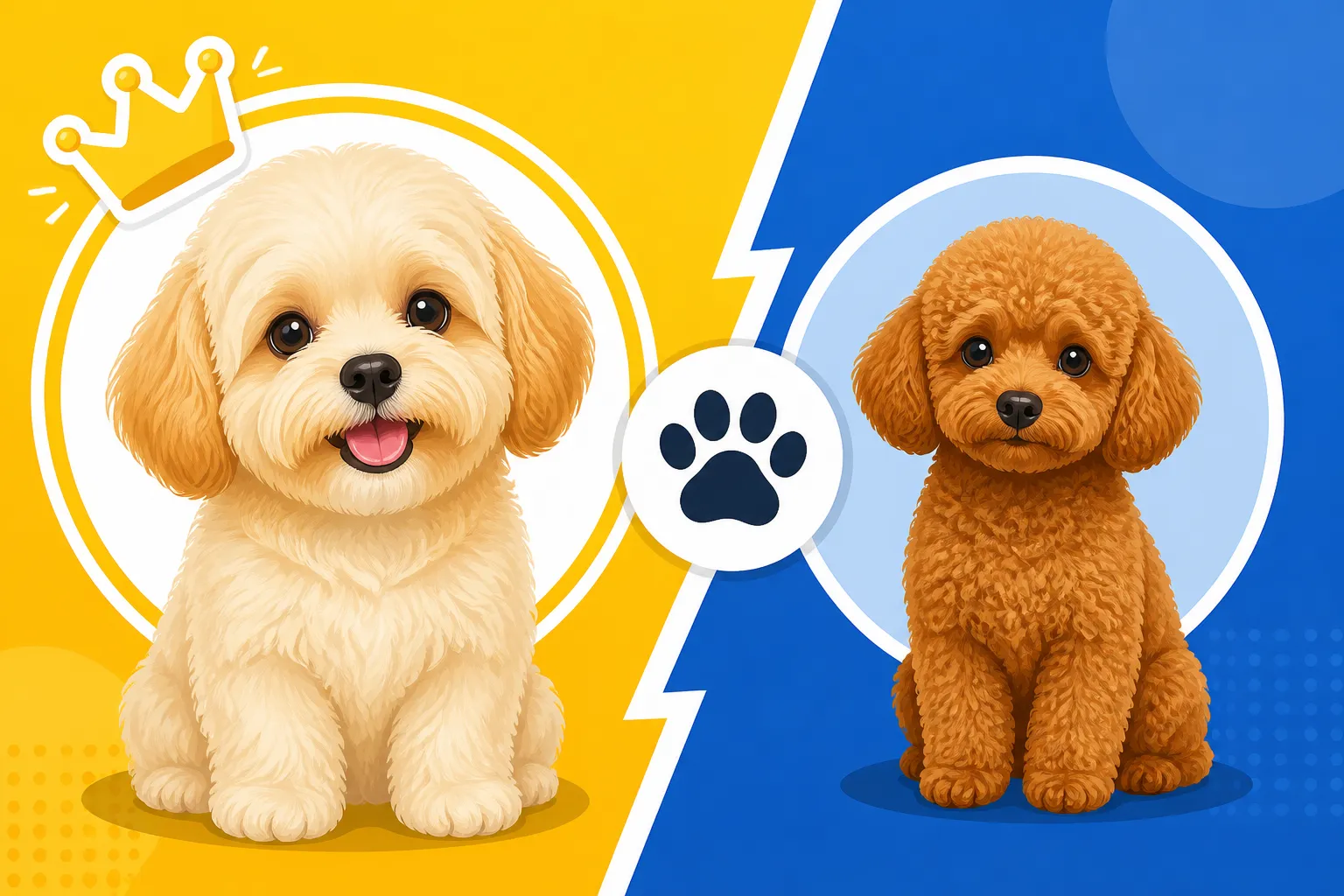
A Maltipoo is a cross between a Maltese and a Poodle. The Poodle parent may be Toy-sized, but the puppy’s inherited traits are not guaranteed to fall neatly between the two parents. One Maltipoo may have a soft, wavy coat and a Maltese-like face; another may have tighter curls or a more Poodle-like build. The background of the cross is explained in The Maltese and the Poodle Behind Every Maltipoo.
This difference matters most if you are hoping to predict the adult dog from a puppy photo or a breeder’s estimate. Parent size and appearance can offer clues, but they cannot promise exactly how a Maltipoo will look or what its coat will be like as an adult. A Toy Poodle is generally the more straightforward choice if consistency is high on your list.
Quick comparison
| Consideration | Maltipoo | Toy Poodle |
|---|---|---|
| Breed type | Maltese-Poodle cross | Purebred Poodle |
| Adult appearance | Can vary considerably | More consistent breed traits |
| Coat | May be wavy, curly, or straighter | Usually curly or corded, with regular clipping needs |
| Grooming | Frequent brushing and professional grooming are often needed | Frequent brushing and professional grooming are needed |
| Temperament | Can combine traits from both parent breeds | Often bright, alert, and responsive to training |
| Allergy expectations | No coat can guarantee an allergy-free home | No coat can guarantee an allergy-free home |
| Best fit | Someone comfortable with variation between individual dogs | Someone who values a more predictable breed profile |
The table gives a useful starting point, not a verdict on any individual dog. A well-socialized Maltipoo may be easier to live with than a poorly matched Toy Poodle, and a particular Toy Poodle may be more sensitive or energetic than the breed’s general reputation suggests. Meet the dog, ask about its behavior, and consider the daily routine you can realistically provide.
Temperament, Training, and Daily Company
How their personalities may differ
Toy Poodles are often quick to learn and attentive to their people. That intelligence can make training rewarding, but it also means they need something to do. A Toy Poodle who gets little interaction or mental stimulation may invent its own entertainment, such as barking at hallway sounds or repeatedly seeking attention. Short training games, sniffing activities, and predictable walks can help channel that energy.
Maltipoos may inherit social, affectionate traits from either parent, but there is no single Maltipoo personality. Some are lively and curious; others are more reserved or strongly attached to one person. A puppy’s upbringing, early experiences, and individual temperament matter alongside its family tree. What the Poodle Puts Into a Maltipoo's Character offers more context for why a Maltipoo may show Poodle-like behaviors without being a small Poodle in every respect.
Both dogs can become distressed if left alone for long stretches without preparation. Their small size does not mean they need only to sit on a lap all day. They benefit from gentle exercise, training, play, and time to rest in a calm place. If your household is empty for much of the day, think through who can provide company and bathroom breaks before choosing either dog.
Training and everyday manners
Both Maltipoos and Toy Poodles can learn household routines, but the work still falls to the owner. Use short, consistent sessions and reward the behaviors you want. For a small dog, that may mean practicing calm greetings, walking comfortably on a harness, settling on a mat, and accepting gentle handling for grooming.
House-training can be frustrating when a small puppy needs frequent opportunities to go outside. Accidents do not mean the dog is stubborn or trying to annoy you. A predictable schedule, close supervision, and praise for going in the right place are more useful than scolding after the fact. If you are comparing expectations, The Household a Maltipoo Actually Suits can help you think about the time and attention a Maltipoo may need at home.
A Toy Poodle’s trainability may appeal if you enjoy teaching cues and tricks. A Maltipoo can also be a keen learner, but its response and focus will depend on the individual dog. Neither choice is automatically “easy.” Choose the one whose likely activity level and need for companionship fit your schedule, rather than assuming that a small companion dog will require little training.
Grooming, Coat Care, and Allergies
Coat care is a real commitment for both
Maltipoos and Toy Poodles usually need consistent coat maintenance. A coat that grows continuously can tangle, especially behind the ears, under the legs, around the collar or harness, and where the legs meet the body. A quick surface brush may leave knots hidden close to the skin, so take time to comb through in sections and check that the comb reaches down to the coat’s base.
A Toy Poodle’s coat is often curly and requires regular brushing and clipping. A Maltipoo’s coat may be curly, wavy, or closer to a straighter texture, and its grooming needs can change as the puppy matures. The coat you see when a Maltipoo is very young may not accurately show what it will be like later. For more detail on coat changes and care, see Whether a Maltipoo's Coat Ever Stops Growing.
Grooming is not just about keeping a dog looking tidy. Mats can pull at the skin, and trimming around the eyes, feet, and sanitary areas helps keep those areas manageable. Before bringing home either dog, consider whether you can maintain regular brushing and arrange professional grooming when needed. A grooming routine introduced gently at home can make salon visits less stressful.
Allergies and shopping for supplies
Neither a Maltipoo nor a Toy Poodle is guaranteed to be suitable for someone with dog allergies. People can react to dander, saliva, or other allergens, and individual responses vary. A low-shedding coat does not mean an allergy-proof dog. If allergies are a concern, spend time with the specific dog before committing and speak with a healthcare professional about your situation. Whether a Maltipoo Suits an Allergic Home covers why coat claims should be treated cautiously.
You will also need practical supplies: a comb that reaches through the coat, a suitable brush, a well-fitted harness, nail-care tools, and dog food appropriate to the dog’s age and needs. When comparing food options at a retailer such as Chewy, use the product’s feeding guidance as a starting point and confirm the diet with your veterinarian, particularly for a puppy or a dog with a medical concern. For grooming tools, focus on comfort and usefulness for the coat in front of you rather than buying a large set of accessories all at once.
If you are unsure which brush or comb suits a Maltipoo’s coat, ask the groomer who handles your dog to show you how to use it safely. A store listing cannot tell you how easily a particular dog mats or how tolerant it is of brushing. For either breed, the best routine is the one you can keep up with gently and consistently.
Health, Costs, and Choosing the Right Dog
Health considerations without breed guarantees
A Toy Poodle may have a more documented breed profile, while a Maltipoo can inherit health risks from either parent. Crossbreeding does not guarantee a healthier dog, just as being purebred does not mean a dog will necessarily develop a particular condition. Health depends on the individual dog, its inherited traits, preventive care, and the quality of its breeding and upbringing.
Ask a breeder what health screening was done for both parents, and request clear records rather than relying on a general statement that the puppies are “healthy.” Ask what veterinary care the puppy has received, how it has been socialized, and what support is available if concerns arise. If adopting an adult dog, ask for its medical history and arrange a veterinary check soon after bringing it home.
Regardless of which dog you choose, budget for routine veterinary care, grooming, food, training, and unexpected needs. The exact expense varies by location and by the dog’s health and coat. When comparing supplies at Chewy or another retailer, remember that the initial shopping list is only one part of ownership; regular grooming and veterinary care are ongoing commitments.
How to decide between them
A Toy Poodle may be a better fit if you value a more predictable breed profile, enjoy training, and are comfortable with regular coat care. A Maltipoo may suit you if you are open to more variation in appearance and temperament and are prepared to assess the individual puppy or adult dog rather than relying on a label. For a wider look at how Maltipoos compare with another small companion breed, see Maltipoo or Toy Poodle.
Before you decide, write down what an ordinary weekday looks like in your home. Consider how long the dog would be alone, who will handle brushing and grooming appointments, whether small children or larger pets live with you, and how much time you can set aside for walks and training. This simple exercise can reveal a mismatch before you bring a dog home.
Finally, meet the dog in a calm setting if possible. Watch how it responds to people, handling, and ordinary household sounds. Ask questions about the dog’s parents, early care, and routine. If you are comparing food or basic care items, Chewy may be one place to browse options, but your veterinarian and groomer can help you decide what is suitable for your specific dog. The best choice is not the one with the most appealing label; it is the dog whose needs you can meet consistently.
Disclaimer
This article is for general informational purposes only and does not constitute professional advice. Laws, prices and regulations vary by location and change over time. Consult a qualified professional for guidance on your specific situation.