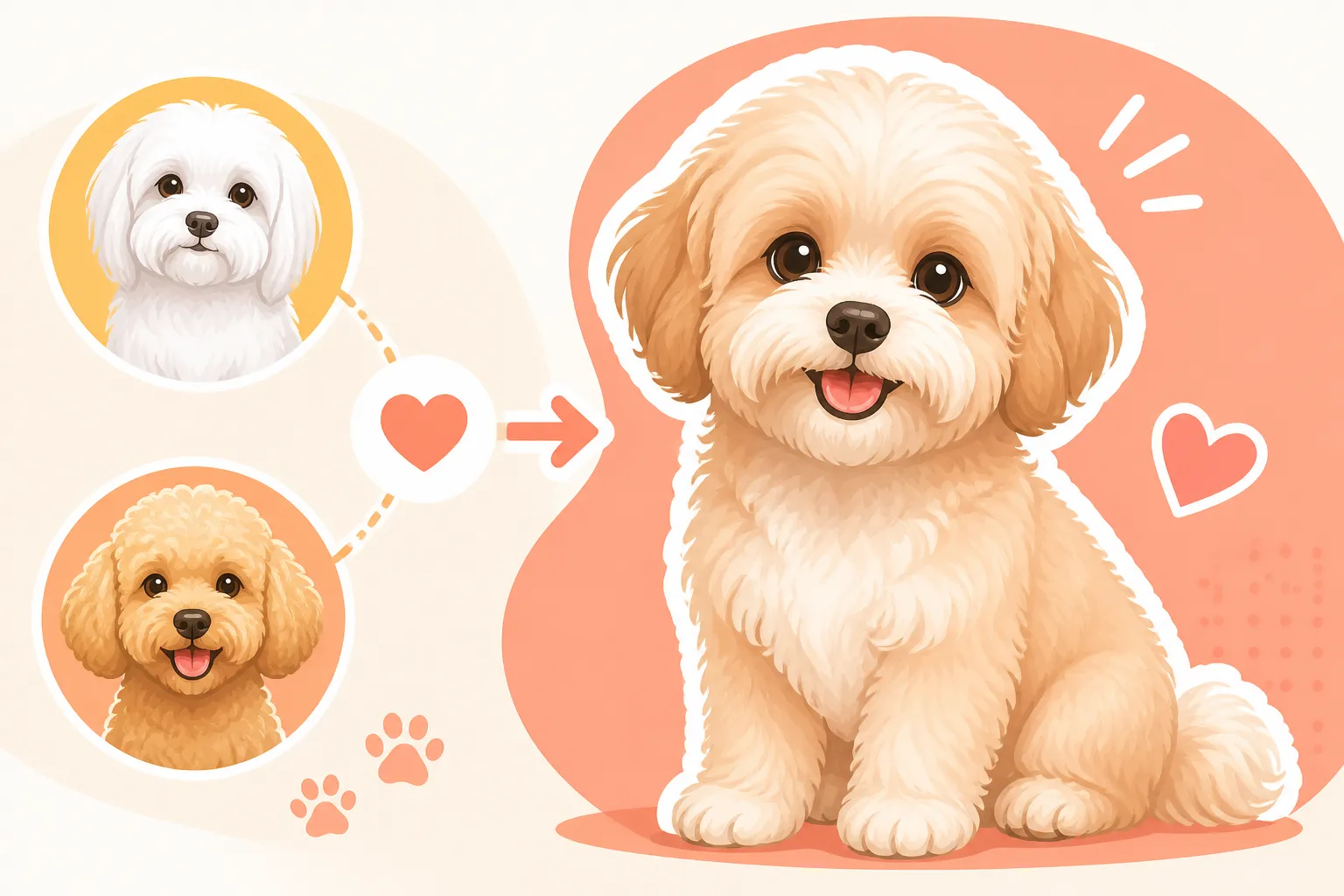
What a Malshi Is
A Malshi is a small companion dog from a Maltese and a Shih Tzu, but the name does not guarantee a particular size, coat, or personality. That uncertainty can make it hard to compare a Malshi with a Maltipoo or know what daily care will involve. This guide explains the mix, the traits to expect, and what to ask before bringing one home.
What a Malshi is and where the name comes from
The Maltese and Shih Tzu mix
A Malshi, sometimes called a Mal-Shi or Maltese Shih Tzu, is a cross between a Maltese and a Shih Tzu. It is not the same mix as a Maltipoo, which comes from a Maltese and a Poodle. The names sound similar, and both dogs are often described as small, affectionate companions, so it is easy to mix them up when browsing listings.
A Malshi can inherit traits from either parent, and even puppies from the same litter may not look or act alike. One may have a longer muzzle or a more Shih Tzu-like face; another may look more like a Maltese. Coat texture, color, and adult size can also vary. A seller may use labels such as “teddy bear” to describe appearance, but those labels are not a reliable guide to a dog’s eventual coat or temperament.
That variation is one reason to look beyond a cute photo or a breed label. Ask about the puppy’s parents, health history, early handling, and the kind of care the dog is already used to. A responsible breeder or rescue should welcome practical questions rather than promising that every Malshi will be identical.
How a Malshi differs from a Maltipoo
The clearest difference is the second parent: a Malshi has a Shih Tzu parent, while a Maltipoo has a Poodle parent. That difference can influence appearance and coat care, but it does not make either mix automatically easier to groom, train, or live with. The individual dog and its early experiences matter a great deal.
People sometimes assume a Malshi will be calmer or a Maltipoo will be more trainable because of the breeds behind the mix. Those are broad expectations, not guarantees. A dog may inherit a mix of traits, and upbringing, socialization, health, and daily routine all play a role. If you are comparing the two, consider the kind of grooming, exercise, and company you can consistently provide—not just which name sounds like a better fit.
For a side-by-side look at the two mixes, see The Maltipoo Against the Malshi. If you are also trying to understand the Maltipoo’s parentage, The Maltese and the Poodle Behind Every Maltipoo explains why a Maltipoo can differ from a Malshi even when both are small companion dogs.
| Feature | Malshi | Maltipoo |
|---|---|---|
| Parent breeds | Maltese and Shih Tzu | Maltese and Poodle |
| Likely general role | Companion dog | Companion dog |
| Coat and appearance | May vary with the traits inherited from either parent | May vary with the traits inherited from either parent |
| Grooming needs | Often require regular coat care; the individual coat matters | Often require regular coat care; the individual coat matters |
| Predictability | A mix does not guarantee a specific adult look or temperament | A mix does not guarantee a specific adult look or temperament |
Is a Malshi a recognized breed?
“Malshi” is a common name for a cross, not a promise that the dog conforms to one universally agreed breed standard. Registries and organizations may handle mixed-breed dogs differently, and paperwork from a registry does not by itself establish health, temperament, or breeding quality.
This matters when a listing uses terms such as “purebred Malshi” or presents a particular coat color, size, or face shape as guaranteed. Ask what the seller means by those descriptions and what documents they can provide. Focus on verifiable details—parent information, veterinary records, health screening where appropriate, and the puppy’s living conditions—rather than treating a label as proof of quality.
What a Malshi may look like and how it may behave
Appearance, size, and coat can vary
Malshis are generally bred as small companion dogs, but you should not assume a specific adult weight or appearance from the name alone. Parent size can offer context, but it cannot guarantee the puppy’s final size. Growth, body structure, and coat may differ even among puppies raised by the same breeder.
The coat may be long or kept in a shorter trim, and its texture can vary. Some owners prefer a short, practical cut; others keep a longer style that needs more frequent brushing and careful detangling. Either way, a coat that looks soft and low-shedding still needs hands-on care. Hair can tangle around friction points such as behind the ears, under a harness, and where the legs meet the body.
Ask the breeder or rescue how the dog responds to brushing, bathing, nail handling, and having its face touched. A young puppy may need gradual, positive practice with these routines. If you plan to shop for brushes, combs, or other basic supplies, Chewy can be one place to compare available options, but choose tools that suit the dog’s actual coat and ask a groomer or veterinarian for guidance if you are unsure.
Temperament is not guaranteed by the mix
Many people look for a Malshi because they want a companion dog that enjoys being near the family. But no mix can promise a particular personality. Some dogs are outgoing with visitors; others need time to warm up. Some settle easily into a quiet home, while others are lively, vocal, or more sensitive to change.
A dog’s behavior is shaped by inherited tendencies as well as socialization, training, health, and daily experience. Look for a puppy or adult dog that has been handled kindly and introduced gradually to normal household sounds and routines. Ask how it reacts to being picked up, groomed, left briefly alone, and approached by unfamiliar people. For an adult rescue dog, ask the foster caregiver what the dog is like in a home setting rather than relying only on kennel behavior.
Small size can also lead people to carry a dog constantly or let it avoid everyday experiences. Gentle handling is important, but a Malshi still benefits from age-appropriate training, supervised exploration, and a predictable routine. If you are comparing family fit more broadly, The Household a Maltipoo Actually Suits and Whether a Maltipoo Suits a Family With Children offer useful questions to consider for a small companion dog.
Are Malshis hypoallergenic?
No dog can be reliably promised as hypoallergenic. A Malshi may shed less than some dogs, but coat and shedding can vary, and allergens are not limited to loose hair. They can also be present in skin flakes and saliva. Spending time with a particular dog may help you understand your own reaction, although one visit cannot guarantee how you will respond after living together.
Be cautious of sellers who use “hypoallergenic” as a firm guarantee or present a certain coat as proof that allergies will not be an issue. If allergies are a serious concern, talk with a healthcare professional and arrange a careful, realistic trial of contact where possible. The same caution applies to Maltipoos: Whether the Maltipoo Was Bred for Allergies explains why a popular description should not be treated as a medical promise.
What caring for a Malshi involves
Coat care is an ongoing routine
A Malshi’s coat needs regular attention, whether you keep it long or choose a shorter clip. Brushing helps identify small tangles before they tighten into uncomfortable mats. Pay particular attention to areas where hair rubs or gathers, including behind the ears, around the collar or harness, and along the legs. If a mat is close to the skin, do not pull hard or cut blindly with scissors; a professional groomer can help prevent accidental injury.
Coat care also involves getting the dog comfortable with being handled. Start with brief, calm sessions and reward relaxed behavior. If brushing becomes a struggle, pause and make the next session easier rather than trying to force the entire coat in one go. A groomer can show you how to maintain the coat between appointments and which comb or brush is appropriate.
Regular care may include bathing, nail trimming, ear checks, and keeping hair around the eyes tidy. A store such as Chewy may carry grooming supplies, but the right choice depends on the dog’s coat and tolerance. If the dog’s skin looks irritated, the ears smell unusual, or grooming seems painful, ask a veterinarian rather than trying to solve the problem with a new product.
Exercise, company, and training
A Malshi does not need to be treated as a fragile ornament. Most dogs benefit from short walks, sniffing time, play, and simple training suited to their age and physical condition. Keep outings comfortable, especially in hot or cold weather, and watch for signs that the dog needs a break. A securely fitted harness can be more comfortable for many small dogs than putting pressure on the neck, but fit matters.
Companionship is often a major part of life with a small companion dog. That does not mean a dog should be expected to cope with constant attention, nor does it mean it should be left alone for long stretches without preparation. Teach short, gradual periods of independence and provide a safe resting place. If your household is busy, plan who will manage walks, toileting, meals, and supervision rather than assuming the dog will simply adapt.
Reward-based training can help with everyday skills such as coming when called, settling, walking on a leash, and tolerating grooming. Use brief sessions and clear routines. If you are considering a Maltipoo as well, remember that shared small size does not mean identical care needs; What Maltipoo Owners Say They Were Not Told highlights why it is worth looking past the appealing first impression of a small dog.
Health questions to discuss
A Malshi may inherit health risks associated with either parent, but an individual dog’s risk cannot be diagnosed from its mix alone. Ask about the health history of both parents and what veterinary examinations or screening have been completed. Request copies of relevant records and ask what signs should prompt a follow-up with the veterinarian.
For a puppy, arrange a veterinary visit soon after bringing the dog home and bring any paperwork you received. Ask about vaccination and parasite-prevention schedules, dental care, nutrition, weight monitoring, and when to schedule routine examinations. For an adult dog, request the available medical history and clarify whether any ongoing treatment or follow-up is needed.
A seller’s broad assurance that a puppy is “healthy” is not a substitute for records or a veterinary assessment. Likewise, a mixed ancestry does not automatically protect a dog from inherited problems. If you are considering a Maltipoo, The Four Certificates a Maltipoo Breeder Should Show offers a useful example of the kind of documentation and questions that can help you evaluate a breeder responsibly.
How to decide whether a Malshi is right for you
Questions to ask a breeder or rescue
Before committing, ask direct questions and take time to assess the answers. Find out where the puppy or dog has been living, how it has been socialized, what food it eats, and what care it has received. Ask to meet the mother when appropriate and practical, and request information about the other parent. A careful conversation should include the dog’s needs and limitations, not just its appealing qualities.
Useful questions include:
- What do you know about the health and temperament of both parents?
- What veterinary care and records will come with the dog?
- How has the puppy been introduced to grooming, handling, household sounds, and people?
- What does the dog eat, and how is its current routine organized?
- What support is available if the dog has difficulty settling in?
- If circumstances change, what is the breeder’s or rescue’s policy for taking the dog back or helping with rehoming?
Be wary of pressure to pay quickly, vague answers about the dog’s background, or promises of a guaranteed adult size, coat, or allergy outcome. What Maltipoo Owners Say They Were Not Told is also a helpful reminder that the questions you ask before bringing home a small companion can shape your experience well beyond the first week.
Match the dog to your daily life
A Malshi may suit someone who wants a small companion and is ready to provide regular grooming, training, veterinary care, and company. It may be a poor fit if you are looking for a dog that needs almost no coat maintenance, can be left alone for most of the day without preparation, or will automatically be comfortable with young children and busy environments.
Think through ordinary days rather than imagining only the fun parts. Who will brush the dog when the coat starts tangling? Who will take it out in bad weather? Can everyone in the home handle the dog gently and consistently? Do you have a plan for supervision around children or larger pets? These practical questions often say more about fit than a breed label does.
A Malshi and a Maltipoo can both be affectionate, engaging companions, but neither mix comes with a guaranteed personality or care profile. Learn about the individual dog, consider the ongoing work involved, and choose based on a realistic match with your household—not on a promise that any particular mix will be effortless.
Disclaimer
This article is for general informational purposes only and does not constitute professional advice. Laws, prices and regulations vary by location and change over time. Consult a qualified professional for guidance on your specific situation.