Whether Maltipoos Reach Shelters at All
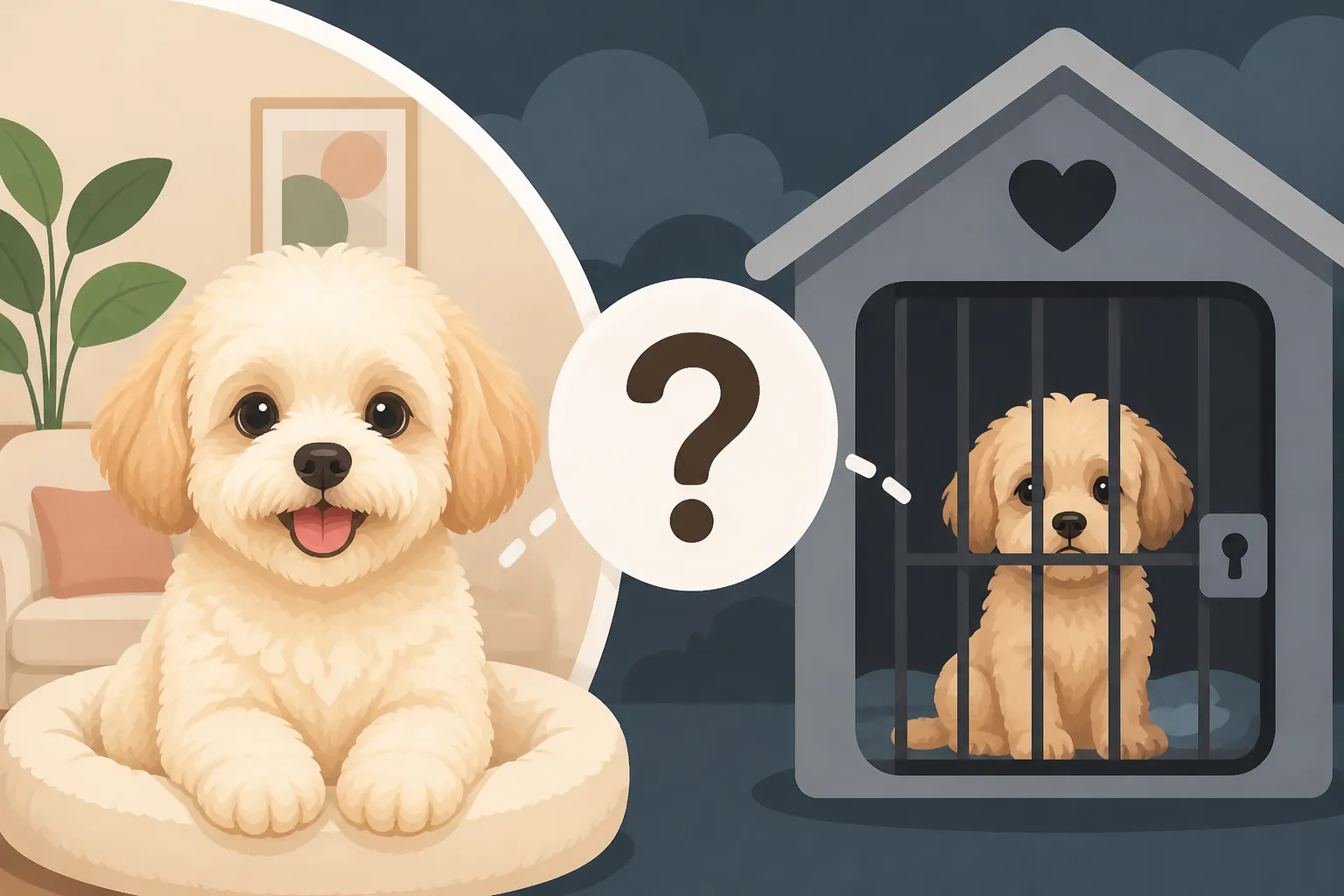
A Maltipoo can turn up in a shelter or rescue, even though the mix is often associated with carefully planned puppy searches. The tricky part is that shelters may not label a small, curly-coated dog as a Maltipoo, and individual dogs arrive for many different reasons. This guide explains where to look, what adoption may involve, and how to assess a dog as an individual.
Yes, Maltipoos can reach shelters and rescues
A Maltipoo is a Maltese–Poodle mix, not a breed that every shelter or rescue can identify with certainty. Still, dogs that look like Maltipoos do enter animal shelters, municipal facilities, humane societies, and private rescue groups. Some arrive with a known history; others come in as strays or with little information about their background.
That means the answer is yes, but finding one may take patience. A listing might describe a dog as a Maltipoo, a Poodle mix, a Maltese mix, or simply a small mixed-breed dog. Searching only one exact label can cause you to miss a dog who might suit your home.
A shelter and a rescue are not quite the same
A municipal or county shelter may take in stray animals, owner surrenders, and dogs transferred from other facilities. Its records and adoption procedures depend on the local organization. A private rescue may use foster homes, screen applicants, and arrange placements without operating a public-facing kennel.
Both types of organization can have Maltipoos or Maltipoo-like dogs, but they may show available dogs differently. A shelter might list a dog under a broad category such as “small mixed breed,” while a foster-based rescue may have more detail about the dog’s behavior at home.
It is also useful to look beyond organizations with “Maltese” or “Poodle” in their name. Some breed-specific rescues accept mixes; others focus on purebred dogs or have limited room. The policies vary, so ask directly rather than assuming a group does or does not take Maltipoos. Whether Maltese Rescues Take Maltipoos
Breed labels can be educated guesses
A shelter’s breed description is often a practical estimate, not a verified family tree. A small dog with a wavy coat and a familiar face may be labeled Maltipoo because that seems plausible, even if no one knows the parents. The dog may also have traits from other breeds that are not obvious from a photo.
This is why listings can be inconsistent. A dog described as a Poodle mix in one place might be called a Maltese mix by another organization, especially if it has been transferred or its records are incomplete. Search by size, coat, age, and location as well as by breed name.
Photos can add to the confusion. Grooming changes a dog’s appearance, and a short haircut may make a curly-coated dog look quite different from a fluffy shelter photo taken weeks earlier. Focus on the organization’s notes and, if possible, meet the dog rather than trying to make a firm breed identification from a picture.
Why a Maltipoo may be surrendered or found as a stray
There is no single reason a Maltipoo ends up in a shelter or rescue. A family may face a move, a change in finances, illness, a new baby, or another circumstance that makes caring for a dog difficult. Sometimes the issue is a mismatch between the dog’s needs and what the household expected.
Coat maintenance can be part of that mismatch. A Maltipoo’s coat may mat without regular combing and grooming, and people who expected a low-maintenance dog can feel overwhelmed by the routine. Other owners may struggle with housetraining, barking, separation distress, or the practical demands of raising a puppy while working long hours. For more on one common route from home to rescue, see Why So Many Maltipoos End Up in Rescue.
Strays may have a different story altogether. A dog can slip through a gate, get lost during a move, or be found without a collar or microchip information that helps reunite it with its family. A shelter listing does not always reveal whether the dog was surrendered or found outdoors, so ask what the organization knows and what remains uncertain.
Where to look for an adoptable Maltipoo
Searching effectively means using several channels and allowing for different labels. A Maltipoo may be listed briefly, placed through a foster network, or adopted before you happen to see the listing. A calm, organized search usually works better than refreshing one page and hoping for a perfect match.
| Place to search | How a Maltipoo may be described | A useful next step |
|---|---|---|
| City or county shelter | Small mixed breed, Poodle mix, Maltese mix | Search by size and ask staff about recently admitted small dogs |
| Humane society | Maltipoo or a general mixed-breed label | Check listings regularly and ask about adoption steps |
| Foster-based rescue | Maltese mix, Poodle mix, or a named cross | Ask about the dog’s daily routine in its foster home |
| Breed-specific rescue | Maltipoo or a mix accepted under its policy | Confirm whether the group places mixed-breed dogs |
| Rehoming network | Owner-described Maltipoo or small companion dog | Request records and use a careful, in-person process |
Search broadly rather than relying on one phrase
Try combinations such as “small Poodle mix,” “Maltese mix,” and “small companion dog,” along with “Maltipoo.” If a shelter has a search filter, use size and age filters too. Checking nearby communities can be worthwhile because animals are sometimes transferred between shelters or placed by organizations serving a wider area.
If you speak with shelter staff, describe the kind of dog you are hoping to meet rather than asking only whether a Maltipoo is available. For example, you might say you are interested in a small adult dog who can manage apartment life and has a known response to being left alone. Staff may know of a suitable dog listed under a different description.
You can also contact rescues and ask whether they maintain a waitlist or share upcoming dogs before a formal listing appears. Be clear about your flexibility: an adult Maltipoo mix may be a better fit than a puppy, and a dog with a different coat or age may still have the companionship you want.
Expect timing to vary
Small companion dogs can draw attention from potential adopters, but that does not mean every Maltipoo is adopted immediately or that one will be available in your area. Some dogs need medical care, behavioral support, or a foster placement before an organization is ready to match them. Others may be adopted quickly after becoming available.
Rather than treating a wait as a reason to rush into a questionable listing, prepare in advance. Decide who will care for the dog during the workday, how you will handle grooming, and what your household can realistically manage. If you are considering a puppy, also think through the time and patience involved in housetraining and early socialization.
A rescue dog may not match the look you pictured, and a dog’s coat can change with age, grooming, and care. Prioritize temperament, health information, and fit with your daily life over a particular color or “perfect” Maltipoo appearance.
Ask how the organization matches dogs with homes
A thoughtful adoption process should give you a chance to ask questions and explain what kind of home you can offer. Some organizations use applications, references, meet-and-greets, or home checks; others have a different process. A rescue’s questions are not necessarily a judgment of you. They may be trying to prevent a difficult match for both the dog and adopter.
Ask whether the dog has lived with children, cats, or other dogs, if that information is known. Find out how the dog behaves when left alone, whether it is comfortable being handled, and what the organization has observed around food, visitors, and grooming. If the dog is in foster care, ask for examples from ordinary days, not just a general description such as “sweet” or “friendly.”
For a fuller sense of what a rescue may ask before approving an application, see What a Rescue Wants to Know Before Placing a Maltipoo. The details can help you consider the dog’s needs honestly before you commit.
What to check before adopting
A rescue listing can make a dog sound appealing, but the most useful information is often about everyday care and known health needs. Some records may be complete; others may be limited, particularly for a stray or a dog surrendered without veterinary paperwork. Ask for what is available and make a plan to have your own veterinarian assess the dog after adoption.
Ask about health history and current care
Request any available veterinary records, vaccination information, medication details, and notes about previous treatment. Ask whether the dog has had a recent examination and whether the organization has identified concerns that need follow-up. If the dog has a known condition, ask what signs the foster caregiver has seen and what care has already been recommended.
Maltipoos can have individual health needs just like other dogs, and the mix itself does not guarantee a particular health outcome. Dental care, kneecap concerns, skin or ear problems, and eye issues may be worth discussing with a veterinarian based on the dog’s age, history, and examination. Do not assume a concern is present simply because the dog is a Maltipoo, but do not avoid asking about one if the dog has symptoms or a known diagnosis.
A rescue may not know the dog’s full history, and that is not automatically a sign that something is wrong. It does mean you should budget time for a veterinary visit and keep expectations realistic. A practical first step is to arrange an appointment and bring all records the organization can provide.
Learn the dog’s routine before changing it
Ask what the dog eats, how often it eats, where it sleeps, and how it handles walks and bathroom breaks. A sudden switch in food, schedule, and surroundings can make the first days harder. If the dog is doing well on a particular food, ask for the exact product name and feeding instructions, then discuss any planned diet change with your veterinarian.
For example, if the foster caregiver says the dog eats a particular food that they order through Chewy, confirm the exact formula and how much the dog receives rather than guessing from the brand name alone. That information can help you keep meals familiar while the dog settles in. If you need to restock supplies through Chewy or another retailer, use the written details from the foster or rescue so you do not accidentally buy a different product.
Grooming is another routine worth understanding. Ask when the dog was last groomed, how it responds to brushing, and whether it has mats or sensitive areas. If the coat is tangled, avoid pulling at painful knots yourself; ask the rescue what grooming has been done and have a groomer or veterinarian advise on the safest next step. You can explore the upkeep involved in The Coat a Maltipoo Gets From Two Non Shedding Parents.
Look closely at behavior, not just the adoption description
“Good with dogs” can mean a dog has lived peacefully with one familiar dog, not that it will be comfortable in every group setting. Ask for specifics: Has the dog shared a home with another dog? How does it behave when a dog approaches on a walk? Has it been around children, and under what kind of supervision?
The same goes for separation. A dog who has spent time in a foster home may have shown how it manages when people leave, but no short observation can predict every reaction in a new home. Ask what the caregiver has actually seen and whether the dog vocalizes, chews, or becomes distressed when alone. Plan for gradual adjustment rather than expecting a newly adopted dog to settle instantly.
Pay attention to how the dog responds to being approached, picked up, brushed, or having its paws handled. A Maltipoo may be small, but it still needs to feel safe and have space to move away. If children are part of your household, adults should supervise all interactions and teach children to let the dog approach rather than grabbing or carrying it.
Making the adoption transition work
A shelter or rescue adoption is not only about finding the right dog. It is also about giving that dog a predictable landing place. The first days can involve uncertainty, missed routines, and behavior that looks different from what the foster caregiver described. A steady transition helps you learn who the dog is without expecting it to adapt overnight.
Prepare the home before pickup
Set up a quiet resting area, secure the doors and gates, and decide where food and water will go. A small dog can slip through openings that seem minor, so check the yard and entryways carefully. Have a correctly fitted harness and leash ready, and keep identification information current.
Gather supplies based on the dog’s actual needs rather than buying every item marketed for Maltipoos. If the foster home uses a specific brush, food, or bedding routine, ask why it works for that dog. You might find that a familiar food or tool is available through Chewy, but the important part is matching the dog’s known routine and confirming product details with the caregiver.
Arrange who will be home during the initial adjustment. A new dog may need more supervision for bathroom breaks, meals, and reassurance than the household expects. If everyone leaves for a full workday immediately, the dog may struggle before you have learned its schedule or its comfort level alone.
Keep the first days calm and predictable
It is tempting to introduce the dog to every neighbor, take a long outing, and let it explore the whole house on day one. For many dogs, that is a lot to process. Start with a limited, quiet area and a simple routine for meals, bathroom breaks, rest, and short walks.
Use the information you gathered from the rescue, but stay observant. A dog may eat less at first, sleep more, or be unusually clingy while adjusting. If you have concerns about appetite, vomiting, diarrhea, breathing, pain, or a sudden change in behavior, contact a veterinarian rather than assuming every change is ordinary stress.
You can keep a simple note of meals, bathroom habits, medication, and questions that come up. If the rescue said the dog was eating a certain food sourced through Chewy, record the exact product and amount while you transition. That can make it easier to discuss appetite or diet with your vet and avoid several changes at once.
Consider all responsible routes to finding a dog
Shelters are one route, but a Maltipoo may also become available through a private rescue or an owner-assisted rehoming arrangement. Each route calls for care. Ask about veterinary history, the reason for rehoming, and whether you can meet the dog in a safe setting. Be cautious of anyone who will not answer basic questions, pressures you to send money quickly, or refuses a reasonable way to confirm the dog’s identity and welfare.
Some people assume adoption is always less expensive than buying from a breeder, but costs and included services differ. A rescue fee may cover some care, while the dog may still need follow-up veterinary work, grooming, training, or supplies. Compare the total responsibilities rather than focusing on one initial payment. Whether Adopting a Maltipoo Costs Less and What Maltese and Doodle Rescues Charge for a Maltipoo offer more context on those considerations.
If you cannot find a suitable dog right away, waiting is a responsible choice. You can contact organizations, revisit listings, and be open to a Maltese–Poodle mix with a different label. You can also learn how an owner may responsibly look for a new home when a rescue placement is not available through Finding a Maltipoo a Home Without a Rescue.
Disclaimer
This article is for general informational purposes only and does not constitute professional advice. Laws, prices and regulations vary by location and change over time. Consult a qualified professional for guidance on your specific situation.