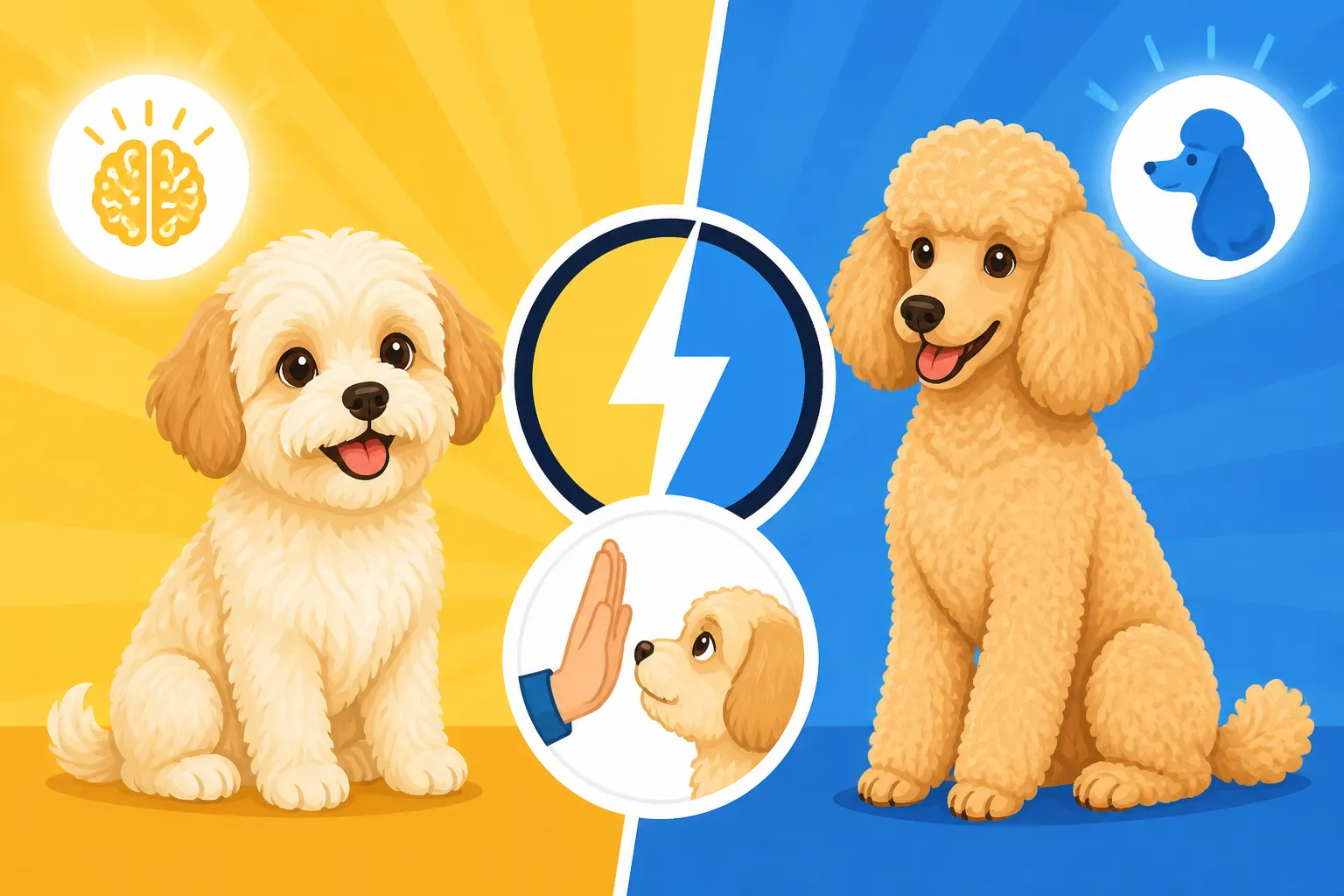
Whether a Maltipoo Bred Back to Poodle Trains Faster
One of the most exciting, yet sometimes confusing, aspects of welcoming a Maltipoo into your life is understanding their unique blend of traits. Many prospective owners wonder about temperament and intelligence, especially when considering a puppy from a lineage "bred back" to a Poodle. This guide aims to demystify how these specific breeding practices can influence a Maltipoo's trainability, helping you set realistic expectations and create the best training plan for your furry family member.
Decoding Maltipoo Generations and Their Genetic Makeup
The term "Maltipoo" itself signifies a cross between a Maltese and a Poodle. But it's not always a straightforward 50/50 split of genetics. When breeders talk about "breeding back to a Poodle," they're usually referring to a specific generation that has a higher percentage of Poodle DNA. This is where terms like F1b, F2b, or even F3b come into play, and understanding them is crucial for anticipating trainability.
What "Bred Back to Poodle" Actually Means for Your Maltipoo
Let's break down the generations. An F1 Maltipoo is a direct cross between a purebred Maltese and a purebred Poodle. This puppy gets roughly half its genetic material from each parent, making its traits quite a "coin flip." You might get a dog leaning more towards the Poodle's active, intelligent nature, or one with more of the Maltese's gentle, sometimes stubborn, demeanor.
When a Maltipoo is "bred back to Poodle," it usually results in an F1b generation. This means an F1 Maltipoo is bred with a purebred Poodle. The "b" stands for backcross. In this scenario, the resulting F1b puppies typically have about 75% Poodle and 25% Maltese genetics. This higher concentration of Poodle genes is often sought after for specific traits, one of which is perceived enhanced trainability. Later generations like F2b (F2 Maltipoo bred with a Poodle) would also increase the Poodle percentage. This intentional breeding aims to strengthen certain characteristics, including intelligence and a drive to please, which are strongly associated with the Poodle breed.
The Poodle's Reputation for Intelligence and Trainability
Poodles, whether Standard, Miniature, or Toy, are renowned for their exceptional intelligence and eagerness to learn. They consistently rank among the smartest dog breeds, making them highly trainable. Historically, Poodles were bred as water retrievers, a working role that demanded sharp minds, problem-solving skills, and a strong desire to cooperate with their human partners. This background has ingrained a biddable nature and an impressive capacity for understanding and executing commands.
Their intelligence means they pick up new concepts quickly, and their desire to please their owners makes them highly motivated students. This is why Poodles excel in obedience, agility, and other dog sports. When this genetic predisposition is amplified in a Maltipoo through backcrossing, owners often hope to see these desirable traits shine through, leading to a dog that's not just smart, but also genuinely enjoys the training process. You can find many Poodle-specific training guides and toys on sites like Amazon that highlight their intellectual capabilities.
The Maltese's Contribution to Temperament and Training
On the other side of the genetic equation is the Maltese. While absolutely charming and intelligent in their own right, the Maltese typically possess a different temperament when it comes to training. They were bred as companion dogs, often enjoying a pampered lifestyle. This background means they are often less driven by a "job" or an eagerness to please in the same way a working breed like a Poodle might be.
Maltese can be independent and, dare I say, a little stubborn at times. They are intelligent enough to learn, but they might decide that learning a particular command isn't worth their effort unless the reward is truly enticing. Their motivation might come from comfort, affection, or a delicious treat, rather than the sheer joy of performing. They also have a reputation for being sensitive, meaning harsh training methods are counterproductive and can lead to them shutting down. Understanding this aspect of the Maltese heritage is key, as even in a Poodle-dominant Maltipoo, some of that independent spirit can still surface. It's truly a The Coin Flip Inside Every Maltipoo Puppy!
How Poodle Genetics Influence Trainability in a Maltipoo
When a Maltipoo is bred to have a higher Poodle percentage, it often tilts the scale towards the Poodle's inherent characteristics. This isn't just about appearance; it profoundly impacts their cognitive abilities, motivation, and overall approach to learning.
Increased Intelligence and Problem-Solving Skills
One of the most significant advantages of a higher Poodle genetic contribution is the potential for increased intelligence and problem-solving skills. Poodles are known for their ability to not just learn commands, but to understand concepts and adapt to new situations. They can figure things out, which is incredibly helpful in training. Imagine a scenario where you're trying to teach your Maltipoo to retrieve a specific toy from a pile. A Poodle-dominant Maltipoo might analyze the situation, connect the sound of the toy's name with its appearance, and then strategize the most efficient way to get it. They're often thinking beyond just rote memorization.
This means they might excel not only at basic obedience but also at more complex tasks or puzzle toys. Instead of giving up, they might try different approaches until they succeed. This trait makes training more engaging for both the dog and the owner, as you can introduce more varied and challenging exercises. They are often keen to engage their minds, which can make training feel less like a chore and more like a collaborative game. You might find yourself delving into Whether a Maltipoo Is as Smart as a Poodle more than you initially expected.
Enhanced Eagerness to Please
Beyond raw intelligence, Poodles typically possess a strong "eagerness to please" their owners. This isn't just about being compliant; it's a genuine desire for positive interaction and approval. This trait is invaluable in training because it provides an intrinsic motivation for the dog to perform. They want to make you happy, and they learn quickly that performing a command earns them praise, petting, or a reward.
In a Maltipoo with more Poodle genetics, this eagerness to please can translate into a more responsive and cooperative student. They're more likely to pay attention to your cues, maintain eye contact, and actively participate in training sessions. This contrasts with a dog who might only perform for a high-value treat, or who quickly loses interest if the reward isn't immediately apparent. This enhanced biddability can make training less frustrating and more rewarding for both parties, fostering a stronger bond built on mutual understanding and cooperation. This is a key part of What the Poodle Puts Into a Maltipoo's Character.
Impact on Focus and Attention Span
Training a small dog often involves working with shorter attention spans, but the Poodle's influence can help mitigate this. Poodles, due to their working background, often have a better capacity for sustained focus compared to many other companion breeds. This means a Poodle-dominant Maltipoo might be able to concentrate on a task for longer periods, absorb more information in one session, and be less easily distracted by environmental stimuli.
While short, frequent training sessions are beneficial for all dogs, a Maltipoo with a higher Poodle percentage might be able to handle slightly longer sessions or maintain focus in more distracting environments earlier in their training journey. This doesn't mean they'll have the focus of a Border Collie, but it generally means they're more capable of locking onto you and the task at hand. This can be particularly useful when teaching complex command chains or working on proofing behaviors in different locations. It helps avoid the frustration of a puppy constantly wandering off, making progress smoother. This also ties into How Long a Maltipoo Works Before It Wanders Off.
Practical Implications for Training a Poodle-Dominant Maltipoo
Knowing the genetic leanings is one thing, but how does it translate into your day-to-day training experience? For owners of Poodle-dominant Maltipoos, several practical advantages often emerge, making the training journey potentially smoother and more expansive.
Faster Acquisition of Basic Commands
One of the most immediate benefits you might notice is how quickly a Poodle-heavy Maltipoo picks up basic commands. Sit, stay, come, down – these foundational behaviors often click into place with fewer repetitions. Their intelligence allows them to grasp the connection between the command, their action, and the reward faster. Their eagerness to please provides the motivation to perform, even when they're not entirely sure what you want.
For example, when teaching "sit," where a more Maltese-dominant Maltipoo might need several gentle prompts or lure repetitions, a Poodle-dominant one might connect the verbal cue and hand signal after just a few tries. This doesn't mean instant perfection, of course, but the rate of acquisition can be noticeably accelerated. This faster learning curve allows you to move on to more advanced concepts sooner, building a robust vocabulary of commands that enhance communication and control. You'll likely be teaching them Teaching a Maltipoo to Come When Called in no time.
Suitability for Advanced Training and Dog Sports
If you have aspirations beyond basic obedience, a Maltipoo bred back to a Poodle might be an excellent candidate for various dog sports and advanced training. Their combination of intelligence, agility, and a strong desire to work with their handler makes them surprisingly versatile. Consider activities like:
- Agility: Their quick thinking and nimble bodies can make them stars on the agility course, navigating tunnels, jumps, and weave poles.
- Obedience Trials: Excelling in precision and focus, they can shine in formal obedience, demonstrating a high level of control and teamwork.
- Scent Work: Their Poodle heritage as retrievers gives them a good nose, making scent detection games or even competitive scent work a fun and stimulating outlet.
- Trick Training: With their intelligence and love for engagement, they can learn a vast array of tricks, from simple bows to complex routines.
While not every Poodle-dominant Maltipoo will be a champion, their genetic predisposition gives them a distinct advantage. They often enjoy the mental and physical challenge these activities provide, which can be a fantastic way to bond and keep them enriched. Finding online courses, like those offered by BAXTER & Bella, can be a great way to explore these avenues from the comfort of your home, offering step-by-step guidance for both basic and more complex skills.
Potential for Reduced "Maltese Stubbornness"
The "Maltese stubbornness" is a trait often encountered by owners of dogs with a strong Maltese influence. It's not malice; it's more about a discerning nature – "What's in it for me?" or "Do I really have to?" This can manifest as refusing to perform a command without a high-value treat, taking their sweet time, or simply deciding they'd rather do something else.
In Maltipoos with a higher Poodle percentage, this tendency towards independence can be significantly diminished. The Poodle's strong desire to please often overrides the Maltese's occasional recalcitrance. While no dog is a robot, you might find that your Poodle-dominant Maltipoo is more consistently cooperative, even when the reward isn't immediate or super enticing. They might just enjoy the interaction and praise itself as a reward. This can make the training process feel more collaborative and less like a constant negotiation, helping to avoid frustrations that sometimes arise when training a more independent-minded companion dog. It's why many breeders focus on the F1b generation, as it offers a more predictable temperament often cited in Whether an F1b Maltipoo Is More Biddable.
Nuances and Exceptions: It's Not Just About Genetics
While the genetic influence of breeding back to a Poodle can certainly stack the deck in favor of trainability, it's vital to remember that genetics are only one piece of the puzzle. Every dog is an individual, and success in training hinges on a multitude of factors beyond just their pedigree.
The Role of Individual Personality
Even within the same litter, puppies can exhibit distinct personalities. You might have an F1b Maltipoo with a strong Poodle lineage who is still a bit more reserved or less food-motivated than their siblings. Conversely, an F1 Maltipoo with a 50/50 split might have inherited a particularly biddable temperament from its Maltese parent or simply developed a strong bond and desire to please its specific human.
Factors like birth order, early experiences, and even subtle variations in brain development can all contribute to a dog's unique personality. It's like children in a family; they share genes but develop their own quirks and strengths. Therefore, while a higher Poodle percentage offers a good prediction of trainability, it's never an absolute guarantee. Approach your Maltipoo as an individual, observing their unique motivations and learning style, rather than relying solely on genetic assumptions. Tailoring your training approach to their specific personality will always yield better results.
Importance of Early Socialization and Consistent Training
No matter how intelligent or eager to please a Maltipoo's genetics make them, consistent training and early socialization are absolutely non-negotiable for a well-adjusted dog. A Poodle-dominant Maltipoo who isn't properly socialized or consistently trained from a young age can still develop behavioral issues or fail to reach their full potential.
Early socialization, exposing your puppy to a wide variety of sights, sounds, people, and other friendly dogs in a positive way, builds confidence and adaptability. Consistent, positive reinforcement training teaches them what you expect and reinforces good behaviors. Even the smartest dog needs to be taught! Programs like BAXTER & Bella offer excellent online resources for puppy training, covering everything from basic manners to preventing common behavioral problems. Having a structured approach, even if it's just 10-15 minutes a day, makes a huge difference. Think about The First Days With a Maltipoo Puppy and how impactful those early weeks are.
The Breeder's Influence on Temperament and Health
A responsible breeder plays a crucial role in laying the foundation for a well-adjusted and trainable Maltipoo. Ethical breeders prioritize temperament as much as health. They will screen their breeding dogs not just for physical health issues like Slipping Kneecaps in a Maltipoo or The Liver Shunt a Maltipoo Can Inherit From the Maltese, but also for stable, friendly temperaments. Puppies raised in a stimulating, loving environment with appropriate early neurological stimulation and handling are more likely to be confident and receptive to training, regardless of their Poodle-Maltese ratio.
A puppy from a less reputable source, such as a puppy mill, might inherit genetic predispositions for fear or anxiety, or lack the crucial early socialization that shapes a resilient temperament. These factors can significantly hinder trainability, making the process much more challenging, even if the puppy technically has a high percentage of Poodle genetics. Always choose a breeder who prioritizes the health and temperament of their breeding lines and provides a nurturing environment for their puppies.
Environmental Factors and Owner Commitment
Finally, your commitment as an owner and the environment you provide are paramount. A highly intelligent Maltipoo with excellent Poodle genetics will not train itself. They thrive on interaction, mental stimulation, and clear guidance. An owner who is patient, consistent, and uses positive reinforcement methods will always get better results than one who is inconsistent or relies on punishment.
Creating a stimulating home environment with appropriate toys (many of which are easily found on Amazon), regular exercise, and mental challenges will keep your Maltipoo engaged and eager to learn. A bored dog, no matter how smart, can become destructive or simply uninterested in training. Your active participation, understanding your dog's motivations (Whether a Maltipoo Works for Food or Praise), and building a strong, trust-based relationship are the ultimate keys to unlocking their full training potential.
The following table outlines general traits of various canine lineages relevant to Maltipoo trainability:
| Trait Category | Maltese (General) | Poodle (General) | F1 Maltipoo (50/50 Maltese-Poodle) | F1b Maltipoo (75/25 Poodle-Maltese) |
|---|---|---|---|---|
| Intelligence | Moderate to High (can be discerning) | Very High (ranks among top breeds) | Variable, often leans high | High, often strong problem-solving skills |
| Eagerness to Please | Moderate (motivated by comfort/affection) | High (strong desire to cooperate and impress) | Variable, can lean either way | High, more consistent desire for interaction |
| Attention Span | Can be shorter, easily distracted | Longer, good focus, especially for tasks | Variable, depends on individual | Generally good, can focus for longer sessions |
| Stubbornness | Can be high, independent streak | Low to Moderate, highly biddable | Variable, the "coin flip" | Lower, Poodle biddability often overrides |
| Motivation for Training | Treats, comfort, affection, gentle praise | Praise, treats, toys, desire to work | Mix of both, requires finding individual motivators | Praise, toys, mental engagement, treats as reinforcement |
| Pace of Learning | Moderate, requires consistency and patience | Fast, picks up commands quickly | Variable, can be moderate to fast | Faster, often quick acquisition of new skills |
| Suitability for Advanced Training | Low to Moderate (best for specific individuals) | High (excels in obedience, agility, tricks) | Moderate to High | High, good potential for complex tasks & sports |
Ultimately, while breeding a Maltipoo back to a Poodle often results in a dog with a stronger predisposition for faster and more eager training, the effort you put in, the environment you create, and the bond you build will always be the most critical factors in their success.
Disclaimer
This article is for general informational purposes only and does not constitute professional advice. Laws, prices and regulations vary by location and change over time. Consult a qualified professional for guidance on your specific situation.