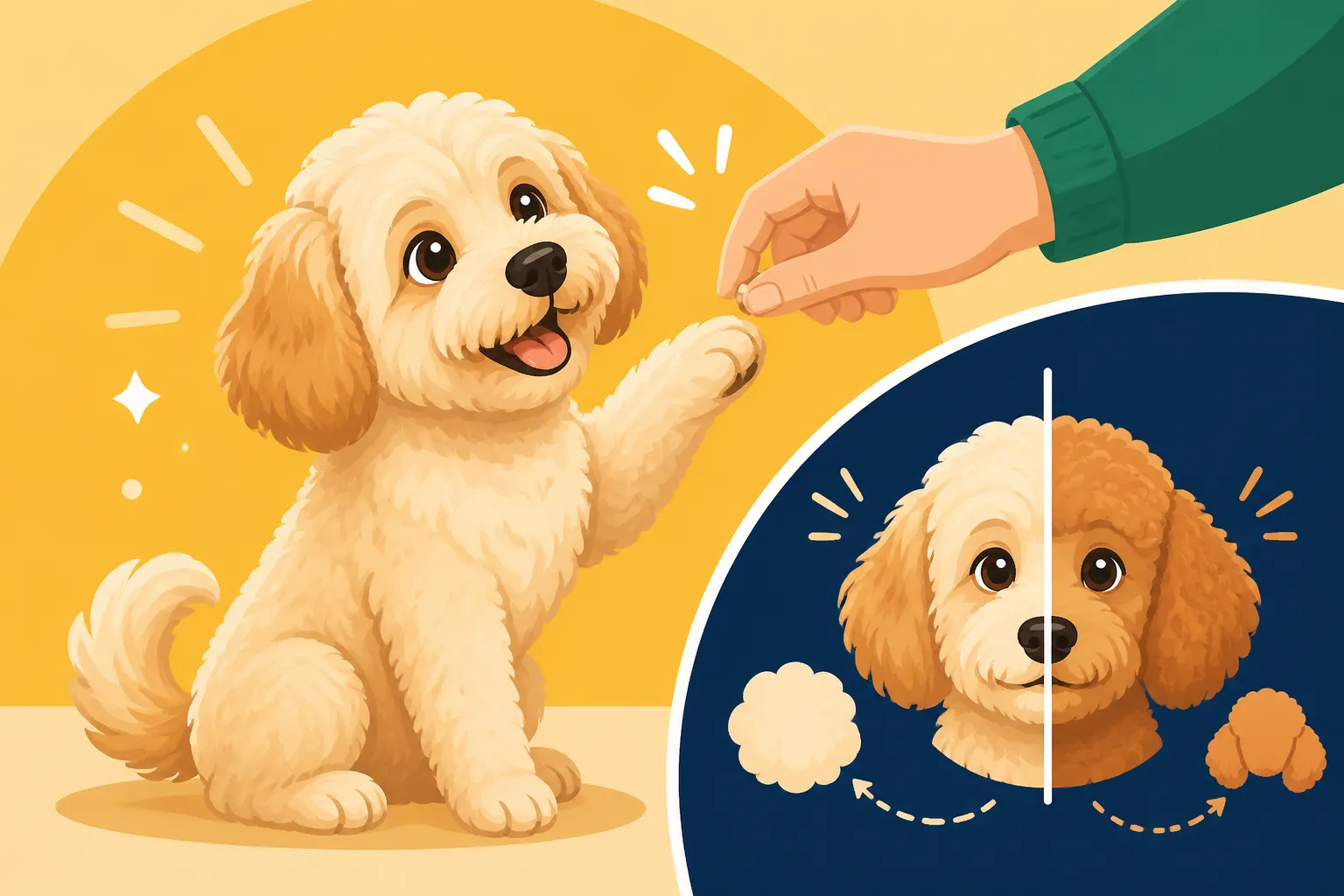
Trick Training a Maltipoo With the Poodle Half
Many Maltipoo owners dream of a clever, well-behaved companion, but often find themselves facing a delightful yet sometimes stubborn little dog who seems to march to the beat of their own drum. It can be incredibly frustrating when you see glimpses of that Poodle intelligence, only for your furry friend to decide belly rubs are a higher priority than "sit." This comprehensive guide will help you tap into your Maltipoo's inherent Poodle cleverness, offering practical strategies and a step-by-step approach to master trick training, turning those moments of frustration into rewarding breakthroughs.
Understanding the Maltipoo's Dual Nature in Training
When you bring a Maltipoo into your life, you're not just getting a cute, fluffy companion; you're welcoming a fascinating blend of two distinct personalities: the Poodle and the Maltese. Understanding this genetic "coin flip" is crucial, especially when it comes to something as intricate as trick training. It’s the constant interplay between these two parent breeds that often dictates how quickly your Maltipoo picks up new skills, or indeed, how much convincing they might need.
The Poodle's Intelligence and Drive
Let's be honest, a huge part of the Maltipoo's appeal is the promise of Poodle intelligence. Poodles, especially the toy and miniature varieties, are renowned for their sharp minds, eager-to-please attitudes, and incredible capacity for learning. They excel in obedience, agility, and can often pick up complex commands and tricks with remarkable speed. This drive to work and please their humans is a massive asset when you're trying to teach your Maltipoo something new, as they genuinely enjoy the mental stimulation and the positive interaction with you. They thrive on challenges, and their quick wit means they can often connect an action to a reward faster than many other breeds.
This Poodle half often means your Maltipoo has a surprising amount of focus and dedication when they're truly engaged. They love having a job to do, even if that job is just learning to "spin" for a treat. This inherent cleverness is why you might feel your Maltipoo has the potential for greatness, even if they sometimes choose to ignore you. It's about harnessing that potential effectively. You can often see this intelligence shine through as your Maltipoo observes you, understanding routines, and even trying to manipulate situations to their advantage – a clear sign of their Poodle brain at work! Whether a Maltipoo Is as Smart as a Poodle is a question many owners ask, and often the answer is a resounding "yes."
The Maltese's Charm and Independent Streak
Now, let's talk about the Maltese side of the equation. Maltese dogs are famous for their sweet, affectionate nature, their undeniable charm, and yes, sometimes a bit of a stubborn streak. They were bred as companion dogs, often lap dogs, and while they are intelligent, their primary motivation isn't always to perform complex tasks. Instead, they might prefer to charm you into giving them what they want without having to lift a paw. This independent nature can sometimes manifest as a delightful nonchalance during a training session. They might understand what you want, but simply decide it's not worth their effort at that precise moment, especially if there's no high-value reward or if they're just not feeling it.
This Maltese influence means you'll need patience and creativity. Your Maltipoo might not have the same unyielding desire to please as a purebred Poodle. They might have their own agenda, and sometimes that agenda involves cuddling on the sofa rather than practicing "roll over." You'll learn quickly that scolding or harsh corrections are usually counterproductive, often leading to a shut-down or a dog who simply walks away. Instead, you'll need to leverage their affectionate side, making training feel like a fun game and a bonding experience, rather than a chore. Whether a Maltipoo Inherits the Maltese Stubbornness is a common concern, and it's definitely something you'll encounter, making positive reinforcement even more critical.
How Both Influence Trick Training
The beauty, and sometimes the challenge, of a Maltipoo lies in this blend. You'll likely see moments where the Poodle's brain takes over, and your dog picks up a new trick with startling speed, eager for the next challenge. Then, other times, the Maltese comes out, and they might look at you with those big, soulful eyes, clearly understanding what you want, but perhaps just deciding to be adorable instead of obedient. It's a charming combination that keeps you on your toes.
For trick training, this means you need to be flexible. You'll have days where your Maltipoo is a superstar, chaining tricks together and learning new ones in minutes. And then there will be days where even a simple "sit" feels like pulling teeth. The key is to celebrate the Poodle's enthusiasm when it's there, and when the Maltese stubbornness appears, pivot. Make it fun, keep it positive, and always end on a good note. Understand that your Maltipoo isn't being difficult on purpose; they're just being a Maltipoo. This dual nature is what makes them so unique and engaging, and with the right approach, you can certainly bring out their inner Poodle performer. The Coin Flip Inside Every Maltipoo Puppy truly defines the unique individual you have.
Setting the Stage for Successful Trick Training
Before you even think about teaching your Maltipoo to "play dead" or "fetch," you need to create an environment and mindset conducive to learning. Imagine trying to learn a new skill in a noisy, distracting room with a grumpy teacher; it wouldn't be very effective, would it? The same goes for your Maltipoo. Setting them up for success involves more than just having treats on hand; it's about making the entire experience enjoyable, clear, and consistent.
Essential Tools and Environment
First things first, let's talk about your toolkit. You don't need a lot of fancy equipment, but a few basics will make your training journey much smoother. High-value treats are paramount – think tiny pieces of cooked chicken, cheese, or specialized training treats that your Maltipoo absolutely adores. These need to be small enough that they can be gobbled down quickly without becoming a choking hazard or filling your dog up too fast. A treat pouch worn around your waist is incredibly useful, allowing for quick access and minimizing fumbling. You can find excellent options on Amazon. A clicker can also be a game-changer. It's a precise marker that tells your dog exactly the moment they performed the desired behavior, which is invaluable for complex tricks.
Beyond the physical tools, consider your training environment. Start in a quiet, distraction-free space. This might be a spare room, a hallway, or even a section of your living room where there isn't much going on. As your Maltipoo gains confidence, you can gradually introduce more distractions, but for initial learning, minimize anything that might pull their attention away. Ensure the surface is comfortable for them, especially for tricks involving lying down or rolling. Think of it like building a solid foundation before you start adding the fancy decor – a calm, predictable space is your best bet for focus.
Establishing a Positive Reinforcement Foundation
This is the golden rule of Maltipoo training, particularly for tricks. Positive reinforcement means rewarding desirable behaviors with something your dog values – a tasty treat, enthusiastic praise, or a favorite toy. The moment your Maltipoo performs even a tiny part of the desired trick, mark it with a click (if you're using a clicker) and immediately follow with a reward. This instant gratification is how dogs learn best. They begin to associate their action with a positive outcome, making them more likely to repeat it.
Avoid punishment or scolding entirely. Maltipoos, especially those with a strong Maltese influence, can be quite sensitive. Negative interactions can lead to fear, reluctance, and a breakdown of trust, making them shut down and unwilling to try. Remember, the goal is to make training a fun game, not a stressful ordeal. If your Maltipoo isn't getting it, it's usually a sign that you need to adjust your approach, break the trick down into smaller steps, or simply take a break. Consistency is also key. Everyone in the household should use the same commands and reward system to avoid confusing your intelligent but discerning companion.
Keeping Sessions Short and Sweet
Maltipoos, like many small breeds, have relatively short attention spans, especially when they're young or if the trick is challenging. Long, drawn-out training sessions are often counterproductive. Aim for 5-10 minute sessions, a few times a day, rather than one long 30-minute session. This keeps the energy high, prevents boredom and frustration, and ensures your Maltipoo stays engaged and eager to participate. Think of it as leaving them wanting more, rather than dreading the next session.
Ending each session on a positive note is also incredibly important. Even if your Maltipoo struggled with a new trick, revert to something they know well, like a "sit" or "paw," have them perform it perfectly, reward them generously, and then say something like, "All done!" with a cheerful tone. This ensures that their last memory of training is positive, reinforcing their confidence and making them more enthusiastic for the next session. This structured, positive, and brief approach is a huge step in Training a Maltipoo Around Four Meals a Day, integrating learning into their routine without overwhelming them.
Building Blocks: Foundational Tricks for Your Maltipoo
Just like a skilled artist starts with basic shapes before painting a masterpiece, your Maltipoo needs to master a few foundational tricks before moving onto more complex maneuvers. These aren't just for show; they build crucial communication skills, reinforce positive associations with training, and set the stage for more advanced learning. Plus, nailing these basics will give both you and your Maltipoo a confidence boost!
"Sit," "Stay," and "Come" as Prerequisites
While "sit," "stay," and "come" might seem like basic obedience rather than "tricks," they are the absolute cornerstone of all further training. Without a reliable "sit," it's hard to get your Maltipoo into position for "shake a paw." Without a "stay," moving away from them to encourage a "come" or a "roll over" becomes nearly impossible. And "come," of course, is a vital safety command. These commands teach your Maltipoo to focus on you, understand cues, and control their impulses – all skills that transfer directly to trick training.
Teach "sit" by luring. Hold a treat near their nose and slowly move it back over their head. Their nose will follow, and their rear end will naturally drop into a sit. As soon as their bottom touches the ground, mark (click!) and reward. Repeat, adding the verbal cue "sit" just as their rear touches the floor. For "stay," start with very short durations (1-2 seconds) and small distances, gradually increasing both. "Come" is best taught in a safe, enclosed space, making it a super fun game with high-value rewards and enthusiastic praise every single time they return to you. These basics lay the groundwork for a responsive and eager student.
"Shake a Paw" and "High Five"
These are fantastic first "party tricks" because they are relatively easy to teach, incredibly cute, and reinforce the positive interaction of touching paws. Many Maltipoos naturally offer a paw when they want attention or are unsure, making it simpler to capture this behavior. Start by asking your Maltipoo to "sit." Once they are sitting, gently take one of their paws in your hand, say "shake," or "paw," and immediately reward them. Repeat this several times.
Once they anticipate you taking their paw, try holding out your hand and waiting. The moment their paw lifts even slightly towards your hand, mark and reward. Gradually wait for them to place their paw in your hand before rewarding. Practice with both paws to ensure they learn it on command. "High five" is a natural progression from "shake." Instead of holding your hand low, hold it higher, just above their head, and encourage them to stretch up to touch it with their paw. Remember to keep the treats flowing and your praise effusive, especially when they nail it!
"Spin" and "Twirl"
These tricks are wonderful for engaging your Maltipoo's body awareness and adding a dynamic element to their trick repertoire. They're also great for a quick energy release! "Spin" involves your Maltipoo turning in a full circle in one direction, while "twirl" is the same but in the opposite direction. Start with "spin." Hold a treat near your Maltipoo's nose and slowly move it in a circle around their head, encouraging them to follow the treat and turn their entire body. As they complete the circle, mark and reward.
Once they consistently follow the lure, start to add the verbal cue "spin" as you initiate the circular motion. Gradually fade the lure, using only your hand motion and then just the verbal cue. Repeat for "twirl" in the opposite direction. Be patient, as some Maltipoos might be a bit clumsy at first, but they will soon get the hang of it. This teaches them to respond to body language and verbal cues, building their confidence in understanding your intentions. These tricks, when mastered, show off that Poodle agility and cleverness beautifully. How Many Tricks a Maltipoo Can Hold at Once might surprise you once they get going!
Intermediate Tricks to Challenge Your Maltipoo
Once your Maltipoo has a solid grasp of the basics and is eager for more, it's time to introduce some intermediate tricks. These require a bit more coordination, patience, and perhaps a few more steps in the training process, but they are incredibly rewarding and further showcase your Maltipoo's intelligence. This is where the Poodle half really starts to shine, as they enjoy the mental challenge of figuring out new sequences.
"Play Dead" and "Roll Over"
These are classic crowd-pleasers that often look more complicated than they are. "Roll over" is often a good precursor to "play dead." To teach "roll over," start with your Maltipoo in a "down" position. Lure them onto their side by holding a treat near their nose and moving it slowly towards their shoulder, then over their back, encouraging them to roll onto their other side. As soon as they complete the roll, mark and reward. It might take several attempts, and you might need to gently guide them with your hand at first.
Once "roll over" is consistent, "play dead" is within reach. With your Maltipoo in a down position, or having just rolled over, use a cue like a pointing finger or saying "bang!" and lure them to lie on their side with the treat. The key is for them to stay still for a few seconds. Mark and reward for stillness. Gradually increase the duration they remain "dead" before giving the release cue and a big reward. These tricks demand a bit more physical coordination and the ability to hold a position, truly tapping into that intelligent Poodle brain.
"Bow" and "Wave"
These tricks add a touch of elegance and interaction. "Bow" is particularly charming, where your Maltipoo lowers their front end while keeping their rear end up. To teach "bow," get your Maltipoo into a "down" position. Hold a treat near their nose and slowly move it between their front paws and slightly under their chest. This will encourage them to lower their head and chest while keeping their rear up. The moment they achieve this "bowing" posture, even briefly, mark and reward.
"Wave" builds on the "shake a paw" foundation. Instead of placing their paw in your hand, you'll encourage them to lift and hold it in the air. Have your Maltipoo sit. Give the "shake" cue, but this time, instead of taking their paw, hold your hand out as if to take it, but don't. As their paw lifts, quickly mark and reward. The goal is for them to lift their paw and hold it in the air momentarily, as if waving. You can also try holding a treat slightly above and to the side of their paw, encouraging them to bat at it or reach for it. Both "bow" and "wave" require a slightly different kind of physical control and can be fantastic confidence boosters for your clever Maltipoo.
"Fetch" and "Drop It" with Purpose
While "fetch" might seem like a basic game, teaching it with purpose, alongside "drop it," elevates it to an intermediate trick. Many Maltipoos enjoy retrieving, thanks to their Poodle heritage, but sometimes they prefer to play keep-away. To teach purposeful "fetch," start with a lightweight, easy-to-carry toy. Toss it a very short distance. The moment your Maltipoo picks it up, praise them enthusiastically. As they return, even if they don't bring it all the way to you, gently encourage them with a treat near your chest, luring them closer.
Once they consistently bring the toy back, introduce "drop it." When they are near you with the toy, hold a high-value treat near their nose. The moment they open their mouth to release the toy to get the treat, say "drop it," mark, and reward. Practice this until "drop it" is reliable. This isn't just a game; it's a useful skill for picking up items, and it strengthens their understanding of cues. Consider Whether a Maltipoo Should Be Allowed to Jump for Toys and ensure their joint health is paramount for any fetching games. Small, soft toys found on Amazon are perfect for their delicate mouths.
Advanced Tricks and Problem-Solving
Once your Maltipoo has mastered a range of intermediate tricks, you're ready to explore more advanced challenges. This is where their Poodle intelligence really gets a workout, demanding more complex thought processes, memory, and sustained focus. These tricks are not just about entertainment; they deepen your bond and provide incredible mental enrichment for your smart little dog.
"Find It" and Scent Games
"Find It" is a fantastic trick that taps into a dog's natural sniffing abilities, and Poodles are known for their scent work capabilities. It's mentally stimulating and can be done anywhere. Start by letting your Maltipoo see you hide a high-value treat under a cup or a small towel, then say "find it!" and encourage them to sniff it out. As soon as they discover it, praise and reward.
Once they understand the game, increase the difficulty. Hide the treat in a slightly less obvious spot within the same room, or under one of several cups. Gradually move to hiding it in another room, or even outdoors in a safe, enclosed area. You can also hide specific toys and have them find those by name (e.g., "Find Teddy!"). This game builds their problem-solving skills, independence, and focus, and it's particularly good for those days when the weather prevents longer walks outside. Whether a Maltipoo Takes to Scent Work is an enthusiastic yes!
"Put Your Toys Away"
This is a functional trick that also looks incredibly impressive. It involves your Maltipoo picking up their toys and placing them in a designated bin or basket. This trick requires several steps and excellent "fetch" and "drop it" commands. Start with a single toy and a clearly visible, low-sided toy basket. Encourage your Maltipoo to "fetch" the toy. As they bring it to the basket, hold a treat over the basket, and when they drop the toy inside, say "put away" (or your chosen cue), mark, and reward.
Practice with one toy until it's consistently dropped into the basket. Then, gradually introduce more toys, always rewarding them for each successful deposit. You might need to gently guide their head over the basket initially. Over time, they'll learn the association between the toys, the basket, and the reward. This trick not only cleans up but also engages their cognitive abilities in a real-world scenario. You can even encourage them to put away their toys after a fun play session, making it part of their daily routine.
Complex Sequences and Combining Tricks
Once your Maltipoo knows many individual tricks, the next level of challenge is to combine them into sequences. This is where you truly harness their Poodle intelligence, as it requires memory, understanding of multiple cues, and the ability to link behaviors. For example, you could teach a sequence like "Sit, stay, spin, come, high five!" or "Bow, roll over, play dead."
Start by chaining two familiar tricks together, rewarding after the second trick is completed. As they get the hang of it, add a third, and so on. Use clear, distinct verbal cues and hand signals for each trick. The online training platform BAXTER & Bella offers excellent resources and video tutorials for breaking down complex behaviors into manageable steps, which can be invaluable when attempting advanced sequences. The mental workout required for these sequences is immense, and your Maltipoo will relish the challenge and the praise that comes with performing like a true star.
Troubleshooting Common Trick Training Hurdles
Even the most intelligent Maltipoos, guided by their Poodle half, will hit a snag or two during trick training. It's a natural part of the learning process for both ends of the leash! Feeling frustrated or like your Maltipoo isn't "getting it" is a common experience, but it doesn't mean your dog is untrainable. It usually means you need to adjust your approach, understand their motivations, and maintain a positive attitude.
Dealing with Distractions and Frustration
Distractions are the arch-nemesis of a focused training session. Whether it's a squirrel outside the window, the mail carrier's truck, or even another family member moving around, a Maltipoo's attention can be easily diverted. If you find your Maltipoo constantly breaking focus, revisit your training environment. Go back to a quiet, low-distraction space until they can perform the trick flawlessly there. Only then, gradually introduce controlled distractions. Practice in different rooms, then in the yard, and eventually in public spaces, but always set them up for success.
Frustration, for both you and your Maltipoo, is a sign to take a break. If you feel your patience wearing thin, or your dog is panting, yawning excessively, or avoiding eye contact, it's time to stop. Forcing a trick will only create negative associations. Take a few minutes, do something completely different (like a short play session or a cuddle), and then try again later, or even the next day. Sometimes, a fresh start is all you need. Remember, short, sweet sessions help prevent frustration in the first place. Whether a Maltipoo Concentrates in a Class can be a major challenge due to these distractions.
When Your Maltipoo Seems Stubborn
Ah, the infamous Maltese stubbornness! It's not uncommon for a Maltipoo to understand a cue perfectly well but decide, in that moment, it's not worth their while. They might offer a partial effort, or simply look at you as if to say, "Are you sure you want me to do that?" This isn't defiance, but often a lack of motivation or a perceived lack of value for the reward.
When this happens, re-evaluate your rewards. Are you using high-value treats? Maybe switch to tiny pieces of cheese or chicken for a breakthrough. Are your rewards varied? Sometimes a favorite toy or a quick game of tug can be a more powerful motivator than a treat. You can also try changing your approach to the trick. Break it down into even smaller, easier steps. If they're not getting a "roll over," reward them just for lying on their side. Celebrate the tiniest effort. And most importantly, keep it light and fun. If you get serious or stern, the Maltese side might just dig in their heels even further. Remember Whether a Maltipoo Is Too Soft for Correction, meaning positive reinforcement is always the way to go.
Maintaining Motivation for Both of You
Training, especially tricks, should be a joy for both you and your Maltipoo. If you're not having fun, chances are your dog isn't either. To keep your motivation high, celebrate every small victory. A perfect "sit" on command deserves just as much praise as a complex "play dead." Vary your training routine; don't just focus on the same three tricks every day. Introduce new tricks, revisit old ones, or integrate tricks into daily activities.
For your Maltipoo, continuous motivation comes from consistent, positive reinforcement and making the sessions exciting. Keep your voice cheerful, your movements animated, and your rewards enthusiastic. Don't forget that verbal praise and gentle physical affection (if your Maltipoo enjoys it) are also powerful motivators. Consider signing up for an online course, such as those offered by BAXTER & Bella, to get fresh ideas and structure, or join a local dog training group to add a social element. Whether Short Sessions Suit a Maltipoo is a key factor here; by keeping it brief, you ensure both of you stay eager for the next learning opportunity.
Making Trick Training a Lifelong Journey
Trick training isn't just about teaching your Maltipoo a few cute behaviors; it's a continuous journey that strengthens your bond, enriches their life, and keeps their intelligent Poodle brain active. It's a testament to the relationship you build together, offering benefits that extend far beyond the moment they perform a perfect "bow" for guests.
Integrating Tricks into Daily Life
The true magic of trick training happens when those learned behaviors become integrated into your daily routine. This isn't about constantly demanding performances, but about using tricks as functional commands or fun interactions. For instance, instead of just asking your Maltipoo to "sit" before dinner, ask them to "spin" first. Instead of simply picking up a dropped item, ask them to "fetch" it to you. This keeps the learned behaviors fresh, reinforces their meaning, and provides mental stimulation throughout the day.
You can also use tricks as a way to manage behavior. A quick "sit" or "paw" can redirect an overly excited Maltipoo when guests arrive. Asking them to "stay" briefly before going outside can prevent door dashing. These integrations make training less of a formal "session" and more of a natural, ongoing conversation between you and your dog. The Daily Routine a Maltipoo Needs definitely benefits from incorporating these fun and functional tricks.
The Benefits Beyond Entertainment
While it's undeniably fun to show off your Maltipoo's tricks, the benefits go much deeper. Firstly, it provides immense mental stimulation, which is crucial for intelligent breeds like Maltipoos. A mentally tired dog is often a well-behaved dog. It prevents boredom, which can lead to destructive behaviors or excessive barking. Secondly, it builds confidence. Each successfully learned trick, each moment of praise, reinforces your Maltipoo's self-esteem and strengthens their belief in their ability to understand and please you. This is especially important for smaller, sometimes timid dogs.
Thirdly, and perhaps most importantly, trick training profoundly strengthens the bond between you and your Maltipoo. It's a shared activity, a language you both understand, filled with positive interactions and mutual respect. It builds trust, improves communication, and transforms your relationship into a true partnership. Plus, the physical aspects of tricks can contribute to their overall fitness and coordination, as long as you're mindful of their delicate structure.
Knowing When to Seek Professional Guidance
While this guide offers a comprehensive approach, there might be times when you feel stuck or encounter behavioral issues that seem beyond your scope. This is absolutely normal, and there's no shame in seeking professional help. A certified professional dog trainer, especially one experienced with small companion breeds and positive reinforcement methods, can provide invaluable insights, tailored strategies, and hands-on guidance. They can help identify underlying issues, refine your techniques, and introduce new methods you might not have considered.
Look for trainers who use positive, reward-based methods and avoid any harsh or aversive techniques. Many trainers offer virtual consultations, which can be convenient for Maltipoo owners. Sometimes, a fresh pair of expert eyes is all it takes to get over a hurdle and continue your rewarding trick training journey with your intelligent and charming Maltipoo. You might even find a group class where your Maltipoo can learn alongside others, though Whether a Maltipoo Copes in a Class With Big Dogs is a valid consideration.
Disclaimer
This article is for general informational purposes only and does not constitute professional advice. Laws, prices and regulations vary by location and change over time. Consult a qualified professional for guidance on your specific situation.