What Size Crate Suits a Maltipoo Puppy
One of the biggest head-scratchers for new Maltipoo parents is figuring out what size crate to buy for their tiny, fluffy bundle of joy. You want it to be a safe, comfortable den, not a giant, intimidating void or a cramped, suffocating box. The challenge lies in balancing their current minuscule size with their eventual adult stature, all while ensuring it aids in house training and provides a secure retreat. This guide will walk you through everything you need to know to choose the perfect crate for your Maltipoo puppy, ensuring they feel secure, happy, and well-adjusted from day one.
Understanding Your Maltipoo Puppy's Crate Needs
Choosing a crate isn't just about finding a box; it's about providing a crucial tool for your puppy's development and a safe haven they can call their own. For a Maltipoo, with their small size and often sensitive nature, the right crate is even more important.
Why Crate Training is So Important for Maltipoos
Crate training is one of the most effective and humane ways to raise a well-behaved puppy, especially for a Maltipoo. Think of it as mimicking a den – a natural, safe space where dogs instinctively feel secure. For house training, it's invaluable. Puppies inherently don't want to soil their sleeping area. If their crate is just the right size, they'll learn to hold their bladder for longer, making the transition to outdoor potty breaks much smoother. This is particularly helpful when you're trying to figure out How Long a Maltipoo Puppy Holds It Overnight or establish a consistent routine.
Beyond house training, a crate offers a secure spot during times you can't directly supervise your puppy, preventing destructive chewing or getting into dangerous situations. It gives them a quiet retreat when they're overwhelmed, tired, or just need a break from household commotion. This can be especially important if your Maltipoo needs to adapt to a bustling environment. We often talk about how Whether Crate Training Speeds a Maltipoo Up in house training, and the answer is usually a resounding yes, because it taps into their natural instincts for cleanliness and security.
The "Just Right" Size Principle
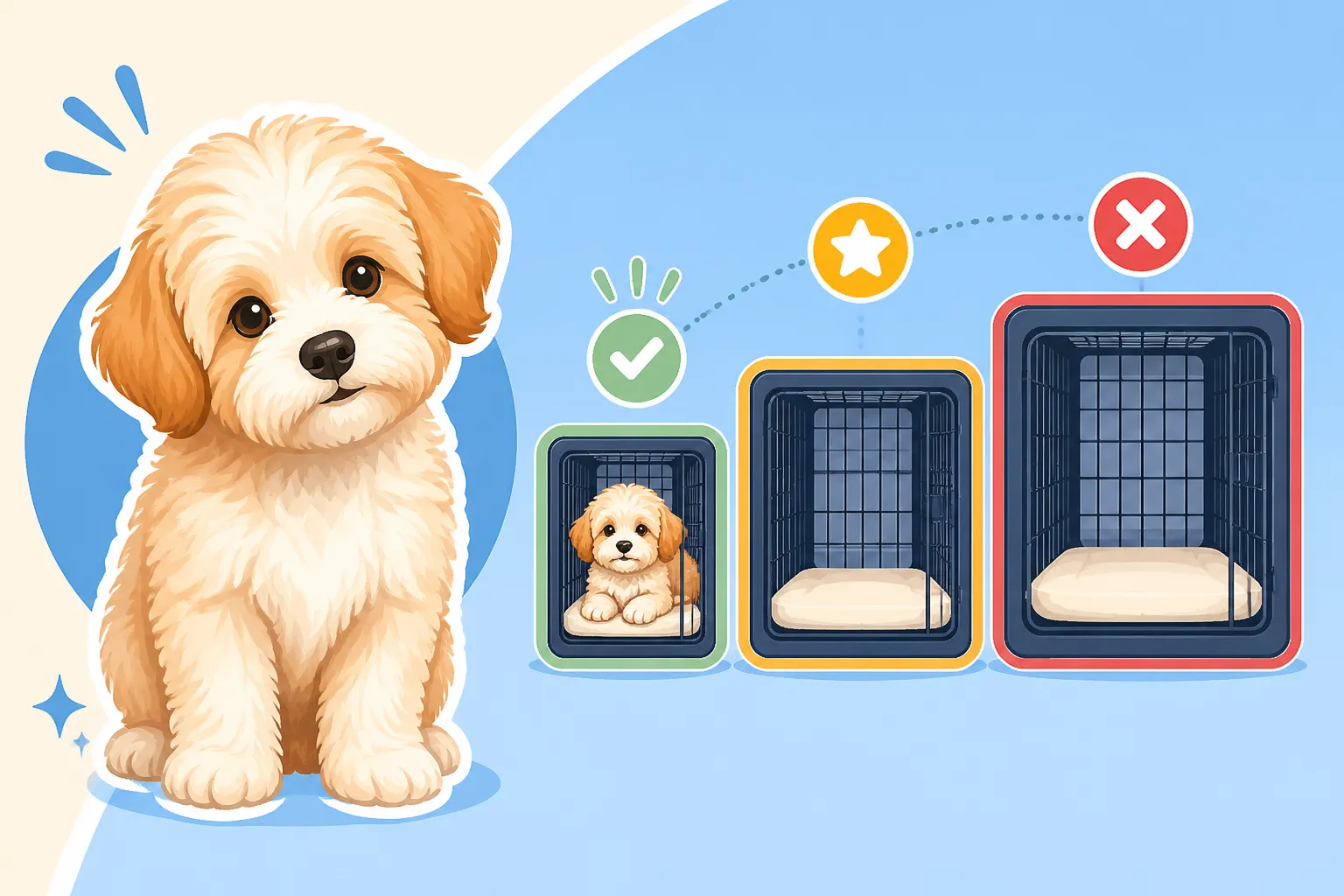
When it comes to crates, bigger isn't always better, and neither is smaller. The key is the "just right" principle: the crate should be large enough for your Maltipoo puppy to stand up, turn around comfortably, and lie down fully stretched out, but not so large that they can designate a "bathroom corner" far away from their sleeping area. If the crate is too big, your puppy will likely use one end as a potty area, defeating the house training purpose. This is a common frustration for new owners who might think they're giving their pup more space, when in fact, they're hindering their progress.
Conversely, a crate that's too small is cruel and uncomfortable. Your puppy should never have to hunch or curl up tightly just to fit. It becomes a punishment rather than a haven, causing anxiety and resistance to entering it. A properly sized crate respects your Maltipoo's need for personal space while leveraging their natural instincts for cleanliness. This balance is crucial, especially for breeds like the Maltipoo, who thrive on comfort and security.
Measuring Your Maltipoo for the Perfect Crate Fit
The Maltipoo isn't a single-sized breed, so there's no one-size-fits-all crate. You'll need to measure your puppy and anticipate their adult size to make the best choice.
How to Accurately Measure Your Puppy
Getting the right measurements now will save you a lot of guesswork and potentially wasted money on a poorly sized crate. Here's how to do it:
- For Length: Have your Maltipoo puppy stand normally. Measure from the tip of their nose to the base of their tail (not the tip of the tail, as this can add unnecessary length). Add 2-4 inches to this measurement. This extra space allows them to turn around comfortably without feeling cramped.
- For Height: While your puppy is standing, measure from the top of their head (or the tip of their ears if they stand erect, like a Poodle's might) to the ground. Add 2-4 inches to this measurement. This ensures they can stand up fully without their head brushing the top of the crate.
It's important to take these measurements even if your puppy is very young. You'll want a crate that can grow with them, which brings us to the next point: adjustable features. Many crates on the market, readily available on platforms like Amazon, come with divider panels, allowing you to adjust the internal space as your puppy grows. This is a brilliant feature because it lets you start with a "just right" small space and expand it incrementally.
Anticipating Adult Size
Maltipoos come in a range of sizes, generally categorized as Teacup, Toy, and Miniature, largely depending on the Poodle parent's size. A "Teacup" Maltipoo might only weigh 2-5 pounds, while a "Toy" could be 5-10 pounds, and a "Miniature" might be 10-20 pounds. This wide range means that a crate suitable for a Teacup will be far too small for a Miniature. Understanding The Weight at Which a Maltipoo Puppy Is at Risk often correlates with their adult size and influences crate choices, especially for very small pups who might need more compact, warming spaces.
If you purchased your puppy from a reputable breeder, they should be able to give you a good estimate of your Maltipoo's likely adult weight and height based on the parents' sizes and their specific litter's history. If you don't have this information, you can make an educated guess by observing the puppy's parents if possible, or by looking at growth charts for toy breeds. When in doubt, it's often better to buy a slightly larger crate with a divider than one that will quickly become too small. Remember, you're investing in something that should serve your Maltipoo for years, not just a few months.
Types of Crates and Features to Consider
The market offers a dizzying array of crates. Knowing the pros and cons of each type, and what features are essential, will help you narrow down your choices.
Wire Crates Versus Soft-Sided and Plastic
Each type of crate has its advantages and disadvantages, and the best choice often depends on your specific needs and your Maltipoo's personality.
- Wire Crates: These are perhaps the most popular choice for puppy training.
- Pros: Excellent ventilation, easy to clean, collapsible for storage or travel, and often come with divider panels, making them adjustable for a growing puppy. They offer good visibility, so your Maltipoo can see what's going on around them, which can be reassuring. Many brands offer durable wire crates on sites like Amazon.
- Cons: Can feel less "den-like" if not properly covered, and some puppies might get their paws caught in the wire bottom if there isn't appropriate bedding. They can also be a bit noisy if your pup moves around a lot.
- Plastic Crates (or "Vari Kennels"): These are solid crates, often used for airline travel.
- Pros: Provide a more den-like, enclosed feel, which some Maltipoos prefer. They are generally very durable, easy to clean, and offer good privacy. They also offer more insulation, which can be a factor if you're concerned about Whether a Maltipoo Sleeps Warmer in a Crate in a cooler part of your home.
- Cons: Less ventilation than wire crates (though they do have vents), not as collapsible, and dividers are less common. This means you might need to buy multiple sizes as your puppy grows. They also take up more space when not in use.
- Soft-Sided Crates: These are lightweight, portable crates made of fabric over a frame.
- Pros: Extremely lightweight, easy to fold and carry, and comfortable. Great for travel if your Maltipoo is already crate trained and not a chewer. They're also much quieter. Many owners find these convenient if their Maltipoo needs to travel frequently or if they want a portable option, tying into concepts like Whether a Maltipoo Travels Better in a Carrier.
- Cons: Not suitable for puppies who are still learning house training (accidents are harder to clean) or chewers (they can easily be destroyed). They don't offer the same level of security as wire or plastic crates and aren't typically used as primary house training crates.
For a Maltipoo puppy, especially for initial house training, a wire crate with a divider is often the most practical choice due to its adjustability and ease of cleaning.
Essential Crate Features for a Maltipoo Puppy
Once you've decided on the type, look for specific features that will make the crate training process smoother and ensure your Maltipoo's comfort and safety.
- Divider Panel: As mentioned, this is a game-changer. It allows you to create a smaller, appropriate space for your puppy, then expand it as they grow. This means you only need to buy one crate for their lifetime.
- Easy to Clean: Look for crates with removable trays or smooth, non-porous surfaces that can be wiped down easily. Accidents will happen, especially in the early days of house training.
- Secure Latches: A good crate will have sturdy, secure latches that your clever Maltipoo can't figure out how to open. Double latches are even better for peace of mind.
- Proper Ventilation: Essential for your Maltipoo's comfort and safety, especially in warmer climates. Wire crates excel here, but plastic crates should have ample ventilation holes.
- Comfortable Bedding: While not a feature of the crate itself, providing appropriate bedding is crucial. A soft, washable bed or blanket will make the crate much more inviting. Just make sure it's not so plush that it takes up too much space or encourages potty breaks. Consider a thin, padded mat or a few old towels at first, especially for young puppies who might have accidents.
- Rubber Feet or Pads: These prevent the crate from scratching your floors and keep it from sliding around, which can be unsettling for a small puppy trying to get comfortable.
Setting Up the Crate for Success
Once you have the right crate, how you set it up and introduce your Maltipoo to it will greatly influence their success and happiness. A positive experience from the start is paramount.
Making the Crate a Cozy Den
The goal is to transform the crate from a mere cage into a warm, inviting den where your Maltipoo feels safe and happy. Here’s how:
- Location, Location, Location: Place the crate in a central part of your home where your Maltipoo can still feel like part of the family, but away from high-traffic areas where they might be constantly disturbed. Many owners opt for the living room or kitchen during the day, and then move it to the bedroom at night so the puppy doesn't feel isolated. Especially for the first few nights, having them close by can ease their transition as you navigate Surviving the First Week With a Maltipoo Puppy.
- Comfort is Key: Line the bottom with a soft, washable blanket, towel, or a purpose-made crate mat. Avoid anything too bulky at first, especially if your puppy is still having accidents. If your Maltipoo is particularly small or prone to shivering, adding a small, soft blanket can also help them feel more secure and warm, echoing advice around Whether a Maltipoo Sleeps Warmer in a Crate.
- Entertainment and Distraction: Place a few safe, durable chew toys or a KONG-type toy filled with a smear of peanut butter or cream cheese inside. This provides positive reinforcement and distracts them, making the crate a place associated with good things. Avoid leaving anything in there that could be a choking hazard or that they might ingest.
- Cover It Up (Optional): For some Maltipoos, covering part or all of the wire crate with a light blanket or crate cover can enhance the den-like feel, making it feel more secure and private. This can reduce visual distractions and help them settle down faster. However, ensure there’s still adequate ventilation, especially if it's warm.
Introducing Your Maltipoo to Their Crate
The introduction process should be slow, positive, and stress-free. Never force your Maltipoo into the crate or use it as a punishment tool. The team at BAXTER & Bella, for example, often emphasizes positive reinforcement and gradual introduction techniques in their training programs, which are perfectly suited for sensitive breeds like Maltipoos.
- First Impressions: Leave the crate door open with a few tasty treats and a favorite toy inside. Let your Maltipoo explore it at their own pace. Don't push them in. When they go in to sniff or grab a treat, offer quiet praise.
- Mealtime Magic: Start feeding your Maltipoo their meals inside the crate. Place the food bowl just inside the door at first, and as they get more comfortable, move it further back. Eventually, close the door gently while they eat, opening it again immediately after they finish.
- Short, Sweet Sessions: Once your puppy is comfortable eating in the crate, start closing the door for very short periods (a few minutes), while you remain nearby. Gradually increase the duration as they remain calm and quiet. Always praise and reward them when they are quiet in the crate. This is where patience pays off; pushing too fast can lead to anxiety.
- Practice Departure: Once your Maltipoo is comfortable being in the crate for longer periods, practice leaving the room for a few minutes, then returning. Gradually extend the time you're away. This helps them understand that you will always come back.
- Potty Breaks: Always take your Maltipoo straight outside for a potty break immediately after they come out of their crate. This reinforces the idea that the crate is for sleeping and relaxing, and the outside is for potty. It's an essential part of Building a Toilet Schedule Around a Maltipoo's Bladder. Remember, small puppies have small bladders, so consistent potty breaks are critical. You might even wonder Whether a Maltipoo Should Be Woken to Go Out during the night, especially in the early weeks, and often, the answer is yes, to prevent accidents and solidify good habits.
Remember that crate training is a process. Some Maltipoos take to it quickly, while others need more time and patience. Consistent positive reinforcement, avoiding punishment, and making the crate a truly happy place are the keys to success. For some dogs, a playpen might even be a better alternative, so consider Whether a Playpen Beats a Crate for a Maltipoo depending on your specific situation and needs.
Here's a quick guide to help you estimate crate sizes:
| Maltipoo Size (Adult Weight) | Approximate Crate Length (inches) | Approximate Crate Height (inches) | Ideal Crate Feature | Examples of Use Case |
|---|---|---|---|---|
| Teacup (2-5 lbs) | 18-22 | 15-18 | Small Divider, Soft Bedding | House training, safe space for tiny pups |
| Toy (5-10 lbs) | 22-24 | 18-20 | Divider, Easy Clean Tray | Primary den, travel with Whether a Maltipoo Travels Better in a Carrier |
| Miniature (10-20 lbs) | 24-30 | 20-24 | Durable Wire, Secure Latches | Larger dog comfort, longer periods |
This table is a general guideline; always measure your individual Maltipoo puppy and consider their specific growth trajectory.
Ultimately, choosing the right size crate for your Maltipoo puppy is a foundational step in their training and well-being. By understanding their needs, taking accurate measurements, selecting appropriate features, and introducing them positively to their new space, you'll provide them with a secure den that they'll appreciate for years to come.
Disclaimer
This article is for general informational purposes only and does not constitute professional advice. Laws, prices and regulations vary by location and change over time. Consult a qualified professional for guidance on your specific situation.