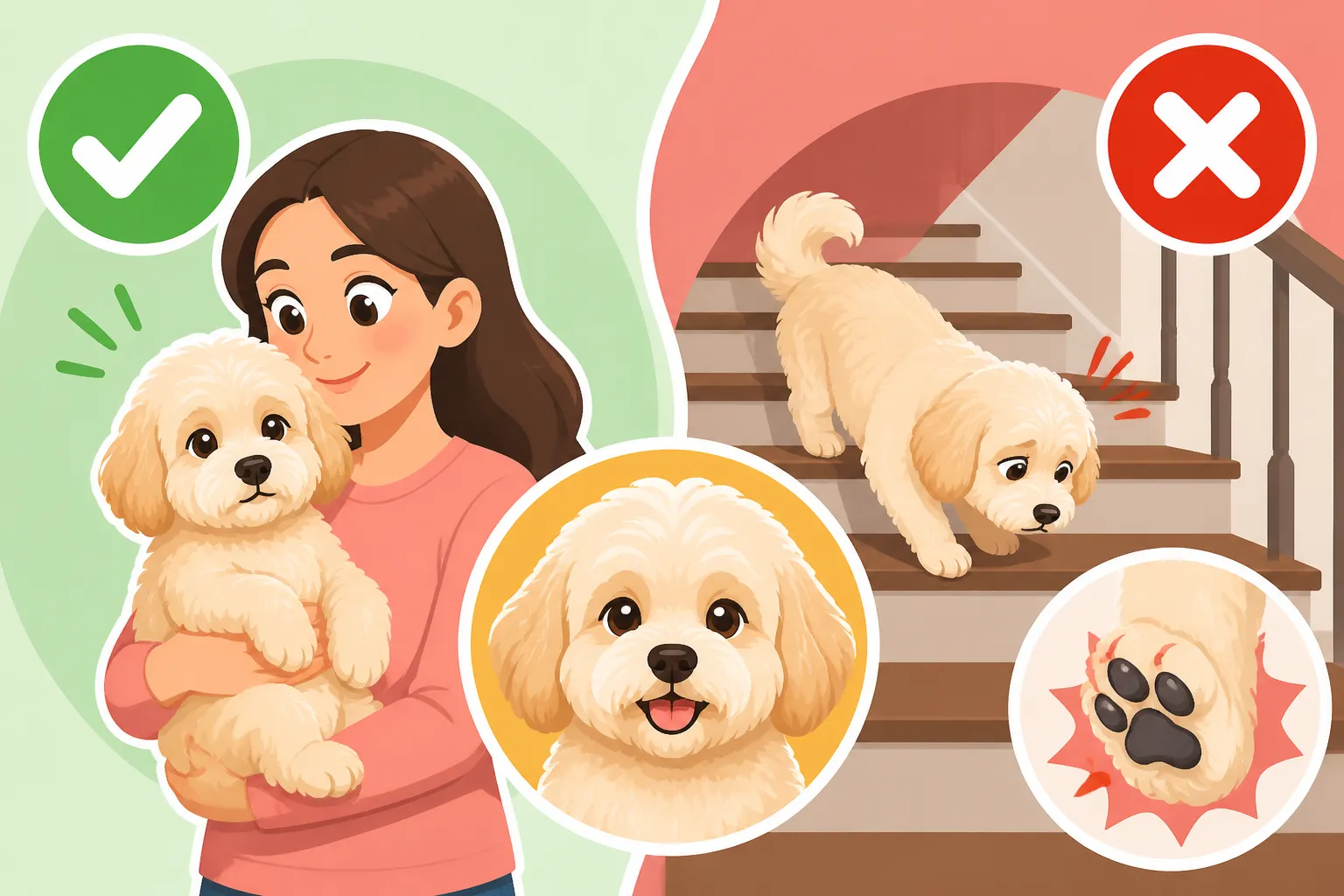
Whether a Maltipoo Should Be Carried Downstairs
It’s a common scene in many Maltipoo households: you’re heading downstairs, and your little furry companion is right there, either bravely attempting to bound down or looking up at you with those big, soulful eyes, clearly wanting to join. The question of whether to let your Maltipoo tackle the stairs independently or scoop them up is one that weighs heavily on many owners, particularly when considering their delicate build and propensity for certain joint issues. This guide will delve deep into why carrying your Maltipoo downstairs is often the safest choice, especially during critical life stages, and explore practical ways to protect their precious little bodies.
Understanding the Physical Vulnerabilities of Maltipoos
Maltipoos, with their small stature and charming demeanor, are often seen as robust little bundles of joy. However, their physical makeup, inherited from both their Maltese and Poodle lineage, can predispose them to certain orthopedic challenges that make stairs a significant risk factor. It's not just about a clumsy fall; it's about the cumulative impact on their delicate skeletal system.
The Delicate Structure of Their Joints and Bones
When you look at a Maltipoo, you're looking at a dog bred for companionship, not for navigating challenging terrain. Their bones are finer, their joints are smaller, and they lack the sheer mass that provides larger dogs with a natural shock-absorbing capability. One of the most common orthopedic conditions in Maltipoos is patellar luxation, or "slipping kneecaps." This is where the kneecap (patella) moves out of its normal groove. Each time a dog jumps or lands hard, especially from a height, it puts immense pressure on this joint, increasing the likelihood of the patella luxating or worsening an existing condition.
Think about the repetitive jarring motion of going downstairs. Each step is a small jump, and the impact resonates up through their tiny legs, directly affecting those vulnerable kneecaps. For a breed like the Maltipoo, where issues like patellar luxation can be hereditary, even seemingly minor impacts can contribute to the development or progression of the condition. Beyond patellar issues, conditions such as Legg Calve Perthes in a Maltipoo, which affects the hip joint, also mean that hard impacts and repetitive stress are highly detrimental to their long-term joint health. Puppies are particularly at risk because their growth plates, the soft areas at the ends of their bones where growth occurs, are still open and easily damaged. A misstep or fall for a young Maltipoo could lead to severe, lifelong orthopedic problems.
Risk of Injury from Falls and Missteps
It might seem intuitive that a small dog could navigate stairs, but their perspective is entirely different from ours. A flight of stairs to a human is a minor inconvenience; to a tiny Maltipoo, it's a sheer cliff face of oversized steps. Their short legs often mean they have to leap or hop down each stair, rather than taking a controlled step. This isn't just inefficient; it's dangerous.
A fall down a flight of stairs, even a short one, can have devastating consequences for a Maltipoo. We’re talking about potential sprains, strains, torn ligaments, or even fractures. Imagine a little dog tumbling end over end – the impact on their head could cause concussions or other neurological damage. Their spines, while flexible, are not designed for such abrupt, uncontrolled movements and impacts. A hard landing can cause painful muscle strains or even more serious spinal injuries. It’s not just about agility; it’s about depth perception and the sheer physical mechanics of navigating disproportionately large steps. A slick surface, a moment of distraction, or simply misjudging a step can lead to a disastrous tumble that could cost thousands in veterinary bills and months of painful recovery for your beloved pet.
The Long-Term Impact of Repetitive Stair Use
While an occasional supervised trip up or down a single step might seem harmless, the real concern with Maltipoos and stairs lies in the cumulative effect of repetitive stress over their lifetime. It’s like a tiny hammer chipping away at their delicate structure, slowly but surely exacerbating underlying conditions or creating new ones.
Stress on Kneecaps and Hips
Every time your Maltipoo goes up or down stairs, especially downwards, there's a certain amount of jarring impact on their joints. For a breed prone to patellar luxation, this repetitive stress can be a primary trigger for the condition to manifest or worsen. Think of it: their kneecap, which is meant to glide smoothly in a groove, is constantly being pushed and pulled out of alignment with each jarring motion. Over months and years, this can lead to chronic inflammation, pain, and accelerated cartilage wear, potentially necessitating surgical intervention.
Many owners find themselves facing questions like "Whether a Maltipoo's Kneecap Needs Operating" due to years of seemingly innocuous activities that put stress on these joints. The cost of such procedures, and the recovery process, are significant. Moreover, beyond the knees, their hips are also susceptible. While not as universally common as patellar issues, conditions affecting the hip, such as Legg Calve Perthes in a Maltipoo, can be aggravated by constant stair use. These are not robust, large-breed hips; they are small and can be fragile. Protecting these joints early in their life can genuinely contribute to a more comfortable and active "The Twelve to Fifteen Years a Maltipoo Lives" down the line.
Spinal Health Concerns
While patellar luxation often steals the spotlight when discussing Maltipoo orthopedic issues, we can’t forget about their spinal health. Though less common than in breeds like Dachshunds, small dogs can still develop intervertebral disc disease (IVDD) or other spinal problems. The spine is a complex structure of vertebrae separated by cushioning discs. Repetitive impact, particularly the compression and twisting movements involved in navigating stairs, can put undue stress on these discs.
Over time, these discs can degenerate, bulge, or even rupture, leading to agonizing pain, nerve compression, and potentially paralysis. Imagine your little Maltipoo landing awkwardly on a step, and the sudden jolt sending a shockwave through their spine. While an immediate catastrophic injury is less frequent, the chronic, low-level trauma can slowly degrade the health of their spinal discs. Preventing this cumulative stress is a proactive step that can save your Maltipoo from significant discomfort and you from the heartbreak and expense of managing a severe spinal injury. It’s another compelling reason why being proactive about carrying them up and down stairs is a small effort for a potentially massive payoff in long-term health.
Practical Strategies for Managing Stairs with Your Maltipoo
Knowing the risks is one thing, but implementing practical solutions is another. Many homes have stairs, and it’s unrealistic to eliminate them. The key is to manage access and assist your Maltipoo in a way that safeguards their health.
When and How to Carry Your Maltipoo Safely
The simplest and most effective solution, particularly for puppies, senior Maltipoos, or those with existing joint issues, is to carry them. For a tiny Maltipoo puppy, whose bones are still developing, every flight of stairs is a potential hazard. It's often debated "Whether a Maltipoo Puppy Should Leave the Breeder at Eight Weeks," and if they do, their fragility means they need constant protection. Always support their body completely, holding them close to your chest, ensuring all four paws are tucked in safely. Never let them dangle or hold them by their front legs alone. For an adult Maltipoo, especially if they are enthusiastic or prone to pulling, ensure you have a firm but gentle grip.
Consider establishing a routine where carrying them becomes second nature. If you live in a multi-story home and find yourself frequently ferrying your Maltipoo up and down, investing in a comfortable dog sling or a small, secure carrier can be a lifesaver for your back and their safety. This also comes in handy if you're taking them to places where stairs might be unavoidable. The goal is to make stair navigation a non-event for their joints.
Alternative Solutions and Training for Stair Navigation
If carrying isn't always feasible, or you want to provide some independence for your Maltipoo, there are alternatives. Dog ramps or specially designed pet stairs can be excellent investments, particularly for accessing sofas, beds, or low sets of stairs. These provide a gradual incline or smaller, more manageable steps that reduce impact. Make sure the ramp or steps are sturdy, have a non-slip surface, and are wide enough for your Maltipoo to feel secure. Training your Maltipoo to use these can take time and patience, with plenty of positive reinforcement and treats.
For actual household stairs, especially those with multiple flights, consider installing baby gates at the top and bottom. This prevents unsupervised access and accidental tumbles. If you absolutely must allow your Maltipoo to use stairs independently (perhaps for very shallow, broad steps and only under direct supervision), ensure the stairs have excellent traction. Carpeted stairs are far better than slick hardwood, where slipping is a major concern. You might also want to look into paw grips or non-slip socks for your Maltipoo, though always prioritize carrying if there’s any doubt about their safety. Remember, while a "Whether a Maltipoo Should Use Steps to the Sofa" article might suggest solutions for furniture access, the dynamics of a full flight of household stairs are vastly different and more hazardous.
The Financial and Emotional Cost of Neglecting Stair Safety
It's easy to dismiss the risks of stairs as overprotective, but the reality is that accidents and long-term joint damage can lead to significant financial burdens and emotional distress for both you and your beloved Maltipoo.
Veterinary Bills and Long-Term Care
Let's not sugarcoat it: a trip to the emergency vet for a serious injury, like a broken leg from a fall, can be incredibly expensive. X-rays, diagnostics, possible surgery, pain medication, and post-operative care can quickly add up to thousands of dollars. "What Patella Surgery Costs on a Six Pound Maltipoo" alone can be a shocking figure for many owners, often ranging from $1,500 to $4,000 per knee, and sometimes both knees require surgery. This doesn't even account for potential physical therapy or long-term medication for arthritis that might develop as a result of injury or chronic joint stress.
This is where pet insurance can be a true lifeline. Companies like Healthy Paws offer coverage for accidents and illnesses, which can significantly alleviate the financial strain of unexpected veterinary emergencies. It's always wise to look into "Insuring a Maltipoo Before Its Knees Go" or before any pre-existing conditions develop, as most policies won't cover conditions diagnosed prior to enrollment. Proactive care, like carrying your Maltipoo on stairs, is not just about their comfort; it's about potentially preventing these costly medical interventions in the first place.
The Emotional Toll on Owners and Pets
Beyond the monetary cost, there's a profound emotional toll when your Maltipoo suffers an injury. The worry, the guilt, the stress of seeing your playful companion in pain and facing a long recovery period can be heartbreaking. Watching them struggle, knowing that a simple precaution could have prevented it, is a heavy burden. The recovery process itself can be demanding, requiring strict crate rest, limited activity, and diligent medication administration.
For your Maltipoo, an injury means pain, restricted movement, and a disruption to their happy routine. They may become fearful or anxious about certain movements or environments. Rehabilitating a small dog after a serious injury can be a slow, frustrating process, and sometimes, despite the best care, they never fully regain their previous mobility. Prioritizing their safety on stairs is a demonstration of your love and commitment to their well-being, sparing both of you unnecessary suffering and allowing you to enjoy many more happy, healthy years together.
Age and Size Considerations for Maltipoos and Stairs
The decision to carry your Maltipoo on stairs isn't a one-size-fits-all answer that remains static throughout their life. It's heavily influenced by their age, their current health status, and even their specific size within the Maltipoo spectrum.
Puppies and Young Maltipoos
When your Maltipoo is a puppy, they are at their most vulnerable. Their bones are still growing, their joints are developing, and their coordination is far from perfected. A puppy's body is more like cartilage than solid bone in many areas, making it extremely susceptible to damage from impact or awkward landings. Just like human babies, they need constant supervision and protection. Allowing a tiny Maltipoo puppy to navigate stairs independently is simply inviting potential disaster.
During these critical developmental months, every jump and fall can have long-lasting consequences, potentially setting them up for joint problems later in life. Imagine the delicate growth plates in their legs being repeatedly slammed or twisted. It's a recipe for orthopedic issues that could require expensive interventions down the road. Until they are fully grown and their growth plates have closed (typically around 12-18 months, though this varies), carrying them up and down every single step is non-negotiable for responsible pet ownership. It’s a small effort that pays dividends in their lifelong health.
Senior and Health-Compromised Maltipoos
As Maltipoos gracefully enter their golden years, their bodies inevitably experience the effects of aging. Arthritis, decreased muscle mass, and even diminishing eyesight can turn a once-manageable flight of stairs into a perilous obstacle course. A senior Maltipoo who once trotted confidently might now hesitate, slip, or simply lack the strength and coordination to navigate steps safely. Conditions like "Slipping Kneecaps in a Maltipoo," if they developed earlier in life, can become more painful and debilitating with age, making every step a challenge.
For an older Maltipoo, especially one with diagnosed arthritis or other joint conditions, carrying them is not just a recommendation, it's a necessity. Even if they protest, thinking they can still do it, their well-being must come first. You might notice them moving slower, perhaps with a slight limp, or showing reluctance to jump or use stairs. This is their body telling you they need help. Regular vet check-ups can help monitor their joint health, and your vet might recommend supplements or pain management. Just as we might make accommodations for "Grooming an Arthritic Maltipoo in Short Sessions" to ensure their comfort, we must extend that same care to their daily mobility. Protect their aging bodies from unnecessary strain to ensure their senior years are as comfortable and pain-free as possible.
| Factor | Should You Carry? | Why or Why Not? |
|---|---|---|
| Puppies (under 1 year) | Always | Extremely delicate developing bones and joints, poor coordination, high risk of growth plate damage, patellar luxation, or fractures from falls. |
| Young Adults (1-5 years) | Highly Recommended | While more coordinated, repetitive jarring can exacerbate genetic predispositions to joint issues (e.g., patellar luxation) and contribute to long-term wear and tear on joints and spine. |
| Adults (5-8 years) | Recommended | Continued repetitive stress can lead to cumulative damage. Consider individual health, weight, and existing conditions. Safer to carry if unsure or if stairs are numerous/steep. |
| Seniors (8+ years) | Always | Increased risk of arthritis, decreased muscle strength, poorer eyesight, and slower reflexes make falls more likely and injuries more severe. Protect their aging joints and spine. |
| Small Maltipoos (under 5 lbs) | Always | Their tiny size makes every step disproportionately large and every fall potentially catastrophic. They are extremely fragile and susceptible to injury. |
| Health-Compromised | Always | Dogs with joint disease, spinal issues, blindness, or any condition affecting mobility/balance should always be carried to prevent further injury or discomfort. Consider their anesthesia risks if surgery becomes necessary, as for a "Whether a Maltipoo Under Four Pounds Survives Anesthesia". |
| Large/Sturdy Maltipoos (10+ lbs) | Optional, with caution | While more robust, still a small breed. Supervise closely, ensure good traction, and consider ramps. Avoid if they show any signs of discomfort or hesitation. |
Disclaimer
This article is for general informational purposes only and does not constitute professional advice. Laws, prices and regulations vary by location and change over time. Consult a qualified professional for guidance on your specific situation.