Whether Sun Bleaches a Maltipoo’s Coat
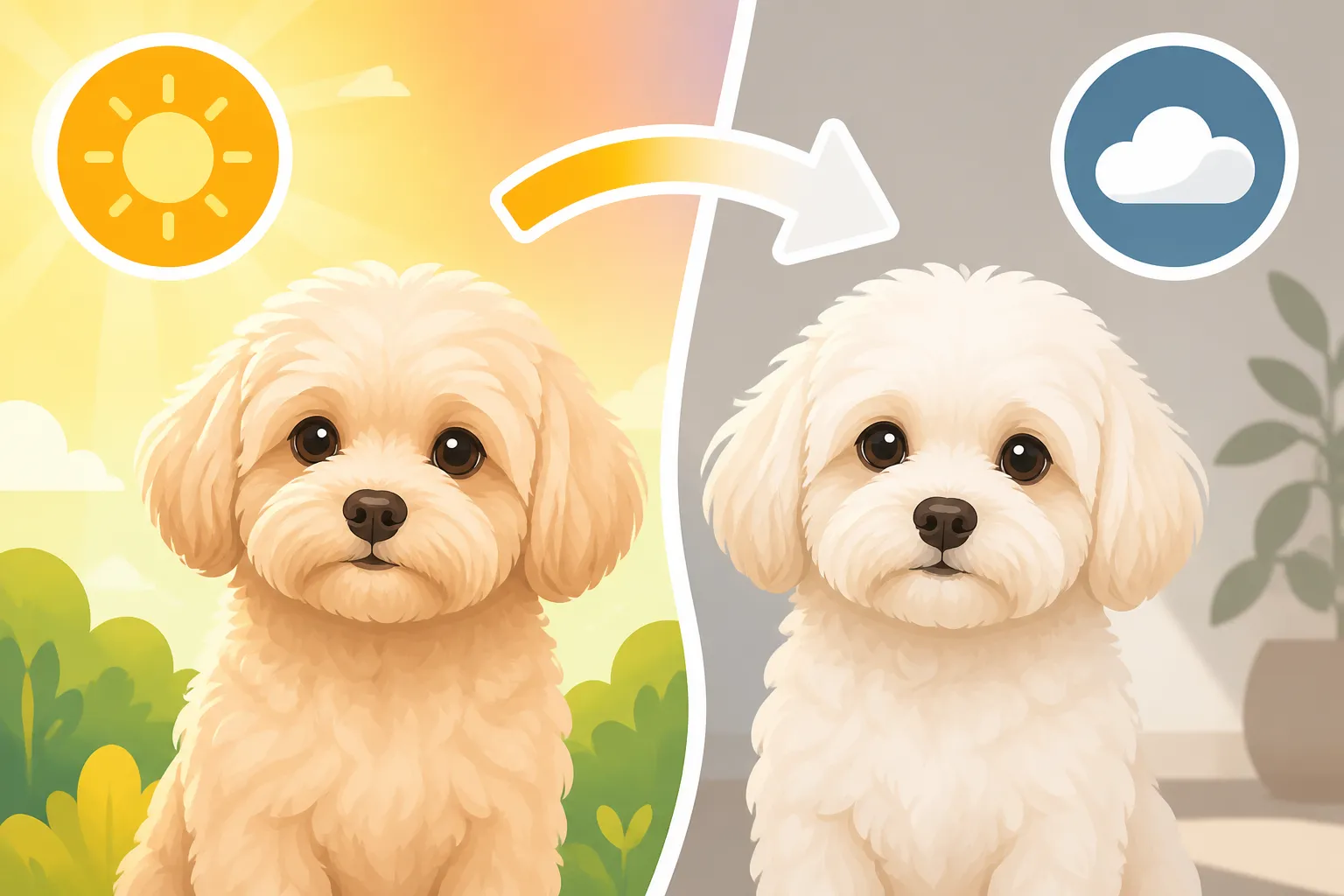
It's a common sight for Maltipoo parents: you bring home that adorable little fluffball, maybe a rich apricot, a deep red, or a striking black. But as the months turn into years, you start noticing subtle changes. That vibrant color might seem a little… duller, a bit lighter, perhaps even with reddish streaks. You start to wonder, is it the sun? This guide dives deep into how the sun can bleach your Maltipoo's coat and how to keep their beautiful fur looking its best.
The Ever-Changing Canvas: Why Maltipoo Coats Aren't Static
One of the most charming, yet sometimes perplexing, aspects of owning a Maltipoo is their coat. Unlike many purebreds with predictable, unchanging colors, a Maltipoo's coat is a delightful mystery, often evolving significantly from puppyhood into adulthood. It's easy to assume any lightening is due to external factors, but often, it's just your dog's genetics doing their thing. Many new owners are surprised to find that their little puppy's vibrant shade doesn't necessarily stay that way.
When you first bring home a Maltipoo puppy, especially one with a darker or more intense color like apricot or red, it’s natural to expect that shade to remain constant. However, their coat color can undergo a transformation as they mature, sometimes lightening dramatically. This phenomenon is often attributed to the Poodle side of their lineage, which carries what's known as a "fading gene." This gene can cause pigments to dilute over time, leading to a softer, lighter shade. What started as a deep red might become a lovely cream, or a rich chocolate could soften to a lighter brown. This natural genetic fading is entirely separate from environmental factors like sun exposure, though it can certainly combine to create an even more pronounced change. Understanding these inherent genetic tendencies is the first step in differentiating between a natural maturation of coat color and actual sun damage.
Puppy Coat vs. Adult Coat Reality
Let's be real, a Maltipoo puppy's coat is almost never its final coat. It's like baby teeth; they're there for a while, but they're not the permanent fixture. Many Maltipoo puppies are born with quite intense colors – a dark apricot that looks almost red, or a rich, deep brown. Owners often fall in love with this initial shade, only to watch it gradually soften as their puppy grows. This isn't a flaw; it's simply how their genetics express themselves over time. The "clearing" or "fading" gene inherited from the Poodle parent is a big player here. For instance, a black Maltipoo puppy might develop silvering or graying around its muzzle or paws much earlier than you'd expect, sometimes even before their first birthday. This is a genetic predisposition, not an indication of premature aging or sun damage. It's simply the coat maturing into its adult form, and it's a common experience for many Maltipoo parents. This journey of Whether a Maltipoo's Color Changes as It Grows is part of their unique charm.
The Poodle's Genetic Hand in Coat Color
The Poodle lineage contributes significantly to the Maltipoo's coat type and color potential. Poodles are known for their wide array of colors, and also for genes that cause these colors to lighten or "clear" over time. This means that even without sun exposure, a Maltipoo that inherits this gene from its Poodle parent might naturally transition from a dark apricot to a light cream, or from a deep black to a smoky silver-blue. This clearing process can be gradual, sometimes taking a year or two to fully manifest. It's not uncommon for owners to think their dog's coat is fading due to age or sun, when in reality, it's simply reaching its genetically predetermined adult shade. This is particularly noticeable in solid-colored Maltipoos, where an Whether an Apricot Maltipoo Fades is a very common observation. This genetic predisposition means that even if your Maltipoo spends most of its time indoors, its coat color might still undergo significant changes, leading to a lighter hue than its puppy coat.
The Sun's Kiss: How UV Rays Affect a Maltipoo's Fur
While natural genetic fading is a significant factor, the sun absolutely can play a role in altering your Maltipoo's coat color. Just like human hair, dog fur contains pigments that can be broken down by prolonged exposure to ultraviolet (UV) radiation. This is what we commonly refer to as "sun bleaching." It's not just a myth; it's a scientific reality, and it can significantly impact the look and even the health of your Maltipoo's beautiful coat. The effects of sun bleaching are often most noticeable on certain colors and textures of fur, and understanding these specifics can help you protect your furry friend.
Imagine spending a summer afternoon outside, your Maltipoo happily trotting alongside you, soaking up the sun's warmth. While enjoyable, those UV rays are actively working on their coat, especially if it's a lighter or red-based shade. The sun's energy can break down the chemical bonds in the melanin (the pigment responsible for hair color), leading to a lighter, often reddish or brassy appearance. This isn't just about aesthetics; prolonged UV exposure can also dry out the hair shaft, making it more brittle and prone to breakage. This can compromise the overall health and integrity of your Maltipoo's coat, making it feel less soft and silky. It's crucial for Maltipoo owners to be aware of this, especially if their dog spends a lot of time outdoors, whether it's playing in the yard or accompanying you on walks.
Understanding Melanin and UV Damage
Melanin is the natural pigment that gives your Maltipoo's fur its color. Different types and concentrations of melanin create the spectrum of colors we see, from pure white to deep black, and all the creams, apricots, and browns in between. When exposed to UV radiation from the sun, these melanin pigments can be chemically altered or broken down. Think of it like a photograph left in direct sunlight; over time, the colors fade. The same principle applies to your dog's hair. The UV rays essentially "bleach" the pigment out of the hair shaft. This effect is often most visible on darker or red-pigmented coats, where the loss of pigment can create a noticeable reddish, orange, or brassy tint. For example, a beautiful black Maltipoo might start developing rusty brown highlights, or an apricot Maltipoo might turn a faded, almost straw-like blonde on its back and head – the areas most exposed to direct sunlight.
Identifying True Sun Bleaching
So, how can you tell if your Maltipoo's coat is truly sun-bleached or just undergoing natural genetic fading? The key lies in observation. Sun bleaching tends to be uneven and concentrated on areas directly exposed to the sun. Look for these tell-tale signs:
- Topline and Ears: These areas are often the first to show signs, as they receive the most direct sunlight when your dog is outdoors. You might see a distinct reddish or brassy stripe down their back or on the tips of their ears.
- Patchy or Uneven Lightening: Unlike genetic fading, which tends to be a more uniform lightening across the entire coat, sun bleaching can appear in patches or streaks where the sun has hit most intensely.
- Reddish/Brassy Tones: This is a classic indicator. Many dark or apricot Maltipoos will develop an undesirable reddish or orange tint when their pigment is broken down by the sun. It's often described as looking "rusty."
- Dry, Brittle Hair: Sun-damaged hair often feels coarser and drier than the underlying, healthy coat. It might lose its natural luster and feel more fragile to the touch.
If you suspect sun bleaching, try comparing the color of the fur on your Maltipoo's back or head with the fur on their belly or under their legs, which rarely sees direct sun. A significant difference in shade, especially with those reddish hues, points strongly to sun bleaching rather than just natural fading. It's worth noting that a Maltipoo with The Wavy Maltipoo Coat or The Curly Maltipoo Coat might show bleaching differently than one with a straighter coat, as the texture can affect how light is absorbed and reflected.
| Feature | Natural Genetic Fading | Sun Bleaching |
|---|---|---|
| Appearance | Generally uniform lightening, softer shades. | Patchy, uneven lightening, often reddish, orange, or brassy tints. |
| Areas Affected | Entire coat, even less exposed areas. | Primarily sun-exposed areas (back, head, ears). |
| Onset | Gradual, often starts in puppyhood, progresses with age. | Can happen at any age, more pronounced after prolonged outdoor time. |
| Coat Texture | Usually remains soft and healthy. | Can become dry, brittle, and coarse. |
| Underlying Cause | Poodle "clearing" genes, age, natural pigment changes. | UV radiation breaking down melanin. |
Safeguarding Your Maltipoo's Vibrant Hue
Now that we understand why sun bleaching happens, the good news is that there are proactive steps you can take to protect your Maltipoo's beautiful coat. It's not about keeping them cooped up indoors forever, but rather about smart sun management and diligent care. Just like we protect our own skin and hair from the sun, our furry companions need similar consideration, especially those with delicate, continuously growing coats like Maltipoos.
Protecting their coat is also about protecting their skin underneath, which can be just as susceptible to sun damage. Think about all the adventures you share—walks in the park, playtime in the yard, trips to the dog-friendly patio. Each of these moments can expose your Maltipoo to UV rays, which, while beneficial in moderation, can be detrimental in excess. A well-protected coat isn't just prettier; it's healthier.
Practical Strategies for Sun Protection
The most effective way to prevent sun bleaching is to limit direct exposure to UV rays, especially during peak sunlight hours. This means being mindful of when and where your Maltipoo spends its time outdoors.
- Timing is Everything: Aim for walks and outdoor playtime in the early morning or late afternoon/early evening. The sun's UV index is highest between 10 AM and 4 PM, so minimizing exposure during these hours is crucial. If your Maltipoo has outdoor potty breaks during this time, keep them brief and in shaded areas.
- Seek Shade: When you are outdoors, always ensure there's ample shade available for your Maltipoo. A large umbrella, a tree, or even the shadow of a building can provide a much-needed respite from direct sun.
- Dog-Specific Sunscreen: Yes, it's a thing! There are sunscreens specifically formulated for dogs. These are safe to use on their sensitive skin and sparse fur areas, such as the bridge of their nose, ear tips, and any areas where the fur is thinner. Never use human sunscreen on your dog, as many ingredients can be toxic if licked. Brands often found on online retailers like Chewy or Amazon can offer a range of safe options. Always read labels carefully and choose one that's zinc-oxide free, as zinc is toxic to dogs.
- Protective Apparel: For Maltipoos with lighter coats or those prone to bleaching, lightweight, breathable UV-protective clothing can be a game-changer. Think of doggy t-shirts or vests made from UV-blocking fabrics. These can cover the most vulnerable areas like the back and sides, offering a physical barrier against the sun's rays. This is particularly helpful for dogs that spend extended periods outdoors, perhaps lounging in a fenced yard.
Grooming's Role in Coat Health and Color
Regular, proper grooming isn't just about looking good; it's vital for maintaining the health and integrity of your Maltipoo's coat, which in turn makes it more resilient to environmental damage like sun bleaching. A healthy coat, nourished and free of tangles, offers better natural protection.
- Consistent Brushing: Daily brushing is paramount for a Maltipoo's continuously growing coat. This helps distribute natural oils, remove loose hair, and prevent mats. Mats not only pull on the skin but can also create uneven exposure to the elements and hinder air circulation, potentially weakening the hair shaft. Regular brushing also stimulates healthy hair growth. Many Maltipoo owners find that a good quality slicker brush and metal comb, available from retailers like Chewy, are indispensable for managing their dog's soft yet prone-to-matting fur.
- Quality Shampoos and Conditioners: Use shampoos and conditioners specifically designed for dogs, ideally those that are moisturizing and color-enhancing. Some brands offer products with UV protectants or color-brightening agents (for white or light coats) that can help maintain vibrancy and offer a small degree of sun protection. A good conditioner will help keep the hair shafts smooth and less prone to dryness and breakage, which UV rays can exacerbate.
- Regular Trims: Keeping your Maltipoo's coat at a manageable length can sometimes help. A shorter, well-maintained coat is often easier to brush thoroughly, reducing mats and allowing for more consistent distribution of protective products. Plus, regular trims help remove any existing sun-damaged, brittle ends. Don't forget that The Two Week Face Trim a Maltipoo Needs is crucial for both hygiene and preventing eye irritation, which is separate from sun care but part of overall grooming. Regularly trimming helps remove damaged ends.
- Dietary Support: A healthy coat starts from within. Ensure your Maltipoo is on a high-quality diet rich in essential fatty acids (Omegas 3 and 6). These nutrients contribute to skin and coat health, promoting a shiny, strong coat that is less susceptible to damage. Brands like Ollie often emphasize these coat-health benefits in their formulas. A healthy coat is a resilient coat.
Distinguishing Sun Bleaching from Other Color Changes
It's easy to look at a lighter Maltipoo coat and immediately assume the sun is the culprit. However, as we've discussed, there are several reasons why a Maltipoo's color might shift, and it's important to differentiate between them to understand what's truly happening and how best to respond. Not every fade is a sun fade, and understanding this can prevent unnecessary worry or ineffective interventions. Sometimes, the change you're observing is simply a part of their natural aging process or genetic predisposition.
Understanding the nuances of coat color changes will help you provide the most appropriate care for your Maltipoo. For example, if it's natural genetic fading, you can embrace their evolving beauty. If it's nutritional, a dietary adjustment might be in order. But if it's truly sun bleaching, then strategic sun protection becomes key. This comprehensive view ensures you're not just guessing but making informed decisions about your cherished pet's well-being.
Natural Fading Due to Age and Genetics
One of the most common reasons for a Maltipoo's coat to lighten is simply their genetic makeup, particularly the Poodle's influence. Many Poodles carry a "fading gene" or "clearing gene" that causes their coat color to lighten significantly as they mature. This isn't just about turning gray with age; it can happen quite early, sometimes starting before their first birthday and continuing for a couple of years. A dark apricot puppy might become a creamy beige, or a vibrant red could soften to a pale ginger. This process is usually uniform across the entire coat, not just the sun-exposed areas.
Age itself can also cause a natural lightening. Just like humans, dogs can develop gray hairs, especially around the muzzle and eyes, as they get older. This silvering is a normal part of aging and is distinct from widespread sun bleaching or genetic fading. So, if your senior Maltipoo is getting lighter, it could be a beautiful testament to their journey through life. Learning about Whether a Maltipoo's Color Lightens as It Ages can help you appreciate these natural transformations.
Nutritional Impact on Coat Quality
Believe it or not, your Maltipoo's diet can have a profound impact on the health and vibrancy of their coat. A diet lacking in essential nutrients, particularly fatty acids like Omega-3 and Omega-6, can lead to a dull, dry, and brittle coat that is more susceptible to damage from environmental factors, including the sun. When the hair shafts aren't properly nourished, their pigment can become less stable, and the overall coat can appear faded or unhealthy.
Conversely, a high-quality diet that includes these vital nutrients can support a strong, shiny, and richly pigmented coat. Many premium dog food brands, easily found on platforms like Amazon or Chewy, formulate their kibble with skin and coat health in mind, often supplementing with fish oil or flaxseed. If you've noticed a change in your Maltipoo's coat quality alongside a color shift, it might be worth discussing their diet with your veterinarian. They might suggest a supplement or a change in food to ensure your Maltipoo is getting everything they need for optimal coat health from the inside out. A healthy coat from proper nutrition is often more resistant to external stressors, including UV damage. Ensuring they eat How Many Calories a Six Pound Maltipoo Needs with a balanced nutrient profile is critical.
Disclaimer
This article is for general informational purposes only and does not constitute professional advice. Laws, prices and regulations vary by location and change over time. Consult a qualified professional for guidance on your specific situation.