Whether Feeding by Hand Spoils a Maltipoo
It’s a common worry among Maltipoo parents: if you hand-feed your precious little fluffball, are you simply spoiling them rotten and creating a monster of a picky eater, or worse, a dog with behavioral issues? This guide is here to untangle that knot of concern, explore the actual benefits and potential drawbacks of hand-feeding, and show you how to do it smartly.
The Truth About "Spoiling" a Maltipoo with Hand-Feeding
Let's be honest, the term "spoiling" when it comes to our beloved Maltipoos often carries a lot of human baggage. We project our own ideas of indulgence and entitlement onto our dogs, imagining that a few extra belly rubs or a bite from our plate turns them into demanding divas. In reality, a dog's brain doesn't work that way. For a Maltipoo, especially a tiny one, feeding isn't just about sustenance; it's a profound interaction.
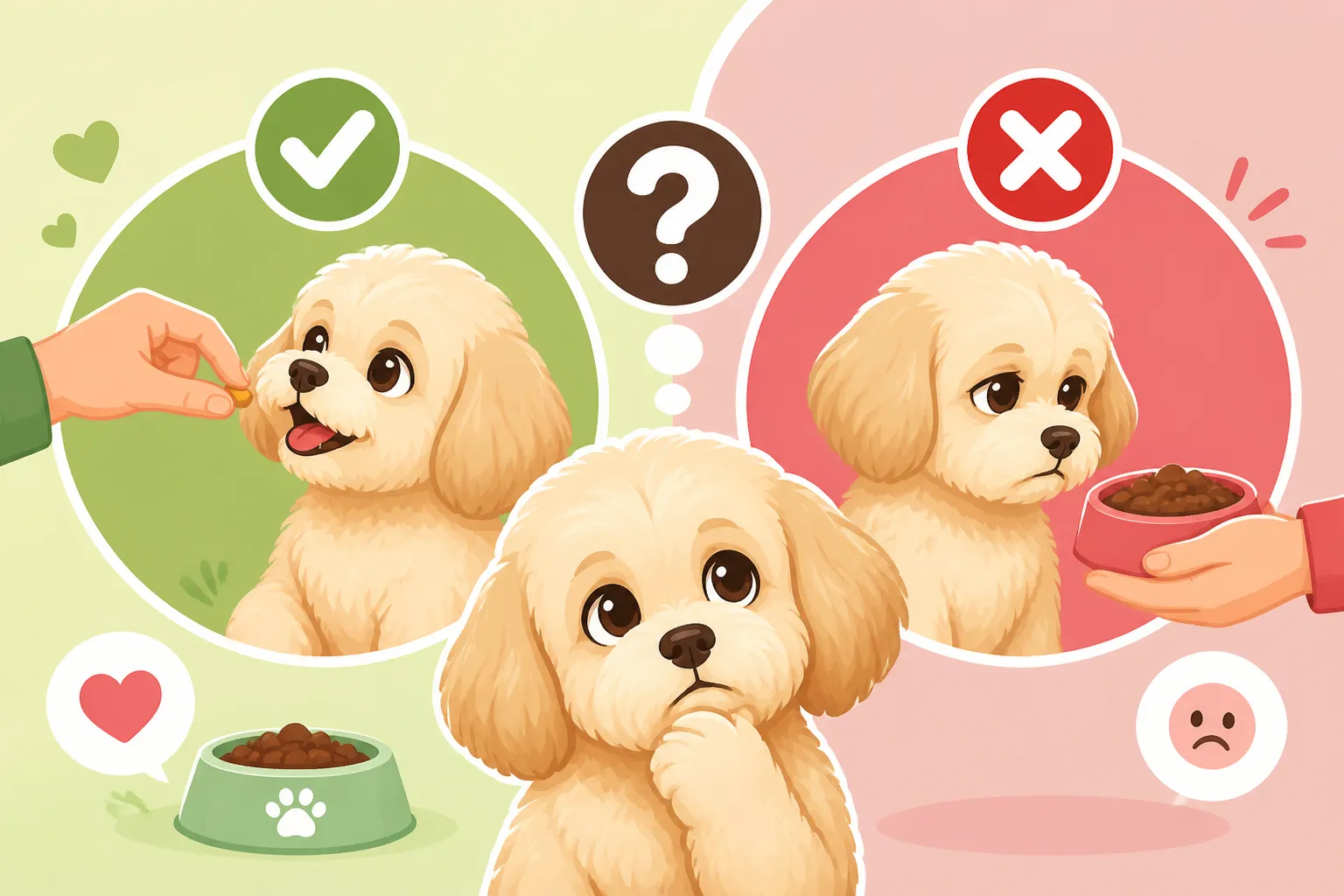
The fear of "spoiling" through hand-feeding usually stems from two main anxieties: creating a dog that refuses to eat from its bowl, or fostering a sense of dominance that leads to other behavioral problems. However, hand-feeding, when done intentionally and correctly, is not inherently a path to a spoiled dog. It's a powerful tool for building trust, providing comfort, and even managing certain health or behavioral challenges. Think of it not as an indulgence, but as a direct, intimate form of communication.
The key lies in understanding your Maltipoo's perspective and using hand-feeding as a deliberate strategy, rather than an accidental habit born of frustration or pity. Your Maltipoo isn't plotting to manipulate you; they're simply responding to patterns and cues. If hand-feeding becomes the only way they get food, that's a pattern, not a power play.
Valid Reasons to Hand-Feed Your Maltipoo And Why It Can Be Beneficial
There are numerous situations where hand-feeding your Maltipoo isn't just acceptable, but actually highly beneficial. Far from spoiling them, it can be a crucial part of their training, rehabilitation, or simply strengthening your bond.
Building Trust and Strengthening Your Bond
For a new Maltipoo puppy, especially one who might be a little shy or anxious about their new environment, hand-feeding can be a magical tool. It transforms mealtime from a solitary act into a shared, positive experience. Imagine bringing home a tiny, perhaps timid Maltipoo from a breeder; they're in a new place, away from their littermates, and everything is overwhelming. Offering food gently from your hand can be one of the first profound acts of bonding. It tells them, "I am a source of good things, you can trust me." This is especially true for Maltipoos who might have had a less-than-ideal start, such as those from rescue situations or puppy mills. It can help them associate human hands with comfort and safety, rather than fear. You're building a foundation of positive association that will serve you both well for years to come.
Managing Picky Eaters or Promoting Appetite
Maltipoos, with their small size, can sometimes be notoriously picky eaters. It’s not uncommon to hear owners fret about their Maltipoo refusing kibble. In these cases, hand-feeding can sometimes kickstart their appetite. The warmth of your hand, the gentle encouragement, and the direct interaction can make the food more appealing than just a bowl sitting on the floor. For a Maltipoo who is just "off" their food for a day or two, perhaps due to a minor stomach upset or a change in routine, hand-feeding small, palatable amounts can ensure they get essential nutrients and don't become hypoglycemic. Whether a Maltipoo Is a Fussy Eater is a common concern, and hand-feeding can be a temporary solution to Getting a Picky Maltipoo to Eat. The act itself can be reassuring, reducing any stress that might be contributing to their lack of appetite.
Administering Medication or Special Diets
Sometimes, hand-feeding is less about choice and more about necessity. If your Maltipoo is recovering from surgery, feeling under the weather, or needs to take medication hidden in a treat, hand-feeding ensures they consume what they need. Imagine your Maltipoo coming home after a dental procedure and needing a soft, specific diet. Offering it carefully from your hand can be the only way to get them to eat comfortably. This is also true for pups at risk of hypoglycemia, like a teacup Maltipoo puppy, where every calorie counts, and missing a meal could lead to serious health issues. Why a Two Pound Maltipoo Cannot Skip a Meal highlights the critical need for consistent caloric intake. Hand-feeding can be a precise way to manage portion control and ensure they consume their full meal.
Using it as a High-Value Reward in Training
Hand-feeding isn't just for mealtimes; it's an incredibly effective tool for positive reinforcement training. When you're teaching your Maltipoo a new trick or working on a challenging behavior, a treat delivered directly from your hand is often perceived as a higher-value reward than one dropped into a bowl. It creates a stronger positive association with you and the task. This technique is especially useful for teaching bite inhibition to puppies, as they learn to take food gently from your fingers. For a breed like the Maltipoo, which is generally eager to please, using food as a direct reward can really accelerate learning. A solid training program, perhaps one like BAXTER & Bella, often incorporates hand-feeding as a way to build focus and reward compliance.
Navigating the Pitfalls: When Hand-Feeding Becomes a Habit, Not a Tool
While hand-feeding offers many advantages, it's crucial to understand where the line is between a beneficial tool and an unhelpful habit. The primary pitfall is creating an unintended dependency, leading your Maltipoo to believe that food only comes from your hand, or that refusing a bowl will eventually lead to a hand-fed meal.
Developing a Dependency on Hand-Feeding
This is the most common concern: your Maltipoo starts turning up their nose at their bowl, waiting for you to hand-feed them. This isn't them being "spoiled" in a malicious sense; it's simply that you've inadvertently taught them that the best food (or the only food they'll get) comes from your hand. If they hold out long enough, their persistence pays off. This can become frustrating for you, and for your Maltipoo, it creates unnecessary stress around mealtimes. They learn that the bowl is just a prop, and their real mealtime only begins when you intervene directly. This can be particularly challenging when Training a Maltipoo Around Four Meals a Day, as constant hand-feeding for every meal can quickly become unsustainable.
Potential for Resource Guarding
While hand-feeding often builds trust, if not managed carefully, it could contribute to resource guarding, though this is less common with hand-feeding than with other methods. If you are constantly removing the food from your hand and then re-offering it, or if there's any perceived inconsistency, a Maltipoo might become anxious about the food source. They might start to guard your hand, or even become possessive of the food once it's given. This is why consistent, positive interaction is key, ensuring your Maltipoo always feels secure and never threatened during feeding. If your Maltipoo is already prone to Teaching a Maltipoo Not to Guard Its Bowl, a careful approach to hand-feeding, perhaps by offering from an open palm rather than between fingers, is crucial.
Stress and Inconvenience for the Owner
Let's face it, perpetually hand-feeding a Maltipoo is not always practical or convenient. What happens when you need someone else to care for your dog? Will your sitter be prepared to hand-feed every meal? What if you're traveling? The dependency creates stress for both you and your Maltipoo. You're constantly worried if they're eating enough, and they're potentially anxious if their expected feeding ritual isn't met. This isn't about control; it's about setting up a healthy, sustainable routine that works for everyone.
Practical Strategies for Intentional Hand-Feeding and a Smooth Transition
The good news is that you absolutely can hand-feed your Maltipoo beneficially without creating bad habits. It’s all about being intentional, setting clear expectations, and knowing when and how to transition back to the bowl.
When to Hand-Feed vs. When to Use a Bowl
The table below offers a simple guideline for when hand-feeding might be appropriate versus when it's best to stick to the bowl. This isn't a rigid rulebook, but a flexible framework to help you make informed decisions.
| Situation | Hand-Feeding Recommended? | Rationale |
|---|---|---|
| New puppy settling in | Yes | Builds trust, bonding, positive association with human hands. |
| Picky eater / low appetite | Temporarily Yes | Encourages eating, ensures caloric intake, can be more appealing. |
| Training high-value rewards | Yes | Strong positive reinforcement, focus on handler. |
| Medical recovery | Yes | Ensures medication/special diet intake, gentle on sensitive areas (e.g., mouth after dental work). |
| Initial socialization | Yes | Helps shy dogs associate people with positive experiences. |
| Normal daily meals (adult) | No (unless training) | Promotes independence, establishes routine, prevents dependency. |
| Established meal routine | No | Reinforces bowl as primary food source, avoids creating a picky eater. |
Gradual Transition Back to the Bowl
If you've been hand-feeding, whether out of necessity or to build a bond, and now want to transition your Maltipoo back to eating from a bowl, consistency and patience are key.
- Start with "Hand-to-Bowl": Begin by offering a few pieces of kibble from your hand, then immediately place the rest of the meal into their bowl. Encourage them to eat from the bowl while you are still present, maybe even touching the bowl gently.
- Increase Distance: Gradually move your hand further away from the bowl as they eat, until they are comfortably eating from the bowl on their own while you sit nearby.
- Short Time Limits: Put the food down for a set amount of time (e.g., 10-15 minutes). If your Maltipoo doesn't eat, pick it up and offer it again at the next scheduled mealtime. Don't give in and hand-feed if they refuse; this teaches them that holding out works. For How Many Calories a Six Pound Maltipoo Needs, it's important not to let them go too long without food, especially as puppies, but a bit of hunger can be a motivator.
- Make the Bowl Appealing: Use a clean, comfortable bowl. Some Maltipoos prefer a raised bowl, which can be more comfortable for their necks, or a slow feeder bowl, which makes eating more of a game (you can find various options on Amazon). You can also add a tiny bit of enticing topper to the kibble in the bowl, like a sprinkle of freeze-dried meat or a lick of peanut butter.
- Positive Reinforcement for Bowl Eating: When your Maltipoo eats from their bowl, praise them lavishly! Make it a positive, rewarding experience.
Incorporating Interactive Feeding Toys
To prevent boredom and make mealtime more engaging, consider using interactive feeders. Instead of just dumping kibble in a bowl, put some of their meal into a puzzle toy. This makes them "work" for their food, which is mentally stimulating and can be more satisfying than simply eating from a bowl. Brands like BAXTER & Bella often recommend enrichment activities such as puzzle feeders, as they tap into a dog's natural foraging instincts and can prevent mealtime boredom from becoming pickiness. You can find a wide variety of these on Amazon, from simple treat-dispensing balls to more complex sniff mats.
Consistency is Crucial
The most important aspect of any feeding strategy, whether hand-feeding or bowl-feeding, is consistency. Your Maltipoo thrives on routine and predictability. Decide on your approach and stick with it. If you decide hand-feeding is for specific situations, reserve it for those times. If you are trying to transition to bowl-feeding, everyone in the household needs to be on the same page. This clarity will help your Maltipoo understand the expectations and feel secure in their feeding routine. If they understand that food comes from the bowl during regular mealtimes, and hand-feeding is a special reward or for specific circumstances, then you're not spoiling them – you're simply being a great, adaptable pet parent.
Disclaimer
This article is for general informational purposes only and does not constitute professional advice. Laws, prices and regulations vary by location and change over time. Consult a qualified professional for guidance on your specific situation.