Whether Tap Water Makes a Maltipoo’s Stains Worse
It’s a sight many Maltipoo parents know all too well: those pesky reddish-brown stains around their darling's eyes, marring that otherwise pristine, fluffy face. You try everything – special wipes, diligent grooming, even switching foods – but the stains just don't seem to budge. It leaves you wondering if something fundamental in their daily routine, like the water they drink, could be making things worse. This guide is going to dive deep into whether your home's tap water is indeed contributing to your Maltipoo's persistent tear stains and what you can actually do about it.
Understanding Maltipoo Tear Stains: More Than Just a Cosmetic Issue
Before we point fingers at the water tap, it’s crucial to understand that tear staining is a complex issue with multiple potential culprits. It’s rarely just one thing, which is why it can be so frustrating to resolve. For our adorable Maltipoos, those delicate systems and beautiful light coats make them particularly susceptible.
The Root Causes of Tear Staining in Maltipoos
Tear stains, often reddish-brown or rust-colored, are caused by a substance called porphyrin, which is present in your dog's tears and saliva. When these porphyrins are exposed to light and air, they oxidize, creating that tell-tale rusty hue. Think of how an apple browns after you cut it – similar principle! But why are some dogs producing more porphyrin-rich tears, or why do their tears pool and stain in the first place?
Firstly, physiology plays a huge role. Some Maltipoos simply have shallow eye orbits or slightly protruding eyes, which means their tears don't drain properly through the tear ducts. Instead, they overflow and run down the face. Blocked tear ducts, often due to inflammation, debris, or even too much hair, can also cause this overflow. If you notice your Maltipoo’s eyes running excessively, it’s always worth a vet check to rule out underlying issues like infections or corneal scratches. For many Maltipoos, especially those with very light coats, even a normal amount of tearing can lead to visible staining.
Then there’s genetics. Certain breeds, like the Maltese (half of our Maltipoo equation!), are known to be more prone to tear staining. If your Maltipoo inherited those particular traits, you might be fighting an uphill battle, but not an unwinnable one. Diet also can’t be overlooked. High-quality food can support overall health, including eye health. Ingredients, especially fillers or artificial additives, can sometimes cause inflammatory responses that increase tear production or alter tear chemistry. Allergies, both environmental and food-related, are huge contributors too. If your Maltipoo is constantly itchy or has watery eyes, they might be reacting to pollen, dust mites, or something in their food, which you can read more about in Allergies Behind a Maltipoo's Itching.
Why Maltipoos Are So Prone to Stains
Maltipoos, being a cross between the Maltese and the Poodle, inherit characteristics from both. From the Maltese side, they often get that gorgeous, long, silky, and typically white coat. This beautiful coat, however, is a double-edged sword when it comes to tear stains. White or light-colored fur shows everything. A speck of dust, a tiny tear, and suddenly it's a prominent reddish streak. Other breeds might have tears, but on darker fur, they're simply less noticeable. You can dive deeper into this specific frustration in Tear Staining on a Light Coated Maltipoo.
The Poodle lineage, while bringing intelligence and a less-shedding coat, doesn't always offer a shield against tearing. Poodles can also experience eye issues, and the combined genetics can sometimes result in a predisposition to excessive tearing or specific eye structures that lead to drainage problems. Furthermore, the hair around a Maltipoo’s eyes grows continuously. If not kept meticulously trimmed, this hair can irritate the eyes, acting like wicks that draw tears out and down the face, creating a perfect breeding ground for stain-causing bacteria and yeast. This is why regular grooming and careful trimming of the facial hair are absolutely essential.
The Tap Water Question: Does It Really Affect Stains?
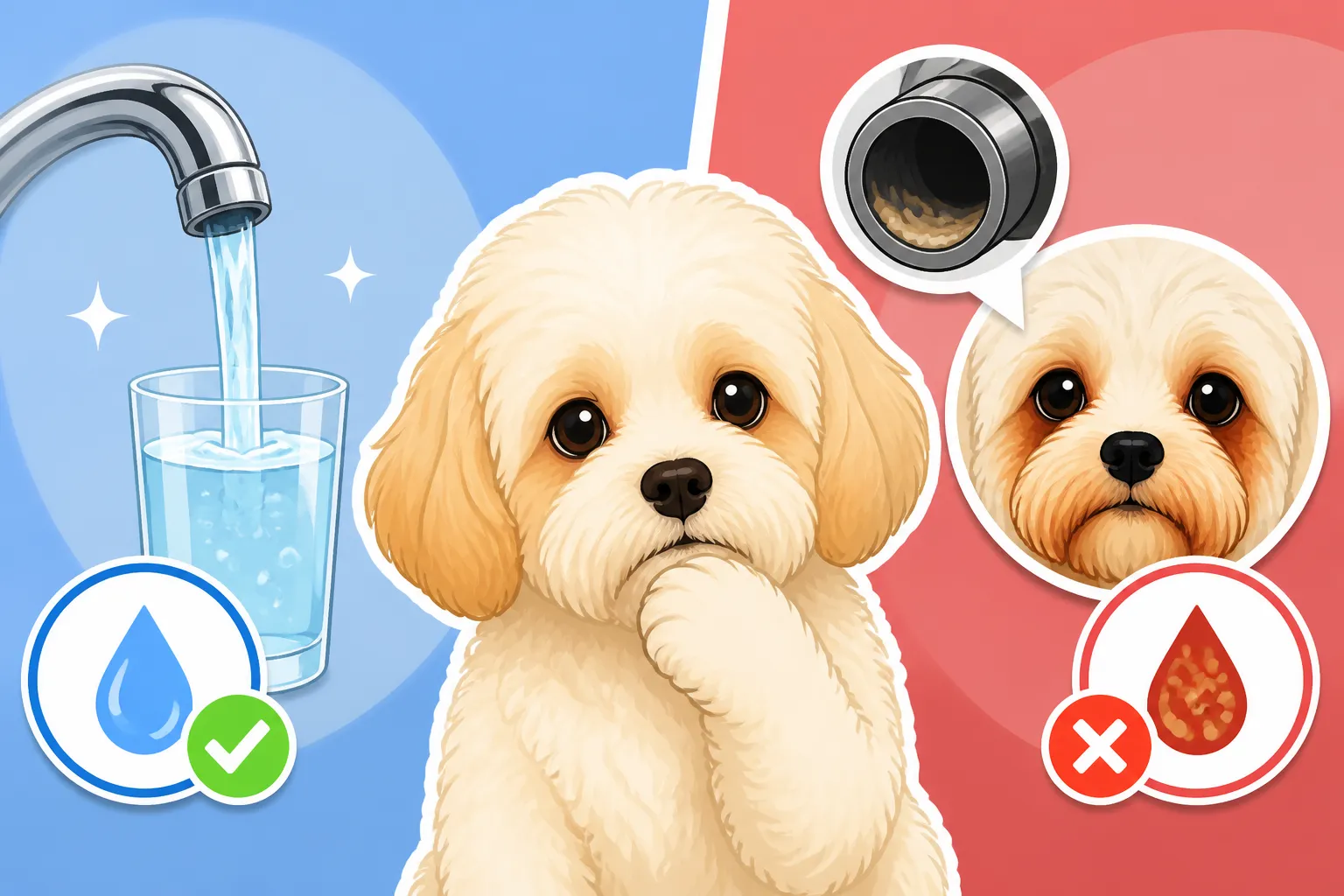
Now, let's get to the heart of the matter: your Maltipoo's drinking water. It might seem like a small detail, but the quality of the water your dog consumes daily can indeed play a subtle, yet significant, role in the battle against tear stains.
Minerals and Impurities in Tap Water
The water that comes out of your tap is far from pure H2O. Depending on where you live, it can contain a cocktail of dissolved minerals, chemicals, and other impurities. This is often referred to as "hard water," which has a high mineral content, primarily calcium and magnesium. While these minerals aren't necessarily harmful in small amounts, they can contribute to the overall mineral load in your dog's system.
Beyond hardness, tap water can also contain trace amounts of iron, copper, chlorine, and fluoride. Iron, in particular, is an oxidizing agent and can react with porphyrins in tears and saliva, potentially intensifying the reddish-brown staining. Chlorine, used to disinfect municipal water, can also be an irritant to some sensitive dogs, leading to increased tearing or mild inflammation. Even if it doesn't directly cause tear stains, it certainly doesn't help. The cumulative effect of these various elements, constantly being ingested, can create an internal environment that exacerbates the staining problem.
Consider your own experience with hard water: it leaves residue on shower doors and appliances, right? Imagine that constant exposure on a delicate system like your Maltipoo's, especially if they are already prone to staining. It’s not about the water causing the staining directly, but rather, the impurities potentially contributing to the severity and persistence of the problem.
How Water Quality Interacts with Your Maltipoo's System
When your Maltipoo drinks tap water filled with minerals and chemicals, their body has to process these substances. While their kidneys and liver are designed to filter out impurities, a constant intake of less-than-ideal water can put a strain on these organs over time. This might manifest not as a severe illness, but as a subtle imbalance within their system.
Some theories suggest that the mineral content in water, particularly iron, can be absorbed and then secreted through tears, further contributing to the porphyrin oxidation on the fur. Think of it as a low-level, continuous internal exposure to elements that can react with the tear chemistry. Additionally, the pH of your dog's body can be subtly influenced by their diet and water intake. While dogs are generally quite resilient, an internal pH imbalance, however slight, can sometimes lead to increased inflammation or changes in tear composition, making them more prone to staining.
Moreover, if your Maltipoo is even mildly sensitive to chlorine or other chemicals in tap water, it could cause minor eye irritation, leading to more frequent tearing. More tears mean more opportunity for staining. Even the simple act of drinking from a bowl that has tap water residue can leave a slight film around their mouth and whiskers, which, again, can react with saliva and lead to brown staining on their chin and beard area – just like the tear stains. Many owners find their Maltipoo’s beard also browns, and this is likely because of the water they drink and the food they eat. You might be surprised to see how much cleaner their beard stays once you address the water issue.
Practical Solutions for Mitigating Water-Related Stains
So, if tap water can make stains worse, what’s a devoted Maltipoo parent to do? The good news is, there are several practical steps you can take to minimize its impact.
Alternatives to Tap Water for Your Maltipoo
The simplest way to reduce the impact of tap water is to offer an alternative. This doesn't mean you need to buy expensive bottled water indefinitely; there are more sustainable and cost-effective options.
- Filtered Water: This is often the most accessible and practical solution. A good quality water filter pitcher, like those found on Amazon, or a filter attached to your tap, can significantly reduce chlorine, heavy metals, and other impurities. While it won't remove all dissolved solids, it can make a noticeable difference. Just make sure to change the filter regularly as per the manufacturer's instructions.
- Distilled Water: Distilled water is essentially pure H2O, with almost all minerals and impurities removed. It’s excellent for preventing mineral build-up, but some argue that a complete lack of minerals might not be ideal for long-term health. If you choose distilled water, ensure your Maltipoo is getting essential minerals from a balanced, high-quality dog food. You can find distilled water at most grocery stores or even invest in a home distiller, available on platforms like Chewy, for a more sustainable option.
- Spring Water: Natural spring water often has a lower mineral content than tap water, depending on its source. It typically contains beneficial trace minerals without the harsh chemicals of treated municipal water. Just check the label for mineral analysis to ensure it's a good choice.
Many owners start by simply switching to filtered water and often see improvements within a few weeks. Consistency is key here. Make sure all the water your Maltipoo drinks, including water in travel bowls or at daycare, is filtered.
| Water Type | Pros | Cons | Impact on Tear Stains |
|---|---|---|---|
| Tap Water | Convenient, readily available | Varies widely in quality, often high in minerals/chemicals | Can exacerbate staining due to impurities (iron, chlorine) |
| Filtered Water | Reduces common impurities, improved taste | Requires filter changes, doesn't remove all minerals | Often leads to noticeable reduction in staining |
| Distilled Water | Pure H2O, no minerals or impurities | Lacks beneficial minerals, can be expensive to buy regularly | Excellent for reducing mineral-related staining |
| Spring Water | Natural minerals, often good taste | Quality varies by brand/source, can be expensive | Generally good, less likely to contribute to staining |
Keeping the Face Dry and Clean: A Daily Battle
Even with perfect water, diligent daily care of your Maltipoo's face is non-negotiable in the fight against tear stains. Tears will still flow, and those porphyrins will still be there.
Firstly, a twice-daily wipe-down is essential. Use a soft, damp cloth or a specific pet-safe tear stain wipe (many brands are available on Amazon) to gently clean the area around their eyes. Be careful not to get any product in their eyes. Follow up with a dry cloth or a cotton pad to ensure the area is completely dry. Moisture is the enemy when it comes to staining and the growth of yeast and bacteria. You can find more detail on this in The Daily Face Wipe a Maltipoo Needs.
Regular professional grooming is also paramount. Your groomer can meticulously trim the hair around your Maltipoo's eyes to prevent irritation and wicking. In between grooms, you might need to do quick trims yourself, carefully using blunt-nosed scissors to keep the hair short. This small act of prevention can significantly reduce the amount of tear-soaked fur. This really highlights The Two Week Face Trim a Maltipoo Needs. Many Maltipoo parents regret not keeping on top of this.
If the staining is severe, consider applying a thin layer of petroleum jelly or a specific pet-safe barrier cream to the clean, dry fur under the eyes. This creates a barrier that prevents tears from soaking into the fur, allowing them to roll off instead. Always consult your vet or groomer for recommendations on safe products.
Dietary Considerations and Supplements
Your Maltipoo's diet and overall health play a massive role in tear production and staining. A holistic approach often yields the best results.
- High-Quality Food: Ensure your Maltipoo is on a premium dog food with wholesome, easily digestible ingredients. Avoid foods with artificial colors, fillers, or by-products, as these can sometimes trigger allergic reactions or sensitivities that lead to increased tearing. Some owners find that switching to a fresh food diet, like those offered by Ollie, makes a noticeable difference in their dog’s overall health, including tear staining, due to the higher quality ingredients and lack of common allergens. You can also explore options on Chewy for highly-rated sensitive stomach or limited ingredient diets.
- Probiotics: A healthy gut microbiome can positively impact the immune system and reduce inflammation throughout the body, including around the eyes. Consider adding a canine-specific probiotic supplement to your Maltipoo's diet.
- Antioxidants: Foods rich in antioxidants can help combat oxidative stress, which might play a role in porphyrin production. Blueberries, spinach, and other fresh fruits and vegetables (in appropriate, safe amounts) can be beneficial additions.
- Tear Stain Supplements: There are various oral supplements designed to reduce tear staining. Many contain ingredients like cranberry extract or probiotics. However, be cautious and always read labels. Some older formulations contained antibiotics (like tylosin), which are now largely discouraged for long-term use due to concerns about antibiotic resistance. Always consult your veterinarian before starting any new supplement regimen, especially one containing active medicinal ingredients. They can also help determine if there's an underlying medical condition, such as The Liver Shunt a Maltipoo Can Inherit From the Maltese, that might be contributing to a compromised immune system and thus more pervasive staining.
Remember, resolving tear stains is a marathon, not a sprint. It takes consistency, patience, and often a multi-pronged approach combining good grooming, appropriate water, and a healthy diet. Don't get discouraged if you don't see immediate results; give each change a few weeks to show its true effect on your precious Maltipoo.
Disclaimer
This article is for general informational purposes only and does not constitute professional advice. Laws, prices and regulations vary by location and change over time. Consult a qualified professional for guidance on your specific situation.