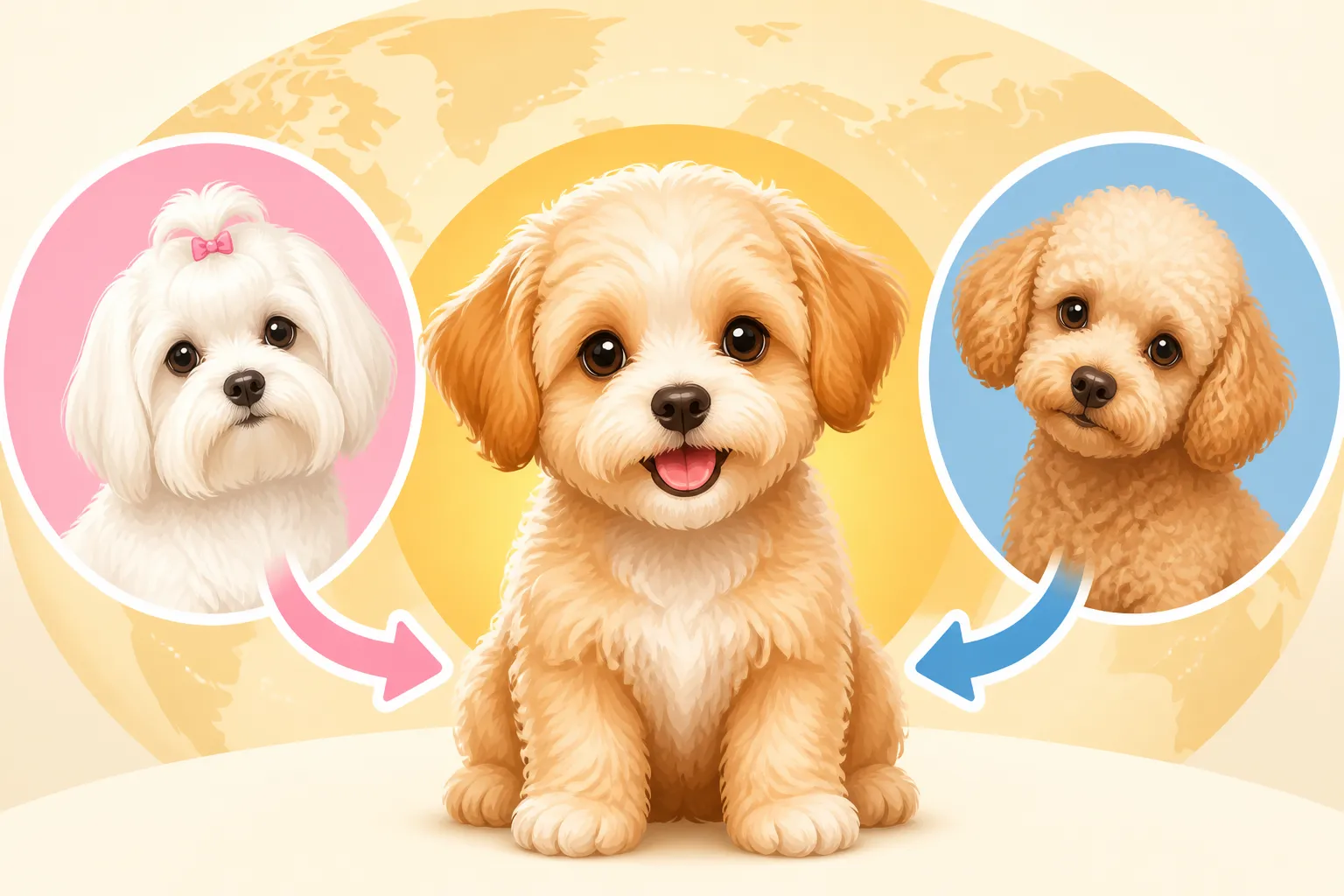
Where the Maltipoo Came From
Many Maltipoo owners find themselves completely smitten with their adorable companions, yet they might not know the full story behind how these charming little dogs came to be. It's easy to assume they've always been around, but the truth is, the Maltipoo has a fascinating, relatively recent history rooted in a deliberate effort to combine some of the best qualities of two beloved purebreds. This guide will take you on a journey through the origins of the Maltipoo, from the ancient lineage of its parent breeds to its modern-day status as a cherished family member.
Understanding the "Designer Dog" Phenomenon
Before we delve specifically into the Maltipoo, it's helpful to understand the broader context of "designer dogs." For centuries, dog breeds were developed for specific purposes – hunting, herding, guarding, or companionship – through selective breeding within a single lineage. However, in recent decades, a new trend emerged: the intentional crossbreeding of two distinct purebreds to achieve a desired combination of traits.
The Rise of Crossbreeds and Doodles
The late 20th and early 21st centuries saw an explosion in the popularity of crossbreeds, often dubbed "designer dogs." This wasn't just about accidental mixes; these pairings were carefully planned, usually with specific goals in mind. Many people were looking for dogs that fit particular lifestyles or had certain health or coat characteristics. For instance, the Poodle, renowned for its intelligence and non-shedding coat, became a prime candidate for crossing with other breeds. The hope was to introduce those desirable Poodle traits, particularly the low-shedding aspect, into other beloved breeds.
The appeal of these new crosses stemmed from a desire for pets that might offer the best of both worlds. Owners often sought dogs with the affectionate nature of one breed and the hypoallergenic qualities of another, or perhaps the robustness of a working dog with the manageable size of a companion breed. This intentionality, coupled with clever naming conventions (like "Labradoodle," "Goldendoodle," and eventually "Maltipoo"), captured the public imagination and fueled a burgeoning market.
Moving Beyond the "Mutt" Label
For a long time, mixed-breed dogs were simply referred to as "mutts" or "mongrels," often seen as less desirable than their purebred counterparts. The "designer dog" movement, however, consciously sought to elevate the status of these intentional crosses. By pairing two recognizable purebreds, breeders could imply a certain level of predictability in traits, even if not guaranteed. The term "designer" itself suggested a bespoke, carefully crafted animal, moving away from the randomness often associated with unplanned litters.
This shift in perception was crucial. Instead of being viewed as genetic uncertainties, designer dogs were presented as a thoughtful blend of specific attributes. Buyers were encouraged to consider the individual qualities of each parent breed and how they might combine in the offspring. This marketing approach helped to solidify their place in the pet world, positioning them as a viable and often preferable alternative for those seeking a dog with particular characteristics that might not be found perfectly encapsulated in a single purebred. It transformed the conversation from simply owning a mixed dog to acquiring a unique, carefully chosen companion.
The Parent Breeds: Maltese and Poodle
To truly understand the Maltipoo, we must first look to its esteemed ancestors: the elegant Maltese and the intelligent Poodle. Each brings a rich history and distinct set of characteristics to the Maltipoo genetic tapestry, influencing everything from its appearance to its temperament and potential health predispositions.
The Ancient Charm of the Maltese
The Maltese is a truly ancient breed, with its origins often traced back thousands of years to the island of Malta in the central Mediterranean. Throughout history, these small, aristocratic dogs have been companions to royalty and nobility, treasured for their exquisite beauty and affectionate nature. They were famously depicted in ancient Greek and Roman art, revered for their delicate features and flowing white coats.
Characteristically, the Maltese is known for being gentle, playful, and utterly devoted to its family. They thrive on companionship and are typically very sweet-natured, making them wonderful lapdogs. Their most striking physical feature is their long, silky, pure white coat, which is non-shedding but requires diligent daily grooming to prevent matting. On the health front, due to centuries of breeding for small size and specific facial structures, Maltese dogs can be prone to certain issues. These often include dental problems because of their crowded mouths, and patellar luxation, more commonly known as Slipping Kneecaps in a Maltipoo, where the kneecap temporarily dislocates. Owners of Maltese, and by extension Maltipoos, often find themselves investing in preventative dental care and being mindful of joint health. You can read more about The Forty Two Teeth Crowding a Maltipoo's Jaw to understand these issues better.
The Intelligent Poodle's Legacy
The Poodle, in all its sizes – Standard, Miniature, and Toy – boasts a heritage that is anything but dainty, despite its refined appearance. Originally bred in Germany as water retrievers, Poodles were active, intelligent working dogs. Their distinctive curly coats were intentionally clipped to protect their joints and vital organs from cold water while allowing for ease of movement during hunts. Over time, their intelligence, trainability, and striking looks led them to become popular circus performers and, eventually, cherished companions, especially among French aristocracy.
The Poodle is celebrated for its keen intellect, trainability, and often spirited personality. They are active and require mental stimulation, making them more than just pretty faces. Their single-layer, curly coat is non-shedding and widely considered hypoallergenic, making them a popular choice for allergy sufferers. This coat, however, also demands regular professional grooming or diligent home care to prevent matting. When it comes to health, Poodles can be predisposed to a range of genetic conditions, particularly the Toy and Miniature varieties often used in Maltipoo breeding. These can include eye conditions like progressive retinal atrophy (PRA), which affects The Eyes a Maltipoo Gets From the Poodle, and endocrine disorders such as Addison's disease. Understanding Whether a Maltipoo Gets Addison's From the Poodle can help prospective owners be more prepared. The Poodle's contributions to the Maltipoo are significant, offering a blend of sharp wits, a robust genetic pool, and that highly sought-after low-shedding coat.
The Emergence of the Maltipoo
With a clear understanding of the Maltese and the Poodle, we can now pinpoint the reasons and the timeline behind the Maltipoo's creation. This crossbreed didn't just happen; it was a response to specific desires from pet owners seeking a particular type of companion.
The Initial Spark: Blending Desirable Traits
The primary motivation behind combining the Maltese and the Poodle was to create a small, affectionate companion dog that possessed the best characteristics of both breeds. Owners were looking for a dog that was:
- Hypoallergenic (or at least low-shedding): Both parent breeds are known for their non-shedding coats, a huge draw for allergy sufferers. The hope was that the Maltipoo would reliably inherit this trait, making it a suitable pet for households that might otherwise be unable to welcome a dog. This was a significant driving force, as many people yearned for canine companionship without the constant battle against pet dander and shedding hair.
- Amiable and Affectionate: The Maltese's gentle, loving nature combined with the Poodle's intelligent and often playful demeanor promised a dog that would be an excellent family pet. Breeders aimed for a companionable temperament that would thrive on human interaction and bring joy to its household. They wanted a dog that was not only cute but also genuinely sweet-natured and easy to live with.
- Manageable Size: Both parent breeds are small, ensuring that their offspring would also be petite and suitable for apartment living or homes with limited space. This desire for a compact dog meant that even a full-grown Maltipoo would remain a manageable size, easy to transport and perfect for cuddling on the sofa.
- Healthier Genetics (perceived): While "hybrid vigor" is often cited as a benefit of crossbreeding, the initial idea was also to potentially broaden the gene pool and reduce the incidence of certain breed-specific genetic health issues that might be prevalent in purebred lines. The thought was that by mixing the two, some of the more common afflictions of each parent might be diluted, leading to a generally healthier animal.
These combined aspirations paved the way for the Maltipoo, a dog specifically designed to cater to a growing niche of pet owners.
The Timeline of Popularity
While exact dates for the "first" Maltipoo are elusive, the breed began to gain noticeable traction in the United States and other Western countries in the late 1990s and early 2000s. This period marked a broader surge in the popularity of "designer dogs." The Labradoodle, often credited as one of the first widely recognized designer crosses, paved the way for others like the Goldendoodle, Cockapoo, and, of course, the Maltipoo.
The rise of the internet played a crucial role in spreading awareness and accelerating the Maltipoo's popularity. As word of these charming, low-shedding, and affectionate companions spread through online forums and nascent social media platforms, demand grew rapidly. Celebrities embracing these new crosses further fueled their appeal. When popular figures were photographed with their adorable, fluffy companions, it brought significant media attention and cemented the Maltipoo's status as a trendy and desirable pet. You can delve more into When Maltipoos First Appeared and How the Maltipoo Became a Celebrity Dog to understand the rapid acceleration of their appeal. This period wasn't just about a new dog; it was about a cultural shift in how people viewed and acquired their canine companions, favoring specific trait combinations over traditional purebred lineages.
The Role of 'Hybrid Vigor' and Health Claims
One of the most compelling arguments often made for crossbreeds like the Maltipoo is the concept of "hybrid vigor." It sounds promising, suggesting that mixing two different breeds automatically results in a healthier, more robust animal. But what exactly is hybrid vigor, and how does it truly apply to the health of a Maltipoo?
Understanding Hybrid Vigor
Hybrid vigor, or heterosis, is a biological phenomenon where the offspring of genetically diverse parents exhibit superior qualities to either parent. In simpler terms, when you cross two unrelated purebred lines, their puppies tend to be stronger, healthier, and potentially even more fertile than their purebred parents. The theory behind this is that purebred lines, especially those with small gene pools, often have recessive genes for certain genetic diseases. If a dog inherits two copies of a "bad" recessive gene (one from each parent), it will likely develop the associated disease.
By crossing two distinct breeds, the chances of a puppy inheriting two copies of the same "bad" recessive gene from both sides of its family are theoretically reduced. Since the Poodle and the Maltese have different sets of genetic predispositions, a Maltipoo might inherit a "good" gene from one parent to mask a "bad" recessive gene from the other. This increased genetic diversity is what underpins the claim of improved health and vitality in crossbreeds. It's not a magical cure for all ailments, but rather a statistical advantage stemming from a broader genetic makeup.
The Reality of Maltipoo Health
While the concept of hybrid vigor is sound in principle, it's crucial to approach it with a realistic perspective when it comes to Maltipoos. Hybrid vigor is not a guarantee of perfect health. It reduces the likelihood of inheriting two copies of the same recessive disease gene, but it doesn't eliminate all genetic risks. A Maltipoo can still inherit any health issue that is common to either the Maltese or the Poodle.
For instance, if a Maltipoo puppy's Maltese parent carries genes for patellar luxation and its Poodle parent carries genes for progressive retinal atrophy, the Maltipoo could potentially inherit both conditions. Furthermore, if breeders are not diligently health-testing their parent stock, they could inadvertently be combining two lines that both carry recessive genes for different but equally serious conditions. This means that a Maltipoo might still face problems such as The Liver Shunt a Maltipoo Can Inherit From the Maltese or conditions related to the Poodle's genetic background.
Therefore, the health of a Maltipoo ultimately depends heavily on the responsible breeding practices of its parents. Reputable breeders, whether for purebreds or crossbreeds, will conduct comprehensive health screenings on their breeding dogs to minimize the risk of passing on known genetic conditions. Simply being a crossbreed does not automatically make a Maltipoo healthier; it's the careful selection and testing of the parent dogs that truly contributes to a puppy's well-being. Without health-tested parents, even a crossbreed can be just as susceptible to inherited diseases as a poorly bred purebred. You can explore topics like Collapsing Trachea in a Maltipoo's Neck to understand specific health challenges.
Lack of Official Recognition and its Implications
Despite their immense popularity, Maltipoos are not recognized as a distinct breed by major kennel clubs like the American Kennel Club (AKC) or the United Kennel Club (UKC). This lack of official status has several important implications for both breeders and owners.
Why the Maltipoo Isn't a "Breed" Yet
Breed recognition by major kennel clubs is a rigorous and lengthy process that often takes many generations. It's not simply about popularity or having two purebred parents. To be recognized as a true breed, several criteria must be met:
- Consistency in Traits: A recognized breed must have a predictable appearance, temperament, and health profile across generations. This means that if you breed two Maltipoos together, their offspring (F2 generation and beyond) should consistently resemble each other and their parents in terms of size, coat type, color, and behavior. This consistency is often lacking in first-generation crosses (F1 Maltipoos, where one parent is Maltese and one is Poodle) because the genetic blend is more varied.
- Established Breed Standard: A formal written standard must exist, detailing the ideal characteristics of the breed. This standard acts as a blueprint for breeders.
- Multiple Generations of Breeding: True breeds are developed over many generations, with careful selective breeding to solidify desired traits and eliminate undesirable ones. A cross like the Maltipoo is often still in its early generations of development.
- Active Breed Club: A dedicated breed club must be formed to advocate for the breed, maintain records, promote responsible breeding, and eventually seek recognition.
The Maltipoo, at present, does not meet these stringent criteria for most major kennel clubs. While individual Maltipoos may be quite consistent in their charm, the overall predictability across all Maltipoos from various pairings is not yet standardized enough for official recognition. You can find more detail on Whether the Maltipoo Counts as a Breed Yet to understand the ongoing debate.
What This Means for Owners and Breeders
The lack of official breed recognition has several practical consequences:
- No Standardized Health Testing: Because there isn't a governing body setting specific health testing requirements for "Maltipoos," the onus falls entirely on individual breeders. Reputable breeders will still follow the health testing guidelines recommended for Maltese and Poodles, but there's no mandatory standard across the board. This makes it crucial for prospective owners to ask for proof of health clearances for both parent dogs.
- Variability in Traits: Without a breed standard, there can be a wide range of variation in Maltipoos, even within the same litter. One puppy might lean more heavily towards its Maltese parent in appearance and temperament, while another might resemble the Poodle more closely. This means that predicting a Maltipoo's exact adult size, coat type (wavy, curly, straight), or even personality can be more challenging than with a purebred.
- Breeder Accountability: While there are many excellent, ethical Maltipoo breeders, the absence of official oversight can make it easier for less scrupulous breeders (like puppy mills) to operate without adhering to high standards. There's no central registry to track lineage or enforce ethical practices, which places a greater burden on buyers to thoroughly vet potential breeders.
- No Show Ring Participation: Maltipoos cannot compete in conformation events (dog shows) sanctioned by the AKC or similar organizations, as these are reserved for recognized purebreds. However, many crossbreeds can and do excel in performance events like obedience, agility, or therapy work, which are often open to all dogs, regardless of breed status.
It really highlights the importance of doing your homework when considering a Maltipoo. Finding a breeder who is transparent about their practices, performs all recommended health clearances for the parent breeds, and offers a clear health guarantee is paramount.
The Maltipoo's Place in the Canine World Today
Despite not being officially recognized as a distinct breed, the Maltipoo has undeniably carved out a significant and cherished place in the hearts and homes of many families. Their journey from intentional cross to beloved companion is a testament to their enduring appeal and the qualities they bring to human lives.
Enduring Popularity and Appeal
The Maltipoo's popularity continues to endure, and it’s not hard to see why. They embody many of the qualities that modern pet owners seek in a companion. Their small size makes them ideal for various living situations, from spacious homes to cozy apartments, and they are generally portable, fitting easily into carriers for travel or errands. This adaptability to different environments is a huge plus for many busy families.
Furthermore, their soft, often wavy or curly, low-shedding coats remain a significant draw, especially for individuals with allergies or those who simply prefer less dog hair around the house. The promise of a reduced allergic reaction or easier cleanup is a powerful motivator. Beyond the practicalities, Maltipoos are often praised for their charming personalities. They tend to be intelligent, affectionate, and playful, often displaying a zest for life that is contagious. They thrive on companionship and are quick to bond with their families, making them wonderful snuggle buddies and loyal friends. Their endearing looks, often described as perpetually puppy-like, also contribute to their lasting appeal, making them irresistible to many.
Responsible Ownership in a Non-Recognized World
Bringing a Maltipoo into your home, especially given their non-recognized status, requires a commitment to responsible ownership that goes beyond what might be expected for a purebred. Since there's no governing body setting strict breeding standards, the responsibility for ensuring you get a healthy, well-socialized puppy rests firmly with you, the prospective owner.
First and foremost, research your breeder meticulously. Ask for transparency regarding the parent dogs, including their purebred registrations, health testing certificates (such as OFA certifications for patellas and CERF for eyes, as recommended for both Maltese and Poodles), and temperament assessments. A reputable breeder will be eager to share this information and answer all your questions. They should also provide a health guarantee for their puppies. For instance, The Four Certificates a Maltipoo Breeder Should Show is a good starting point for what to look for.
Secondly, prepare for their specific care needs. Maltipoos, like their Poodle parent, often have coats that continue to grow, requiring regular professional grooming every 6-8 weeks to prevent matting and maintain good hygiene. Between professional grooms, daily brushing at home is often necessary. Their small size also means they are susceptible to rapid drops in blood sugar (hypoglycemia) as puppies, requiring frequent meals and careful monitoring, particularly for smaller individuals. You can read more about Why a Two Pound Maltipoo Cannot Skip a Meal for insights into their specific nutritional needs.
Finally, invest in early training and socialization. While often sweet, Maltipoos can inherit the Poodle's intelligence and the Maltese's occasional stubborn streak. Consistent positive reinforcement training from an early age is vital to help them become well-adjusted members of your family. Socialization with various people, places, and other animals is crucial to prevent them from becoming overly timid or reactive. You want to ensure your Maltipoo grows up to be a confident companion, not The Maltipoo That Was Never Taught to Be a Dog. For all their needs, from specialized small-breed kibble to grooming tools and safe, chew-resistant toys, many owners rely on established pet supply retailers. For instance, you can find a vast selection of high-quality products suitable for a Maltipoo's specific requirements at online stores like Chewy.
The Maltipoo's journey from a deliberate cross to a beloved family pet is a testament to its charming qualities. With informed choices and dedicated care, a Maltipoo can bring immense joy and companionship to its owners for many years.
| Feature | Maltese | Poodle (Toy/Miniature) | Maltipoo (First Generation) |
|---|---|---|---|
| Origin | Malta, ancient times | Germany, 16th century (water retriever) | United States, late 20th century (designer cross) |
| Primary Purpose | Lapdog, companion | Water retriever, companion, performer | Companion, family pet (low-shedding) |
| Average Size | 4-7 lbs | Toy: 4-6 lbs, Miniature: 10-15 lbs | Typically 5-15 lbs (highly variable depending on Poodle parent) |
| Coat Type | Long, silky, straight, pure white, non-shedding | Curly, dense, non-shedding (various colors) | Variable (wavy to curly), non-shedding, various colors |
| Grooming Needs | High, daily brushing, professional grooming | High, professional grooming every 4-6 weeks | High, daily brushing, professional grooming every 6-8 weeks |
| Temperament | Gentle, affectionate, playful, devoted | Intelligent, active, trainable, often spirited | Variable blend of both parents, typically intelligent and affectionate |
| Common Health Issues | Patellar luxation, dental issues, liver shunt | PRA, Addison's, patellar luxation, epilepsy | Can inherit issues from either parent breed, hybrid vigor not a guarantee |
Disclaimer
This article is for general informational purposes only and does not constitute professional advice. Laws, prices and regulations vary by location and change over time. Consult a qualified professional for guidance on your specific situation.