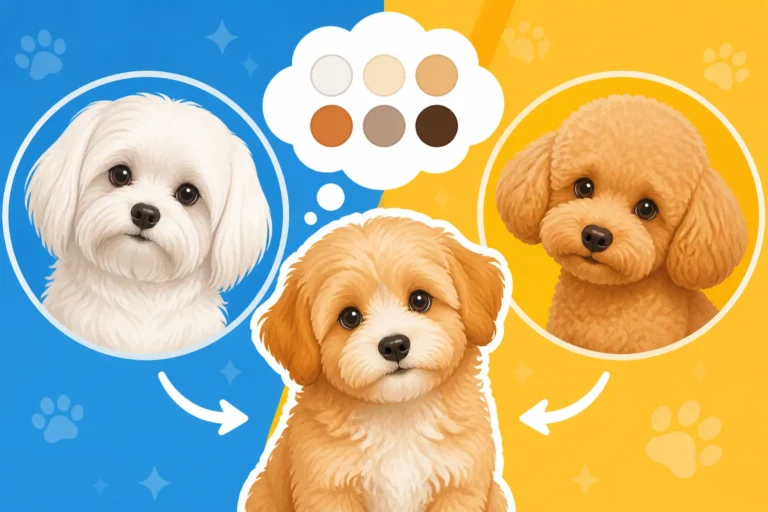
Where a Merle Maltipoo’s Color Comes From
You’ve fallen in love with the adorable Maltipoo, but then you spot a picture of one with unique, swirling patches of color and possibly striking blue eyes – a "merle" Maltipoo. Suddenly, you're wondering, where does this dazzling, often marbled coat pattern come from? It's a common and very valid question, especially since neither the purebred Maltese nor the purebred Poodle is known for carrying the merle gene. This guide will walk you through the fascinating genetic journey of the merle pattern and help you understand its origins and implications for Maltipoo owners.
Understanding the Merle Gene in Dogs
The merle pattern is incredibly striking, but it's not just a beautiful coat color; it's a genetic trait with specific implications. Many new or prospective Maltipoo owners are understandably captivated by these unique patterns, often without fully realizing the science behind them.
What is the Merle Pattern?
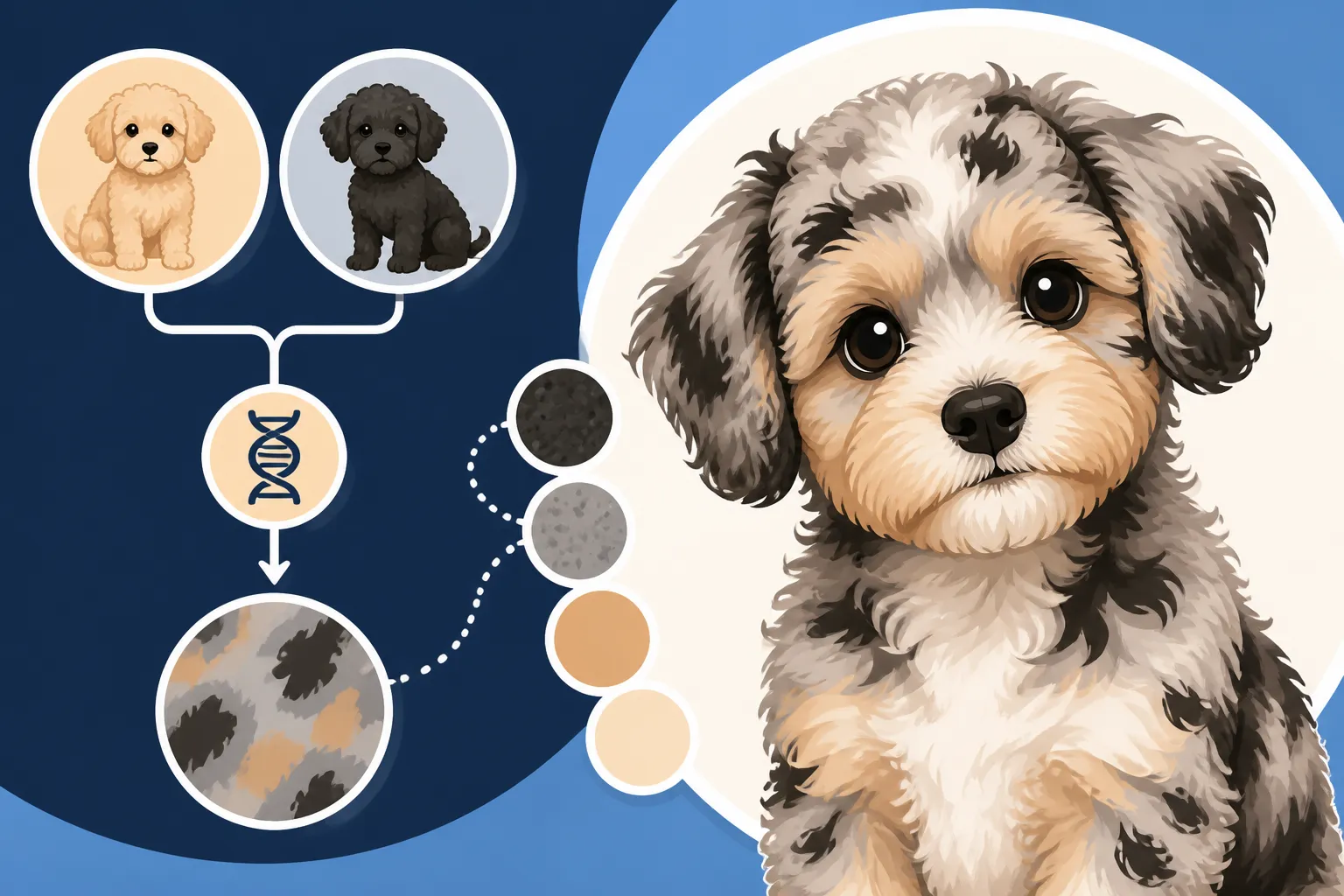
When you see a merle Maltipoo, you're looking at a dog whose base coat color has been diluted in an irregular, patchy way. Imagine a black or brown dog, and then picture scattered areas where that black or brown has been faded to a lighter grey or tan. These lighter areas are interspersed with the original, darker, undiluted color, creating a marbled or mottled effect. Blue merle, for example, features black patches on a diluted gray background, while red merle shows liver-colored patches on a lighter reddish-tan.
Beyond the coat, merle often brings distinctive eye colors. Many merle dogs have piercing blue eyes, or even heterochromia, where one eye is blue and the other is brown, or both eyes can be partially blue, appearing marbled. Their noses might also show patches of pink, especially if the merle gene affects areas of pigmentation. It's truly a head-turner, but it's important to understand this isn't just about aesthetics; it's about a specific gene at play that causes this dilution.
The M Locus and Its Impact
The merle pattern is controlled by a dominant gene located on what geneticists call the M locus. This means a dog only needs one copy of the merle gene (denoted as M) to express the merle pattern. If a dog inherits two copies (M/M), they are referred to as a "double merle," which, as we’ll discuss, comes with significant health risks. A non-merle dog would carry two recessive copies (m/m).
There are actually several variations of the merle allele, from cryptic merle (Mc) which might show little to no visible merle pattern, to atypical merle (Ma), classic merle (M), and harlequin merle (Mh), each resulting in slightly different expressions of the pattern. However, for most owners, the key takeaway is that the mere presence of the M allele dictates the merle patterning. This genetic factor is what allows for the stunning variations you see, but it also carries the weight of potential health concerns depending on how it's inherited.
The Absence of Merle in Purebred Maltese and Poodles
This is where the mystery often begins for many Maltipoo enthusiasts. You know a Maltipoo is a cross between a Maltese and a Poodle, and neither of those breeds is typically merle. So, how does a merle Maltipoo come to be? The answer lies in understanding the genetic history and breed standards of the parent breeds.
The Maltese Genetic Pool
Historically, and by all breed standards, the Maltese is a solid white dog. Their genetic makeup does not include the merle gene. The characteristic long, silky, pristine white coat is a hallmark of the breed. If you were to encounter a purebred Maltese advertised as "merle," it would immediately raise red flags for any reputable breeder or breed enthusiast. Such a claim would strongly suggest that the dog is either not a purebred Maltese or has had merle introduced through an outcross, which would disqualify it from being considered a purebred by any recognized kennel club. The Maltipoo Against a Purebred Maltese highlights some of these key differences in appearance and lineage.
The expectation for a Maltese is a consistent, non-patterned white coat. Any deviation, especially one as striking as merle, simply doesn't originate from the Maltese side of your Maltipoo's family tree. This fundamental aspect of Maltese genetics means we have to look to the Poodle side, or beyond, for the source of merle.
The Poodle Genetic Pool
Similarly, the Poodle breed, while boasting a vast array of solid colors (black, white, brown, apricot, red, cream, blue, silver, gray), does not naturally carry or express the merle gene according to official breed standards. Reputable Poodle breeders do not produce merle Poodles, and kennel clubs do not recognize merle as an acceptable Poodle coat pattern. A Poodle with a merle pattern would not be eligible for registration or conformation showing under most major kennel club rules.
This strict adherence to solid colors and specific patterns like parti (two colors) or phantom (specific markings) means that traditionally, a purebred Poodle cannot pass on the merle gene. This fact often leaves Maltipoo prospective owners scratching their heads: if neither parent breed is merle, how can their offspring be? The answer points to a more complex, and often controversial, aspect of designer dog breeding. It's a key piece of information when you're asking Whether a Maltipoo Is Just a Colored Maltese or trying to understand their varied appearances.
The Introduction of Merle into Maltipoo Lines
Since neither the Maltese nor the Poodle naturally carries the merle gene, the appearance of a merle Maltipoo tells us something very important: the merle gene was intentionally introduced into one of the parent lines. This isn't a naturally occurring genetic variation within the established Poodle or Maltese gene pools.
Merle's Entry via Non-Standard Poodles
The most common way the merle gene enters a Maltipoo lineage is through the Poodle parent. While traditional Poodles do not carry merle, some breeders, driven by the demand for "unique" or "rare" coat colors, have deliberately introduced the merle gene into Poodle lines. This is achieved by breeding a Poodle with another breed that does naturally carry the merle gene, such as an Australian Shepherd or a Border Collie, and then breeding the merle offspring back to Poodles over several generations. This process is often referred to as an "outcross."
Once the merle gene is established in these non-standard Poodle lines, these Poodles can then be used to breed Maltipoos. So, when you see a merle Maltipoo, it's almost certainly because its Poodle parent (or a Poodle ancestor in its lineage) carried the merle gene, not because it spontaneously arose from a purebred Maltese and a standard Poodle. This is a point of contention among breeders and breed enthusiasts, as it deviates significantly from established breed standards and can have serious consequences. Understanding What Breeding Smaller Costs a Maltipoo often involves looking at how breeders try to manipulate traits, sometimes at the expense of health.
The Ethical Dilemma and Health Risks of Merle
While the merle pattern is undeniably beautiful, its introduction into breeds where it doesn't naturally occur, especially without careful genetic testing and ethical breeding practices, poses a significant ethical dilemma. The main concern centers around the health risks associated with the merle gene, particularly in "double merle" dogs (M/M).
Dogs that inherit two copies of the merle gene (one from each parent) are at a much higher risk for severe health issues, including:
- Vision problems: This can range from abnormally small eyes (microphthalmia) to misplaced pupils, detached retinas, colobomas (holes in ocular tissue), and varying degrees of blindness.
- Hearing problems: Double merles are prone to congenital deafness, either in one or both ears. The gene affects the pigmentation of cells in the inner ear that are crucial for hearing.
Even single merle dogs (M/m) can have health issues if the merle gene affects specific areas. For instance, some cryptic merles might have minimal visible patterns but still carry the gene and its associated risks. Responsible breeders, therefore, would never breed two merle dogs together, specifically to avoid producing double merle offspring. The goal should always be to prioritize health over novelty of color. The Eyes a Maltipoo Gets From the Poodle is a critical read, as eye health is a concern with merle genetics. When considering a puppy, asking for The Four Certificates a Maltipoo Breeder Should Show including genetic health clearances, is non-negotiable.
What a Merle Maltipoo Means for Owners
If you're drawn to the unique appearance of a merle Maltipoo, it's vital to be fully informed about what that means for both the dog and your responsibility as an owner. The rarity and visual appeal can be tempting, but knowledge is your best tool.
Recognizing a Merle Maltipoo
A merle Maltipoo will exhibit the characteristic diluted and patched coat patterns we discussed earlier. Blue merle Maltipoos will have distinct black patches on a gray background, while red merles will show liver-colored patches on a lighter, reddish-tan base. Some might even have "phantom" merle markings if the merle gene interacts with the typical phantom pattern (tan points).
Beyond the coat, pay close attention to the eyes and nose. Blue or "marbled" eyes are a strong indicator of the merle gene. A marbled eye might have segments of blue and brown within the same iris. Noses can also have pink patches, especially in lighter merle variations. These features, while beautiful, are key visual cues that the merle gene is present. It's important to differentiate these genetic traits from other coat changes; for example, Whether an Apricot Maltipoo Fades is a separate, normal aging process, not a genetic pattern.
Finding a Responsible Breeder
When it comes to merle Maltipoos, selecting a responsible breeder becomes even more critical than usual. A truly ethical breeder will prioritize the health and well-being of their puppies above all else, especially over novel color trends. Here’s what to look for and what to ask:
- Transparency about Parentage: A responsible breeder will be open about the lineage of their dogs. They should be able to explain how the merle gene entered their Poodle line and provide documentation of the parent dogs.
- Genetic Health Testing: This is paramount. They should conduct extensive genetic testing on both parent dogs to ensure they are not carriers of various genetic diseases common to Poodles and Maltese, and they should be able to confirm if the parents carry one or two copies of the merle gene. Crucially, they should never breed two merle dogs together (M/m x M/m) due to the high risk of producing double merle (M/M) puppies with severe health defects. Always ask Whether a Maltipoo Breeder Should Run the Poodle Panel, which should include specific tests relevant to the breed.
- Avoid "Rare" Color Marketing: Be wary of any breeder who emphasizes the "rarity" or "exclusivity" of a merle Maltipoo as a primary selling point, especially if they charge a premium for it without thoroughly explaining the associated health risks. This often indicates a breeder more focused on profit than welfare.
- Health Guarantees: Understand what their health guarantee covers. While no breeder can guarantee a dog will never have a health issue, a responsible breeder will offer a guarantee against genetic conditions.
If you are setting up your home for a new Maltipoo, whether merle or not, remember that finding high-quality food, beds, and toys is essential. Online retailers like Chewy offer a convenient way to get everything you need, often with detailed product descriptions and reviews to help you make informed choices. They stock a wide array of specialized diets for small breeds and puppies, which can be particularly useful for a growing Maltipoo.
Living with a Merle Maltipoo
If you decide to bring a merle Maltipoo into your life, be prepared for the potential health considerations. Regular veterinary check-ups are always important for any dog, but they become even more crucial for a merle Maltipoo to monitor for any developing vision or hearing issues. Discuss these concerns openly with your veterinarian from the very first puppy visit.
Should your merle Maltipoo have vision or hearing impairments, creating a consistent and safe environment at home is key. This might involve:
- Maintaining a consistent layout: Avoid frequently rearranging furniture to help a visually impaired dog navigate.
- Using scent cues: Placing scented markers on furniture or doorways can help.
- Gentle handling: Always approach a deaf dog carefully, making your presence known through vibrations or gentle touches rather than startling them.
- Visual cues: For deaf dogs, hand signals can be incredibly effective for training and communication.
Many merle Maltipoos live perfectly normal, happy lives, especially those who only carry one copy of the merle gene and are free of significant health problems. However, being aware and prepared for potential challenges is part of responsible pet ownership. Chewy also has a great selection of assistive products, such as beds with orthopedic support for older dogs, or toys designed for dogs with different sensory needs, which might be helpful if your Maltipoo develops specific requirements. After all, the goal is always to provide the best possible life for our furry family members, regardless of their unique traits.
Disclaimer
This article is for general informational purposes only and does not constitute professional advice. Laws, prices and regulations vary by location and change over time. Consult a qualified professional for guidance on your specific situation.