Whether a Harness Protects a Maltipoo’s Windpipe
It’s a heart-stopping moment for any Maltipoo owner: that sudden, alarming honking cough that sounds like your precious pup can’t breathe. This common and distressing experience often leads us to question every aspect of their care, especially their walking gear. You worry if your adorable Maltipoo is safe on a leash, and if a traditional collar is unknowingly putting their delicate windpipe at risk. This guide will meticulously break down the critical role a harness plays in safeguarding your Maltipoo's trachea and ensuring their comfort and health.
Understanding Your Maltipoo's Delicate Trachea
Many Maltipoo owners don't realize just how delicate their furry friend's respiratory system can be until they witness a terrifying coughing fit. This isn't just a minor inconvenience; it's often a sign of a very real and common health concern in small breeds like the Maltipoo: a collapsing trachea. Understanding this condition is the first step to truly protecting your dog.
What is Collapsing Trachea?
Imagine your windpipe as a flexible, but firm, tube made of C-shaped cartilage rings. In a healthy dog, these rings hold the airway open, allowing air to flow freely to and from the lungs. However, for many small breeds, including Maltipoos, these cartilage rings can be weaker than they should be, or they can flatten over time, particularly in certain sections of the windpipe. When this happens, the airway becomes narrow, making it difficult for your dog to breathe properly. This structural weakness is known as a collapsing trachea.
It's a progressive condition, meaning it tends to worsen with age, but it can start manifesting in puppies or young adults. The signs often include a distinctive dry, harsh cough, often described as a "goose honk." This cough can be triggered by excitement, exercise, drinking water, or even just pulling on a collar. If you've ever heard The Honking Cough of a Maltipoo With a Bad Trachea you know how distressing it is. The reason Maltipoos are particularly susceptible isn't entirely clear, but it's believed to be a genetic predisposition inherited from their Maltese and Poodle ancestors, both of whom can carry this trait. The smaller the dog, the more pronounced the issue can become, making "teacup" or "toy" sized Maltipoos especially vulnerable.
Why Collars are a Risk for Maltipoos
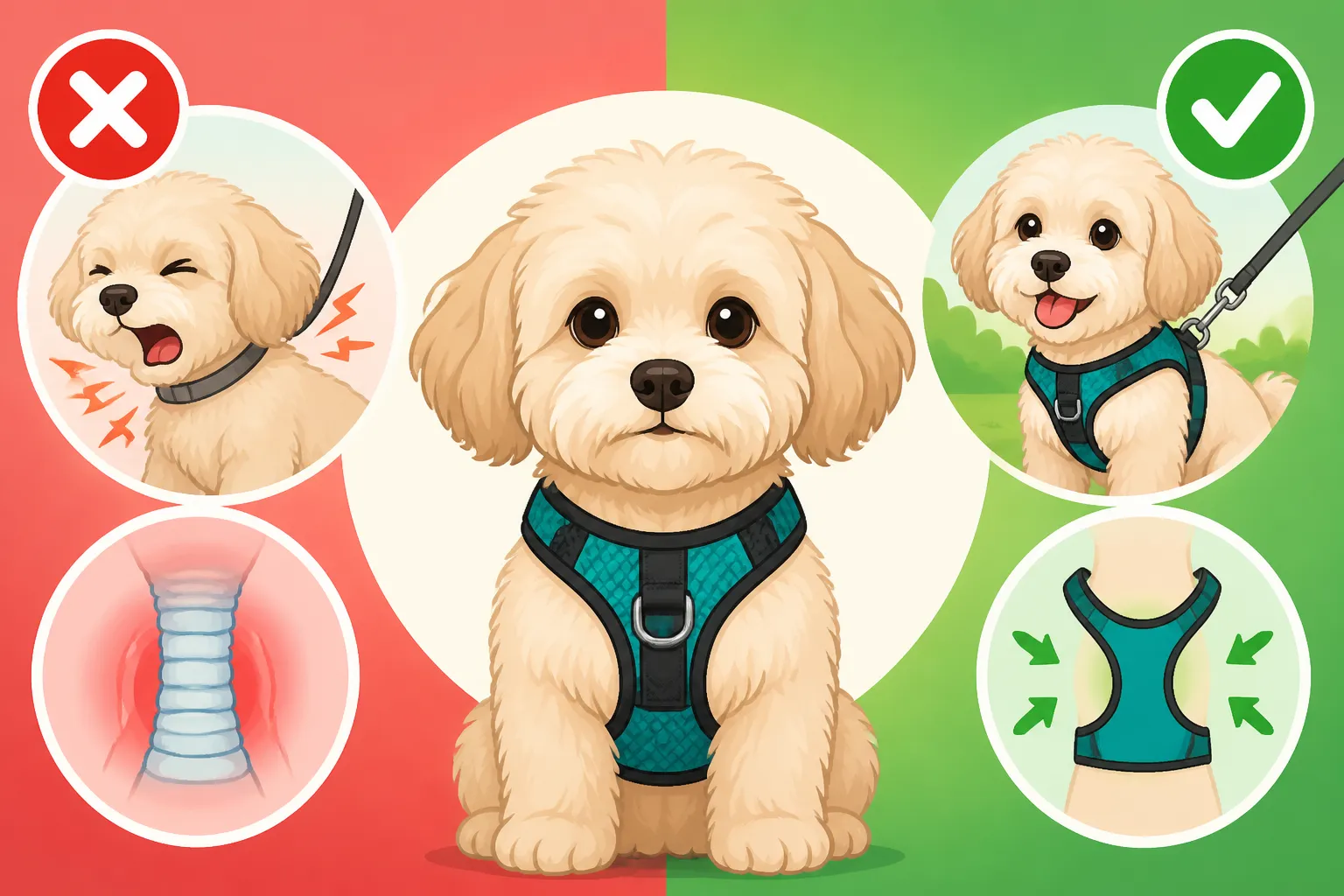
Now that we understand the fragility of the trachea, it becomes clear why traditional neck collars pose such a significant risk. When you attach a leash to a collar, any tension, whether from your dog pulling, you correcting them, or even just a sudden stop, exerts direct pressure on the front of their neck. This is exactly where the trachea lies. For a dog with a compromised or inherently weak trachea, this pressure can physically compress the already narrowing airway, further restricting airflow and potentially triggering a coughing spasm or even a full-blown breathing crisis.
Think of it like this: if you had a straw that was already a bit bent, and someone squeezed it with their fingers, it would be much harder to breathe through. That's essentially what happens to your Maltipoo's windpipe. Even if your Maltipoo doesn't have a diagnosed collapsing trachea, repeated pressure and stress on the windpipe from a collar can contribute to the weakening of the cartilage over time, potentially accelerating the onset or severity of the condition. This is precisely Why a Maltipoo Should Never Wear a Collar for walks, especially if they show any signs of coughing or wheezing. The immediate solution is to remove that pressure point.
How a Harness Protects Your Maltipoo's Windpipe
The good news is that protecting your Maltipoo's delicate windpipe is quite straightforward: switch from a collar to a well-fitting harness. This simple change can make a world of difference in their comfort, safety, and long-term health.
The Mechanics of Harness Protection
A harness works by distributing any pulling force across your dog's chest, shoulders, and back, completely bypassing the neck and throat area. Instead of a single point of pressure on the trachea, the leash attachment point on a harness is typically located on the back or the front chest, depending on the harness style. This means that when your Maltipoo pulls (or you gently guide them), the pressure is evenly spread over strong skeletal structures and muscles, not on the fragile windpipe.
This distribution of force is crucial for dogs prone to tracheal collapse. It eliminates the direct trauma and compression that collars inflict, dramatically reducing the risk of a coughing fit or exacerbating an existing tracheal condition. For Maltipoos, whose tracheas are often narrower and more susceptible to collapse, this shift in pressure point is not just a preference, but a vital medical precaution. It allows them to breathe freely, even during moments of excitement or exertion, making their walks far more enjoyable and safer.
Different Harness Types and Their Benefits
Not all harnesses are created equal, and understanding the different types can help you choose the best one for your Maltipoo. The key is to select a design that maximizes chest and back distribution while avoiding any straps that sit directly on the throat.
-
H-Harness (or "Body Harness"): These are very popular and widely available. They typically have a strap that goes around the chest and another around the girth, connected by a vertical strap on the back and another on the chest. The leash attaches to a D-ring on the back. The "H" shape, when correctly fitted, keeps all pressure off the neck. They are generally secure and comfortable for most Maltipoos, provided the fit is snug but not restrictive. They allow for a full range of motion for the legs and shoulders, which is important for their small joints.
-
Vest Harnesses: These are often made of soft, breathable fabric that covers a larger area of the dog's chest and back, resembling a small vest. The leash attachment is usually on the back. Vest harnesses offer excellent pressure distribution due to their wide coverage and soft materials. They are particularly good for very small or fragile Maltipoos, providing a sense of security and warmth, and preventing any localized pressure points. They are also often step-in designs, which can be easier for both you and your dog.
-
Step-In Harnesses: As the name suggests, your Maltipoo "steps into" these harnesses with their front paws. The harness then buckles over their back. These are generally very easy to put on and take off, which is a huge plus for dogs who might be squirmy or anxious about having things pulled over their heads. They typically distribute pressure well across the chest and sides, making them a good option for tracheal protection. However, ensure the front strap doesn't ride up too high on the neck when the dog pulls.
Front-clip harnesses, while excellent for discouraging pulling by redirecting the dog, might not always be the first choice for a Maltipoo specifically due to tracheal concerns. While they don't put direct pressure on the throat, some designs can still have straps that sit higher on the chest, which, if improperly fitted, could still cause discomfort. For a Maltipoo with a sensitive trachea, back-clip H-harnesses or vest harnesses are often preferred for their clear separation from the neck area.
Choosing the Right Harness for Optimal Protection
Selecting the perfect harness isn't just about picking the cutest one; it's about fit, material, and design to ensure maximum comfort and protection for your Maltipoo. A poorly fitting harness can be just as problematic as a collar, so paying close attention to the details is paramount.
Key Features to Look For
When you're out shopping for a harness, or browsing online, keep these critical features in mind:
- Placement of Straps: This is arguably the most important factor. Ensure that no straps sit directly on your Maltipoo's throat or in the sensitive area where the neck meets the chest. The straps should rest comfortably across their chest bone (sternum) and behind their front legs, allowing plenty of clearance for their windpipe. Look for harnesses where the horizontal chest strap is quite low on the chest.
- Adjustability: Maltipoos, even within the "toy" and "teacup" ranges, come in slightly different shapes and sizes. A good harness will have multiple adjustable points – typically around the neck opening and the girth – to allow for a snug, custom fit. This prevents chafing, escapes, and ensures the harness stays in the correct, trachea-safe position.
- Material and Comfort: Look for soft, lightweight, and breathable materials that won't irritate your Maltipoo's delicate skin or cause their fine fur to mat. Nylon, mesh, or soft padded fabrics are generally good choices. Avoid stiff or heavy materials that could restrict movement or cause discomfort. Reflective stitching is a bonus for evening walks, adding an extra layer of safety.
- Durability and Security: While we want comfort, the harness also needs to be robust enough to withstand daily wear and tear and secure enough to prevent your clever little Maltipoo from backing out of it. Check the buckles, D-rings, and stitching. Reputable brands like Ruffwear, Puppia, or Gooby often have designs tailored for small dogs that combine these qualities effectively.
Achieving the Perfect Fit
Even the best harness design won't offer proper protection if it doesn't fit correctly. Getting the right measurements and knowing how to check the fit is crucial.
-
Measure Carefully: Before you even think about buying, grab a soft tape measure. Measure your Maltipoo's chest girth (the widest part of their rib cage, right behind their front legs) and their neck circumference (where a collar would normally sit). Compare these measurements to the sizing chart provided by the harness manufacturer. Don't guess, and don't assume sizes are universal across brands.
-
The Two-Finger Rule: Once the harness is on your Maltipoo, you should be able to comfortably slip two fingers flat underneath all straps. If you can fit more than two fingers, it's too loose, and your dog might slip out or the harness could shift into an uncomfortable position. If you can't fit two fingers, it's too tight and could cause chafing or restrict breathing (even if not directly on the trachea).
-
Check for Clearance: Pay close attention to the strap that goes across the chest. It should sit well below the base of the throat, on the breastbone. There should be ample space between the front strap and your Maltipoo's armpits to prevent chafing, especially during movement. The harness shouldn't ride up into their throat when they walk or pull lightly.
-
Observe Movement: Put the harness on your Maltipoo and let them walk around naturally. Does it restrict their shoulder movement? Do they seem uncomfortable or try to chew at it? A well-fitting harness should allow for a full, natural stride without any hindrance. If you're unsure, consulting with a vet or a professional dog trainer can provide valuable guidance on the best fit for your individual Maltipoo.
| Harness Type | Pros for Maltipoos | Cons for Maltipoos | Ideal for |
|---|---|---|---|
| H-Harness | Excellent neck/trachea clearance, good adjustability | Can be tricky to put on a squirmy dog | Active Maltipoos, general walking, good all-rounder |
| Vest Harness | Optimal pressure distribution, very comfortable | Can be warmer in hot weather, potentially bulkier | Very small, delicate, or cold-sensitive Maltipoos |
| Step-In Harness | Easy to put on, minimal head manipulation | Front strap can ride up if not properly fitted/adjusted | Anxious dogs, owners seeking ease of use, short walks |
Beyond the Harness: Holistic Tracheal Health for Your Maltipoo
While a harness is an absolute game-changer for protecting your Maltipoo's windpipe, it's just one piece of a larger puzzle when it comes to managing their respiratory health. A holistic approach encompasses various aspects of their care.
Managing Environmental Factors
Your home environment can significantly impact your Maltipoo's tracheal health. Think about anything that might irritate their airways:
- Avoid Smoke and Irritants: Cigarette smoke, strong chemical cleaners, air fresheners, and even heavy perfumes can be extremely irritating to a dog's sensitive respiratory system. Just like humans, repeated exposure can lead to inflammation and exacerbate existing tracheal issues. Keep your home well-ventilated and free of such irritants.
- Control Allergens: If your Maltipoo has allergies, which many small dogs do, controlling environmental allergens like dust mites, pollen, or certain molds can reduce overall airway inflammation. Regular cleaning, using air purifiers, and washing bedding frequently can help.
- Humidity: In very dry climates, a humidifier can sometimes provide relief for dogs with irritated airways, just as it might for humans with a dry cough. Conversely, in very humid environments, ensuring good air circulation is important to prevent mold growth.
- Temperature Regulation: Small Maltipoos can struggle to regulate their body temperature. Extreme cold can trigger coughing spasms, as can excessively hot, dry air. Ensuring they are comfortable, perhaps with a cozy sweater in winter or access to cool, shaded areas in summer, is important. You might notice Whether a Maltipoo Gets Cold Easily.
Weight Management and Diet
Maintaining a healthy weight is one of the most impactful things you can do for your Maltipoo's overall health, and especially for their trachea. An overweight Maltipoo carries excess fat around their neck and chest, which can further compress the trachea and put additional strain on their respiratory system.
Even a small amount of extra weight on a tiny Maltipoo can make a big difference. It's not just about aesthetics; it's about reducing the workload on their lungs and heart. Work with your veterinarian to determine the ideal weight for your individual Maltipoo and develop a feeding plan. This might involve precise portion control, specialized small-breed kibble, or even fresh food options. Remember, even a few extra treats can add up for such a small dog. For more detailed information, consider reading Whether an Overweight Maltipoo Coughs More. Consistent weight management can significantly alleviate symptoms and improve their quality of life.
Regular Veterinary Care and Monitoring
Even with the best preventative measures, regular veterinary check-ups are non-negotiable for a Maltipoo, especially as they age. Your vet can monitor for early signs of tracheal issues, recommend appropriate management strategies, and intervene if the condition progresses.
During your Maltipoo's yearly check-up, your vet will listen to their lungs and trachea, and discuss any coughing or breathing changes you've observed. If a collapsing trachea is suspected, they might recommend X-rays to visualize the airway. In some cases, medication might be prescribed to help reduce inflammation, suppress coughing, or dilate the airways. For severe cases, surgery may be considered, but this is usually a last resort due to its complexity and risks for such small dogs. Understanding Whether a Maltipoo Needs Tracheal Surgery is a crucial part of managing this condition.
It’s also wise to consider pet insurance for your Maltipoo. Unforeseen medical conditions, including chronic issues like a collapsing trachea or even accidental injuries, can lead to significant veterinary bills. Having a comprehensive pet insurance plan from providers like Healthy Paws can help cover these costs, ensuring you can always make decisions based on your Maltipoo's health needs rather than financial constraints. It offers immense peace of mind, knowing that if specialized diagnostics or long-term medication are needed, you’ll have support. Regular preventative care and being proactive with vet visits are key to The Yearly Checks a Maltipoo Should Get to catch issues early.
Disclaimer
This article is intended for informational purposes only and does not constitute veterinary advice. Always consult with a qualified veterinarian regarding your Maltipoo's health and specific medical conditions.