Teaching a Maltipoo to Give a Foot
Getting your adorable Maltipoo to "give a foot" might seem like a cute party trick, but for many owners, it feels like an uphill battle. You just want to trim those tiny nails or check a paw, and suddenly it's a wrestling match, leaving both of you stressed and frustrated. This comprehensive guide will walk you through teaching your Maltipoo this essential, cooperative command, turning potential struggles into bonding opportunities and making necessary care much easier for everyone involved.
Understanding Why "Give a Foot" is More Than a Trick for Your Maltipoo
For a small, sometimes delicate breed like the Maltipoo, a simple command like "give a foot" is far from frivolous. It's a foundational skill that opens doors to cooperative care, enhances your bond, and significantly reduces stress during routine tasks. Think of it not as a parlor trick, but as teaching your Maltipoo a critical life skill that directly impacts their health and well-being.
The Practical Benefits Beyond Showmanship
Let's be honest, those tiny Maltipoo paws can be incredibly sensitive. Nail trims often become a source of dread, for both you and your furry friend. When your Maltipoo understands "give a foot," they are actively participating in the process rather than being restrained. This command allows you to gently take their paw, inspect it, clean between their pads, or clip their nails without a struggle. Imagine the relief of a peaceful nail trim instead of a frantic dance! It's also invaluable for quick checks after a walk, especially if you're worried about thorns, burrs, or anything else they might have stepped on. Without this cooperation, you're left chasing and wrestling, which can easily lead to a negative association with any kind of paw handling.
Beyond just nail care, this command aids immensely with overall grooming. Maltipoos have those lovely, flowing coats that can easily mat, especially around their feet. Being able to calmly present a paw means you can brush out tangles, inspect for dry skin, or check for any irritation without causing undue anxiety. It translates into a smoother, less stressful experience for vet visits too. When the veterinarian needs to examine their paws, or perhaps give a shot in the leg, a Maltipoo that willingly offers a foot is a much happier, calmer patient. This proactive training makes a tangible difference in their daily comfort and health care.
Building Trust and Cooperation
Training isn't just about teaching commands; it's about building a language and a relationship with your dog. When you engage in positive reinforcement training, especially for something that involves handling, you're strengthening the trust between you and your Maltipoo. They learn that your hands are not something to fear, but rather a source of gentle guidance and rewards. Each successful "give a foot" session reinforces this trust.
Consider the inherent nature of a Maltipoo – they're smart and eager to please, inheriting some wonderful traits from both the Maltese and the Poodle. They thrive on interaction and positive attention. By making "give a foot" a fun, rewarding experience, you're nurturing their confidence and willingness to cooperate. It teaches them that following your lead, even when it involves something they might naturally be a bit wary of (like paw handling), leads to good things. This cooperative spirit often extends to other areas of their training, making them more receptive to learning new things and generally more biddable. It's about empowering them to be an active participant in their own care.
Early Intervention for Paw Sensitivity
It's a common observation that many small breeds, Maltipoos included, can be quite sensitive about their paws. Perhaps it's because they are so close to the ground, or maybe it's simply a genetic predisposition. Regardless of the reason, addressing this sensitivity early and positively is crucial. If left unaddressed, it can escalate into fear-based aggression or extreme resistance, making routine care a nightmare.
Starting to teach "give a foot" when your Maltipoo is a puppy, or as soon as possible if you have an adult dog, acts as an early intervention. It helps them associate paw touches with positive experiences (treats, praise, gentle affection) rather than negative ones (restraint, discomfort, fear). By gradually and gently working with their paws, you're desensitizing them to touch, building up their tolerance, and ultimately preventing future behavioral issues. This is especially vital given how often small dogs need their paws handled for things like nail trims, which are a recurring part of their life. For some Maltipoos, this early positive training can prevent chronic stress and anxiety surrounding basic health maintenance.
Laying the Foundation: Prerequisite Training for "Give a Foot"
Before you even think about asking your Maltipoo to "give a foot," there are a few foundational elements you need to have in place. Think of it like building a house – you wouldn't start with the roof, right? You need a solid slab first. This preparation is especially important for a Maltipoo, who can be both intelligent and sensitive. A strong foundation will make the "give a foot" training process much smoother and more positive for both of you.
Basic Obedience and Focus
Having some basic obedience commands under their belt is incredibly helpful. A solid "sit" and "stay" are your best friends here. Why? Because you want your Maltipoo to be calm and focused when you start working with their paws, not wiggling around or trying to play. If they can reliably sit and hold that position for a few seconds, you've already won half the battle. This gives you a stationary target to work with and helps your Maltipoo understand that this is a training session, not just random petting.
Maltipoos, with their Poodle intelligence, are generally quick learners, but they can also be easily distracted by sights, sounds, or the promise of a game. Teaching them to focus on you, even for short bursts, is paramount. Start with very short training sessions in a quiet environment. Use high-value treats – something truly irresistible to your Maltipoo – to capture and hold their attention. Commands like "look at me" or having them settle for a treat are excellent precursors. If your Maltipoo struggles with basic focus, you might want to spend a week or two just reinforcing "sit" and working on attention exercises before moving on to their paws. Think of it as getting their brain ready to learn a new concept.
Gentle Handling and Desensitization
This is arguably the most critical step, especially if your Maltipoo is already sensitive about their paws. Before you ask them to lift a paw, you need them to be comfortable with you touching their paws. This process is called desensitization. Start with very light, gentle touches on their leg, moving slowly towards their paw. The moment you touch their leg, offer a small, delicious treat and praise them calmly. Don't grab or hold their paw yet. Just touch and treat.
Gradually, over several sessions, extend the touch to their paw, then to their individual toes, and finally, gently squeeze a paw pad for a second. The key is to go at their pace. If they pull away, you've gone too far too fast. Revert to an easier touch they're comfortable with and build up again. Keep these sessions extremely short – literally 10-15 seconds of gentle touches followed by praise and a treat. End on a positive note, even if it's just a light touch they tolerate well. The goal is to create a positive association: "Human touches my paw, I get yummy treats!" This might take days or even weeks, but it's essential groundwork. For a Maltipoo, whose little bones and joints can be delicate, ensuring they're comfortable with gentle manipulation is vital for their physical and psychological well-being.
The Right Environment for Learning
Setting up the right environment for training makes a huge difference. For a Maltipoo, this means a calm, quiet space with minimal distractions. Turn off the TV, put away your phone, and make sure other pets or family members aren't creating noise or movement. You want your Maltipoo's full attention on you.
Choose a time when your Maltipoo is relatively relaxed but not overly tired or wired from playtime. Often, after a short potty break and before a meal, when they're a little hungry, can be ideal. You'll want to have your high-value treats ready and easily accessible. Think small, soft, super tasty treats that they can eat quickly, like tiny pieces of cooked chicken or cheese. This helps maintain the flow of the training session. A non-slip surface, like a rug or carpet, can also make your Maltipoo feel more secure, as they won't worry about slipping when you're working with their paws. For specific training guidance, resources like BAXTER & Bella offer online puppy training programs that provide structured steps, which can be immensely helpful for establishing a conducive learning environment and consistent methods.
Step-by-Step Guide to Teaching "Give a Foot" to Your Maltipoo
Once your Maltipoo is comfortable with gentle paw handling and can maintain a basic "sit," you're ready to start actively teaching the "give a foot" command. Patience and positive reinforcement are your greatest tools here. Remember, your Maltipoo wants to please you, but they need clear, consistent guidance.
The Lure-and-Reward Method
This is often the easiest way to introduce a new behavior. You'll use a treat to "lure" your Maltipoo into performing the desired action.
- Get Ready: Have your Maltipoo sit in front of you in a quiet, distraction-free area. Make sure you have plenty of small, high-value treats ready.
- The Lure: Hold a treat between your thumb and forefinger. Gently place your hand, palm up, with the treat slightly behind your Maltipoo's paw. Most dogs will try to get the treat.
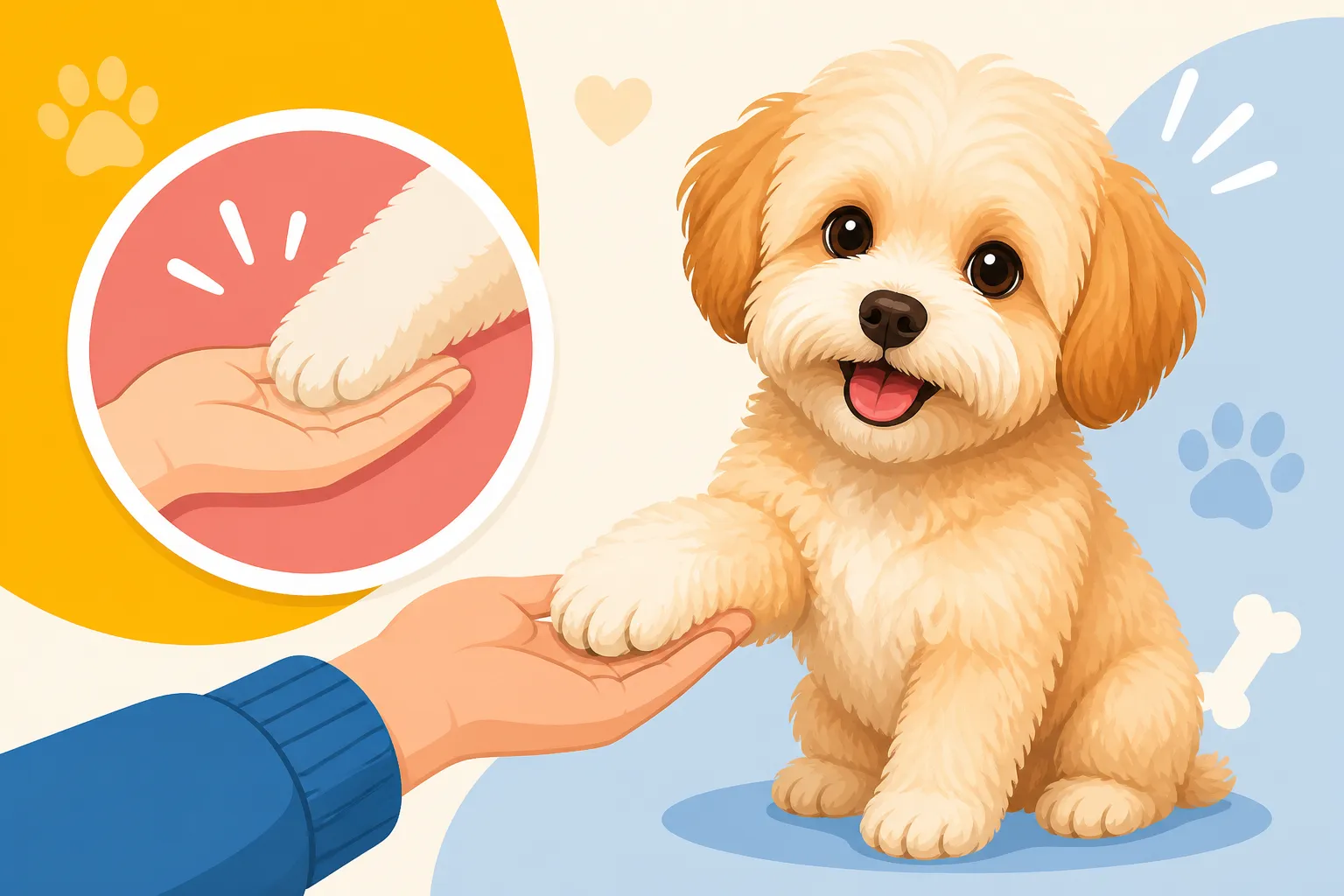
- Encourage Paw Lift: As your Maltipoo tries to get the treat, they might nudge your hand with their nose or mouth. Keep your hand still. Eventually, they will likely try to use their paw to bat at your hand or try to dig for the treat. The moment their paw lifts and touches your hand, say "Yes!" (or use a clicker if you're clicker training) and immediately give them the treat.
- Repeat, Repeat, Repeat: Do this several times in short sessions. The goal in this stage is simply to get them to lift their paw and touch your hand. Don't worry about them holding it for long yet. If they don't lift their paw, you might try gently nudging their paw from behind with your other hand, just enough to get a slight lift, then immediately mark and reward. Some Maltipoos are naturally more hesitant, so be extra patient.
Adding the Verbal Cue and Hand Signal
Once your Maltipoo is consistently lifting their paw and touching your hand in response to the lure, it's time to add the verbal command and a hand signal.
- Introduce the Cue: As your Maltipoo sits in front of you, say "Give a foot" (or "paw" or "shake" – choose one and stick with it). Immediately follow with your luring hand movement (holding the treat near their paw as before).
- Mark and Reward: The moment their paw touches your hand, mark the behavior ("Yes!" or click) and give the treat.
- Consistency is Key: Repeat this sequence many times: "Give a foot" -> Lure -> Paw Lift -> Mark -> Treat. Your Maltipoo will start to associate the sound of the words "give a foot" with the action of lifting their paw.
- Add a Hand Signal: Once they're responding fairly well to the verbal cue, introduce a subtle hand signal. This could be extending your open palm towards them. Say "Give a foot," show your hand signal, then do the lure. Eventually, you'll be able to fade the lure and they'll respond to the verbal cue and/or hand signal alone. For visual learners, often the hand signal becomes even stronger than the verbal cue.
Fading the Lure and Generalizing the Behavior
The ultimate goal is for your Maltipoo to offer their paw simply when asked, without needing to see or smell a treat first.
- Reduce the Lure: Start making the luring motion less obvious. Instead of holding the treat right at their paw, hold it a little further back, or pretend to have a treat in your hand even when you don't (you'll still reward them from your other hand after).
- Delay the Reward: Once they are offering their paw reliably to the verbal cue and hand signal, start asking them to hold their paw in your hand for a tiny bit longer before you mark and reward. Start with one second, then two, then three. This teaches duration.
- Practice in Different Contexts: Once your Maltipoo has mastered "give a foot" in your quiet training spot, try it in different rooms of your house. Then, perhaps in the backyard. The more places you practice, the more generalized the behavior becomes. This means they'll understand the command applies everywhere, not just where you usually train.
- Vary the Reward: While high-value treats are great for initial learning, you can also start to use praise, gentle petting, or a quick game as a reward. This keeps them engaged and prevents them from only working for food. Always make it a positive interaction! Remember to keep sessions short and fun – Whether Short Sessions Suit a Maltipoo is something to consider for this intelligent but sometimes easily distracted breed.
Troubleshooting Common Challenges When Teaching "Give a Foot"
Even with the best intentions and methods, teaching a new command can sometimes hit a snag. Maltipoos, with their unique blend of Maltese charm and Poodle intelligence, can present specific challenges. Don't get discouraged! Understanding the common hurdles can help you adjust your approach and get back on track.
The Maltipoo Who Won't Lift a Paw
You're trying the lure, you're being patient, but your Maltipoo just stares at your hand or tries to nudge it with their nose, but the paw stays firmly planted on the ground. This is a common issue and usually boils down to a few reasons:
- Confusion: They might not understand what you want. Are you making the lure clear enough? Is the treat positioned in a way that naturally encourages a paw lift? Try moving your hand slightly more under their paw, almost prompting it to lift as they investigate the treat.
- Lack of Motivation: Is the treat high-value enough? For some Maltipoos, their regular kibble just isn't exciting enough to put in the effort. Experiment with different, more enticing treats like tiny bits of cheese, cooked chicken, or special training treats you buy from a place like Amazon.
- Fear/Reluctance: If your Maltipoo is generally timid or has had negative experiences with paw handling in the past, they might be reluctant to offer a paw. In this case, you need to go back to the desensitization steps mentioned earlier. Just focus on positive, gentle touches without asking for a lift for a while. Rebuild that trust. If they're showing clear signs of stress or fear (tucked tail, ears back, trying to escape), stop and consult with a professional trainer, or review resources from online dog training platforms like BAXTER & Bella which often provide video examples.
If your Maltipoo is simply not getting the paw lift on their own, you can try a gentle "assist." Once they are in a sit, put your hand out, say "Give a foot," and then very gently lift one of their paws yourself, immediately mark ("Yes!") and reward. Do this only once or twice per session, slowly reducing the amount of help you give until they start anticipating and lifting it themselves. The goal is for them to offer the paw, not for you to manipulate it.
Paw Sensitivity and Resistance
Maltipoos can indeed have sensitive paws, a trait sometimes seen in smaller breeds. This sensitivity can manifest as pulling away, yelping, or even nipping if they feel uncomfortable or threatened when their paws are touched or held. If your Maltipoo is showing this kind of resistance during the "give a foot" training:
- Revisit Desensitization: This is paramount. You simply cannot push through paw sensitivity. Go back to very light, brief touches on their leg and paw, rewarding every single second of tolerance. Gradually increase the duration and pressure of the touch.
- Observe Body Language: Pay close attention to your Maltipoo's cues. Are their ears pinned back? Are they trying to pull their paw away quickly? Are they licking their lips excessively? These are signs of discomfort. Stop, reset, and try a less invasive touch.
- Rule Out Pain: Sometimes, paw sensitivity isn't just behavioral; it could be due to an injury, an embedded thorn, or even joint discomfort like Slipping Kneecaps in a Maltipoo. If the sensitivity is sudden, severe, or accompanied by limping or swelling, a vet check is essential to rule out any underlying medical issues. Once a clean bill of health is confirmed, you can continue with behavioral desensitization.
- Positive Association, Always: Every interaction with their paws should be positive. This means generous treats, gentle praise, and never forcing the issue. If you find yourself getting frustrated, take a break. Your frustration will only make their sensitivity worse.
Distraction and Lack of Focus
Maltipoos are intelligent and curious, but like many small dogs, they can also be prone to distraction. A fluttering curtain, a distant car, or even a leaf blowing past the window can instantly derail a training session. If your Maltipoo is constantly losing focus:
- Choose Your Environment Wisely: Start training in the quietest room in your house. Eliminate all potential distractions. As they get better, gradually introduce minor distractions.
- Short, Sweet Sessions: Keep training sessions very brief, especially in the beginning. Five to ten minutes, even less if your Maltipoo has a short attention span, is perfect. It's better to have several short, successful sessions than one long, frustrating one. Think about How Long a Maltipoo Works Before It Wanders Off.
- High-Value Rewards: Ensure your treats are compelling enough to keep their attention on you. If the treat is boring, the outside world becomes far more interesting.
- Engage with Energy: Be enthusiastic! Use an upbeat tone of voice and positive body language. Your excitement can be contagious and help keep your Maltipoo engaged.
- Practice "Look at Me": If your Maltipoo struggles with focus, go back to practicing a "look at me" command. Hold a treat near your nose, say "Look at me," and reward them the moment they make eye contact. This builds their ability to focus on you amidst distractions.
Maintaining and Advancing the "Give a Foot" Skill
Teaching "give a foot" isn't a one-and-done deal. Like any skill, it requires ongoing practice and reinforcement to stay sharp. For your clever Maltipoo, building on this command can also be a fun way to keep their minds active and prevent boredom. This maintenance and advancement phase ensures the command remains a reliable tool for cooperative care throughout their life.
Regular Practice for Reinforcement
Consistency is the secret sauce for any dog training, and "give a foot" is no exception. If you only ask for their paw when you absolutely need to trim their nails, your Maltipoo will quickly associate the command with something unpleasant. Instead, integrate short, positive practice sessions into your daily routine.
Think of it as mental exercise. A few times a day, just for fun, ask your Maltipoo to "give a foot," reward them, praise them, and then move on. This keeps the command fresh in their mind and ensures it remains a positive interaction. You can vary the location – ask for it while you're sitting on the sofa, while they're on their bed, or even out in the yard. The more often they successfully perform the command for low-stakes reasons, the more reliable it will be when you really need it. This regular reinforcement helps solidify the neural pathways, making the response almost automatic.
Teaching the Other Paw and Different Contexts
Once your Maltipoo is confidently giving one paw, it's time to teach them to give the other. The process is largely the same, but you'll want to use a distinct cue or hand signal to differentiate. For example, if "Give a foot" means the right paw, you might use "Other foot" or "Left paw" for the other. You can also use a different hand signal, perhaps pointing to the desired paw.
- Start Fresh (But Faster): Begin the lure-and-reward method for the new paw, but you'll likely find your Maltipoo picks it up much faster since they already understand the concept.
- Varying Hand Signals: To clearly differentiate, you might teach them to give their left paw when you present your left hand, and their right paw when you present your right hand.
- Different Positions: Don't just practice "give a foot" when they're sitting. Can they do it from a stand? What about when they're lying down? These variations help them truly understand the underlying behavior, not just a specific sequence of actions in one position.
- Generalizing Locations: As mentioned before, gradually introduce new environments. Can they give a foot at the park? At a friend's house? This generalization makes the command truly robust. Remember, a Maltipoo in a new environment might have a harder time focusing initially, so be patient and use those high-value treats.
Making It Fun and Engaging
Training should never feel like a chore for your Maltipoo. They thrive on interaction and mental stimulation. Turn "give a foot" into a game!
- Hide and Seek Paw: Once they're proficient, you can try "hide and seek" with their paw. Ask for their paw, then quickly move your hand away and ask for it again. Make it a fun, quick interaction.
- Combining Commands: Link "give a foot" with other commands. For example, "Sit, give a foot, treat!" This adds complexity and mental challenge, which a smart Maltipoo will enjoy.
- Paw-Focused Play: Incorporate paw handling into gentle play. Gently hold their paw while you praise them, then release and give a treat. This reinforces the positive association without directly asking for the command every time.
- Positive Reinforcement Variety: Don't just rely on food. Use excited vocal praise, a favorite toy as a reward, or a gentle belly rub. Keeping the rewards varied makes the interaction more engaging and less predictable. This helps your Maltipoo stay excited about training with you.
Integrating "Give a Foot" into Your Maltipoo's Routine
The true value of teaching your Maltipoo to "give a foot" comes when it transitions from being a trick to an integrated part of their daily routine and cooperative care. This isn't just about showing off; it's about practical application that makes both your lives easier and healthier. For a small breed like the Maltipoo, whose health often depends on consistent grooming and checks, this skill is invaluable.
Practical Applications for Grooming and Health Checks
Imagine the scenario: it's nail trim day. Instead of wrestling your Maltipoo, causing stress for both of you, you calmly ask them to "sit," then "give a foot." They extend their paw, allowing you to quickly and safely trim their nails. This is where the magic happens! This command transforms a potentially dreaded task into a manageable interaction.
- Nail Trims: This is perhaps the most obvious and impactful application. A Maltipoo that willingly offers a paw for nail trims reduces the risk of cutting too short, causes less stress, and makes the whole experience quicker. For tips on managing the process, you might find insight in Teaching a Maltipoo to Be Handled Every Two Weeks.
- Paw Pad Checks: After walks, especially on rough terrain or in extreme weather, you need to check your Maltipoo's paw pads for cuts, cracks, or foreign objects. "Give a foot" makes this a simple inspection rather than a struggle.
- Cleaning: Maltipoos can get debris, mud, or even snow/ice buildup between their paw pads. Asking for their foot allows for easy cleaning, preventing mats and irritation.
- Grooming: For overall coat care, especially around their delicate feet, having them offer a paw means you can brush and comb through their fur thoroughly, preventing mats from forming between their toes and up their legs.
- Vet Visits: When your vet needs to examine a paw, or administer medication or a vaccine in the leg, your Maltipoo's ability to offer a foot makes them a much calmer, more cooperative patient.
Enhancing the Bond Through Cooperative Care
Beyond the practical benefits, integrating "give a foot" into daily life fosters a deeper connection with your Maltipoo. When your dog cooperates willingly, it reinforces the positive relationship you share. They learn that you are a benevolent leader who asks them to do things that ultimately benefit them, and that cooperation leads to positive outcomes.
This cooperative care approach builds mutual respect. Your Maltipoo isn't just being passive; they are actively participating in their own well-being. This sense of agency, even in a small way, can boost their confidence and make them generally more amenable to handling and other forms of care, whether it's Teaching a Maltipoo to Have Its Teeth Brushed or simply being comfortable with general examination. It's a fundamental aspect of communicating with your Maltipoo, strengthening the understanding that you are a team working together.
Consistency is Key for Lifelong Success
To ensure "give a foot" remains a reliable command throughout your Maltipoo's life, consistency is non-negotiable. Don't let the skill fall by the wayside.
- Keep it Up: Even after they've mastered it, continue with those quick, positive practice sessions. This prevents the skill from fading.
- Don't Only Use it for "Bad" Things: Avoid only asking for their paw when you're about to do something they don't love. Mix it up! Ask for it just to give a treat, or as part of a greeting.
- Everyone on Board: If you have multiple people in your household, ensure everyone uses the same cues and methods. This prevents confusion for your Maltipoo.
- Adapt as They Age: As your Maltipoo gets older, they might develop joint issues like Slipping Kneecaps in a Maltipoo. Be gentle and sensitive to any discomfort. The "give a foot" command will be even more crucial then, allowing for careful examination and care without causing pain or fear.
- Make it Part of the Daily Routine: From a quick paw inspection after a walk to a gentle groom before bed, actively use the command in relevant situations. This shows your Maltipoo that this isn't just a trick, but a useful part of their The Daily Routine a Maltipoo Needs.
Remember, teaching your Maltipoo to give a foot is a marathon, not a sprint. Celebrate every small success, be patient with setbacks, and always keep the experience positive. You're not just teaching a trick; you're building a foundation for a lifetime of cooperative care and a stronger bond with your beloved furry companion.
Disclaimer
This article is for general informational purposes only and does not constitute professional advice. Laws, prices and regulations vary by location and change over time. Consult a qualified professional for guidance on your specific situation.