Teaching a Maltipoo Not to Guard Its Bowl
Seeing your sweet Maltipoo suddenly snarl, snap, or even bite when you approach their food bowl is utterly heartbreaking and, frankly, quite scary. It's a behavior that can shatter the trust you're working so hard to build, making meal times fraught with anxiety for everyone. This guide is here to walk you through understanding why your beloved Maltipoo might be guarding their precious food, how to spot the early warning signs, and most importantly, how to gently and effectively retrain them so that meal times can be a peaceful, bonding experience once again.
Understanding Why Your Maltipoo Guards Its Bowl
When a Maltipoo guards its food, it’s not because they’re being “mean” or intentionally defiant. This behavior, often called resource guarding, stems from deep-seated canine instincts. For a small dog like a Maltipoo, which can feel quite vulnerable in a big world, protecting valuable resources like food can feel like a matter of survival. Understanding these roots is the first step toward empathy and effective training.
Instinctual Roots and Survival
Think about dogs in a wild pack environment. Resources like food are limited, and competition is fierce. The strongest, most assertive dogs often get to eat first, and they learn to defend their portion from others. While your Maltipoo lives a pampered life in your home, those ancient instincts are still present, just beneath the surface. For a tiny creature, even in a secure home, the urge to protect what feels essential can be very strong. They might perceive your approach not as an act of providing, but as a potential threat to their meal. It’s not a personal affront; it’s a hardwired response.
These instinctual behaviors can be particularly pronounced in smaller breeds. A Maltipoo, typically weighing anywhere from a few pounds up to maybe ten or fifteen, is physically vulnerable compared to a human or even a larger pet in the household. Their small size might amplify their feeling of needing to defend what’s theirs. They might have a legitimate concern that their food could be taken away, even if you, as their loving owner, would never do such a thing. This primal fear can trigger growling, stiffening, or even snapping as a warning to keep away.
Past Experiences and Trauma
Sometimes, bowl guarding isn't just instinct; it's learned behavior, often from negative past experiences. If your Maltipoo came from a situation where food was scarce, or they had to compete aggressively with littermates or other dogs, they might have learned that guarding was necessary for survival. This is especially true for Maltipoos adopted from rescues, particularly if they came from puppy mills or crowded environments where food access was inconsistent. They remember those times, even if you don't.
Even subtle, unintentional actions on your part can inadvertently reinforce guarding. Did someone playfully try to "steal" a piece of food from their bowl as a puppy, only to be met with a growl and then back off? This teaches the dog that growling works. Or perhaps they were punished for growling, which only teaches them to skip the warning and go straight to biting. It’s crucial to consider their history and how previous interactions, intentional or not, might have shaped their current behavior. A rescue Maltipoo might have a particularly strong history here, and it's something to be extremely patient and understanding about. Why Maltipoos Reach Rescue often involves stressful beginnings that can imprint such behaviors.
Underlying Anxiety and Resources
Beyond food, resource guarding can also be a symptom of broader anxiety or insecurity in your Maltipoo. If your dog feels generally uneasy, unsafe, or lacks confidence, they might try to assert control over the few things they can control, like their food bowl. A change in routine, a new pet, or even a stressful vet visit can heighten general anxiety, leading to a more pronounced guarding response. It's not just about the food; it's about feeling secure in their environment.
It’s also important to note that resource guarding isn't exclusive to food. Your Maltipoo might guard toys, their bed, a favored chew, or even you! If you notice guarding behavior spreading to other items, it’s a strong indicator that underlying anxiety is a significant factor. Addressing the core anxiety can often help mitigate the guarding. For example, ensuring they have a consistent routine, a safe den-like space where they can retreat, and positive reinforcement for calm behavior can all contribute to a more secure dog who feels less need to guard.
The Early Signs of Bowl Guarding in Your Maltipoo
Detecting resource guarding early on is key to preventing it from escalating into a serious problem. Maltipoos, like many dogs, often give clear signals before resorting to more aggressive actions. Learning to read these subtle cues means you can intervene safely and effectively, fostering trust instead of fear.
Subtle Body Language Cues
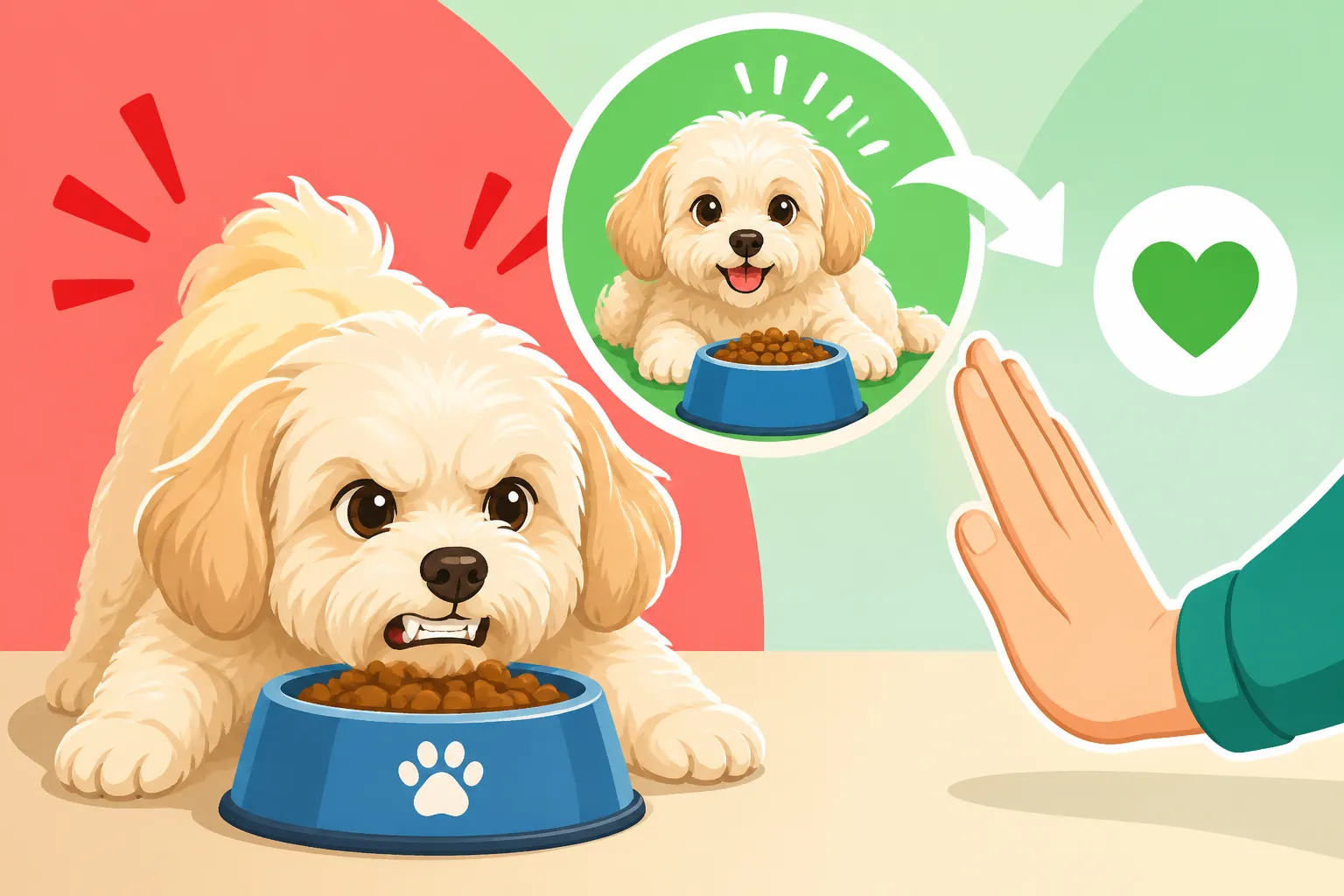
Before any growl or snap, your Maltipoo will likely communicate their discomfort through their body language. These signs can be subtle, especially in a small dog, but they are crucial warnings. Look for your Maltipoo stiffening their body, freezing in place over the bowl, or lowering their head and tensing their neck and shoulders. Their tail might go stiff, either held low or tucked. Their eyes might dart towards you, or they might give you a "hard stare" – a direct, unblinking gaze that says "don't come closer." They might also quickly gulp down their food as you approach, as if trying to finish it before you can take it.
Another common early sign is what's called "whale eye," where you can see the whites of their eyes on either side of the iris as they look at you without turning their head. They might also lean over the bowl, placing their body directly between you and the food, effectively shielding it. These are all attempts to communicate, "This is mine, please back off," without resorting to aggression. Ignoring these early warnings forces the dog to escalate its communication.
Vocalizations and Posturing
If the subtle body language cues are ignored, your Maltipoo will escalate their communication. The next stage often involves vocalizations. This might start as a low, rumbling growl when you get too close. It's a warning, not an attack, and it's essential not to punish the growl itself. Punishing a growl teaches your dog that warnings are unacceptable, which can lead them to bite without warning in the future. Instead, acknowledge the growl as a sign that your dog is uncomfortable, and adjust your approach.
Along with growling, you might see more pronounced posturing. This includes baring teeth, a wrinkled nose, or even a quick snap in the air. The hackles (hair on their back) might raise, making them appear slightly larger. They might also snarl, pulling back their lips to show their canines. These are all clear signals that they feel threatened and are prepared to defend their resource. If you see these signs, it's a clear indication that a structured training approach is needed to resolve the issue safely. Whether a Maltipoo Warns Before It Snaps delves deeper into these warning signals.
What to Avoid Doing When You See These Signs
When you see your Maltipoo guarding their bowl, your natural instinct might be to assert dominance, punish them, or try to snatch the bowl away to "show them who's boss." Please, resist this urge at all costs. These actions will almost certainly backfire, deepening your dog's fear and reinforcing their belief that you are a threat to their food. Punishment can create a dog who hides their guarding behavior, making it more dangerous because they skip the warning signs and go straight to biting.
Never reach into their bowl, try to take it away, or force your hand near their face when they are guarding. This is a direct challenge to their resource and will escalate their defensive response. Instead, calmly back away and give them space. Your goal in the moment is to de-escalate, not to confront. Once the immediate situation is calm, you can start implementing the training strategies outlined below. Remember, patience and positive reinforcement are your greatest tools, not force or intimidation.
Creating a Safe and Predictable Feeding Environment
A significant part of addressing bowl guarding in your Maltipoo involves making meal times feel as safe, predictable, and stress-free as possible. This means more than just putting food down; it's about establishing rituals and choices that build your dog's confidence and trust in you.
Establishing a Consistent Routine
Dogs thrive on routine and predictability, and Maltipoos are no exception. Knowing exactly when and where they will eat can significantly reduce anxiety around food. Establish a consistent feeding schedule – for many adult Maltipoos, this means two meals a day, but puppies might need How Often a Teacup Maltipoo Puppy Must Eat. Stick to these times as closely as possible, even on weekends. Always feed them in the same designated spot, away from busy household traffic or other pets if you have them.
Beyond just the timing, think about the entire feeding ritual. Do you always ask them to sit and wait patiently before you place the bowl down? This simple act teaches impulse control and establishes you as the provider of the meal, rather than someone who might take it away. Using a specific cue word like "dinner" or "eat" just before placing the bowl can also help create a clear signal that food is coming and it’s theirs. This predictability helps them understand that their meal is not a contested item, but a gift from you.
Choosing the Right Feeding Tools
The type of bowl and where it's placed can also impact your Maltipoo's comfort level. For some Maltipoos, especially those with past trauma, a quiet, low-traffic area is paramount. This might mean feeding them in a crate, a designated corner, or even a separate room where they can eat undisturbed. If you have other pets, ensure they are separated during meal times to eliminate competition or perceived threats.
Consider the bowl itself. A wide, shallow bowl might feel less restrictive than a deep one, allowing them to see their surroundings better while eating. If your Maltipoo eats too quickly, a slow feeder bowl can be beneficial, but make sure it's not so complex that it frustrates them, which could increase guarding. For tiny Maltipoos, ensure the bowl is easily accessible without them having to strain their neck. Some owners find that a heavier, non-slip bowl from brands found on Amazon can prevent the bowl from sliding around, which might be a subtle source of frustration for some dogs.
Implementing a "Trade-Up" Strategy
This is a cornerstone of building trust around food. Instead of approaching their bowl with the intention of taking something, approach it with the intention of giving something even better. This is called a "trade-up." While your Maltipoo is eating, approach them calmly, toss a high-value treat (something they absolutely adore, like a piece of cooked chicken or cheese) near their bowl, and then immediately walk away. Do this repeatedly over several days or weeks.
The goal is to change their association with your approach from "threat of loss" to "opportunity for gain." They learn that your presence near their food doesn't mean their meal is going away; it means something even better is coming! This process is about desensitization and counter-conditioning. Gradually, they will start to look forward to your approach during meal times. Never try to snatch the original food away during this process; the trade-up is about building positive associations.
| Scenario | Triggering Behavior | Safe Handling Practice |
|---|---|---|
| Approach during eating | Reaching for the bowl, standing over them, staring | Toss a high-value treat from a distance, then retreat |
| Taking the bowl away | Grabbing the bowl directly | Offer a superior treat in exchange, then take the bowl |
| Child/other pet near | Allowing uncontrolled interaction | Supervise closely, separate during meals, manage space |
| Accidental drop of food | Diving in to pick it up quickly | Calmly place another, better treat nearby, then retrieve |
| Punishing a growl | Scolding, yelling, or physical correction | Retreat, give space, reflect on triggers for the growl |
Desensitization and Counter-Conditioning Training
Once you've established a safe feeding environment, it's time to actively work on changing your Maltipoo's emotional response to your presence during meal times. This is where desensitization (gradually exposing them to the trigger) and counter-conditioning (changing their emotional reaction) come into play. It requires patience and consistency, but the results are incredibly rewarding.
Step-by-Step Desensitization
This process needs to be slow and gradual, always staying below your Maltipoo's "threshold" – the point at which they start to show guarding signs. Start by standing a good distance away from your Maltipoo while they eat, far enough that they don't react at all. Toss a high-value treat (like those delicious tiny pieces of chicken or cheese) towards them, but not into their bowl. Then, simply walk away. Repeat this several times during each meal, over multiple days.
Once they are completely comfortable with this, showing no signs of guarding, you can very gradually reduce the distance. Take one small step closer, toss a treat, and retreat. If they show any signs of tension, you’ve gone too fast – increase the distance again. The key is to keep it positive and prevent any guarding behavior from occurring. You want them to associate your approach with good things happening, not bad. This systematic approach helps them relax around their food. Reputable online training programs, like those offered by BAXTER & Bella, often have detailed modules on desensitization techniques for resource guarding. Whether a Maltipoo Owner Can Do It Without a Trainer might touch upon the benefits of such structured guidance.
Positive Reinforcement for Calmness
Throughout this process, showering your Maltipoo with praise and positive reinforcement for calm behavior is crucial. When you approach, toss the treat, and they continue eating or even look up at you happily, reward that! Use a calm, reassuring voice. The goal is to build their confidence that your presence is a signal for good things, not a threat. This is a crucial element of changing their emotional response.
Avoid any punishment. If your Maltipoo growls or shows tension, it means you’ve pushed too fast or are too close. Simply retreat and try again from a greater distance next time. Punishing a growl will only teach them to suppress the warning, making future incidents more dangerous. Remember, they are growling out of fear or insecurity, not malice. Your calm, consistent positive reinforcement will slowly chip away at that fear. Whether a Maltipoo Is Too Soft for Correction explores why harsh methods are ineffective and potentially harmful for this sensitive breed.
Practicing the "Touch and Treat" Game
Once your Maltipoo is comfortable with you tossing treats from a distance, you can introduce the "touch and treat" game. This involves gently touching the side of their bowl while simultaneously dropping a high-value treat into it, then immediately backing away. This further solidifies the association: "human hand near bowl = super yummy treat." Again, start at a comfortable distance and gradually move closer.
You can also use a long-handled spoon to place treats near the bowl if you're still working on comfort with close proximity. Products available on Amazon can help here. The movement of the spoon is less threatening than a hand, and it keeps a safe distance. The goal is for your Maltipoo to eventually associate your hand near their bowl with the best things ever. Eventually, you should be able to approach, lightly touch the bowl, and they’ll happily look up at you, expecting a treat, instead of tensing up.
Teaching a Maltipoo to Expect Good Things
The ultimate goal isn't just to stop the guarding, but to completely flip their perception of you approaching their bowl. You want them to welcome your presence, seeing it as a source of additional deliciousness, rather than a threat. This mental shift is achieved through consistent positive experiences.
Adding to the Bowl, Not Taking Away
A powerful technique is to actively demonstrate that your presence means more food, not less. During your Maltipoo's meal, walk by and casually drop a few extra pieces of their regular kibble or a small, high-value treat into their bowl. Do this calmly, without making a big fuss, and then move away. Repeat this a few times during each meal. They will quickly learn that your approach signifies an addition to their meal, not a depletion.
This simple act directly counteracts the ingrained fear that food will be taken away. It builds a strong positive association and reinforces your role as the generous provider. Over time, your Maltipoo will start to anticipate your passes during mealtime with excitement rather than apprehension. This proactive approach fosters genuine trust and relaxation around food.
Hand-Feeding to Build Trust
While some sources might caution against hand-feeding for fear of "spoiling" a dog, it can actually be a powerful tool for building trust and mitigating resource guarding, especially in the early stages or with a dog that has significant anxiety. Start by hand-feeding a portion of their meal, offering small amounts directly from your hand. This forces them to engage with you positively for their food.
As they become comfortable, you can transition to placing a portion of their food in their bowl, then walking away. After they eat it, return and hand-feed them the next portion. Gradually, you can put more food in the bowl and less in your hand, until they are eating their full meal from the bowl without issue. This intermittent hand-feeding throughout the training process can be very effective. Whether a Maltipoo Should Be Hand Fed offers further insights into this technique.
Practicing During Non-Meal Times
The principles of desensitization and positive association aren't just for meal times. You can reinforce these lessons when the bowl is empty or with other resources. Periodically, walk by their empty bowl, toss a small treat into it, and then walk away. This keeps the positive association alive even when there's no immediate food pressure.
Similarly, practice the "trade-up" with high-value toys or chews. If your Maltipoo is guarding a favorite toy, offer them an even more exciting toy or a piece of chicken, and when they drop the guarded item to take the treat, praise them and then take the original toy. Immediately return it after they finish the treat, showing them that giving things up results in a positive outcome, not a permanent loss. This expands their understanding of resource exchange and trust beyond just their food bowl.
When to Seek Professional Help
While many cases of mild resource guarding can be successfully addressed with consistent home training, there are situations where professional intervention is not just helpful, but necessary. Recognizing these signs can prevent escalation and ensure your Maltipoo gets the specialized support they need.
Escalation of Aggression
If, despite your best efforts with positive reinforcement and desensitization, your Maltipoo's guarding behavior isn't improving, or worse, is escalating, it's a clear signal to call in a professional. Escalation might look like more frequent growling, harder snaps, or even actual bites (even if they don't break the skin, a bite is a serious concern). If your Maltipoo is moving quickly from a subtle warning to aggressive behavior, you need expert guidance.
A professional dog trainer specializing in positive reinforcement or a certified veterinary behaviorist can assess the situation, identify underlying triggers that you might be missing, and develop a tailored training plan. They can observe your Maltipoo in their environment, which is invaluable for pinpointing subtle behavioral cues and environmental factors that contribute to the guarding. Don't feel like a failure if you need professional help; it's a responsible step to ensure both your safety and your Maltipoo's well-being.
Fear and Anxiety Dominate
If your Maltipoo seems to live in a constant state of anxiety around food, even outside of meal times, or if the guarding behavior extends significantly to other valuable items, it suggests a deeper issue than simple resource guarding. This level of pervasive fear and anxiety may require a more holistic approach, potentially including behavioral medication in conjunction with training.
A veterinary behaviorist is a veterinarian with specialized training in animal behavior, who can prescribe medication if deemed appropriate and safe. They can also rule out any underlying medical conditions that might be contributing to anxiety or pain, which could exacerbate guarding. Sometimes, physical discomfort can make a dog more irritable and defensive. Getting to the root of the anxiety is crucial for long-term success.
Safety Concerns for Household Members
Any time there is a risk of injury to a human or another pet in the household, professional help becomes paramount. This is especially true if you have children. Children, with their unpredictable movements and lack of understanding of dog body language, are particularly vulnerable to nips or bites from a guarding dog. A Maltipoo, while small, can still inflict a painful bite. A Maltipoo in a House With Children needs special considerations for safety.
If you find yourself constantly walking on eggshells around your Maltipoo during meal times, or if you're unable to manage the behavior safely on your own, it's time to bring in an expert. They can implement safety protocols, guide you through advanced training techniques, and help restore peace of mind to your home. Your professional's priority will be creating a safe environment for everyone while rehabilitating your Maltipoo's behavior.
Disclaimer
This article is for general informational purposes only and does not constitute professional advice. Laws, prices and regulations vary by location and change over time. Consult a qualified professional for guidance on your specific situation.