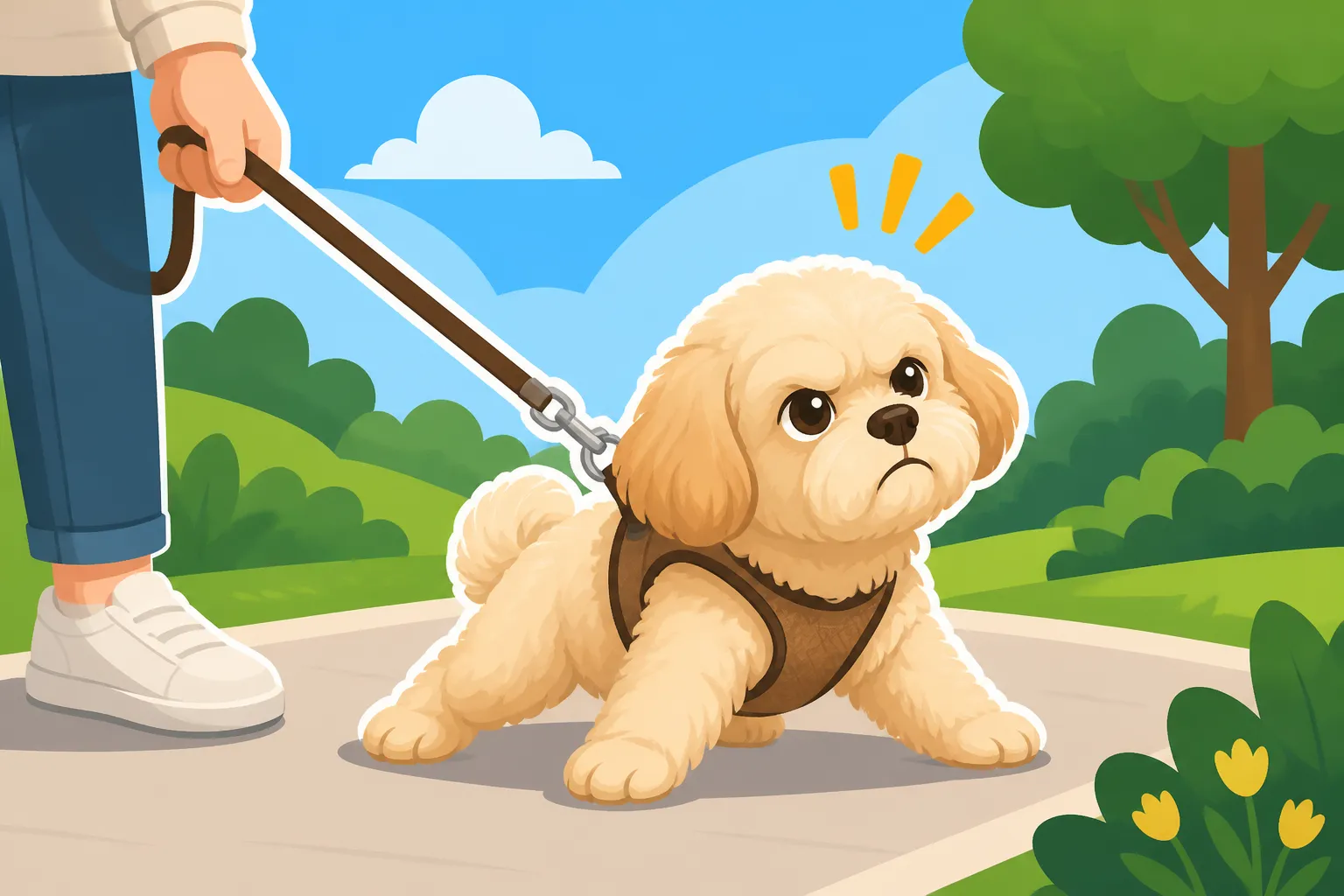
Whether a Maltipoo Plants Its Feet on a Walk
It's incredibly frustrating when you're out for a walk with your adorable Maltipoo, looking forward to some fresh air and exercise, only for them to suddenly stop dead in their tracks, refusing to budge. One moment they're trotting along happily, and the next they're a tiny, fluffy statue, planted firmly on the pavement, ignoring all your gentle tugs and coaxing. This guide is here to help you unravel the mystery behind your Maltipoo's sudden stops and equip you with practical strategies to encourage confident, consistent walks.
The Mysterious "Planting of Feet" Phenomenon in Maltipoos
It's a scene many Maltipoo owners know all too well: you're enjoying a pleasant stroll, and then, thud. Your little companion becomes an unmovable object, often looking up at you with wide, innocent eyes that seem to say, "I'm not going anywhere." This isn't just a quirky habit; it’s a form of communication, and understanding its roots is the first step to a more enjoyable walking experience for both of you.
Is It Stubbornness or Something Else?
While it might feel like your Maltipoo is being incredibly stubborn, deliberately defying your wishes, it's often far more complex than simple disobedience. Dogs, especially small breeds like Maltipoos, don't typically "plant their feet" out of spite. Their motivations usually stem from a place of discomfort, fear, overstimulation, or even a perceived lack of clear direction. Labeling it as just "stubbornness" can make us less empathetic and less likely to find the real solution.
Think about it from their perspective. A Maltipoo is small, and the world can be a very big, overwhelming place. What seems like an ordinary walk to us can be a sensory overload for them. Imagine walking through a bustling city as a small child, with towering buildings, loud noises, and countless feet rushing past. It's easy to feel lost, scared, or simply overwhelmed to the point of freezing. Your Maltipoo often experiences a version of this, and planting their feet might be their only way to communicate that they need a moment, need a break, or need your reassurance. Sometimes, it's a learned behavior too – they stop, you pick them up, and presto, problem solved (for them!).
Common Triggers for the Sudden Stop
There's a whole host of reasons why your Maltipoo might suddenly decide to put on the brakes. Understanding these common triggers can help you become a super sleuth in deciphering your dog's language. It could be something as simple as a strong smell they want to investigate, making them dig in their heels. Or it might be something more significant, like an unfamiliar object, a loud noise, or even a person approaching that makes them feel uncertain.
Other common triggers include encountering another dog, especially a much larger one that feels intimidating. The change in terrain can also be a factor; some Maltipoos dislike walking on grates, wet grass, or uneven surfaces. And let's not forget sheer exhaustion – these little legs can only go so far! If they've had a long day or a particularly stimulating walk, they might just be telling you, "My batteries are drained, and I need a rest." Being mindful of these potential causes can help you anticipate and adjust your walks accordingly.
Addressing Environmental and Physical Factors
Before you jump into advanced training techniques, it’s crucial to assess the more immediate, tangible factors that could be influencing your Maltipoo's walking behavior. Sometimes, the solution is as simple as a change in gear or a different route.
The Impact of Weather and Terrain
Maltipoos, with their small size and often delicate paws, can be quite sensitive to environmental conditions. Extreme temperatures, both hot and cold, can make walks uncomfortable or even dangerous. On scorching summer days, asphalt can burn their paw pads, leading them to stop and refuse to move. Conversely, in colder climates, their thin coats mean they can quickly get chilled, prompting them to halt and seek warmth. If your Maltipoo starts shivering, it might be a clear sign they are too cold and need to go inside. This is why many owners dress their Maltipoos in sweaters or coats, especially if they have a short clip. You might find that Whether a Maltipoo Gets Cold Easily or Whether a Maltipoo Needs a Coat Outdoors offer more insights into keeping them comfortable in different weather.
Beyond temperature, the walking surface itself can be a major deterrent. Some Maltipoos are highly averse to walking on wet grass, puddles, or slippery surfaces. Imagine trying to navigate a wet, uneven path when you're only inches off the ground! Rough gravel, grates, or even unfamiliar textures like a patch of astro-turf can make them feel insecure. If your Maltipoo consistently stops at a specific type of surface, try to find an alternative route or gently encourage them over it with treats, building their confidence incrementally.
Gear Matters: Harnesses, Collars, and Comfort
The equipment you use for walks plays a much bigger role than you might think. A poorly fitting harness or collar can cause discomfort, pain, or restrict movement, leading your Maltipoo to stop. Collars, in particular, can put pressure on their delicate trachea, which for some Maltipoos is a significant concern. Many Maltipoos are prone to Collapsing Trachea in a Maltipoo's Neck, and a collar pulling on their neck could trigger a cough or discomfort that makes them refuse to move. This is why a well-fitting harness is often recommended, distributing pressure more evenly across their chest and shoulders. Check out Why a Maltipoo Should Never Wear a Collar for more details on this important topic.
When choosing a harness, look for one that doesn't chafe under the armpits, isn't too tight around the chest, and allows a full range of motion. Brands like Ruffwear or Kurgo offer well-designed harnesses for smaller dogs that can be found easily on Amazon. Remember, a harness that’s too bulky or heavy can also be uncomfortable for such a small dog. Regularly check for signs of rubbing or irritation where the harness sits. If your Maltipoo stops and scratches at their harness, it's a clear signal something isn't quite right.
Beyond the Walk: Energy Levels and Health Concerns
Sometimes, the reason for stopping isn't about the walk itself but the dog's overall physical state. Maltipoos have varying energy levels; while some can go for surprisingly long distances, others tire quickly. How Far a Maltipoo Can Walk Before It Stops explores this in more detail. If your Maltipoo consistently stops towards the end of a walk, they might simply be exhausted. Over-exercising a small dog can lead to fatigue, especially puppies or older dogs. Adjust the length and intensity of your walks to match their individual stamina.
More seriously, underlying health issues can manifest as a reluctance to walk. Pain, stiffness, or general malaise could cause your Maltipoo to stop moving. Conditions like Slipping Kneecaps in a Maltipoo (patellar luxation), hip problems, or even dental pain can make walking uncomfortable. If the stopping is sudden, persistent, accompanied by limping, whining, or changes in appetite/behavior, a veterinary check-up is essential. Don't assume it's "just being lazy"; always rule out physical discomfort first.
Training Your Maltipoo to Walk with Confidence
Once you've ruled out physical discomfort and environmental issues, it's time to focus on training. Many common walking behaviors can be shaped with consistent, positive methods.
Positive Reinforcement and Lure Training
When your Maltipoo plants its feet, your first instinct might be to pull on the leash or even pick them up. While picking them up might provide temporary relief, it inadvertently teaches them that stopping works to get what they want. Instead, turn to positive reinforcement. Carry small, high-value treats with you (think tiny pieces of cooked chicken or cheese). When your Maltipoo stops, try to lure them forward a step or two with a treat held near their nose. The moment they take a step, praise them enthusiastically and give them the treat.
Keep the sessions short and fun. If they refuse to move, don't engage in a tug-of-war. Instead, try changing directions slightly, or even crouching down to their level to offer the treat. The goal is to make moving forward their idea, associated with something positive. Over time, they'll learn that walking means good things happen. An online training program, such as those offered by BAXTER & Bella, can provide structured lessons and support for developing these positive walking habits. Their approach often emphasizes building a strong foundation of trust and clear communication.
Building Stamina and Desensitization
For Maltipoos that stop due to fear or overstimulation, a gradual approach to building confidence is key. Start with short walks in very quiet, familiar areas. As they become more comfortable, slowly introduce new environments with slightly more activity. If a specific sight or sound triggers a stop, work on desensitization. For example, if they stop at the sight of another dog, create distance. When another dog passes at a comfortable distance without your Maltipoo reacting, reward them. Slowly decrease the distance over many sessions.
For building stamina, consistency is more important than distance initially. Daily short walks are better than infrequent long ones that might overwhelm them. Gradually increase the duration of your walks, paying close attention to your Maltipoo's cues. Don't push them past their limit. Some Maltipoos, particularly the younger ones, can have a short attention span. Remember How Long a Maltipoo Works Before It Wanders Off might not be very long! If you notice their focus waning, it might be time to head home or take a brief break.
When to Bring in the Experts
While many walking challenges can be solved at home with patience, there are times when professional help is invaluable. If your Maltipoo's refusal to walk is severe, accompanied by fear-based aggression, extreme anxiety, or if you're simply feeling overwhelmed and stuck, a certified professional dog trainer or veterinary behaviorist can provide tailored guidance. They can assess your specific situation, identify subtle cues you might be missing, and develop a customized training plan.
Sometimes, the issue stems from deep-seated anxieties or past negative experiences, which can be difficult to address without expert intervention. Don't view seeking professional help as a failure; it's a responsible step towards ensuring your Maltipoo leads a happy, confident life. These experts often have a wealth of tools and techniques, and they can help you understand whether the issue is purely behavioral or if there's an underlying medical component that needs addressing, such as a painful joint, which might be explored further in Whether a Maltipoo's Kneecap Needs Operating.
Proactive Steps for a Smooth Stroll
Setting your Maltipoo up for success on walks involves more than just reacting to their stops. It’s about building a foundation of predictability, comfort, and understanding.
Establishing a Consistent Routine
Dogs thrive on routine, and Maltipoos are no exception. Establishing a consistent daily walking schedule helps them understand what to expect. Knowing when walks will happen can reduce anxiety and build anticipation. Try to walk at roughly the same times each day. This not only helps with house-training but also reinforces the idea that walks are a regular, predictable part of their day. If your Maltipoo is always stopping at the same point, try to vary your route or schedule to break the pattern.
Consider the duration of your walks carefully. While a quick potty break is necessary multiple times a day, a dedicated "decompression" walk where your Maltipoo can sniff and explore is also vital for their mental well-being. Even a short 15-20 minute sniffari can be incredibly enriching, allowing them to engage their senses and feel more confident in their environment.
Understanding Their Limits and Needs
Every Maltipoo is an individual, and what works for one might not work for another. Some are little adventurers, eager to explore the world, while others are more cautious and prefer quiet, familiar surroundings. Pay close attention to your dog's body language. Are their ears back? Tail tucked? Are they panting excessively or trying to hide? These are all signs they might be uncomfortable or overwhelmed.
It's tempting to want your Maltipoo to be a perfect walking companion right away, but patience is truly a virtue here. Celebrate small victories: one extra step forward, a moment of looking at you for direction, or simply being calm in a new environment. Remember that walks are not just about physical exercise; they're also about mental stimulation, bonding, and building confidence in the world. By understanding their unique limits and needs, you can tailor walks to be a positive experience that you both look forward to.
Here's a quick reference table summarizing common reasons for stopping and potential solutions:
| Reason for Stopping | Description | Potential Solutions |
|---|---|---|
| Fear/Anxiety | New sights, sounds, people, or dogs; feeling overwhelmed or insecure. | Start in quiet areas, gradually introduce new environments. Use positive reinforcement (treats, praise) to build positive associations. Maintain calm, confident demeanor. Practice desensitization from a distance. |
| Discomfort (Physical) | Sore paws from hot/cold pavement, joint pain (e.g., The Age a Maltipoo's Kneecap First Slips), ill-fitting harness, general malaise. | Check paw pads; use booties or avoid extreme temperatures. Ensure harness fits properly and doesn't rub. Rule out underlying health issues with a vet. Adjust walk duration. |
| Discomfort (Environmental) | Wet grass, rough gravel, grates, loud noises, strong winds. | Offer alternative routes. Gently encourage over disliked surfaces with high-value treats. Consider a stroller for very challenging terrain or adverse weather. |
| Overstimulation/Distraction | Too many exciting smells, sights, or sounds. | Use a short leash in busy areas to keep focus. Practice "look at me" commands. Reward for ignoring distractions. Allow ample sniffing time in designated areas; some stops are simply for investigation! |
| Fatigue/Exhaustion | Walk is too long, too strenuous, or dog is tired from other activities. | Shorten walks, especially for puppies or older Maltipoos. Break walks into multiple shorter sessions. Monitor for signs of tiring. Carry your Maltipoo for part of the walk if needed. |
| Stubbornness (Learned Behavior) | Dog has learned that stopping gets them picked up or special attention. | Avoid picking them up immediately. Use lure training with high-value treats to get one step forward, then reward. Be patient and consistent. Do not reward stopping with attention. Turn around and walk in a different direction. |
| Boredom | Repetitive route, lack of mental engagement. | Vary your walking routes. Incorporate sniff walks where they can explore scents. Bring a small toy to play with briefly during a pause. Consider Whether a Maltipoo Enjoys Puzzle Toys to provide mental enrichment at home. |
Ultimately, your Maltipoo wants to please you and enjoy their time with you. By taking the time to understand their unique needs, fears, and physical limitations, you can transform those frustrating "planted feet" moments into confident, joyful walks together.
Disclaimer
This article is for general informational purposes only and does not constitute professional advice. Laws, prices and regulations vary by location and change over time. Consult a qualified professional for guidance on your specific situation.