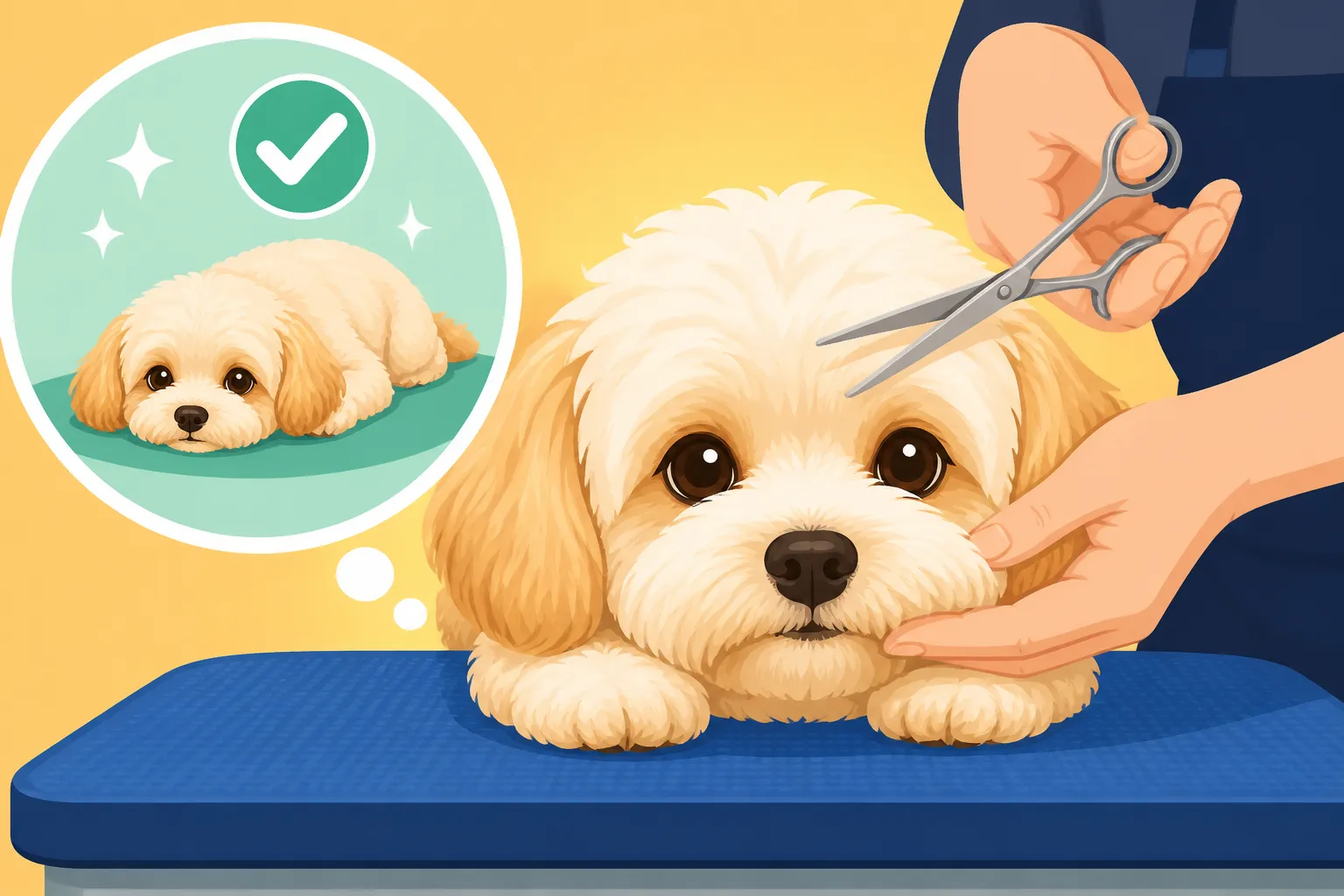
Teaching a Maltipoo to Lie Still for a Face Trim
Trying to trim your Maltipoo's face can feel like wrestling a greased-up, fluffy kitten with a severe aversion to scissors. It's a common struggle for so many of us, as our sweet pups instinctively shy away from anything near their eyes and muzzle, making a necessary grooming task stressful for both human and dog. This guide is here to walk you through how to gently and effectively teach your Maltipoo to lie still for those essential face trims, turning a dreaded chore into a calmer, more manageable experience.
Why Face Trims Become Such a Battleground
Let's be honest, asking a tiny, often squirmy Maltipoo to hold perfectly still while sharp objects approach their sensitive eyes and nose is a big ask. It’s not just about compliance; it's about deep-seated instincts and a lack of understanding on their part. Many owners, with the best intentions, inadvertently create negative associations, making future trims even harder.
The Fear and Anxiety of the Unknown
Imagine someone coming at your face with a buzzing, vibrating object or cold, sharp metal. Even if you understand what's happening, it's unsettling. For a Maltipoo, especially a puppy, they don't have that context. The sound of clippers, the sight of scissors glinting, the restraint, the feeling of hair being pulled – it can all be genuinely terrifying. They don't know it's for their own good; they only perceive a potential threat. If early experiences are forceful or rushed, that fear can quickly escalate into full-blown anxiety, making them anticipate the worst every time grooming tools come out.
Furthermore, some Maltipoos might be sensitive to the sensation itself. Their facial hair can be incredibly fine, and even a slight tug can feel uncomfortable. If they've had a bad experience where their whiskers were pulled or they were nicked, they'll remember that pain and associate it with the entire grooming process. This isn't stubbornness; it's a learned survival mechanism that we need to patiently help them unlearn.
Protecting Those Precious Eyes
One of the primary reasons for face trims is to keep hair out of their eyes, preventing irritation, infections, and even vision impairment. However, this is also the most vulnerable area, and your Maltipoo knows it. Their natural instinct is to protect their eyes, which means flinching, blinking rapidly, or turning their head away. This makes working around their eyes incredibly challenging and requires immense patience and a gentle touch.
When hair grows long and starts poking them, it’s not just annoying; it can actually cause physical damage to the cornea. This is why regular trims are non-negotiable for their health. But when your dog perceives the trimming itself as a greater threat than the hair in their eyes, you have a real dilemma. We have to communicate that we are helping, not hurting, and this involves a lot of slow, trust-building work.
The Handling Hurdle: Not Every Dog Is Used to Being Held Still
Many Maltipoos love to be cuddled, but being held still and restrained for a specific purpose is a different story. If a puppy isn't introduced to various types of handling from a very young age – being held in different positions, having their paws touched, ears examined, and face gently manipulated – they can grow up finding these experiences stressful. For a face trim, your Maltipoo needs to tolerate having their head tilted, their muzzle held, and their fur parted.
This isn't something they intuitively understand. It requires purposeful, consistent training where these actions are paired with positive reinforcement. Without this foundation, simply trying to force them into a position will likely be met with resistance, wriggling, and even nipping. It’s a bit like trying to teach a teenager calculus before they’ve learned basic arithmetic; you’re asking for too much, too soon. Building up their tolerance for handling is crucial, and it’s something you can start working on long before the clippers even come out. Teaching a Maltipoo to Be Handled Every Two Weeks can be a great resource for this foundation.
Building a Foundation of Trust and Positive Association
The key to a successful face trim isn't about brute force or clever tricks; it's about slowly, patiently, and consistently building trust and creating positive associations with the tools and the process. This takes time, often weeks or even months, but it pays off in a much calmer dog and a less stressful experience for everyone involved.
Starting Early and Making It Fun
The earlier you start introducing grooming tools and the idea of handling, the better. Even before your Maltipoo puppy needs its first proper trim, you can begin the desensitization process. Let them sniff the clippers (unturned off), touch the blunt scissors, and gently run your fingers over their face, praising and rewarding them lavishly. The goal is for them to see these objects as neutral or even positive, not as harbingers of discomfort.
Think of it as a game rather than a chore. Keep sessions very short – literally a few seconds at first. Touch the clippers to their face (still off), treat. Touch the scissors, treat. The moment they show any tolerance or stillness, celebrate and end the session on a high note. This positive reinforcement, often with high-value treats, helps them understand that "grooming time" means good things happen. An online puppy training program, like the one offered by BAXTER & Bella, can provide structured guidance on early handling and desensitization, helping you build this crucial foundation from the moment your puppy comes home.
Choosing the Right Tools for the Job
Having the right equipment can make a world of difference. Cheap, noisy clippers can scare a sensitive Maltipoo, and dull scissors can pull their hair, causing pain. Investing in quality, quiet tools is paramount.
- Quiet Clippers: Look for small, cordless clippers designed for intricate work around the face and paws. Many brands offer models specifically marketed as "low noise" or "quiet." These greatly reduce the anxiety caused by the buzzing sound. You can often find a good selection of quiet, precision grooming clippers on Amazon.
- Blunt-Tip Scissors: When using scissors, always opt for blunt-tip grooming shears. These significantly reduce the risk of accidentally poking your Maltipoo's eyes or skin if they suddenly move.
- Steel Comb: A fine-toothed steel comb is essential for parting the hair and ensuring there are no tangles before you cut, which could cause painful pulling.
- High-Value Treats: These are your secret weapon! Small, soft, incredibly tasty treats that your Maltipoo absolutely loves. Think tiny pieces of cooked chicken, cheese, or specialized training treats.
Using the correct tools minimizes discomfort and fear, making the entire experience smoother. A dull blade can be incredibly painful, so ensuring your clippers are sharp and well-maintained is also crucial. Getting a Maltipoo Used to Clippers Near Its Eyes will be easier if they are quiet and sharp.
Setting the Scene for Success
Where and how you approach the face trim matters as much as the tools you use. The environment should be calm, quiet, and free from distractions. This isn't the time for background noise, other pets, or curious children running around.
Find a stable, comfortable surface at a height that allows you to work without hunching over. A non-slip grooming table is ideal, but a kitchen counter with a non-slip mat (like a rubber bath mat) can also work. The idea is to have your Maltipoo at eye level, which makes the process less physically demanding for you and more stable for them. Ensure there's good lighting so you can clearly see what you're doing, minimizing the chance of accidental nicks.
Before you even start, take a few deep breaths yourself. Your calm energy will translate to your dog. If you're stressed, they'll pick up on it. Have all your tools laid out, treats ready, and allocate ample time so you don't feel rushed. Remember, these initial sessions are about building positive associations, not necessarily achieving a perfect trim. The Two Week Face Trim a Maltipoo Needs can sometimes feel overwhelming, so breaking it into small steps with the right environment helps.
Step-by-Step Guide to a Stress-Free Face Trim
Now that you've laid the groundwork, it's time to approach the actual trim. This isn't about one marathon session but many short, successful interactions building up to the goal. Patience is truly your most valuable tool here.
The Gentle Introduction to Tools
Before any actual trimming begins, continue to re-introduce the tools in a positive, non-threatening way. Hold the (off) clippers near their face, praise, treat. Turn the clippers on at a distance, let them hear the sound, treat. Gradually bring the running clippers closer to their face, praising and treating for calm behavior. You can even let the vibration touch their shoulder or back first, then slowly move to their face, always rewarding stillness.
Repeat this with the blunt-tip scissors. Let them sniff them, touch the closed blades to their fur, always followed by a treat and gentle praise. The goal is to desensitize them to the sight, sound, and feel of the tools so that when you finally use them, they don't react with panic. Remember, this step alone might take several days or even a week of short, five-minute sessions.
The "Touch and Treat" Method
This is a powerful technique for building tolerance. The concept is simple: you touch the area you want to trim, and then immediately give a treat. The sequence is critical: touch, treat, release.
- Start with low-stress areas: Begin by gently touching your Maltipoo's cheek or chin with your fingers. Praise, treat. Repeat.
- Introduce the comb: Once they're comfortable with your fingers, use a fine-toothed steel comb to gently comb a small section of their facial hair. Praise, treat.
- Bring in the tools (no cutting yet): With the clippers off or the scissors closed, gently touch the tool to their face where you intend to trim. Praise, treat. Immediately remove the tool.
- Gradually add action: Once comfortable, turn the clippers on (still not cutting) and touch them to their face briefly. Praise, treat. For scissors, just open and close them a tiny bit, but don't cut. Praise, treat.
Keep these sessions incredibly short, like 10-30 seconds. The moment your Maltipoo shows any sign of stress or tries to pull away, stop immediately, but end on a positive note if possible (e.g., if they pause for a second, treat and then stop). You want to build positive associations, not push them over their limit. This slow and steady approach is vital for Teaching a Maltipoo to Hold Still for Its Face.
Mastering the Hold and Position
For a safe and effective face trim, you'll need to gently stabilize your Maltipoo's head. Never force them into a position they are fighting against, as this can lead to injury.
- The Gentle Cuddle Hold: Sit with your Maltipoo facing away from you, resting against your chest. Use one arm to gently secure their body, and your other hand to cup their chin. This provides a sense of security and limits sudden movements.
- The Chin Cup: Place your non-dominant hand under their chin, gently holding their head still but not rigidly. Use your thumb and forefinger to slightly pull back the skin around their eyes to expose the hair you want to trim. Be very careful not to press on their throat or restrict their breathing.
- Use a Grooming Loop (Optional): If you're using a grooming table, a grooming loop (a soft, adjustable restraint that goes around their neck) can help prevent them from jumping off. Never leave your Maltipoo unattended with a grooming loop, and ensure it's not too tight. It's a safety measure, not a means of force.
- Practice Without Tools: Practice these holding positions without any tools first, rewarding stillness. Gradually increase the duration of the hold as they become more comfortable.
The key is gentle, consistent pressure that communicates firmness without aggression. If they struggle, ease up slightly, wait for them to calm, then gently re-establish the hold.
The Actual Trim: Precision and Patience
Once your Maltipoo is tolerating the tools and the hold, you can attempt small, incremental trims.
-
Eyes First (Carefully!): This is often the most critical area. Use your non-dominant hand to gently pull the skin around their eye taut and push any loose hair away from the eye itself. Use blunt-tip scissors, pointing them away from the eye, and only snip a few hairs at a time. Work slowly, one snip at a time, followed by praise and a treat for any stillness. For longer sessions, you might use clippers with a very small blade (like a #10 or #15) between their eyes. Always comb the hair up and away from the eye before trimming. How Often a Maltipoo Needs Its Eyes Cleared is often, so regular, small trims are better than one large, stressful one.
-
Muzzle and Beard: For the muzzle, you can use clippers for a cleaner look or scissors to maintain a softer, fuller style. Again, comb the hair out, and trim against the direction of growth for clippers, or snip small amounts with scissors. Be mindful of their whiskers, as some dogs are sensitive to having them trimmed. Always ensure you have a clear view and don't accidentally cut their lips or nose.
-
Ears: For the ears, you'll likely use scissors around the edges to tidy them up and clippers on the inside to keep the hair short and prevent matting or ear infections. Be extremely careful not to cut the ear leather itself. Hold the ear flap firmly but gently.
Throughout the entire process, talk to your Maltipoo in a calm, reassuring voice. Keep sessions short. If you can only manage one eye in a session, that's perfectly fine. End on a positive note, even if it means just a tiny snip. Consistency over perfection is the goal here.
Common Pitfalls and Troubleshooting
Even with the best intentions and methods, you might run into challenges. It’s important to understand these common issues and how to navigate them effectively.
When Your Maltipoo Just Won't Cooperate
Sometimes, despite all your patient efforts, your Maltipoo might still be too fearful or reactive for you to safely trim their face at home. This isn't a failure on your part; some dogs simply have a higher anxiety threshold, or they may have had deeply ingrained negative experiences before coming to you.
- Professional Groomer: A professional groomer has experience with all types of temperaments and often has specialized equipment (like professional grooming tables and restraints) that can make the process safer. They also have the expertise to get the job done quickly and efficiently. Make sure to communicate your Maltipoo's anxieties upfront so they can use a gentle, fear-free approach. Sometimes, a dog will behave better for a professional stranger than for their owner, as there's less emotional baggage.
- Veterinarian Assistance: If even a professional groomer struggles, or if the dog becomes aggressive due to fear, a veterinary visit might be necessary. Your vet can perform the trim under light sedation, ensuring your dog's safety and comfort. This should ideally be a last resort, as you want to avoid making grooming solely reliant on sedation, but it's a humane option if the alternative is injury or severe distress. Whether Sedation Is Ever Right for Grooming a Maltipoo is a serious question, and your vet can advise.
- Behavioral Consultation: For severe anxiety, consider consulting with a certified professional dog trainer or veterinary behaviorist. They can provide a tailored behavior modification plan to address the root cause of the fear. The BAXTER & Bella online program can also be a great resource here, as they often have guidance on tackling specific behavioral challenges related to grooming.
Remember, a stress-free trim is the ultimate goal, and sometimes that means seeking help from those with specialized skills.
Maintaining the Routine: Consistency is Key
A face trim isn't a one-and-done event for a Maltipoo. Their hair grows continuously, and neglecting regular trims will quickly lead to hair obscuring their vision, causing irritation, and matting. Regularity reinforces the training you've done.
Aim for small, frequent maintenance trims rather than letting the hair grow too long and then attempting a big overhaul. For many Maltipoos, a quick tidy-up around the eyes and muzzle every two to three weeks is ideal. This keeps the hair manageable and prevents build-up, and also keeps the sessions short and less stressful. The shorter the session, the more likely your Maltipoo is to tolerate it.
Consistency also means everyone in the household who interacts with the dog should be aware of the training methods. Using the same commands, rewards, and gentle handling techniques ensures your Maltipoo receives a consistent message about grooming. Keeping a Maltipoo's Face Trimmed and Clean relies on this consistency.
Dealing with Nips and Growls: Understanding Warning Signs
If your Maltipoo nips, growls, or tries to bite during a trim, it's crucial to understand that this is a warning sign born of fear, not malice or aggression. They are communicating that they are deeply uncomfortable and feel trapped. Punishing these warnings can make the situation worse, leading to a dog who might skip the warnings and go straight to biting.
- Stop and Assess: Immediately stop what you're doing. Give them space and allow them to calm down.
- Identify the Trigger: What specifically caused the reaction? Was it the sound of the clippers, a particular touch, the restraint, or did you push too far?
- Go Back to Basics: If your Maltipoo exhibits these behaviors, you've likely progressed too quickly. Go back to the earlier stages of desensitization and positive association. Spend more time on the "touch and treat" method with no trimming, ensuring they are absolutely comfortable before moving forward.
- Avoid Harsh Punishment: Never yell at, hit, or scold your Maltipoo for growling or nipping during grooming. This will only increase their fear and lead to a dog who might associate you with pain and punishment, further eroding trust.
- Consider a Muzzle (Temporarily/If Necessary): In extreme cases, if a trim is medically necessary and your dog is a bite risk, your vet or groomer might suggest a soft, basket muzzle. This is purely a safety measure to protect the humans involved and should always be paired with continued positive reinforcement and behavior modification to address the underlying fear, not as a permanent solution to force compliance. Whether a Maltipoo Bites the Groomer is a real concern, and safety is paramount.
Remember, the goal is always to make grooming a positive or at least neutral experience. With patience, understanding, and consistent positive reinforcement, you can teach your Maltipoo to lie still for a face trim, making life happier and healthier for both of you.
| Aspect of Grooming Training | Recommended Approach | Key Takeaways |
|---|---|---|
| Starting Age | As early as possible (8-10 weeks) | Builds trust, prevents ingrained fears |
| Session Length | Very short (10-60 seconds), frequent | Prevents overstimulation, ends on positive note |
| Tool Introduction | Desensitization: off, on at distance, on nearby, touch | Familiarity reduces fear of buzzing/clippers |
| Methodology | "Touch and Treat," positive reinforcement | Connects grooming actions with rewards |
| Holding Technique | Gentle, secure, no forced restraint | Promotes security, prevents struggle & injury |
| Tool Selection | Quiet clippers, blunt-tip scissors, steel comb | Minimizes discomfort, maximizes safety |
| Environment | Calm, quiet, non-slip surface, good lighting | Reduces distractions, enhances focus |
| Troubleshooting Nips | Stop, reassess, return to basics, no punishment | Fear-based communication, not aggression |
| Consistency | Regular mini-trims (every 2-3 weeks) | Reinforces training, prevents matting/overgrowth |
Disclaimer
This article is for general informational purposes only and does not constitute professional advice. Laws, prices and regulations vary by location and change over time. Consult a qualified professional for guidance on your specific situation.