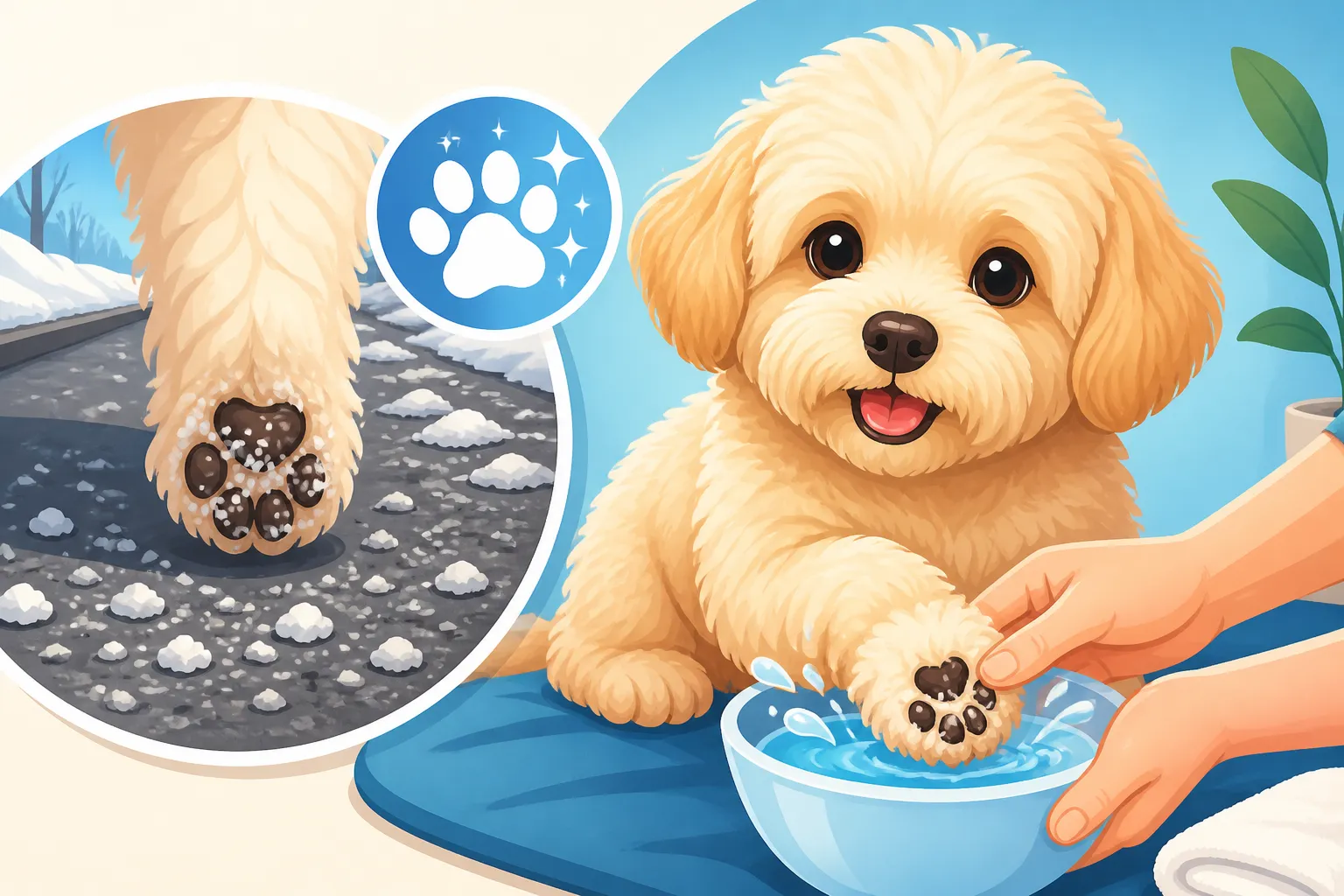
Washing Road Salt Off a Maltipoo’s Feet
Winter walks with your adorable Maltipoo can be magical, with sparkling snow and crisp air, but there's a hidden menace lurking on sidewalks and roads: harsh road salt. This seemingly innocuous white stuff, essential for human safety, can be incredibly painful and dangerous for your small companion's delicate paws, leading to painful cracks, irritation, and even serious health issues if ingested. This guide is here to walk you through exactly how to protect your Maltipoo's sensitive paw pads, clean them effectively after every outing, and know when it's time to call the vet.
The Invisible Threat of Road Salt to Your Maltipoo's Paws
It's easy to overlook the damage road salt can do, especially when you're bundled up and focused on enjoying the fresh air with your furry friend. But for a Maltipoo, whose paws are directly exposed to these chemicals, the consequences can range from uncomfortable to outright dangerous. Their tiny, sensitive paw pads are not built to withstand the corrosive nature of de-icing agents.
How Road Salt Burns and Irritates Delicate Paws
Road salt isn't just common table salt (sodium chloride); it often contains a mix of chemicals like calcium chloride and magnesium chloride. These compounds are designed to lower the freezing point of water, but they are also highly dehydrating and caustic to organic tissue. When your Maltipoo walks on salted surfaces, these chemicals immediately begin to draw moisture from their paw pads, leading to dryness, cracking, and a burning sensation. Imagine walking barefoot on a surface that's both freezing and chemically irritating – that's what your Maltipoo experiences.
The irritation can start subtly. You might notice your Maltipoo lifting a paw, limping slightly, or trying to shake something off. Over time, repeated exposure without proper care can cause raw spots, deep cracks, and even bleeding. These open wounds are not only incredibly painful but also leave your dog vulnerable to bacterial infections. A little skip in their step might be more than just a playful bounce; it could be an early sign of discomfort from salt. Remember, your Maltipoo's tiny pads are their only direct contact with the ground, making them particularly susceptible to this environmental hazard.
Beyond the Burn: Other Dangers of Ingesting Road Salt
Perhaps even more concerning than the direct irritation is the risk of ingestion. After a walk, it's a natural instinct for dogs, especially small breeds like Maltipoos, to lick their paws to clean them or soothe any irritation. When they do this, they inevitably ingest whatever chemicals are clinging to their pads. Because Maltipoos are so small, even a seemingly tiny amount of ingested salt can have a disproportionately large impact on their system.
Symptoms of salt ingestion can range from mild gastrointestinal upset, like vomiting and diarrhea, to more severe issues such as excessive thirst, lethargy, loss of appetite, and in serious cases, tremors or seizures due to sodium ion poisoning. The salts can disrupt their electrolyte balance, leading to dehydration and kidney stress. It’s a terrifying thought that a simple walk could lead to an emergency vet visit, which is why diligent paw cleaning is absolutely non-negotiable for Maltipoo owners in winter. Understanding What an Emergency Sugar Crash Costs a Maltipoo Owner might give you an idea of the kind of emergency expenses you could face for other health issues, and salt poisoning can be just as serious.
Essential Steps to Cleaning Your Maltipoo's Paws After Winter Walks
Knowing the risks is one thing, but establishing a consistent and effective cleaning routine is your best defense against road salt damage. It doesn't have to be a complicated or time-consuming ordeal, but it does require diligence and the right approach.
The "Immediate Action" Protocol for Post-Walk Paw Care
The key to preventing salt damage is speed. As soon as you step back inside from a walk, it’s time for paw patrol. Don't let your Maltipoo wander through the house, leaving salty residue on your floors and furniture, and certainly don't let them start licking their paws before you've had a chance to clean them. We want to interrupt that natural instinct immediately.
Set up a dedicated "paw washing station" right by your door. This can be as simple as a small, shallow basin or a sturdy dish filled with warm (not hot!) water, a soft towel, and maybe some pet-safe wipes or a mild dog shampoo designed for sensitive skin. Gently guide your Maltipoo to this spot. One by one, immerse each paw into the warm water, swishing gently to loosen any salt particles. Take your time to thoroughly rinse between the toes and around the paw pads, as salt can hide in these crevices. You might even give a very gentle massage to ensure all residue is removed. Afterwards, blot each paw dry with a soft towel. Remember how important it is for your Maltipoo to be comfortable with handling, as this regular routine will require their cooperation. Teaching a Maltipoo to Give a Foot can make this process much smoother.
Choosing the Right Products for Sensitive Maltipoo Paws
While plain warm water is often sufficient for a quick rinse, sometimes you need a little extra help, especially if you know the sidewalks were heavily salted. The market is full of paw cleaning products, but for a Maltipoo with sensitive skin, less is often more.
For daily, light cleaning, pet-safe paw wipes are fantastic. They're quick, convenient, and usually contain gentle, moisturizing ingredients. Just be sure to choose wipes specifically formulated for dogs and free of alcohol or harsh chemicals. For more thorough cleaning, a mild, hypoallergenic dog shampoo can be used, but always make sure it's completely rinsed off to avoid skin irritation. You can find a wide variety of these products on online retailers like Chewy or Amazon, making it easy to keep your emergency paw kit stocked. When drying, be diligent! Moisture trapped between toes can lead to yeast or bacterial infections, so gently patting and even using a low-setting hairdryer (held at a safe distance) can be beneficial, especially for Maltipoos with their fluffy paw hair.
| Cleaning Method | Pros | Cons | Best For |
|---|---|---|---|
| Warm Water Rinse | Simple, readily available, no chemicals | Less effective on heavy salt/grime | Daily, light exposure |
| Pet-Safe Wipes | Convenient, quick, often moisturizing | Can be costly, not for heavily soiled paws | Quick touch-ups, light walks |
| Mild Dog Shampoo | Deep cleaning, removes stubborn residue | Requires thorough rinsing, more time | Heavy salt exposure, visible grime |
| Paw Washer Cup | Excellent for thorough rinsing, contains mess | Some dogs dislike the sensation | Moderate to heavy salt exposure, muddy paws |
Preventing Road Salt Damage: Proactive Measures for Maltipoo Owners
Cleaning after the fact is crucial, but wouldn't it be great to prevent the damage in the first place? Taking some proactive steps can significantly reduce your Maltipoo's exposure to road salt and keep those precious paws safe and sound throughout the colder months.
Paw Protection: Boots, Balms, and Beyond
One of the most effective ways to create a barrier between your Maltipoo's paws and the harsh winter ground is with protective gear. Paw balms are a fantastic first line of defense. These typically wax-based products create a thin, protective layer on the paw pads, shielding them from salt, ice, and cold. They often contain natural moisturizers like shea butter or beeswax, which also help to prevent dryness and cracking. Apply a thin layer to your Maltipoo's paw pads and between their toes before every walk. It's a quick and easy habit to adopt, and many Maltipoos tolerate it well. You can find quality paw balms from various pet supply retailers on Amazon or Chewy.
For maximum protection, especially if you live in an area with very heavy salt use, dog boots are an excellent option. However, getting a Maltipoo to wear boots can be a bit of an adventure! Start slowly, introducing them indoors for short periods, and reward heavily with treats and praise. Look for lightweight, flexible boots designed for small breeds that offer good grip and stay on securely without restricting movement. It might take some trial and error to find the perfect pair that your Maltipoo accepts, but the protection they offer from salt, ice, and even Ice Balls Between a Maltipoo's Toes is invaluable.
Adjusting Your Winter Walking Routine
Sometimes, the best offense is a good defense, and that means being strategic about where and when you walk your Maltipoo. If possible, try to steer clear of heavily salted sidewalks. Opt for routes that include grassy verges or areas with untreated snow. While snow can still be cold, it won't have the corrosive chemicals that road salt does. If you live in a city, this might mean taking an extra loop around a park or finding less-trafficked streets.
Consider the timing of your walks as well. After a fresh snowfall, salt application might be at its peak. You might also find that early mornings, before the sun has had a chance to melt some of the salt, are particularly harsh. Shorter, more frequent walks can also be beneficial, limiting the amount of time your Maltipoo's paws are exposed. A small dog like a Maltipoo has a harder time regulating its body temperature, so shorter walks also help prevent Whether a Maltipoo Gets Cold Easily. Always check the weather forecast and look for visible salt on the ground before heading out. Sometimes, a quick potty break on a designated indoor pad might be the safest option on those truly brutal days.
When to Seek Veterinary Advice for Salt-Related Paw Issues
Even with the best preventative care and cleaning routine, sometimes problems can arise. It’s crucial to know when a paw irritation is minor enough for home care and when it warrants a trip to the veterinarian. Ignoring persistent or worsening symptoms can lead to more serious complications.
Recognizing Serious Symptoms and Complications
Keep a close eye on your Maltipoo's paws, especially during winter months. After cleaning, take a moment to inspect them thoroughly. Look for any signs of redness, swelling, open sores, deep cracks, or bleeding. If your Maltipoo is constantly licking, chewing, or limping even after cleaning, it's a clear signal that something is wrong. Pain is often indicated by a reluctance to put weight on a paw, or excessive sensitivity when you try to touch it.
Beyond visible paw damage, watch for signs of salt ingestion. If your Maltipoo experiences repeated vomiting, diarrhea, appears excessively thirsty, is lethargic, or shows any signs of neurological distress like disorientation or tremors, do not delay in contacting your vet. These symptoms can escalate quickly in a small dog and require immediate professional attention. Early intervention can prevent minor issues from becoming severe infections or systemic health problems. Your vet can assess the damage, prescribe pain relief, antibiotics for infection, or offer more intensive care if needed.
Long-Term Paw Health Beyond Winter
While road salt is a specific winter concern, maintaining overall paw health is a year-round commitment for Maltipoo owners. Regular paw care helps to build resilience and makes your dog less susceptible to environmental irritants. This includes keeping their nails trimmed to a healthy length, which prevents discomfort and abnormal weight distribution that can put stress on pads. Remember, How Fast a Maltipoo's Nails Grow can vary, so check them frequently.
It also means inspecting their paws periodically for any foreign objects, cuts, or signs of irritation, not just in winter. Consider using a moisturizing paw balm periodically even in warmer months to keep pads supple and less prone to cracking. A healthy paw is a happy paw, and by making paw care a consistent part of your routine, you're contributing to your Maltipoo's overall comfort and well-being, much like the diligent Brushing a Maltipoo's Teeth Every Single Day contributes to their dental health. Just like you might have a routine for The Daily Face Wipe a Maltipoo Needs, integrating paw checks into your grooming schedule ensures you catch any issues early.
Disclaimer
This article is for general informational purposes only and does not constitute professional advice. Laws, prices and regulations vary by location and change over time. Consult a qualified professional for guidance on your specific situation.