Whether a Maltipoo Should Be Left With Children
Bringing a lovable Maltipoo into a home with children can be a truly wonderful experience, full of joy and companionship. However, it also comes with a unique set of challenges and responsibilities that many new owners don't fully anticipate. The truth is, while Maltipoos are incredibly sweet, their tiny size and sensitive nature mean they are not automatically equipped to handle the unpredictable energy of children. This guide will walk you through the real considerations of having a Maltipoo alongside kids, offering practical advice to ensure both your beloved pet and your children can coexist happily and safely.
The Delicate Nature of a Maltipoo Around Children
It's easy to look at a fluffy, adorable Maltipoo and imagine perfect harmony with kids, but their small stature brings inherent vulnerabilities that need careful consideration. This isn't about blaming anyone; it's about understanding the physical realities.
Why Small Size is a Risk Factor, Not a Benefit
While a tiny dog might seem less intimidating to a child, their small size actually makes them incredibly fragile. A Maltipoo's bones are fine and delicate, and their slight frame means they can be easily injured by accidental tumbles, drops, or even overly enthusiastic hugs. We're not talking about malicious intent here from children, but rather the simple physics of a small, lightweight creature interacting with a larger, less coordinated human.
Imagine a bustling household: a child might trip and fall, not even realizing the little Maltipoo was underfoot. Or perhaps they attempt to pick up the puppy, but their grip is unsure, leading to a sudden drop that could cause serious injury. A fall from even a small height, like off a sofa or a low chair, can result in broken bones for a Maltipoo, especially if they land awkwardly. Whether a Maltipoo Breaks Its Leg Easily is a very real concern, and it only takes one accidental incident for things to go wrong. It’s vital to remember that their small size, which makes them so endearing, also places them at a higher risk of accidental harm. Their tiny skulls can also be quite delicate, with some puppies even having an Whether an Open Fontanel Closes in a Maltipoo. Therefore, treating them like a fragile object, especially around energetic children, is not an overreaction – it’s a necessity.
Misinterpreting Maltipoo Body Language
Another critical aspect of ensuring safety is understanding that Maltipoos, like all dogs, communicate through body language. However, their subtle cues of discomfort or fear can be easily missed by children, who are still developing their empathy and understanding of non-verbal communication. A child might see a dog's tail wagging and think it's always happy, not realizing that a stiff, low wag could mean anxiety.
When a Maltipoo feels overwhelmed, cornered, or threatened, they might display subtle warning signs: a lip lick, a yawn when not tired, turning their head away, or showing the whites of their eyes (often called "whale eye"). If these signals are ignored, the dog's stress level can escalate, potentially leading to a snap or bite as a last resort to create space and protect themselves. A child, being engrossed in play, often won't notice these subtle indicators. They might continue to hug a dog tightly, even if the Maltipoo is trying to squirm away, leading to a situation where the dog feels it has no other option. It’s an unfortunate reality that sometimes Whether a Maltipoo Warns Before It Snaps, and children can easily miss those initial warnings, leading to unintended consequences for both dog and child. Educating both children and adults on these cues is essential for preventing stressful or dangerous encounters.
Setting the Stage for Safe Interactions
Successfully integrating a Maltipoo into a family with children isn't just about hoping for the best; it requires intentional, consistent effort from the adults in the home. It's about proactive teaching and creating an environment where both dog and child feel secure.
Teaching Children How to Interact Respectfully
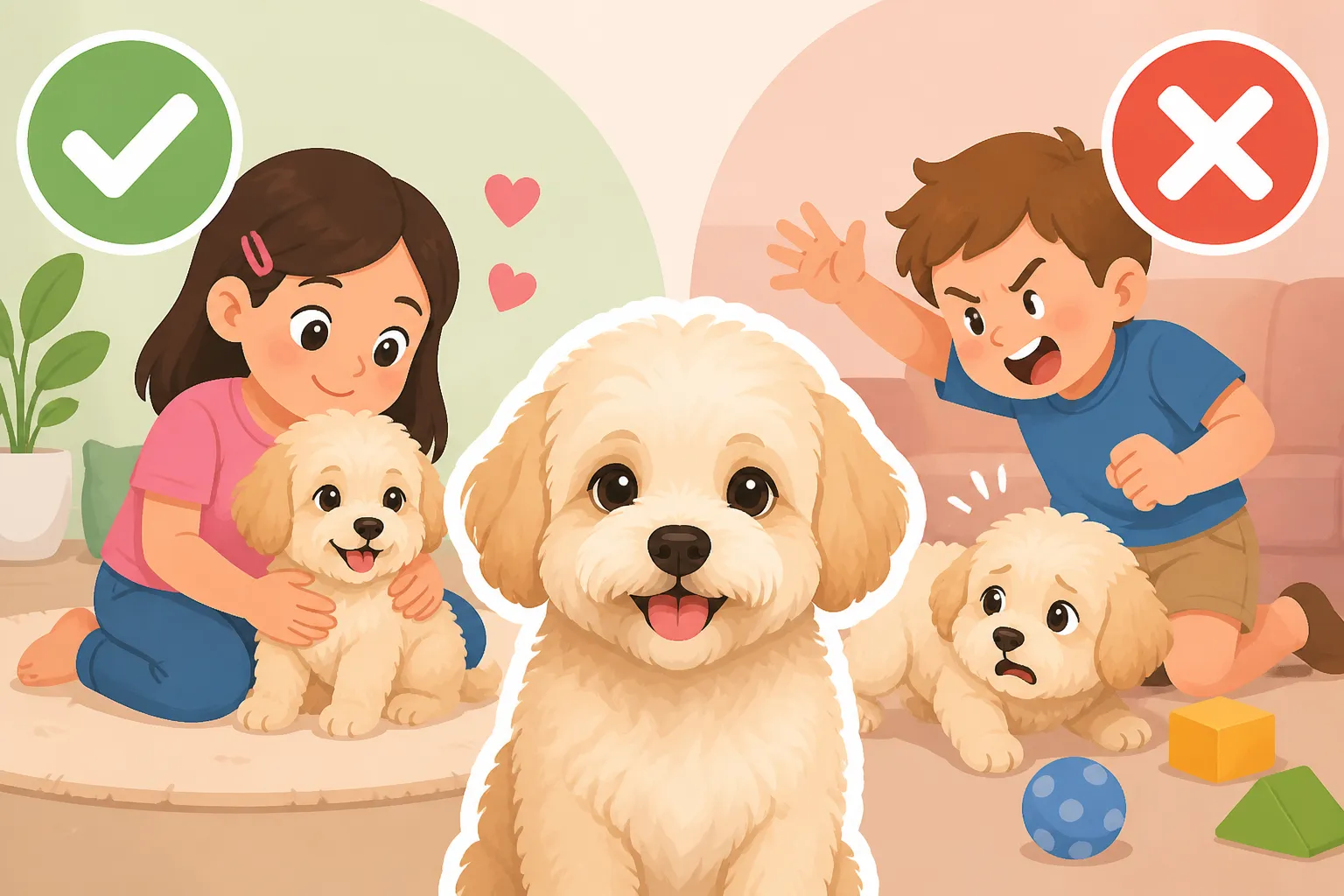
This is perhaps the single most important step. Children need to be actively taught how to interact with a Maltipoo in a way that is respectful, gentle, and safe for everyone involved. It's not enough to just tell them "be nice." You need to demonstrate and enforce specific rules. One of the golden rules should be "four on the floor" – meaning the Maltipoo's feet should always be on the floor, and children should never pick up the dog unless under direct adult supervision. Even then, an adult should always be present to guide Teaching a Child Where to Support a Maltipoo, ensuring the child supports the dog's body properly.
Practice gentle petting: use soft, open-handed strokes on the back or chest, avoiding the face, tail, or paws, which can be sensitive areas. Teach children to offer a hand for the dog to sniff first, and to let the dog approach them, rather than cornering the dog for attention. You can use role-playing games where children pretend to be the dog, and you demonstrate gentle interaction. Explain that the Maltipoo is a living creature with feelings, not a toy. For younger children, short, supervised interactions are best, with frequent breaks. Emphasize respect for the dog's space, especially when eating or sleeping. Books and videos can also be great tools to help children understand dog behavior in an age-appropriate way.
Creating a Safe Retreat for Your Maltipoo
Every Maltipoo, especially one living with children, needs a designated "safe space" where they can retreat and be undisturbed. This isn't a punishment area; it's their personal sanctuary. This could be a comfortable crate, a small playpen, or even a dog bed tucked away in a quiet corner of a room that children are taught to respect as the "dog's space." When your Maltipoo is in this area, children must understand that they are absolutely not to bother the dog.
Crate training can be incredibly beneficial for a Maltipoo, turning the crate into a cozy den where they feel secure. Make it inviting with soft bedding, a favorite toy, and perhaps a long-lasting chew. The crate provides not only a safe haven from energetic children but also a secure place for your Maltipoo to rest, eat, and feel secure. When choosing a crate, consider What Size Crate Suits a Maltipoo Puppy – it should be just big enough for them to stand up, turn around, and lie down comfortably. Having this consistent, predictable safe space helps reduce stress for your Maltipoo and prevents many potential conflicts. It teaches children boundaries and gives your dog the control to remove themselves from a situation if they feel overwhelmed, which is crucial for building trust and preventing fear-based reactions. Many dog owners will set up a crate or a playpen in the living area where the family spends time, allowing the Maltipoo to be part of the action but always with the option to retreat to safety. You can easily find suitable crates and playpens on online retailers like Amazon.
Practical Strategies for Day-to-Day Living
Managing the daily life with a Maltipoo and children requires vigilance and consistency. It's about establishing routines and being actively involved in every interaction.
Constant Supervision and Active Management
The idea of "leaving" a Maltipoo with children should generally be avoided. Instead, think in terms of "supervised interaction." This means an adult should always be present and actively engaged when children and the Maltipoo are together, especially if the children are young. Active management involves more than just being in the same room; it means observing the interaction closely, anticipating potential problems, and intervening before any issues arise.
For instance, if you see your child getting too boisterous or your Maltipoo starting to show signs of stress (like lip licking or moving away), you step in immediately. This might mean redirecting the child to a different activity, giving the Maltipoo a break in their safe space, or engaging both in a structured, calm activity like gentle fetch. Consider the context: a quiet evening is different from a loud playdate. Whether a Maltipoo Copes in a Loud House can vary greatly depending on the individual dog and how well they've been socialized. Even quick moments, like running to answer the door or stepping into another room, can be opportunities for accidental injury or an unwanted interaction. For young children, it’s often best to separate the dog with a baby gate or put them in their crate when you can’t offer full, undivided attention.
Training Your Maltipoo for a Family Environment
A well-trained Maltipoo is a more confident and adaptable Maltipoo, which significantly contributes to their ability to thrive in a family with children. Basic obedience training is not just about manners; it's about building a strong bond and clear communication between you and your dog. Commands like "sit," "stay," "come," and "leave it" are invaluable. "Leave it" can prevent your Maltipoo from picking up dropped toys or food that might lead to a scuffle with a child. "Come" (or Teaching a Maltipoo to Come When Called) ensures you can quickly call your dog to safety if an interaction becomes too intense.
Early and positive socialization is also key. Introduce your Maltipoo to children of various ages in controlled, positive environments, always with supervision. This helps them learn that children are not a threat, but can be a source of gentle attention and treats. Consider enrolling in an online puppy school like BAXTER & Bella. Their platform offers comprehensive, positive reinforcement-based training that can be done from the comfort of your home. This is especially helpful for families, as everyone can participate in the training sessions, learning together and reinforcing good habits. It helps build a foundation of trust and good behavior, making your Maltipoo a more secure and predictable member of the family unit.
Long-Term Considerations and Realistic Expectations
Bringing a Maltipoo into a family with children is a long-term commitment. The dynamics will change as both your children and your dog grow, requiring ongoing adaptation and understanding.
The Evolving Dynamics as Children Grow
The way children interact with a Maltipoo will naturally evolve as they age, and your approach as a parent needs to evolve with it. A toddler's interactions are very different from a school-aged child's or a teenager's. What might be a high risk for a two-year-old – accidentally stepping on the dog, grabbing fur – becomes less of an issue with an eight-year-old who can understand rules and consequences better.
As children get older, they can often take on more responsibility for their Maltipoo's care, such as feeding, helping with grooming, or engaging in supervised play. This can deepen the bond between them, but it’s still crucial to monitor interactions and ensure the respect for the dog's boundaries remains. Continue to reinforce gentle handling and understanding of body language. Teenagers, for instance, might understand the risks better, but could still inadvertently leave doors open or leave tempting items within reach. The goal is to foster a relationship built on mutual respect and understanding, where the Maltipoo feels safe and loved, and the children learn valuable lessons in empathy and responsible pet ownership.
When Professional Help Might Be Needed
Even with the best intentions and diligent efforts, sometimes situations arise that warrant professional intervention. It's important to recognize when you might need help from a certified professional dog trainer or a veterinary behaviorist. Signs that indicate you might need professional help include:
- Persistent Fear or Anxiety: Your Maltipoo consistently hides from children, trembles, or shows overt signs of fear whenever children are present.
- Aggressive Displays: Snapping, growling, lunging, or biting (even if no skin is broken) towards children. Any form of aggression, no matter how minor, should be taken seriously.
- Resource Guarding: Your Maltipoo becomes possessive over food, toys, or sleeping areas, growling or snapping if a child approaches.
- Regression in Training: A previously well-behaved Maltipoo starts having accidents inside or exhibiting destructive behavior when children are around, suggesting stress.
Don't hesitate to seek help if you notice these behaviors. Addressing issues early on is always better than letting them escalate. A professional can help identify the root cause of the behavior and develop a customized plan to ensure safety and improve the relationship between your Maltipoo and your children. They can provide invaluable strategies and guidance, turning a potentially difficult situation into a manageable one. Remember, your vet is also a great first point of contact, as some behavioral issues can stem from underlying medical conditions.
| Interaction Type | Appropriate Behavior for Children | Inappropriate Behavior for Children | Potential Impact on Maltipoo |
|---|---|---|---|
| Physical Contact | Gentle petting on back/chest, allowing dog to approach | Grabbing, hugging tightly, pulling tail/ears, picking up unsupervised | Fear, pain, accidental injury (fractures) |
| Personal Space | Respecting dog's crate/bed, giving space when eating or sleeping | Climbing on dog, disturbing dog while resting/eating, cornering | Stress, anxiety, resource guarding, snapping |
| Play | Gentle fetch (supervised), using appropriate toys | Roughhousing, chasing, teasing, loud yelling | Overstimulation, fear, reactivity |
| Communication | Quiet, calm voice; observing dog's body language | Shouting, sudden movements, ignoring warning signals | Increased stress, confusion, defensive bite |
| Supervision Level | Always supervised by an adult, especially young children | Left alone with dog, even for short periods | High risk of injury (to dog or child) |
Disclaimer
This article is for general informational purposes only and does not constitute professional advice. Laws, prices and regulations vary by location and change over time. Consult a qualified professional for guidance on your specific situation.