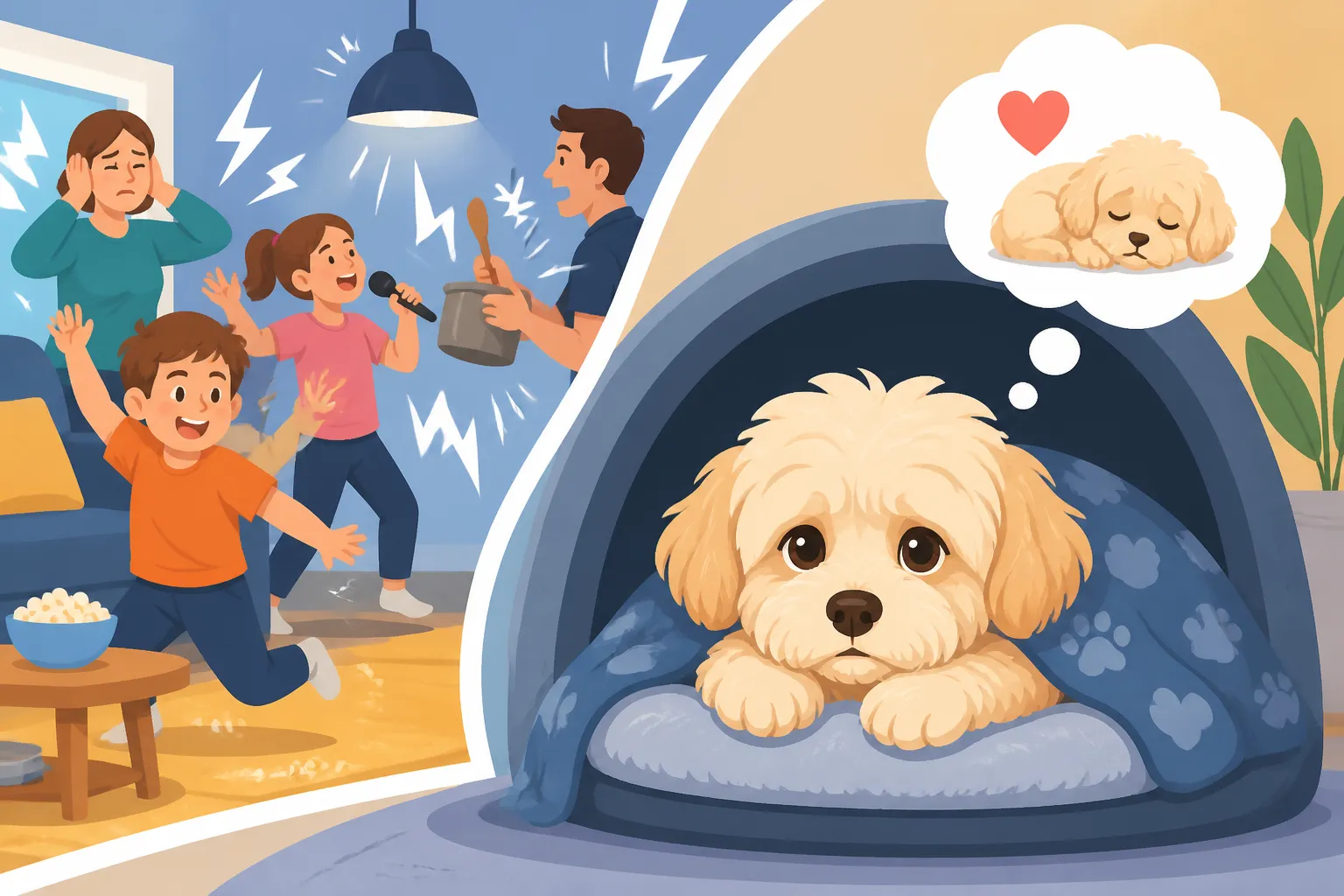
Whether a Maltipoo Copes in a Loud House
Bringing a fluffy, adorable Maltipoo into a home that's often buzzing with activity, children's laughter, other pets, or frequent visitors can feel a bit like placing a delicate teacup in the middle of a bustling kitchen. You adore their lively spirit but worry about their sensitive nature. This guide will help you understand how a Maltipoo perceives a busy, loud household and offer realistic strategies to help your furry companion not just cope, but truly thrive in a lively environment.
Understanding Your Maltipoo's Sensory World
It’s easy to look at our Maltipoos and see them as miniature humans, but their experience of the world is profoundly different, especially when it comes to sound and vibration. Their small stature and distinct genetics from both the Maltese and Poodle breeds contribute to a sensory apparatus that’s often much more finely tuned than our own. This isn't just a quirk; it's a fundamental aspect of their well-being that we, as their guardians, need to respect and understand.
The Maltipoo's Heightened Senses
Imagine hearing every single rustle, every distant siren, every floorboard creak as if it were right next to you. That's often what life is like for a Maltipoo. Their sense of hearing is significantly more acute than ours, meaning what sounds like a normal conversation or a moderately loud TV show to us can be a cacophony to them. This isn't just about volume; it's about the sheer intensity and detail of sound they process.
Beyond just sound, Maltipoos are incredibly sensitive to vibrations. Their tiny paws and lightweight bodies make them highly attuned to subtle shifts in the environment. A child running across the floor, a washing machine humming in the next room, or even heavy footsteps can create vibrations that they feel deeply. This constant sensory input, if not managed, can lead to overstimulation and anxiety, making a busy house a particularly challenging place for them. Their delicate nature is something to consider from the very start. The Coin Flip Inside Every Maltipoo Puppy often means some are more sensitive than others.
Why Small Dogs Can Be More Reactive
It might seem like smaller dogs, including our beloved Maltipoos, are often more prone to barking, trembling, or darting away when faced with loud noises or sudden movements. This isn't necessarily a sign of a "bad" dog; it's often a natural consequence of their size and inherent vulnerabilities. In a world full of much larger beings and louder sounds, their instinct for self-preservation kicks in more readily.
Think about it from their perspective: a loud bang or a towering, fast-moving child can feel genuinely threatening when you weigh only a few pounds. This physiological response often translates into what we perceive as reactivity – a quick, sometimes exaggerated, reaction to perceived threats. It’s not an act; it's a genuine expression of their stress or fear. Understanding this innate predisposition helps us approach their behavior with more empathy and less frustration.
Common Sources of Noise and Chaos in a Household
Our homes are hubs of activity, and what we consider normal daily life can be a constant barrage of sensory challenges for a Maltipoo. Identifying these common culprits is the first step in creating a more harmonious environment for your sensitive companion. It’s not about eliminating all joy or activity, but about recognizing the impact and finding ways to mitigate it.
Children, Other Pets, and Frequent Visitors
Children, especially young ones, are a primary source of unpredictable noise and movement. Their joyful shouts, sudden sprints, and dropped toys can be startling. While they mean no harm, a Maltipoo's natural instinct is often to retreat from such erratic energy. It's a common concern for many owners, wondering Whether a Maltipoo Is Too Fragile for a Toddler or A Maltipoo in a House With Children. Similarly, other pets, particularly larger, boisterous dogs or curious cats, can add to the noise level with their play, barking, or squabbles. The unpredictable nature of these interactions can keep a Maltipoo constantly on edge.
Frequent visitors, while wonderful for humans, disrupt routine and introduce new voices, footsteps, and smells. Each new arrival is a potential source of anxiety for a Maltipoo, who may not understand the context of the excitement. Even a well-meaning guest who speaks loudly or makes sudden movements can trigger a stress response. This constant influx can prevent a Maltipoo from ever truly settling into a state of calm, making it vital to manage these interactions.
Everyday Household Sounds and Their Impact
Beyond the people and pets, our homes are full of mechanical sounds that can be incredibly distressing for a Maltipoo. The whirring of a vacuum cleaner, the sudden ring of the doorbell, the blare of a television, or the clatter of pots and pans in the kitchen are all routine for us. However, to a Maltipoo's sensitive ears, these can be perceived as loud, intrusive, and even threatening.
Consider the doorbell: to us, it signals a guest. To a Maltipoo, it's a sudden, piercing noise often followed by the commotion of someone entering their territory. Over time, this can lead to anticipatory anxiety, where they become nervous even before the sound occurs. Similarly, loud music or continuous background noise from a television can prevent them from truly resting or relaxing. This constant auditory stimulation contributes to a higher baseline stress level, making them more prone to reactivity throughout the day.
Strategies for Helping Your Maltipoo Thrive in a Busy Home
The good news is that living in a lively home doesn't mean your Maltipoo is doomed to a life of stress. With thoughtful planning and consistent effort, you can create an environment where they feel secure, understood, and able to relax amidst the commotion. It's all about proactive management and tailoring your approach to their unique needs.
Creating a Safe Haven and Quiet Retreat
One of the most crucial steps is establishing a designated "safe haven" for your Maltipoo. This isn't just a bed in the corner; it's a space where they can retreat, feel undisturbed, and know they won't be bothered. This could be a cozy crate covered with a blanket, a small room with a pet gate, or a snug bed tucked under a table. The key is that this spot is theirs and respected by everyone in the household.
Fill this space with comforting items: a soft blanket, a favorite toy, and perhaps a long-lasting chew or puzzle toy. Consider adding a white noise machine or a calming music playlist (easily found on platforms like Amazon) near their retreat to mask jarring household sounds. Teach children that when the Maltipoo is in their "house," they are not to be disturbed. This consistent respect for their personal space goes a long way in building trust and reducing anxiety. A good resource for understanding their need for personal space might be found in Whether a Maltipoo Needs Company Most of the Day.
Gradual Exposure and Positive Reinforcement Training
Desensitization and counter-conditioning are powerful tools for helping your Maltipoo adapt to loud noises. This involves gradually exposing them to sounds or situations they find stressful, but at a low intensity, and pairing it with something positive. For example, if the vacuum cleaner is a trigger, start by turning it on in a distant room at a very low setting while you give your Maltipoo high-value treats or engage in a fun game. Slowly, over many sessions and days, you can increase the volume or bring the vacuum closer.
Always use positive reinforcement, rewarding calm behavior with treats, praise, or gentle petting. Never force them into a situation or punish them for reacting fearfully, as this will only exacerbate their anxiety. Online training programs, like those offered by BAXTER & Bella, often have modules on desensitization to common household sounds, providing structured lessons and support. This consistent, gentle approach teaches them that scary sounds can actually predict good things, gradually changing their emotional response.
Managing Daily Routines and Predictability
Maltipoos, like many small breeds, thrive on routine and predictability. A chaotic environment can be less stressful if they know what to expect and when. Establishing a consistent schedule for meals, walks, potty breaks, and playtime provides a framework of security. If your days are erratic, try to create mini-routines around specific events.
For example, if you know children will be playing loudly after school, make sure your Maltipoo has had a good walk and is settled in their safe haven with a treat a few minutes before the commotion begins. If guests are arriving, give them a chance to relieve themselves and then lead them to their quiet spot before the doorbell rings. This kind of preparation and routine helps them feel more in control and less overwhelmed by the unexpected. Consistency around training, which helps them feel more settled, is also covered in topics like How Many Months Before a Maltipoo Stops Having Accidents.
When to Seek Professional Help and What It Might Look Like
While many Maltipoos can adjust to a lively home with the right strategies, there are times when their anxiety or reactivity goes beyond what you can manage on your own. Recognizing these signs and knowing when to reach out for professional guidance is crucial for your Maltipoo's long-term well-being. Don't feel guilty about seeking help; it's a sign of a responsible pet parent.
Recognizing Signs of Overwhelm and Anxiety
It’s important to distinguish between normal reactivity and genuine anxiety or chronic stress. If your Maltipoo consistently exhibits several of the following behaviors in response to household noise or activity, it might be time to consider professional intervention:
- Excessive Trembling or Shaking: Beyond normal shivering from cold, this can indicate fear.
- Constant Hiding: Repeatedly seeking secluded spots, even when the house is relatively calm. This can also be a sign of discomfort around new people, as described in Whether a Maltipoo Hides From Visitors.
- Destructive Chewing or Licking: Directing anxiety into inappropriate chewing on furniture, or excessive licking of paws or objects.
- Panting or Drooling: Even when not hot or exercised, these can be stress indicators.
- Loss of Appetite: Refusing meals or treats in a typically enjoyable setting.
- Increased Vocalization: Persistent barking, whining, or growling at sounds or people.
- House Soiling: Accidents indoors, despite being reliably house-trained, can be stress-related.
- Aggression: Nipping, growling, or snapping when startled or cornered, especially if they are feeling overwhelmed by proximity to children or other pets.
If these behaviors are severe, frequent, or impact your Maltipoo's quality of life, it's a clear signal that they need more support than you can provide alone.
Consulting a Vet or Professional Trainer
Your first point of contact should always be your veterinarian. They can rule out any underlying medical conditions that might be contributing to behavioral changes or heightened sensitivity. Sometimes pain or an undiagnosed illness can manifest as anxiety or aggression. Your vet might also discuss options like calming supplements or, in more severe cases, anti-anxiety medication to help your Maltipoo manage their stress levels while you implement behavioral modifications.
After a vet check, consider working with a certified professional dog trainer or a veterinary behaviorist. These experts can assess your Maltipoo's specific triggers and provide tailored strategies, including advanced desensitization protocols, confidence-building exercises, and management techniques for your unique household dynamics. They can observe your Maltipoo's reactions and guide you through effective training, often with an emphasis on positive reinforcement. They can also help you understand concepts covered in Whether a Maltipoo Is Too Soft for Correction for a sensitive dog. Look for trainers who specialize in small breeds or anxiety, and who use humane, science-based methods.
Here's a quick overview of how a loud environment might affect your Maltipoo and some coping strategies:
| Potential Loud House Challenge | Maltipoo Reaction Signs | Coping Strategy | Relevant Tools/Resources |
|---|---|---|---|
| Loud Voices/Screaming | Trembling, hiding, excessive barking | Designate quiet zone, gradual exposure, calm voice | Crate, sound machine, BAXTER & Bella training |
| Running Children/Sudden Movements | Darting away, nipping, fear urination | Supervised interactions, teach "gentle touch" | Playpen, baby gate, puzzle toys |
| Doorbell/Knocking | Frantic barking, jumping, anxiety | Desensitization to sound, reward calm behavior | Doorbell sound recording, calming treats |
| Vacuum/Blender/Appliances | Hiding, trembling, trying to escape | Start in distant rooms, reward proximity to sound | Calming bed, white noise machine (Amazon) |
| Other Boisterous Pets | Retreat, growling, avoiding interaction | Separate playtimes, safe zones, structured introductions | Pet gates, separate feeding areas |
| Frequent Visitors | Hiding, growling, submissive urination | Scheduled "meet and greet" with treats, quiet retreat | Visitor management, enrichment toys |
By being proactive and understanding your Maltipoo's perspective, you can ensure they lead a happy, confident life even in the liveliest of homes.
Disclaimer
This article is for general informational purposes only and does not constitute professional advice. Laws, prices and regulations vary by location and change over time. Consult a qualified professional for guidance on your specific situation.