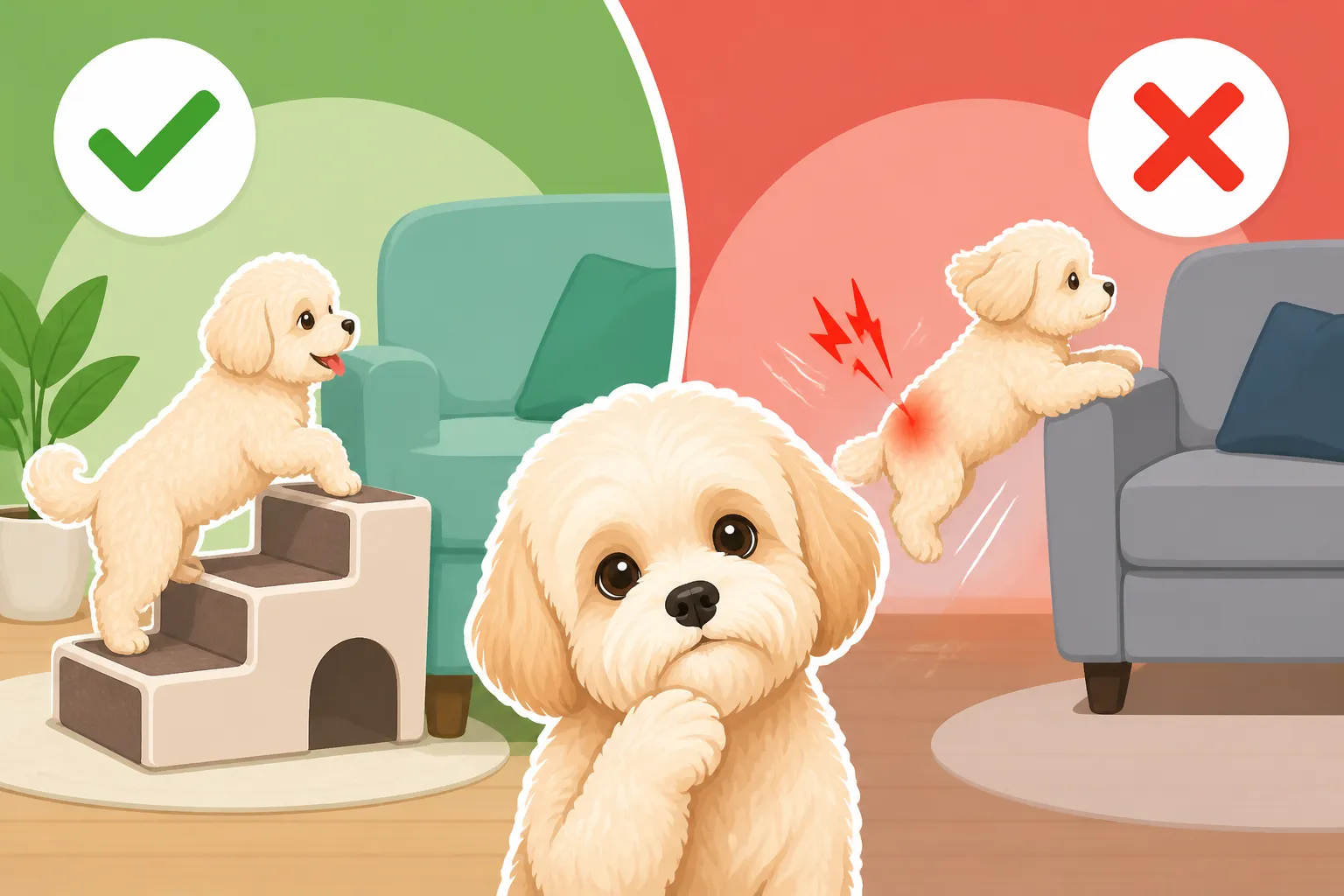
Whether a Maltipoo Should Use Steps to the Sofa
Watching a tiny, six-pound Maltipoo fearlessly launch off the top cushion of a high sofa directly onto a slick hardwood floor is enough to make any dog parent’s heart drop. That sudden thump sounds scary, and for good reason—those delicate legs are taking an enormous brunt of force. If you are wondering whether your Maltipoo genuinely needs dedicated steps or a ramp to access your living room furniture, the short answer is an absolute yes. Protecting your puppy or adult dog from devastating joint damage starts with understanding how these jumps affect their fragile bodies.
The Biomechanics of a Small Dog’s Jump
To understand why a simple hop off the couch poses such a severe health risk, you have to look at the anatomy of a toy crossbreed. Maltipoos inherit physical traits from two small parents—the Maltese and the Toy or Miniature Poodle. While they are agile, athletic, and surprisingly fast, their skeleton is built on a miniature scale. When a five-to-ten-pound dog leaps off a sofa that stands twenty-four inches high, they are jumping off a ledge that is two to three times their total body height.
Why Gravity Is Unforgiving to Toy Breeds
When a human jumps off a table onto concrete, their knees and ankles absorb a massive kinetic shock. For a Maltipoo, leaping down from a sofa cushion creates a landing force that can equal many times their entire body weight. All of that energy travels straight through their front paws, up their narrow wrist joints, and into their shoulders and spine.
Repeatedly taking this impact wears down cartilage, stretches tendons, and compresses spinal discs over time. A young, sprightly pup might bound off the couch fifty times a day without showing an ounce of pain, leading owners to believe their pet is indestructible. However, micro-trauma builds up silently. What looks like a harmless habit at one year old often manifests as chronic stiffness, spinal inflammation, or early-onset arthritis by the time the dog reaches middle age. You might wonder whether a Maltipoo Breaks a Leg Jumping Off a Sofa, and the stark reality is that acute fractures happen far more often than most pet parents realize.
Patellar Luxation and Joint Stress
One of the most prevalent orthopedic issues in toy breeds is patellar luxation, a medical condition where the kneecaps slip out of their natural groove. Because of genetic predispositions inherited from both parent breeds, a Maltipoo’s femoral groove is often shallow. When landing from a high jump, the mechanical torque placed on the hind legs can pop the kneecaps right out of place.
If you notice a sudden limp, a quick hop-step rhythm in their gait, or slipping kneecaps in a Maltipoo, high-impact landings are often a primary trigger. The severity of this condition varies, but understanding the Four Patella Grades and Where a Maltipoo Lands can help you realize that even a mild grade can rapidly deteriorate if the knee is repeatedly traumatized by jumps. Consistently using pet steps eliminates the sharp twisting forces that dislodge the kneecap, keeping the rear leg assemblies properly aligned.
Bone Density and Risk of Fractures
Beyond long-term joint wear, there is the immediate danger of acute physical trauma. The radius and ulna bones in a Maltipoo’s lower front legs are remarkably thin, sometimes no thicker than a standard ballpoint pen. If a dog lands awkwardly, slips on a rug upon impact, or twisted mid-air because they got spooked by a sudden noise, those slender bones can snap easily.
Repairing a lower-leg fracture in a small dog requires specialized surgical plates, pins, and months of strict crate rest. Veterinary orthopedic surgeries of this scale can quickly run into thousands of dollars. Pet parents who maintain comprehensive coverage through providers like Healthy Paws often find relief knowing surgical costs are manageable, but preventing the physical trauma altogether through environmental safeguards should always be the primary goal.
Foam Steps vs. Wooden Ramps: Choosing the Right Solution
Once you decide to safeguard your home, you will quickly notice that the pet market offers dozens of entry options, primarily split between stepped structures and inclined ramps. Choosing the right setup depends on your Maltipoo’s specific age, mobility, confidence level, and home layout.
Comparing Slope Angles, Grip, and Stability
Pet steps generally work well for healthy, young, or mid-sized Maltipoos who already navigate household staircases with confidence. However, deep steps with short treads can force a small dog into a steep, awkward climbing posture. If the steps are too tall, the dog might simply ignore them and jump anyway.
Ramps, on the other hand, provide a smooth, continuous incline with zero impact on the joints. They are particularly vital for senior Maltipoos suffering from arthritis, dogs recovering from surgery, or pups with severe patellar luxation. The key to any ramp or step system is friction and stability. If a plastic step slides across your hardwood floor when your dog steps on it, or if the fabric cover is slippery, your Maltipoo will quickly lose confidence and resume jumping off the couch. Look for heavy-density foam cores, solid wood bases with non-skid rubber feet, and high-traction carpet covers.
| Feature | High-Density Foam Steps | Solid Wooden Ramps | Bare Floor Jumping |
|---|---|---|---|
| Impact Level on Joints | Very Low | Zero Impact | Dangerously High |
| Best For | Healthy puppies, agile adult Maltipoos | Seniors, post-op dogs, severe patella cases | Never recommended |
| Storage & Mobility | Lightweight, easy to move around | Folds flat, heavier, semi-permanent | No equipment required |
| Risk of Slipping | Low (if covered in plush fabric) | Very Low (with high-traction carpet grips) | Extremely High (especially on hardwood) |
| Footprint / Space Needed | Compact, sits close to couch | Requires a longer runway for proper angle | None |
Assessing the Incline Angle
When picking a ramp or step set, pay close attention to the overall angle. A ramp that is too short will create a wall-like steepness that forces your dog to scramble, putting unnecessary pressure on their back legs. A gentle slope allows your Maltipoo to walk up and down naturally without straining their lower spine.
If your living room has space constraints, high-density foam steps with wide treads are usually the best compromise. Foam offers a gentle cushion that absorbs heel strikes while offering enough firmness to support a ten-pound dog without sagging.
Training Your Maltipoo to Actually Use Couch Steps
Buying steps is only half the battle; the real work lies in convincing your independent, energetic Maltipoo to use them reliably. It is frustrating to invest in high-end pet gear only to watch your pup bypass the steps entirely and continue launching off the edge of the cushions.
Overcoming Hesitation with Luring and Treats
Dogs are creatures of habit and efficiency. To a Maltipoo, a straight leap off the sofa seems like the fastest route to the kitchen when they hear a food wrapper. To change this habit, you must make the steps the most rewarding pathway in the house.
- Block the Danger Zones: Place decorative throw pillows or rolled blankets along the open edges of the sofa, leaving the steps as the only accessible clearing.
- Introduce the Equipment on Level Ground: Before placing the steps against the couch, let your dog sniff them on the floor. Drop high-value treats on the bottom step to build a positive connection.
- Lure Up and Down: Place your dog on the sofa, put a treat right in front of their nose, and slowly guide them down the steps step-by-step. Praise heavily the moment all four paws touch the floor.
- Repeat and Reinforce: Practice this luring routine ten times a day for two weeks. Never force or drag your dog onto the steps, as fear will cause them to avoid the area entirely.
Many owners wonder whether Stairs Damage a Maltipoo’s Knees compared to flat ramps. While climbing standard house stairs involves repetitive stepping, dedicated low-rise pet steps trained with positive rewards carry a minimal risk compared to the violent impact of free-jumping.
Preventing the “Descent Launch”
A common issue during training is the “descent launch”—where a dog walks down the first two steps and then leaps off the middle tier directly onto the floor. This mid-height jump still places substantial stress on the front wrists and neck.
To curb this behavior, continue using the “follow the treat” technique all the way to the carpet. You can also place a plush, high-traction runner rug at the base of the steps to give them a soft landing zone if they do happen to hop off the final step prematurely. Consistent reinforcement over several weeks will rewire their brain to view the steps as their default pathway.
Long-Term Joint Care and Financial Preparedness
Preventing joint issues in toy dogs requires a holistic approach that goes beyond just buying a set of foam steps for the living room. You need to consider how your dog moves throughout your entire home every day.
Environmental Modifications Across the Home
Take a walk through your house from your dog’s perspective. Are there other high-risk jumping zones?
- The Bedroom: Beds are typically much higher than sofas. If your pet sleeps with you, a longer, low-incline wooden ramp is essential to prevent midnight leaps. You should evaluate whether Jumping Off a Bed Hurts a Maltipoo just as carefully as sofa jumping, as nighttime jumps in the dark carry a higher risk of awkward landings.
- Flooring: Hardwood, tile, and laminate floors offer zero traction. A dog landing on a slick surface is prone to splay-legged wipeouts that can tear knee ligaments or strain hip joints. Adding non-slip area rugs around furniture landing zones provides critical traction.
- Vehicles: If your Maltipoo loves car rides, avoid letting them jump in and out of high SUV trunks or tall footwells. Lift them personally or use a portable folding ramp.
Protecting Your Finances Against Sudden Orthopedic Bills
Despite our best efforts to baby-proof our homes, small dogs are notorious for sudden bursts of excitement—the dreaded “zoomies”—where they might misjudge a distance or bypass their steps entirely. Orthopedic tears, sudden luxations, and accidental bone fractures can require immediate, high-level veterinary intervention.
When unexpected injuries occur, having solid health coverage through companies like Healthy Paws helps cushion the shock of expensive specialist consultations, diagnostic X-rays, and corrective surgeries. Securing coverage early in your dog’s life—ideally while they are still a puppy and before any joint conditions are documented in their medical records—ensures you aren’t caught off guard by pre-existing condition exclusions later on. It gives you peace of mind knowing that if your dog does suffer an awkward fall, financial limits won’t stand between your pet and the surgical care they need.
If your dog ever suffers a knee injury despite your preventive measures, understanding whether a Maltipoo Recovers Fully From Knee Surgery can give you hope. With proper post-operative care, strict crate rest, and controlled rehabilitation, the vast majority of toy breeds go on to lead full, pain-free lives.
Ultimately, installing sofa steps is one of the simplest, most effective lifestyle changes you can make for your pet. It preserves their spinal health, protects their fragile limbs, prevents painful knee luxations, and ensures your beloved companion stays mobile, happy, and pain-free well into their senior years. Taking the time to train them today pays off in a healthier, more vibrant life for years to come.
Disclaimer
This article is for general informational purposes only and does not constitute professional advice. Laws, prices and regulations vary by location and change over time. Consult a qualified professional for guidance on your specific situation.