Whether Stairs Damage a Maltipoo’s Knees
It’s a common sight: a tiny Maltipoo, full of boundless energy, attempting to tackle a flight of stairs. As a loving owner, you can’t help but watch with a mix of awe and anxiety, wondering if those ambitious leaps and bounds are secretly causing harm to those delicate little joints. The concern about whether stairs damage a Maltipoo's knees is incredibly valid, and this guide is here to unravel the complexities and provide practical advice to protect your furry family member.
Understanding Your Maltipoo's Delicate Structure
Maltipoos, a beloved crossbreed of the Maltese and Poodle, inherit a wonderful blend of traits. However, like many small breeds, they can also inherit predispositions to certain health issues, particularly concerning their musculoskeletal system. Their petite size, while undeniably adorable, also means their bones and joints are inherently more fragile and susceptible to strain than those of larger dogs. This delicate construction is the primary reason why activities like navigating stairs become a genuine concern for owners.
The Anatomy of a Small Dog's Joints
When we talk about a Maltipoo's joints, we're often focusing on their knees, specifically the patella (kneecap). In a healthy dog, the patella sits snugly in a groove at the end of the femur (thigh bone), gliding smoothly as the leg bends and straightens. For small breeds like Maltipoos, this groove can sometimes be shallower, or the surrounding ligaments and muscles might not hold the kneecap as securely in place. This anatomical variation is what often leads to a condition called luxating patella, or a "slipping kneecap."
Imagine your kneecap as a small train on a track. For some Maltipoos, that track might not be deep enough, or the train might be prone to derailing. Every time they put weight on the leg, especially when moving quickly or twisting, there's a chance the kneecap could pop out of its groove. Now, consider the mechanics of a dog climbing or descending stairs. It involves significant flexion and extension of the knee joint, as well as pushing off and absorbing impact. Each step, particularly the downward motion, places a concentrated load on the kneecaps. If the patella is already predisposed to slipping, this repeated, high-impact movement can exacerbate the issue, potentially leading to pain, inflammation, and even long-term damage to the cartilage and surrounding tissues. You might even notice a peculiar "skip" in their step, which is a classic sign that their kneecap is momentarily slipping out of place, as discussed in the article on "The Skip in a Maltipoo's Walk That Means a Patella".
Common Orthopedic Concerns in Maltipoos
Beyond the general delicate nature of small breed joints, Maltipoos are specifically prone to a couple of orthopedic issues that make stairs a heightened concern.
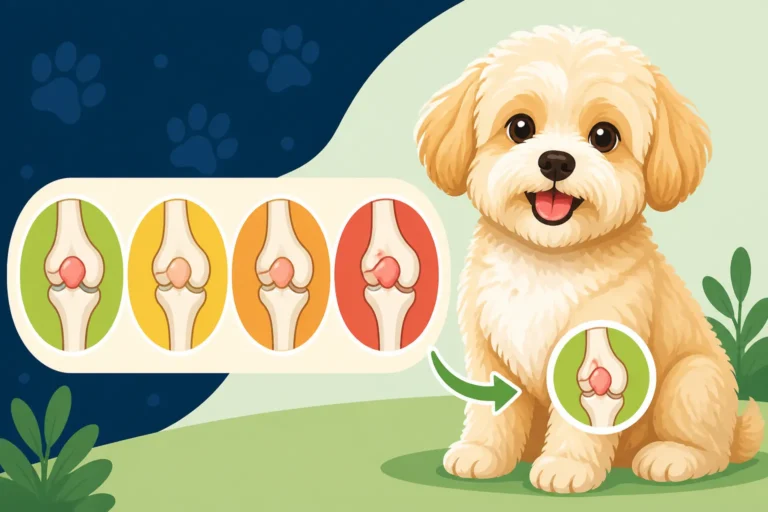
Luxating Patella (Slipping Kneecap): This is by far the most common orthopedic problem seen in Maltipoos. Both the Maltese and Poodle breeds, from which the Maltipoo originates, have a genetic predisposition to this condition. It's classified into four grades, with Grade 1 being the mildest and Grade 4 being the most severe. Even a Grade 1 luxating patella, where the kneecap only occasionally slips out and back in, can be aggravated by the repetitive stress of stairs. Over time, this constant popping in and out can wear down the bone and cartilage, leading to arthritis, chronic pain, and a greater likelihood of needing surgical intervention. The article on "The Four Patella Grades and Where a Maltipoo Lands" offers a deeper dive into this condition. For many owners, the first signs often appear as the dog grows, and understanding "The Age a Maltipoo's Kneecap First Slips" can help with early detection.
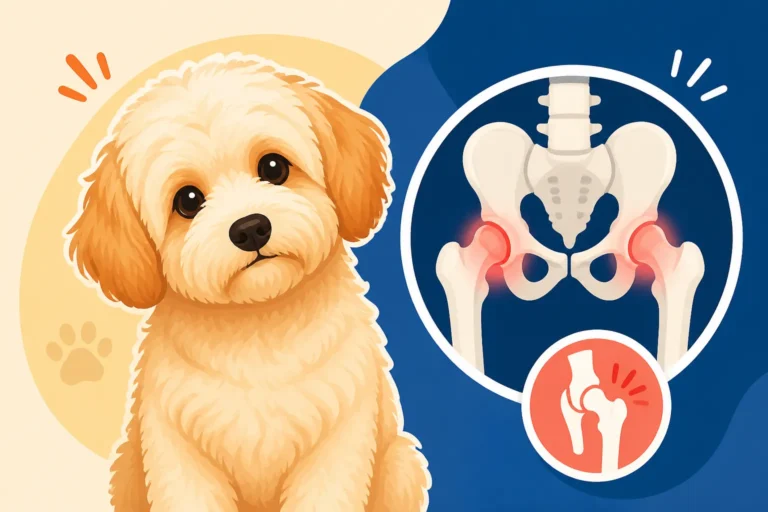
Legg-Calve-Perthes Disease (LCPD): While less common than luxating patella, LCPD is another condition that affects the hip joint and can be exacerbated by excessive strain. This disease involves the degeneration of the head of the femur (the ball part of the ball-and-socket hip joint) due to an interruption of its blood supply. It's primarily seen in small dog breeds and usually manifests when the dog is between 6 and 12 months old. A Maltipoo suffering from LCPD will experience pain and lameness in the affected hind leg. While stairs aren't a direct cause, the awkward movements and extra strain required to navigate them can certainly worsen the pain and progression of LCPD. If you suspect your Maltipoo might be dealing with this, our article on "Legg Calve Perthes in a Maltipoo" provides more detailed information. For dogs with either of these conditions, the strain of climbing and descending stairs can be incredibly detrimental, leading to increased pain and accelerating degenerative changes.
The Direct Impact of Stairs on Maltipoo Knees
It’s not just about the possibility of an injury; it’s about the consistent, low-level trauma that accumulates over time, often unseen by the casual observer. The way a Maltipoo interacts with stairs creates specific stresses that can take a toll on their small joints.
Force and Repetitive Strain
Think about a human descending stairs. We use our quadriceps and hamstrings to control our descent, essentially "braking" our body weight. A Maltipoo does something similar, but the biomechanics are far less forgiving for their tiny frame. When a Maltipoo descends stairs, each step creates an impact that sends forces through their joints, especially the knees and hips. Because their legs are short and their stride is small, they often have to jump or awkwardly stretch between steps, increasing the concussive force.
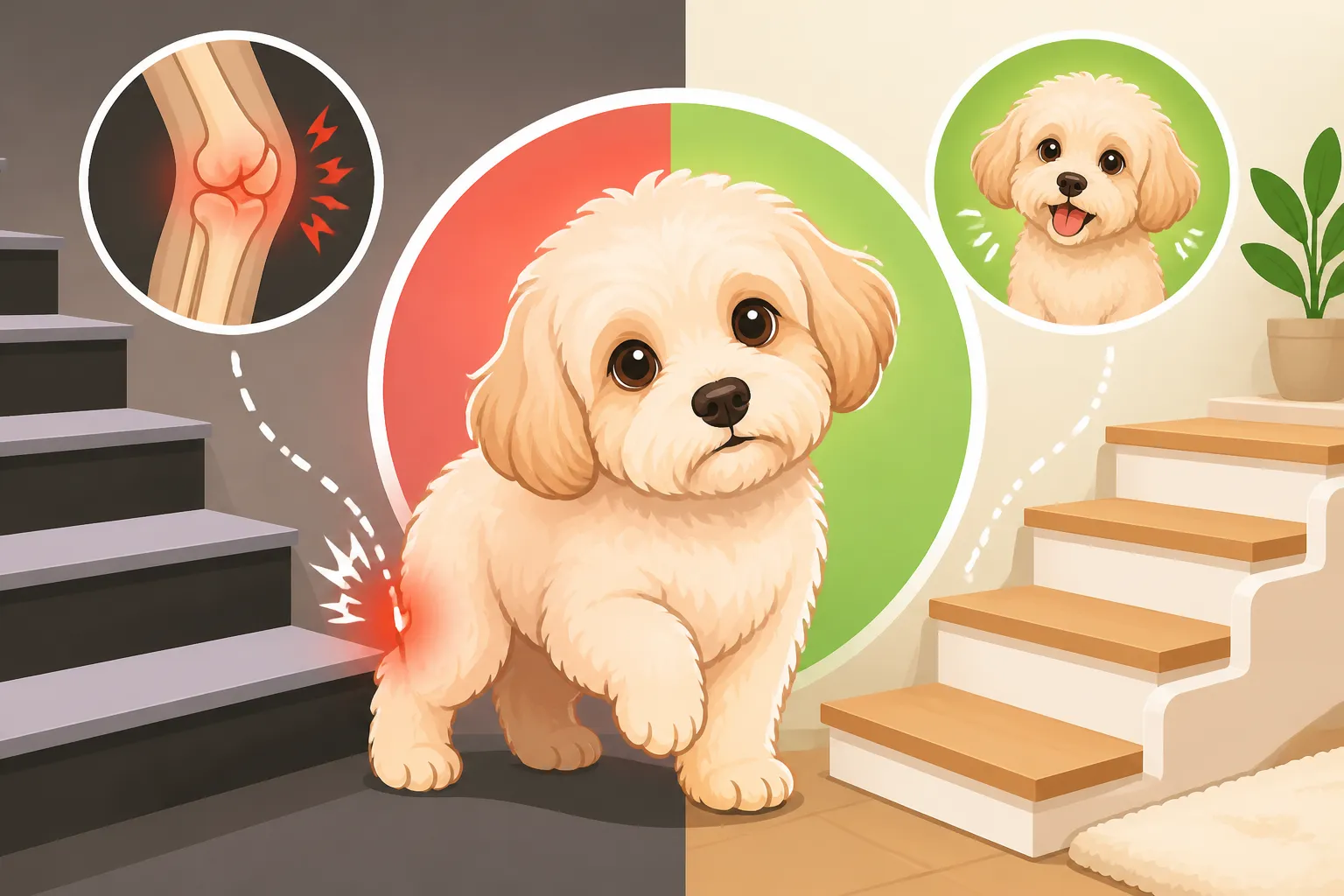
The greatest strain occurs when they are going down the stairs. Gravity pulls them forward, and their muscles and joints must work harder to absorb the impact and maintain control. This isn't a gentle, controlled descent like ours. For a small dog, it often looks like a series of small, rapid jumps. This repeated jarring, step after step, day after day, week after week, contributes to what’s known as repetitive strain injury. It's like a tiny hammer tapping on a fragile structure. Over time, this can lead to inflammation, micro-traumas to ligaments and tendons, and the accelerated wear and tear of joint cartilage. If your Maltipoo already has a predisposition to a condition like luxating patella, this constant strain significantly increases the likelihood of the condition worsening or becoming symptomatic earlier in life.
Risk Factors and Injury Prevention
While stairs inherently pose a risk, certain factors can amplify the danger for your Maltipoo. Understanding these can help you implement smarter prevention strategies.
Slippery Surfaces: The most immediate danger on stairs is the risk of slipping. Hardwood, laminate, or tile stairs, especially without runners or non-slip strips, offer little traction for tiny paws. A slip can lead to a sudden, wrenching movement that forces a kneecap out of place, tears a ligament, or even results in a broken bone. Small dogs, with their lighter weight, sometimes pick up speed quickly, making a fall even more impactful.
Jumping Mid-Stair: Many energetic Maltipoos, in their eagerness to reach you or chase a toy, will attempt to jump from the middle of a flight of stairs or skip several steps. This kind of high-impact landing places immense, sudden stress on their joints, far greater than a controlled step-by-step descent. It's akin to a human jumping from a significant height – the shock absorption required is tremendous, and a Maltipoo's small joints are simply not built for it. This isn't just a concern for stairs, but any high jump, as explored in the article "Whether a Maltipoo Breaks a Leg Jumping Off a Sofa".
Lack of Muscle Conditioning: Dogs with weaker hind leg muscles are more susceptible to injury on stairs. Strong muscles provide better support for the joints, helping to stabilize the kneecap and absorb shock. If your Maltipoo isn't regularly exercised in ways that build hindquarter strength, they're at a higher risk.
Preventative Measures:
- Install Non-Slip Runners: For permanent staircases, investing in carpet runners or adhesive non-slip strips can drastically reduce the risk of slips and falls.
- Supervised Use: Never allow a Maltipoo, especially a puppy, to navigate stairs unsupervised. If they must use stairs, guide them slowly, one step at a time, particularly when going down.
- Controlled Environment: Keep toys and distractions away from staircases to prevent your Maltipoo from getting overly excited and making a risky leap.
- Regular Exercise & Muscle Building: Consult with your vet about appropriate, low-impact exercises to help build and maintain strong hindquarter muscles, which provide essential joint support.
Taking these proactive steps can make a significant difference in protecting your Maltipoo’s precious knees and preventing costly veterinary visits down the line. Many owners find that having comprehensive pet insurance, such as through Healthy Paws, gives them peace of mind regarding unexpected injuries or the long-term management of orthopedic conditions.
Practical Strategies for Safe Stair Navigation
Okay, so we know stairs can be a real headache for our little Maltipoos. The good news is, you're not powerless! There are plenty of practical strategies you can implement to keep your furry friend safe and sound, minimizing the risk to their joints. It’s all about creating an environment that respects their size and physical limitations.
Limiting and Managing Stair Access
The most straightforward way to prevent stair-related injuries is to simply limit or entirely block your Maltipoo's access to them. This might sound drastic, but for many small breeds, it's the safest bet, especially if they are prone to luxating patella or are very young.
Baby Gates are Your Best Friend: Just like you'd use them for a human toddler, sturdy baby gates are incredibly effective for dogs. Install them at the top and bottom of any staircases in your home. This physically prevents your Maltipoo from attempting to climb or descend on their own. Make sure the gates are tall enough that your Maltipoo can't jump over them and secure enough that they can't squeeze underneath. This simple step can save you a lot of worry and potential vet bills.
Carry Them Up and Down: For many owners, especially those with very small or older Maltipoos, carrying them up and down the stairs becomes a routine part of their day. This completely eliminates any risk of falls or repetitive strain. Just be sure to support their body properly, holding them securely to prevent accidental drops. This is particularly crucial for puppies, whose bones and joints are still developing, or for older dogs whose joints may already be showing signs of arthritis. It may seem like a small inconvenience, but it's a huge protective measure for their long-term health.
Teaching Controlled Stair Use (with caution): If completely blocking stair access isn't feasible, or if you live in a multi-story home where they need to navigate stairs occasionally, you can try to teach controlled stair use. This is a slow, patient process.
- Leash Guidance: Start with them on a leash. Lead them up and down one step at a time, using positive reinforcement (treats and praise) for each successful, slow step.
- Focus on Descent: Emphasize slow, controlled descents, as this is where the most impact occurs. Encourage them to place all four paws on each step, rather than jumping.
- No Rushing: Never let them run or jump on the stairs. This means no games, no chasing, and certainly no allowing them to leap off mid-flight.
- Consistency is Key: Everyone in the household needs to be consistent with these rules. One lapse can undo weeks of training.
However, it's important to be realistic. Some Maltipoos, due to their personality or specific physical predispositions, may never be able to navigate stairs safely without significant risk. In these cases, consistent carrying or permanent barriers are the smarter choice.
Alternative Solutions and Protective Measures
Beyond direct management of stair access, there are other tools and habits you can adopt to support your Maltipoo's joint health and well-being.
Ramps and Dog Steps: These are invaluable aids for any small dog, not just for stairs, but also for getting onto and off furniture. "Whether a Maltipoo Should Use Steps to the Sofa" is a common question, and the answer is almost always yes! Ramps offer a gentle incline, eliminating the jarring impact of steps entirely. Dog steps, typically carpeted, provide smaller, easier-to-manage risers than full-sized household stairs. Place them next to sofas, beds, or even as an alternative to one or two steps leading into a room. Introduce them slowly with treats and praise, making them a positive experience for your Maltipoo. Many pet stores offer a variety of options, from foldable ramps to sturdy wooden steps, suitable for different household aesthetics and dog sizes.
Joint Supplements and Diet: A healthy diet and targeted joint supplements can play a supportive role in overall joint health. Look for supplements containing glucosamine, chondroitin, and MSM, which are known to support cartilage health and reduce inflammation. Omega-3 fatty acids are also beneficial for their anti-inflammatory properties. Always discuss any supplements with your veterinarian before introducing them, as they can recommend the best options and dosages for your specific Maltipoo. A balanced, high-quality dog food designed for small breeds will also provide essential nutrients. Our article "Whether a Maltipoo Needs Supplements" delves deeper into this topic.
Regular Veterinary Check-ups: Regular vet visits are crucial for monitoring your Maltipoo's joint health. During these check-ups, your vet can perform a physical examination to assess knee stability, especially if you notice any limping or odd gait. Early detection of luxating patella or other orthopedic issues allows for proactive management, which might include exercise modification, medication, or in some cases, early surgical intervention before the condition becomes severe. A good baseline understanding of your dog's health can be established during "What a Maltipoo's First Vet Visit Should Include".
Pet Insurance: Accidents happen, and even with the best preventative care, orthopedic issues can arise. Whether it's a sudden injury from an unexpected fall or the diagnosis of a chronic condition like a luxating patella that eventually requires surgery, veterinary care can be expensive. Pet insurance, like policies offered by Healthy Paws, can provide a significant financial safety net, covering a large percentage of unexpected vet bills. Knowing you have that support can help you make the best medical decisions for your Maltipoo without financial stress. Many owners find that signing up for pet insurance early, before any pre-existing conditions are diagnosed, provides the most comprehensive coverage for their dog's lifespan. Considering "Whether a Maltipoo Recovers Fully From Knee Surgery" and the associated costs often highlights the value of having insurance in place.
Strengthening and Support
While preventing harmful activities is key, actively working to strengthen your Maltipoo's body can also build resilience against joint issues. It's about proactive care, not just reactive.
Controlled Exercise: Low-impact, consistent exercise is vital for building and maintaining muscle mass around the joints, providing natural support. Short, regular walks on soft surfaces like grass are ideal. Avoid high-impact activities like excessive jumping or long runs on hard pavement. Swimming, if your Maltipoo enjoys it and is safely supervised, is an excellent non-weight-bearing exercise that builds muscle without stressing joints. Consult your vet or a certified canine rehabilitation specialist for tailored exercise plans if your Maltipoo has a diagnosed joint condition.
Weight Management: Keeping your Maltipoo at a healthy weight is one of the most impactful things you can do for their joint health. Every extra pound places additional strain on their small joints, accelerating wear and tear. Work with your vet to determine your Maltipoo's ideal weight and create a feeding plan if they need to shed a few ounces. Even a slight reduction in weight can make a big difference in how much stress their knees and hips endure daily.
Warmth and Comfort: For older Maltipoos or those with existing joint issues, providing warmth and a comfortable place to rest can help alleviate stiffness and pain. A soft, orthopedic bed can reduce pressure on joints during sleep. In colder weather, a small sweater or coat can help keep their muscles and joints warm, especially before walks, as explored in "Whether a Maltipoo Gets Cold Easily".
By combining preventative measures with proactive care, you can significantly reduce the risk of stair-related injuries and contribute to a healthier, more comfortable life for your cherished Maltipoo. This holistic approach ensures you're addressing potential issues from all angles, providing the best possible care for their delicate structure.
Disclaimer
As a friendly lifestyle blogger, I'm passionate about sharing helpful advice for Maltipoo owners. However, please remember that this content is for informational purposes only and is not a substitute for professional veterinary advice. Always consult with a qualified veterinarian regarding any health concerns or before making any decisions about your pet's care, diet, or exercise regimen. They are the best resource for diagnosing and treating your Maltipoo's specific health needs.