Whether a Parti Maltipoo Comes From the Poodle
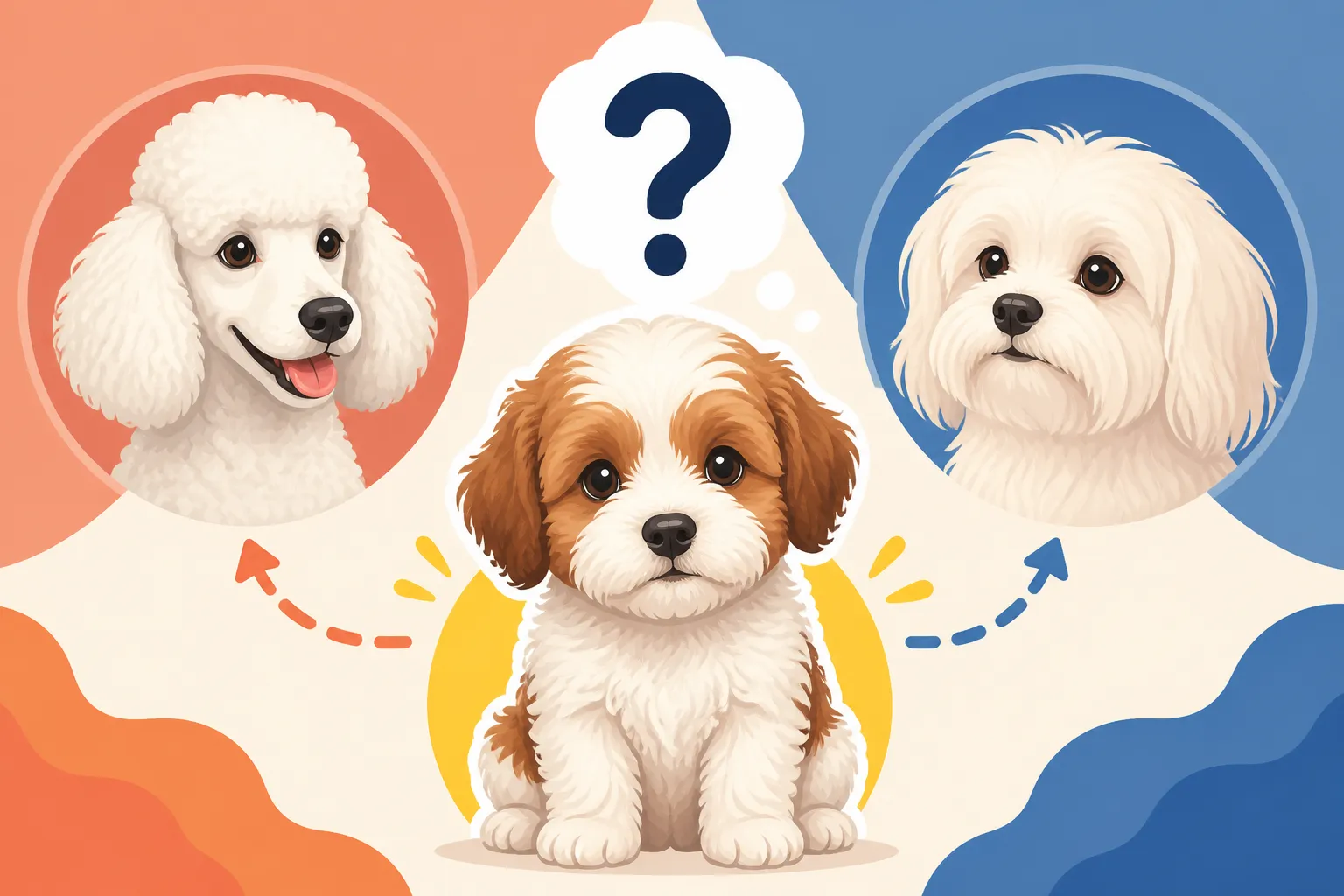
It's a common and totally understandable question to wonder about the beautiful, unique patterns you see on some Maltipoos. When you envision a Maltipoo, you might first think of a solid white or cream puffball, inheriting the classic Maltese look. But then you spot a "Parti" Maltipoo—a dog with striking patches of color on a white background—and it naturally sparks curiosity: where does that distinct pattern come from? This comprehensive guide will unravel the fascinating genetics behind the Parti coat, clearing up any confusion and highlighting the Poodle's definitive role in bringing this eye-catching pattern to the Maltipoo family.
Understanding Maltipoo Coat Genetics: It's More Than Just a Mix
When you bring together two distinct breeds like the Maltese and the Poodle, you're opening up a whole new world of genetic possibilities. It's not just a simple blend of two traits; it's a complex interplay of dominant and recessive genes that ultimately decide what your Maltipoo will look like, from coat texture to color and, yes, even patterns. Understanding the genetic contributions of each parent breed is the first step to truly appreciating the diverse beauty of Maltipoos.
The Maltese's Limited Color Palette
Let's start with the Maltese, one half of The Maltese and the Poodle Behind Every Maltipoo equation. If you've ever seen a purebred Maltese, you know they are almost universally white. In fact, for a Maltese to be recognized by breed standards, its coat must be pure white. There's very little room for variation here. Genetically speaking, this means the Maltese carries genes for solid white coats. They don't typically carry genes for other colors or, crucially, for coat patterns like "parti."
This genetic consistency in the Maltese simplifies one side of the Maltipoo's genetic makeup. When a Maltese contributes to a Maltipoo litter, it's essentially bringing a "solid white" genetic blueprint to the table. This is why many Maltipoos have a predominantly white base, often with light cream or apricot accents that can sometimes fade over time. It's important to realize that the Maltese heritage doesn't introduce much in the way of varied patterns or darker colors, which often surprises new owners expecting a uniform look.
The Poodle's Kaleidoscope of Colors and Patterns
Now, let's turn our attention to the Poodle, the other half of this designer breed pairing. Poodles are renowned for their incredible diversity in coat color and pattern. Seriously, it's like a rainbow of possibilities! You can find Poodles in solid colors like black, white, brown, apricot, red, and silver, but also in a fascinating array of patterns. This includes phantom, sable, brindle, and, most importantly for our discussion, parti. This extensive genetic palette is precisely Why a Maltipoo Comes in Colors a Maltese Never Does.
The term "parti" refers to a coat pattern that is at least 50% white, with distinct, irregular patches of another solid color. These patches can be any of the Poodle's many colors – black, brown, apricot, red, etc. It’s not just a random splash of color; it’s a genetically determined pattern. The Poodle carries the specific genes responsible for this striking look. This means that if you see a Maltipoo with those beautiful, clear patches of color on a crisp white background, you can almost certainly trace that pattern back to its Poodle heritage. The Poodle side is where all the exciting variations in color and pattern truly originate, giving Maltipoos a much broader spectrum of appearances than their Maltese ancestors alone would allow.
Decoding the Parti Gene in Maltipoos
The magic behind the Parti Maltipoo lies squarely in understanding a specific gene that's active in Poodles but absent in Maltese. It’s not just about a pretty coat; it’s about a fascinating genetic blueprint passed down through generations. Once you grasp how this gene works, the mystery of the Parti Maltipoo suddenly becomes crystal clear.
How the Parti Gene Works
The Parti gene is scientifically known as the "S locus" or spotting gene. Specifically, the "parti" pattern is expressed when a dog inherits two copies of a recessive allele, often denoted as sp/sp. What does this mean in plain English? It means that for a Maltipoo to display the Parti pattern, both of its parents must contribute at least one copy of this sp gene.
Think of it like this:
- S/S: The dog is solid colored (like a purebred Maltese, or a solid Poodle that doesn't carry parti).
- S/sp: The dog is solid colored, but carries the parti gene. It can pass this gene on to its offspring. This is often called a "parti carrier."
- sp/sp: The dog will be a parti-colored dog, displaying the white base with colored patches. This is The Parti Maltipoo you see.
Since purebred Maltese are essentially S/S (solid white), they don't carry the sp gene. Therefore, the sp gene must come from the Poodle parent. If a Poodle parent is a Parti (sp/sp), or if it's a solid Poodle that carries the parti gene (S/sp), then there's a possibility for Parti puppies in the litter, especially if bred with another dog carrying the sp gene. This explains why sometimes a Maltipoo will be parti even if neither parent visually appears parti themselves—one or both were likely carriers! This genetic inheritance is a key reason why predicting a Maltipoo's exact adult weight or coat type can be challenging, similar to the discussions around Whether a Maltipoo's Curl Is Visible in the Litter or Whether an F1 Maltipoo's Temperament Is Predictable.
The Visuals of a Parti Maltipoo
A Parti Maltipoo is a sight to behold, standing out with its distinctive appearance. Unlike a solid white or a fading apricot, a Parti Maltipoo has a base coat that is predominantly white, often with large, clearly defined patches of another color. These patches can vary widely in size and placement, making each Parti Maltipoo truly unique. You might see patches over the ears and eyes, across the back, or at the base of the tail.
The color of these patches can be anything that a Poodle comes in:
- Black Parti: Striking black patches on white.
- Apricot Parti: Warm, creamy apricot patches on white, often originating from a Poodle carrying the Where a Maltipoo's Apricot Comes From gene.
- Red Parti: Deep, rich red patches on white.
- Brown/Chocolate Parti: Lovely brown patches on white.
- Silver Parti: Grey or silver patches on white, which can often darken or lighten with age, a phenomenon sometimes seen in solid colored Maltipoos as well, like Whether a Maltipoo Puppy's Color Fades.
These patches are typically quite crisp and well-defined, not mottled or blended, which differentiates them from other patterns like merle (which is not found in purebred Poodles or Maltese and usually indicates another breed in the lineage). The amount of white can vary significantly; some Parti Maltipoos might be almost entirely white with just a few small patches, while others can be nearly half white and half colored. It's these clear, distinct color blocks that truly define the Parti pattern and make these Maltipoos so visually appealing.
Why the Poodle is the Primary Source of Parti Coloring
It can't be stressed enough: if your Maltipoo boasts those lovely parti markings, that trait unequivocally hails from the Poodle side of their family tree. The genetic contribution of the Maltese, while providing the beautiful white base, simply doesn't include the machinery for the parti pattern.
The Absence of Parti in Purebred Maltese
As we discussed, the Maltese breed standard dictates a solid white coat. This isn't just a preference; it's deeply ingrained in their genetics. Purebred Maltese dogs do not carry the gene for the parti pattern. Their genetic code is fixed on producing solid white coats. This means that if you have a Maltipoo with distinct colored patches on a white background, it's impossible for that pattern to have originated from the Maltese parent. The Maltese provides the 'canvas' (the white background), but not the 'paint' (the colored patches in a parti pattern).
This is a fundamental point that often surprises people who are new to designer breeds. They might assume that mixing two breeds means any trait could come from either side. However, in the world of canine genetics, certain genes are exclusive to certain breeds. The parti gene is one such example, firmly rooted in the Poodle lineage. So, any time you admire a beautiful parti-colored Maltipoo, you're essentially seeing a direct genetic nod to its Poodle ancestry. It’s a clear example of Why a Maltipoo Comes in Colors a Maltese Never Does.
Breeding Scenarios for Parti Maltipoos
Understanding the genetics helps demystify how a Parti Maltipoo comes to be. Let's look at a few straightforward scenarios:
-
Parti Poodle x Solid Maltese: If one parent is a Parti Poodle (meaning it's sp/sp and visually parti) and the other is a solid white Maltese (which is S/S), all of the puppies in that litter will inherit one S gene from the Maltese and one sp gene from the Poodle. This makes all the puppies S/sp. They will appear solid colored (likely white or a very light cream/apricot if the Poodle carries those genes too), but every single one of them will be a "parti carrier." This means they could produce Parti puppies in future generations if bred with another parti carrier or a Parti dog. This scenario highlights how breeders plan for specific coat colors, something that also impacts What a Parti Maltipoo Sells For.
-
Parti Poodle x Maltipoo (Parti Carrier): This is where you significantly increase the chances of getting Parti Maltipoo puppies. If a Parti Poodle (sp/sp) is bred with a Maltipoo that is a parti carrier (S/sp), then some of the puppies will be sp/sp (visually parti), and some will be S/sp (solid colored but carriers). The probabilities are much higher for visible parti coats in this pairing.
-
Two Maltipoos (Both Parti Carriers): If two Maltipoos, both of whom are S/sp (solid colored but parti carriers), are bred together, statistically, about 25% of their puppies will be sp/sp (Parti), 50% will be S/sp (solid carriers), and 25% will be S/S (solid, non-carriers). This is a common way to produce Parti Maltipoos from parents that don't display the pattern themselves.
These breeding scenarios make it abundantly clear that the Parti pattern is a direct inheritance from the Poodle side. The Maltese's contribution is largely restricted to providing that lovely, often pristine, white backdrop that makes the colored patches pop so beautifully. This distinction is crucial for both breeders aiming for specific traits and owners who want to understand the unique genetic blueprint of their beloved companion. It also speaks to the larger question of Whether a Maltipoo Breeder Can Promise a Size or color, as genetics are not always a simple 1+1 equation.
Implications for Breeders and Owners
The understanding of the Parti gene, and its Poodle origins, holds significant implications for both Maltipoo breeders and prospective owners. For breeders, it means making informed decisions to achieve desired coat patterns. For owners, it offers a deeper appreciation for their dog's unique appearance and helps set realistic expectations.
Predicting Parti Patterns
For responsible Maltipoo breeders, understanding the genetics of the Parti pattern is absolutely essential. They can utilize genetic testing to determine if their Poodle parent or any Maltipoo breeding stock carries the sp gene, even if the dog itself appears solid. This knowledge allows them to strategically plan pairings to produce Parti puppies, if that is their goal. Without this understanding, producing Parti coats would be left to chance, which isn't how reputable breeding operations work. They track lineages and genetic predispositions, just as they would for health clearances like those discussed in Whether a Maltipoo Breeder Should Show Patella Grades.
For future Maltipoo owners, this genetic insight can be incredibly helpful. If you have your heart set on a Parti Maltipoo, you'll know to seek out breeders who specifically breed for this trait, likely utilizing Poodle lines known for their Parti patterns. You can ask breeders about the genetic history of their breeding dogs, particularly the Poodle parent, to understand the likelihood of a Parti puppy being born. This kind of transparency allows you to make an educated choice when selecting your new family member. Remember that while genetics give us a roadmap, there can still be variations in intensity and placement of color, even within a single litter, so exact predictions can be tricky.
The Appeal and Rarity of Parti Maltipoos
Parti Maltipoos often command attention, and for good reason! Their patterned coats are undeniably striking and can be quite unique. While many Maltipoos are Whether a Maltipoo Is Usually White or solid cream, the Parti pattern offers a delightful contrast. The distinct patches of color against the white background create a playful and eye-catching aesthetic that many people find incredibly appealing. They truly stand out in a crowd, and for those who appreciate a dog with a bit more visual flair, a Parti Maltipoo is often a top choice.
While the Parti pattern is common in purebred Poodles, its appearance in Maltipoos can sometimes be considered a bit rarer, depending on the breeding lines. Not all Poodle parents used in Maltipoo breeding are Parti themselves or carry the parti gene, which means litters with visible Parti puppies aren't as ubiquitous as solid-colored ones. This can sometimes influence What a Parti Maltipoo Sells For, with prices potentially reflecting the perceived rarity and distinctiveness of the pattern. However, the true value of any Maltipoo, whether solid or parti, lies in their health, temperament, and the joy they bring to your home. Just like when you're stocking up on treats from Chewy or a new bed from Amazon, sometimes the unique options just catch your eye! And for premium food choices, Ollie offers options that cater to all Maltipoo varieties.
Here's a quick comparison of the color contributions from each parent breed to the Maltipoo:
| Trait / Breed | Maltese Contribution | Poodle Contribution |
|---|---|---|
| Base Color | Primarily solid white | Wide range of solid colors (white, black, apricot, red, brown, silver) |
| Patterns | None (always solid) | Parti, Phantom, Sable, Brindle (and others) |
| Parti Gene | Absent (S/S) | Present (S/sp or sp/sp) |
| Dominant Look | Often contributes to a white/light base | Contributes to varied colors and all patterns like parti |
| Genetic Role | Provides foundational white, limits pattern diversity | Introduces vast color and pattern diversity, including parti |
In essence, if you're looking at a Parti Maltipoo, you're looking at a dog whose Poodle genetics are shining through in a truly spectacular way. It’s a testament to the diverse and wonderful traits that can emerge when these two beloved breeds come together, creating companions that are as beautiful as they are charming.
Disclaimer
This article is for general informational purposes only and does not constitute professional advice. Laws, prices and regulations vary by location and change over time. Consult a qualified professional for guidance on your specific situation.