Whether a Maltipoo Sulks After Being Told Off
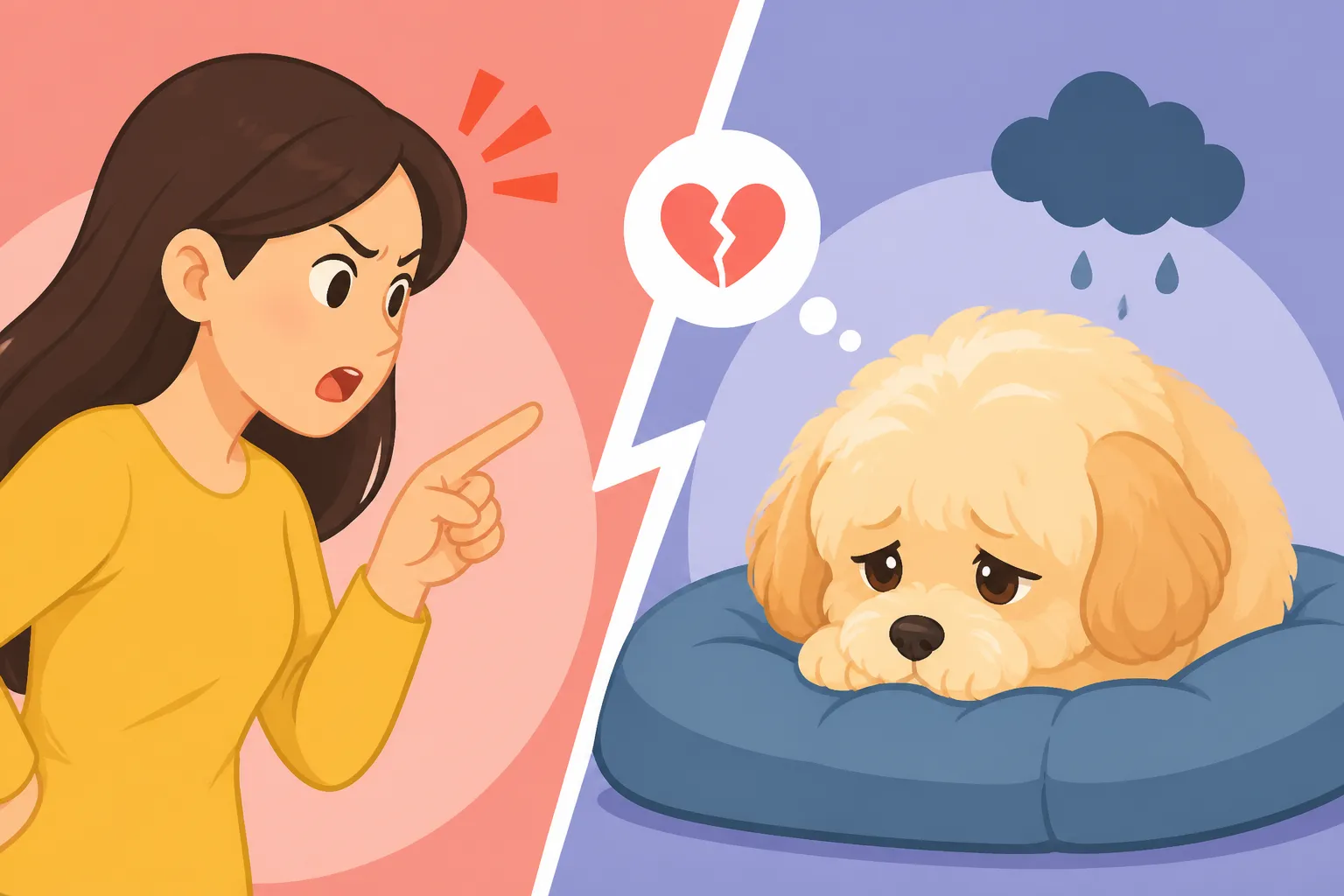
It's a common, almost instinctual reaction to humanize our beloved Maltipoos, especially when they act in ways that mirror our own emotional responses. You've just told your sweet little companion "no," perhaps a bit sternly, and now they're retreating to their bed, turning their back, or giving you those big, sad eyes. It's easy to wonder, "Is my Maltipoo actually sulking after I told them off?" This guide dives deep into canine behavior, helping you understand what's really going on in your Maltipoo's mind when they seem to be giving you the cold shoulder, and how to communicate more effectively for a happier, healthier relationship.
What "Sulking" Really Looks Like in a Maltipoo (and Why It's Misleading)
When we see our Maltipoo seemingly withdrawing or acting "off" after a correction, our human brains often jump to the conclusion that they're feeling a complex emotion like sulking. We project our own feelings onto them, imagining they're intentionally trying to make us feel guilty or are nursing a grudge. However, canine emotional responses are typically far more direct and focused on immediate consequences and their relationship with you. They don't have the capacity for abstract resentment or holding a "sulking" posture out of defiance.
Interpreting Common "Sulking" Behaviors
What you're observing as sulking is usually a series of behaviors rooted in appeasement, stress, or a learned response to avoid conflict. For instance, if your Maltipoo lowers their head, avoids eye contact, or walks away slowly, these are classic signs of a dog trying to diffuse a tense situation. They're not thinking, "I'll make mom feel bad for telling me off." Instead, they're communicating, "I understand you're unhappy, and I'm not a threat. Please calm down." They've learned that these actions often reduce your frustration or anger, which is a powerful motivator for a dog who thrives on harmony with their human.
Another scenario might be a Maltipoo who, after being corrected for jumping on the sofa, then sits politely on the floor but seems less enthusiastic than usual. This isn't them being passive-aggressive. It's more likely they're processing the correction and might be a little confused, or perhaps they've associated your presence with the negative experience and are simply being more cautious. Their enthusiasm might dip temporarily because they're trying to figure out what behavior is acceptable and what isn't, and they're sensitive enough to your tone to be affected. You might be interested in reading Whether a Maltipoo Is Too Soft for Correction to understand this sensitivity better.
The Lack of Complex Emotions in Dogs
Dogs operate very much in the present moment. While they certainly experience emotions like joy, fear, anxiety, and even some forms of grief, the intricate, layered emotions like guilt or spite or "sulking" are generally beyond their cognitive abilities. When a dog "looks guilty," for example, they're often reacting to your body language and tone of voice, anticipating your displeasure, rather than genuinely feeling remorse for an action they understand as "wrong" in the human sense. They’re masters at reading us, and they adapt their behavior to de-escalate tension or seek comfort.
Think of it this way: your Maltipoo knows that when you use a certain tone or posture, it usually means something unpleasant is coming. Their subsequent actions are a response to your current state, not a prolonged emotional protest about what just happened. They're seeking to restore equilibrium in their world, which revolves so much around their relationship with you. Their immediate goal is to make the "scary" or "unhappy" human feel better, or to remove themselves from a situation they perceive as negative.
The Maltipoo's Emotional Landscape: Understanding Canine Reactions
Understanding how a Maltipoo processes information and emotional signals is key to interpreting their post-correction behavior. These little dogs, a blend of Maltese and Poodle, often inherit a high degree of sensitivity and intelligence, which means they're acutely aware of changes in your voice and demeanor. Their "sulking" is rarely defiance, but rather a manifestation of their innate desire to please and their keen sense of self-preservation within their social structure – your family.
Sensitivity to Tone and Body Language
Maltipoos are famously sensitive creatures. The Poodle parent often contributes a sharp intellect and a desire to work, while the Maltese side can bring a gentle, affectionate nature. This combination means your Maltipoo is likely to pick up on the subtlest shifts in your voice, facial expressions, and body language. When you "tell them off," even if you think you're being mild, they can perceive a significant change in your energy. They don't just hear the words; they absorb the disapproval. This can be particularly true if you tend to raise your voice, as explored in Raising Your Voice Shuts a Maltipoo Down.
Because they are so attuned to you, a harsh word or a frustrated sigh can have a profound impact. Their response isn't to be stubborn, but to try and understand how to bring harmony back. A lowered head, a tucked tail, or a slow retreat are all forms of canine appeasement gestures, designed to show submission and reduce perceived threat. They are saying, "I acknowledge your displeasure and am no challenge to you." This isn't sulking; it's smart dog communication.
Short-Term Memory and Association
Dogs have associative memory, meaning they link events together. If they get corrected when they're near the garbage, they learn to associate the garbage with your displeasure. However, their short-term memory for the reason behind a past event isn't as developed as ours. So, if you correct them for something that happened five minutes ago, they won't necessarily connect your current anger to that past action. They'll just perceive you as angry now. This is why immediate, consistent correction is vital for effective training.
When a Maltipoo appears to "sulk" after a correction, it's often a direct, immediate reaction to the negative interaction itself. They've associated your scolding with an uncomfortable feeling, and their withdrawal is an attempt to alleviate that discomfort or to remove themselves from the source of it. They might also associate the environment where the correction happened with the negative feeling, which is why they might retreat to a different room or their crate. This isn't them being vengeful; it's them seeking a safe space.
Individual Differences in Temperament
Just like people, every Maltipoo is an individual. While we can talk about general breed tendencies, the specific mix of Maltese and Poodle traits, and even early life experiences, play a huge role in how sensitive and resilient a dog is. Some Maltipoos might brush off a stern "no" relatively quickly, while others might take it deeply to heart and seem visibly shaken for a longer period.
Consider the role of genetics. What the Maltese Puts Into a Maltipoo's Character and What the Poodle Puts Into a Maltipoo's Character highlight how both parent breeds contribute to the Maltipoo's overall personality. Some might inherit more of the Poodle's eager-to-please nature, making them highly responsive to even subtle cues, while others might lean more towards the Maltese's sometimes independent streak, which might translate to a seemingly more 'stubborn' reaction, though it's still not true sulking. Understanding your individual dog's personality is crucial.
| Perceived "Sulking" Behavior | Actual Canine Interpretation |
|---|---|
| Retreating to another room | Seeking a safe space, avoiding conflict |
| Avoiding eye contact | Appeasement gesture, showing submission |
| Lowered head or body posture | Sign of submission, reducing perceived threat |
| Less enthusiastic playtime | Processing correction, momentary confusion or caution |
| Turning back to you | Disengagement, avoiding direct confrontation |
| "Sad" or "guilty" expression | Reacting to your body language, anticipating displeasure |
Effective Communication and Discipline for a Sensitive Maltipoo
Since our Maltipoos don't "sulk" in the human sense, the goal of any correction or discipline should be clear communication, not emotional manipulation. For a sensitive breed like the Maltipoo, harsh or inconsistent discipline can be counterproductive, leading to anxiety, fear, and a breakdown in trust, rather than an understanding of what you want them to do. The key is to teach, not to punish.
The Power of Positive Reinforcement
For Maltipoos, positive reinforcement is overwhelmingly the most effective training method. Instead of focusing on what they're doing wrong, try to catch them doing something right and reward them generously. This builds confidence and helps them understand what behaviors earn praise and treats. If your Maltipoo jumps on the sofa, instead of just saying "no" sternly, gently guide them off, then ask them to sit on the floor and immediately reward that sit. They quickly learn that sitting on the floor gets them what they want (your attention and a treat), while jumping up does not.
Positive reinforcement also strengthens your bond, as they associate you with good things, rather than just corrections. This creates a much more willing participant in training sessions. You might find that short, engaging sessions work best for your Maltipoo, as they can sometimes wander off if not sufficiently motivated. Learning How Long a Maltipoo Works Before It Wanders Off can help you structure these sessions. Many Maltipoo owners find success with structured online training programs like those offered by BAXTER & Bella, which emphasize positive, relationship-based methods that teach both you and your dog effective communication.
Clear, Consistent, and Timely Corrections
When a correction is necessary, it needs to be clear, consistent, and happen immediately. A gentle "no" or a sharp "ah-ah!" delivered at the exact moment of the undesirable behavior is far more effective than a delayed lecture. Dogs live in the present, so if the correction isn't linked to the behavior in real-time, it loses its meaning. For example, if your Maltipoo nips your hand during play, a firm "no" and immediately withdrawing your hand teaches them that nipping makes the fun stop.
Consistency is equally important. If sometimes jumping on the sofa is allowed and sometimes it's not, your Maltipoo will be confused. Everyone in the household needs to be on the same page regarding rules and corrections. This clarity reduces anxiety for your dog and speeds up learning. Remember that while food rewards are often highly motivating, praise and attention can be just as powerful for a social dog like the Maltipoo. Understanding Whether a Maltipoo Works for Food or Praise can fine-tune your approach.
Avoiding Accidental Punishment
Sometimes, owners inadvertently punish their dogs by ignoring desirable behavior while only paying attention to undesirable ones. For example, if your Maltipoo is quietly playing with a toy but you're busy, then jumps up on you for attention and gets a "no!", they still got attention, albeit negative. They might learn that any attention is better than none.
Instead, when your Maltipoo is doing something you like – like chewing their toy calmly or resting in their bed – go over and offer calm praise or a gentle pet. This reinforces the good behavior. Make sure your corrections are not overly emotional. A calm, firm voice is usually more effective than an angry shout, which can just scare a sensitive Maltipoo without teaching them anything. In fact, for very sensitive dogs, even a strong verbal reprimand can be too much and create unnecessary fear or shutdown. Whether a Maltipoo Is Too Soft for Correction emphasizes this point about their gentle nature.
Preventing Behaviors That Lead to "Telling Off"
The best way to avoid your Maltipoo seeming to "sulk" is to minimize the need for harsh corrections in the first place. This involves proactive training, managing their environment, and understanding their needs to prevent undesirable behaviors from even starting. By setting your Maltipoo up for success, you build a stronger bond based on mutual understanding and positive interactions.
Environmental Management and Puppy-Proofing
Many "bad behaviors" stem from a lack of appropriate outlets or access to things they shouldn't have. Puppy-proofing your home is essential, especially for a curious and often mouthy Maltipoo puppy. Keep valuable items, toxic plants, electrical cords, and tempting chewables out of reach. If your Maltipoo can't get to it, they can't chew it! This simple step eliminates a huge number of potential "telling off" situations.
Consider using playpens or crates for supervised downtime, especially when you can't give your full attention. This prevents them from practicing undesirable behaviors unsupervised, like chewing furniture or having accidents. You can find many secure, comfortable playpens and crates for small dogs on platforms like Amazon, which can be invaluable tools for management. These tools allow your Maltipoo to be safe and secure while reducing your stress and the need for constant verbal corrections.
Providing Appropriate Outlets and Enrichment
A bored Maltipoo is a mischievous Maltipoo. These intelligent dogs, thanks to their Poodle heritage, need mental and physical stimulation. If they're not getting enough, they might invent their own "games" that you consider naughty, like barking excessively, digging, or chewing inappropriate items. Provide plenty of appropriate chew toys, puzzle toys, and opportunities for play. Interactive toys that dispense treats can keep their minds engaged for a good while.
Regular, appropriate exercise is also crucial. While Maltipoos are small, they still need daily walks and playtime. This helps burn off excess energy and keeps them physically healthy. Mental stimulation can be just as tiring as physical exercise, so think about incorporating short training sessions where you teach them new tricks. Whether Short Sessions Suit a Maltipoo highlights how effective brief, focused training can be. A well-exercised and mentally stimulated Maltipoo is a happy Maltipoo, less likely to engage in behaviors that earn them a telling off.
Teaching "Alternative" Behaviors
Instead of focusing solely on stopping a behavior, teach your Maltipoo what you want them to do instead. For example, if your Maltipoo tends to jump on visitors, teach them to "sit" when someone comes to the door. Practice this frequently with calm rewards. When a visitor arrives, ask for the "sit" and have the visitor reward them for staying seated.
If they bark excessively, teach them a "quiet" cue. After they bark a few times, say "quiet" and then reward them when they stop. Over time, they'll associate "quiet" with a reward and learn to offer that behavior. This approach empowers your Maltipoo by giving them clear instructions and positive reinforcement for making good choices, rather than leaving them guessing and fearing correction. For deeper dives into these kinds of training strategies, resources like BAXTER & Bella often provide step-by-step guidance on teaching alternative behaviors and building a solid foundation of obedience.
Remember, the goal is always to build a positive, trusting relationship with your Maltipoo. By understanding their true emotional responses and using effective, compassionate training methods, you can avoid those moments where you wonder if they're "sulking" and instead foster a confident, well-behaved companion.
Disclaimer
This article is for general informational purposes only and does not constitute professional advice. Laws, prices and regulations vary by location and change over time. Consult a qualified professional for guidance on your specific situation.