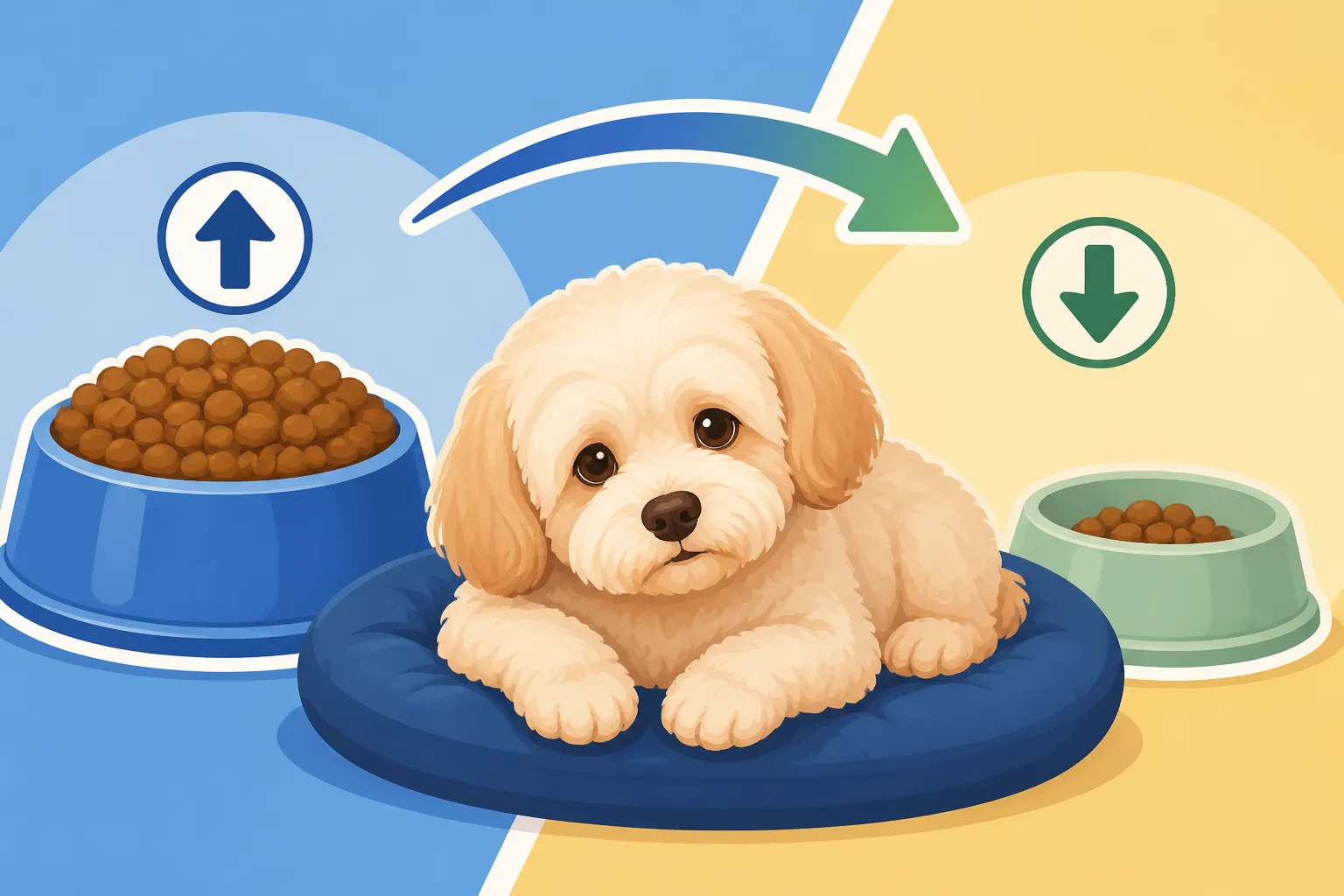
Cutting an Old Maltipoo’s Portions as It Slows
It’s a bittersweet moment when you notice your beloved Maltipoo slowing down. One day they’re zooming around the house, full of puppy energy, and the next you find them napping more, perhaps a little less enthusiastic about their walk. This natural progression into their golden years brings a host of new considerations, and one of the most critical, yet often overlooked, is adjusting their diet. This guide is here to help you understand why an older Maltipoo needs changes to their food portions and how to make those adjustments thoughtfully, ensuring they stay healthy and happy as they age gracefully.
The Subtle Shift: Why Your Senior Maltipoo Needs Less Food
As Maltipoo parents, we want to give our furry family members the very best, and often that means making sure their bowl is always full. But when they enter their senior years, that well-intentioned generosity can actually become detrimental. It’s not about deprivation; it’s about adaptation. Their bodies simply aren't the same as they were in their bouncy youth.
Recognizing the Signs of Slowing Down
It's not always a sudden change. Often, the signs that your Maltipoo is transitioning into their senior years and becoming less active are subtle. You might notice they don't jump on the sofa quite as readily, or perhaps their once-vigorous tail wags are a little less enthusiastic. Those long, rambling walks that used to be a highlight of their day might now be shorter, punctuated by more stops to sniff or simply rest. They might choose a cozy spot for a nap over engaging in a game of fetch, or perhaps they're just not as quick to greet you at the door. Caring for a Maltipoo Past Ten delves deeper into what to expect in their later years.
These small shifts in behavior and energy levels are critical indicators. They tell us that their body isn't burning calories at the same rate it once did. It’s easy to miss these signs, especially when they’re still full of love and affection. But overlooking them can lead to a silent weight gain that can exacerbate other age-related health issues, making their golden years less comfortable than they could be. Pay close attention to their daily routines, even the smallest details, to catch these subtle clues.
For some Maltipoos, the change might be even more pronounced due to conditions like Slipping Kneecaps in a Maltipoo, which can make movement painful and naturally reduce activity. If your Maltipoo is experiencing any mobility issues, their calorie needs will be even lower, and adjustments will be even more critical. Consulting with your veterinarian can help you discern if underlying health issues are contributing to their decreased activity, which in turn informs their dietary needs.
Metabolism and Age: The Science Behind the Change
At its core, the reason older Maltipoos need less food boils down to their changing metabolism. Just like us, as dogs age, their metabolic rate slows down. This means their body doesn't burn calories as efficiently or as quickly as it did when they were younger and full of boundless energy. Think of it like a car that once needed premium fuel for high-speed driving, but now mostly idles in the garage; it just doesn’t need as much gas to keep running.
Beyond a slower metabolism, older dogs also tend to lose muscle mass and replace it with fat. Muscle burns more calories at rest than fat does, so even if your senior Maltipoo looks roughly the same size, the composition of their body has likely shifted, further reducing their daily energy requirements. This is a natural physiological process, not a sign that you’ve done anything wrong. It's simply the reality of aging that we, as responsible pet parents, need to acknowledge and respond to.
Maltipoos, being a smaller breed, are particularly susceptible to these changes because even a small amount of excess weight can have a significant impact on their tiny frames. What might be a negligible weight gain for a larger dog can be a considerable burden for a six-pound Maltipoo. Understanding this metabolic shift is the first step toward making informed decisions about their dietary future and preventing issues before they even arise. Whether a Maltipoo Ages Faster Than a Bigger Dog can provide more context on the unique aging process of small breeds.
The Risk of Overfeeding: Beyond Just Weight Gain
When we talk about overfeeding a senior Maltipoo, it’s not just about them looking a little pudgy. The consequences of carrying extra weight can be far more serious and deeply impact their quality of life during their senior years. Excess weight puts immense strain on their joints, which may already be experiencing age-related wear and tear or conditions like arthritis. This discomfort can further reduce their desire to move, creating a vicious cycle of inactivity and weight gain.
Beyond joint issues, overfeeding can contribute to a host of other health problems. It can exacerbate conditions like heart disease, make breathing more difficult, and increase the risk of diabetes, a serious condition that can drastically reduce their lifespan and quality of life. Furthermore, an overweight senior Maltipoo may struggle more with temperature regulation, finding it harder to cool down in warm weather or move comfortably.
The goal isn't just to keep them thin, but to keep them at a healthy, lean weight that supports their aging body and minimizes the risk of preventable illnesses. It’s an act of love to adjust their food, ensuring their later years are as comfortable and healthy as possible, free from the added burdens that unnecessary weight can bring.
How to Accurately Assess and Adjust Your Maltipoo's Portions
Once you recognize the need for dietary adjustments, the next step is to figure out how much to reduce their food. This isn't a one-size-fits-all approach; it requires careful observation and precise measurements. Guesswork simply won't cut it when it comes to the delicate balance of a senior Maltipoo's nutrition.
The Importance of a Regular Weight Check
One of the most powerful tools in managing your senior Maltipoo's diet is a simple, regular weight check. Just like you might weigh yourself to monitor your own health, doing the same for your Maltipoo provides invaluable data. Aim for a weekly or bi-weekly weigh-in. For small breeds like Maltipoos, a kitchen scale works perfectly. Simply weigh yourself, then pick up your Maltipoo and weigh yourself again. The difference is their weight! Keep a little logbook to track their progress.
What constitutes a healthy weight for your Maltipoo? This can vary based on whether they are a 'Teacup' (typically 2-5 pounds), 'Toy' (5-10 pounds), or 'Miniature' (10-20 pounds) size, but generally, you should be able to easily feel their ribs without seeing them protruding, and they should have a discernible waistline when viewed from above. Their tummy should tuck up slightly when viewed from the side. If you notice their weight creeping up, even by a few ounces, it's a clear signal that dietary adjustments are needed. Your vet can give you an ideal weight target for your individual dog. For more on managing weight, refer to Getting a Pound Off an Overweight Maltipoo.
Regular weigh-ins aren't just about catching weight gain; they also help you ensure you’re not over-reducing their food, especially if your Maltipoo has other health conditions. It’s a proactive measure that empowers you to make small, informed adjustments rather than reacting to a larger, more problematic weight issue down the line. It builds confidence in your senior care routine.
Calculating Calorie Needs for a Less Active Senior
Estimating your senior Maltipoo’s calorie needs can feel a bit daunting, but it doesn’t have to be. The general rule of thumb is that senior dogs need about 20% fewer calories than their adult counterparts, assuming their activity levels have decreased significantly. However, this is just a starting point. For a precise calculation, your veterinarian is your absolute best resource. They can assess your Maltipoo’s individual health, current weight, ideal weight, and activity level to provide a specific calorie target.
Many dog food bags provide feeding guidelines based on weight, but these are often for active adult dogs and can be wildly inaccurate for a sedentary senior. You'll likely need to feed significantly less than the recommendation on the bag. Once you have a calorie target from your vet, you can then calculate how much of your chosen food your Maltipoo needs. Remember, a common mistake is simply reducing the volume of their existing food without considering its caloric density. How Many Calories a Six Pound Maltipoo Needs can give you a baseline understanding of general caloric needs.
It’s always better to start with a slight reduction and monitor their weight than to make drastic cuts. Small adjustments over time allow their body to adapt and help you find that sweet spot where they maintain a healthy weight without feeling hungry. This process requires patience and consistency, but it’s crucial for their long-term health.
The Pitfalls of "Eyeballing" Food and Treats
We’ve all been there: reaching for the bag, pouring what looks like "about a cup" into the bowl, or liberally tossing in a handful of treats without a second thought. For an aging Maltipoo whose metabolism is already slowing, "eyeballing" portions and being casual with treats can quickly lead to weight gain, undoing all your good intentions. The problem with eyeballing is that it's highly inconsistent. What looks like a cup one day might be significantly more or less the next. For a tiny Maltipoo, even a slight overestimation in kibble volume can mean dozens of extra calories daily.
Treats are another major culprit. A small treat to us can be a significant caloric intake for a dog weighing just a few pounds. If you’re giving several treats throughout the day for good behavior, training, or just because they’re cute, those calories add up alarmingly fast. Many treats are designed for larger dogs, and even breaking them into tiny pieces might not be enough to reduce their caloric impact for a small senior Maltipoo.
To avoid these pitfalls, precision is key. This means no more guessing. Every single piece of kibble and every single treat needs to be accounted for. It's a small shift in habit that makes a monumental difference for your senior Maltipoo's health and longevity. It may feel a bit obsessive at first, but it quickly becomes second nature and gives you peace of mind that you're truly providing balanced nutrition.
Practical Strategies for Portion Control and Healthy Eating
Making the switch to precise portion control might sound like a chore, but with the right tools and habits, it becomes a simple and effective part of your daily routine. These strategies focus on accuracy and quality, ensuring your Maltipoo gets exactly what they need.
Measuring Meals by Weight, Not Volume
This is perhaps the single most impactful change you can make: measure your Maltipoo’s food by weight, not by volume. A standard measuring cup is notoriously inaccurate for kibble. The density of kibble varies between brands and even within the same bag, and how tightly you pack a cup can dramatically alter the actual amount of food. For a small dog like a Maltipoo, this inconsistency can lead to significant overfeeding. A kitchen scale, readily available from retailers like Amazon or Chewy, is your best friend here.
Most quality dog food brands provide feeding guidelines in grams or ounces, or you can find the caloric density (kcal/cup) on the bag and do a quick conversion. Once you know your Maltipoo's daily calorie target and the caloric density of their food, you can weigh out the exact amount needed for each meal. This ensures consistency and accuracy every single time. Feeding a Six Pound Maltipoo by the Ounce, Not the Scoop emphasizes this point for optimal feeding.
Imagine feeding your Maltipoo five pounds of food over a month. If you're off by just 10% each day due to inaccurate measuring, that's an extra half-pound of food over the month – a massive difference for a tiny dog. Weighing eliminates this margin of error and gives you precise control over their caloric intake.
Here’s a quick comparison of measuring methods:
| Method | Accuracy | Consistency | Effort | Common Problems for Maltipoos |
|---|---|---|---|---|
| Eyeballing | Very Low | Very Low | Low | Frequent overfeeding, unknown calorie intake |
| Measuring Cup | Low to Medium | Low to Medium | Medium | Kibble density variation, packing differences |
| Kitchen Scale (Weight) | High | High | Medium | Initial setup, precise measurement required, but worth it |
Choosing the Right Food for an Older Maltipoo
Beyond adjusting quantities, the type of food your senior Maltipoo eats can also make a big difference. Many pet food companies offer formulas specifically designed for senior dogs. These foods often have a slightly lower calorie count to accommodate reduced activity levels, and they're usually fortified with ingredients that support aging bodies. Look for added joint support supplements like glucosamine and chondroitin, which can help maintain joint health, especially crucial for breeds prone to Slipping Kneecaps in a Maltipoo.
Senior dog foods may also contain increased fiber to aid digestion, and sometimes higher quality proteins to help maintain muscle mass without adding excess fat. When switching your Maltipoo to a new food, always do it gradually over 7-10 days to avoid upsetting their stomach. Mix a small amount of the new food with their old food, slowly increasing the proportion of the new food each day until they've fully transitioned. This is especially important for Maltipoos, which can sometimes be Whether a Maltipoo Is a Fussy Eater.
You can explore options on sites like Chewy or Amazon, which offer a wide range of senior-specific diets from various reputable brands. Some owners also find success with fresh food options, like those from Ollie, which can be highly digestible and palatable for older dogs, but always ensure they meet the specific nutritional needs and calorie targets for a senior. Your vet can provide recommendations tailored to your Maltipoo's health profile.
Smart Snacking: Keeping Treats Part of a Healthy Diet
No one wants to stop giving their Maltipoo treats; it’s a wonderful way to show affection and reinforce good behavior. The key is smart snacking. First, choose treats wisely. Look for low-calorie, healthy options. Many brands offer treats specifically designed for small dogs or those on a diet. Plain cooked chicken breast (shredded), green beans, or small pieces of carrot can make excellent, low-calorie alternatives to traditional dog biscuits.
When you do opt for manufactured treats, break them into tiny pieces. A single treat might be meant for a 50-pound dog, but for a 7-pound Maltipoo, that's like eating a whole candy bar! Smaller pieces mean you can give them the feeling of getting multiple treats without the caloric overload. Factor all treats into their daily calorie allowance. If they get an extra treat, a tiny bit of kibble needs to come out of their next meal.
Avoid "human food" treats that are high in fat, sugar, or salt, as these are not only calorically dense but can also lead to digestive upset or more serious health issues. Be mindful of how many people in the household are giving treats; everyone needs to be on the same page about the daily limit. Smart snacking allows your Maltipoo to still enjoy those special moments while keeping their diet balanced and healthy.
Maintaining Health and Happiness Beyond the Bowl
While diet is a cornerstone of senior Maltipoo care, it's just one piece of the puzzle. A holistic approach that includes appropriate exercise, consistent veterinary care, and mental stimulation will ensure your aging companion enjoys their golden years to the fullest.
Gentle Exercise Tailored for Seniors
Just because your Maltipoo is slowing down and eating less doesn't mean they should become a couch potato. Exercise remains vital for maintaining muscle tone, joint flexibility, and overall mental well-being, even for seniors. The key is gentle and tailored. Instead of long, strenuous walks, consider shorter, more frequent strolls around the block. A leisurely walk in the park where they can sniff and explore at their own pace can be incredibly enriching without overexertion. The Walk a Six Pound Maltipoo Actually Needs addresses this balance.
Indoor play can also be adjusted. Instead of high-impact games of fetch, try rolling a soft toy for them to chase a short distance. Gentle stretching exercises or short, supervised swims (if they enjoy it and it’s safe) can also be beneficial for joint health without putting undue strain on their bodies. The goal is to keep them moving, keep their joints lubricated, and prevent muscle atrophy, but always respecting their current physical limitations.
Always pay attention to their cues. If they seem tired, it’s time to stop. On colder days, a warm sweater might encourage them to get outside for a short walk. On warmer days, avoid the hottest parts of the day to prevent overheating. Consistency is more important than intensity. Even a few minutes of gentle movement each day can make a big difference in their comfort and health.
Regular Vet Check-ups: Your Best Partner in Senior Care
As your Maltipoo enters their senior years, regular veterinary check-ups become even more crucial. These visits are not just for vaccinations; they are an opportunity for a comprehensive assessment of their overall health. Your vet can perform blood work to check organ function, examine their joints, listen to their heart and lungs, and give you professional guidance on their diet and exercise regimen. What a Maltipoo's Yearly Vet Bill Comes To highlights the importance of budgeting for these essential health checks.
Discuss any changes you've noticed – whether it's a decrease in appetite, increased thirst, new lumps or bumps, or changes in their bathroom habits. Many age-related conditions, when caught early, can be managed effectively, improving their quality of life. For instance, dental health is a major concern for Maltipoos as they age, and regular check-ups can help identify issues before they become severe. Your vet can recommend professional cleanings or discuss at-home dental care strategies.
Think of your veterinarian as your trusted partner in navigating your Maltipoo’s senior years. They can offer invaluable advice on everything from joint supplements to managing chronic conditions, ensuring your furry friend receives the best possible care during this precious time.
Mental Stimulation for an Aging Mind
Physical activity might naturally decrease with age, but your Maltipoo's mind still needs to stay active and engaged. Mental stimulation is just as important as physical exercise for their overall happiness and cognitive health. Puzzle toys, for example, can be a fantastic way to keep their brains working as they figure out how to get a treat. These can be found at pet stores and online retailers like Chewy.
Continue with short, gentle training sessions. Reviewing commands they already know, or teaching them new, simple tricks, can keep their minds sharp and strengthen your bond. Even though their memory might not be as quick as it once was, the process of learning and problem-solving is beneficial. Simple scent games, where you hide a treat and let them use their nose to find it, can also be very enriching.
Consistent routines provide a sense of security and predictability for older dogs, which can reduce anxiety. Gentle interaction, plenty of cuddles, and quiet time together are also vital for their emotional well-being. Even if your Maltipoo is spending more time napping, make sure they still feel like an integral and cherished part of the family. Keeping their mind active can even help with issues like An Old Maltipoo That Will Not Settle at Night by providing sufficient engagement during their waking hours.
Disclaimer
This article is for general informational purposes only and does not constitute professional advice. Laws, prices and regulations vary by location and change over time. Consult a qualified professional for guidance on your specific situation.