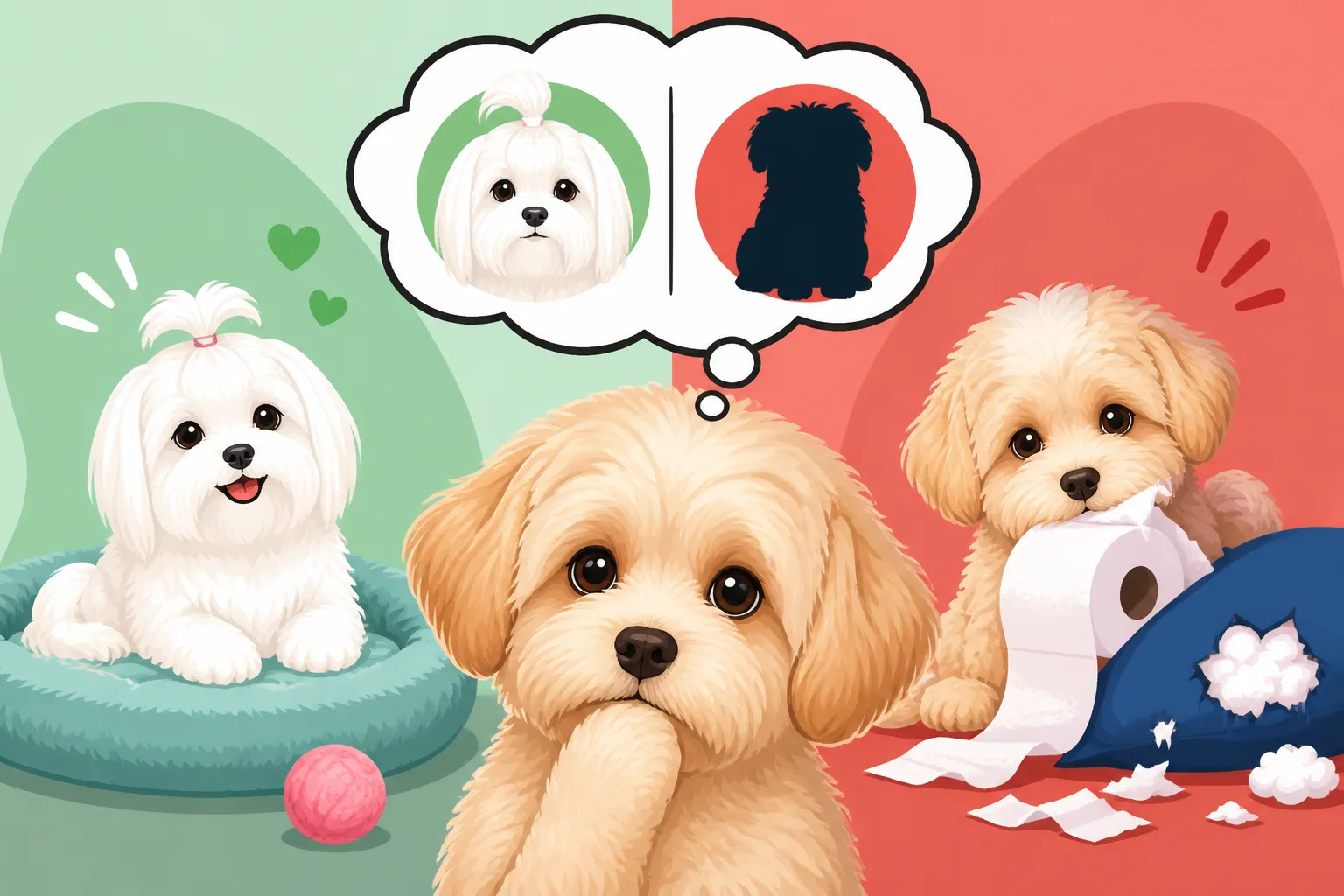
Whether a Maltipoo Inherits the Maltese’s Worst Habit
It’s a question that keeps many prospective Maltipoo owners up at night: will your adorable, fluffy new family member inherit the notorious "worst habits" often attributed to the Maltese side of their lineage? It’s a completely valid concern, as anecdotes about small dog syndrome, house-training woes, and persistent barking from Maltese dogs are widespread. This guide will delve into what these "habits" actually are, how the Poodle influence can balance them out, and most importantly, what you can do through proactive training and consistent care to ensure your Maltipoo develops into a well-adjusted, delightful companion.
Unpacking the "Worst Habit" – What is it, Really?
When people talk about the "worst habit" of a Maltese, they're rarely referring to one single, isolated behavior. Instead, it's usually a collection of traits that can become problematic if not understood and managed properly. These often stem from the unique characteristics of toy breeds combined with owners' sometimes unwitting contributions. Understanding these perceived downsides is the first step in preparing for a Maltipoo.
The Maltese Reputation: Small Dog Syndrome and Stubbornness
The Maltese has earned a reputation, perhaps unfairly, for what some call "small dog syndrome." This isn't a medical condition, of course, but rather a behavioral pattern where small dogs act out in ways typically not tolerated in larger breeds. Think of incessant barking, demanding attention, snapping, resource guarding, or even aggression, often fueled by fear or a lack of proper socialization. Because they're small, these behaviors are sometimes excused or even found "cute" by owners, leading to a lack of correction that would be immediately applied to a larger dog.
Then there's the stubborn streak. Malteses can be incredibly charming and intelligent, but they also possess a strong will. This can manifest in challenges with house-training, where they might prefer the comfort of an indoor spot over going out in the rain, or with obedience, where they might decide a command isn't worth their effort at that moment. They thrive on attention and can become quite demanding, using their voice or persistent nudging to get what they want. It's not malice; it's often a combination of being pampered, a desire for comfort, and a strong personality in a tiny package. This stubbornness is what many potential owners are worried their Maltipoo will inherit, making training feel like an uphill battle.
The Poodle's Counter-Influence: Intelligence and Biddability
Fortunately, your Maltipoo isn't just a Maltese. They have a significant Poodle influence, which often brings a wonderful balance to the equation. Poodles, whether Toy or Miniature, are renowned for their intelligence, eagerness to please, and high trainability. They are often described as biddable, meaning they are generally responsive to commands and enjoy having a "job" to do, even if that job is just learning new tricks or following household rules. This sharp mind and cooperative spirit can be a powerful counterweight to any stubborn or demanding tendencies inherited from the Maltese side.
The Poodle's active and athletic nature also means they often enjoy engaging in activities that require mental and physical exertion, which can help channel energy productively. Where a Maltese might prefer to cuddle on the sofa all day, a Poodle influence might mean your Maltipoo is more inclined to learn, play fetch, or engage with puzzle toys. This desire for interaction and mental stimulation from the Poodle can make training a Maltipoo a truly rewarding experience, transforming potential challenges into opportunities for bonding and learning. So, while you might see a flash of Maltese stubbornness, the Poodle's brainpower and desire to work with you can often win out, making your Maltipoo a much more adaptable and trainable companion than a purebred Maltese might be. You'll often find that the "coin flip" of their mixed heritage lands in a really sweet spot. You can learn more about this blend of personalities in The Coin Flip Inside Every Maltipoo Puppy.
The Maltipoo's Genetic Lottery: Nature vs. Nurture
Understanding what your Maltipoo might inherit is just one piece of the puzzle. The fascinating thing about designer breeds like the Maltipoo is the genetic lottery they represent. While genetics provide the blueprint, your influence as an owner — through dedicated training, socialization, and a consistent environment — can significantly shape the final outcome. It's a delicate dance between nature and nurture, and with Maltipoos, nurture often plays an incredibly powerful role.
It's a Mix: The Unpredictable Blend of Traits
Every Maltipoo is a unique individual, a genetic blend of two distinct purebred parents. This means you can't predict with absolute certainty which traits they will inherit or how strongly they will manifest. Some Maltipoos might lean heavily towards the Poodle's intelligence and eagerness to please, making them quick learners and easy to house-train. Others might inherit more of the Maltese's independent spirit and require more patience and consistency. This variability is part of their charm, but also a challenge for owners hoping for a predictable temperament.
You might find one Maltipoo puppy in a litter is incredibly calm and compliant, while another is a little firecracker, full of sassy independence. This is why meeting the puppy's parents, if possible, and observing the litter's temperament can offer valuable clues, but it's never a guarantee. The unpredictable blend means that while your Maltipoo could inherit the Maltese's stubborn streak, they could just as easily inherit the Poodle's sharp mind, or, most likely, a fascinating mix of both. It's about being prepared for a spectrum of possibilities and committing to tailoring your approach to the individual dog in front of you. Whether a Maltipoo Trains Like a Poodle or a Maltese explores this further.
Early Socialization and Training: The Nurture Factor
Regardless of genetic predispositions, early socialization and consistent, positive reinforcement training are paramount for a Maltipoo. From the moment you bring your puppy home, you have a crucial window to introduce them to a wide variety of sights, sounds, people, and other friendly dogs in a positive way. This helps them grow into confident, well-adjusted adults who are less likely to develop fear-based behaviors that might be mistaken for "small dog syndrome."
Consistent training, starting with basic commands and house-training protocols, sets clear expectations and builds a strong bond between you and your Maltipoo. Using positive reinforcement – rewarding desired behaviors with treats, praise, or toys – makes learning fun and effective for these intelligent dogs. Companies like BAXTER & Bella offer excellent online puppy training programs that can guide you through these critical early stages, providing structured lessons and support. This kind of proactive approach helps nurture desirable traits and mitigate any less-than-ideal genetic tendencies. Remember, a well-socialized and well-trained Maltipoo is a happy Maltipoo, regardless of which parent they "take after" more behaviorally. Understanding What the Maltese Puts Into a Maltipoo's Character and What the Poodle Puts Into a Maltipoo's Character can help you prepare for these influences.
Navigating Common Maltipoo Behavioral Challenges (and How to Avoid Them)
Knowing that a Maltipoo is a blend of two distinct personalities, and that you play a huge role in shaping their behavior, means you can be proactive. Many of the "worst habits" attributed to the Maltese can be effectively managed, or even completely avoided, with the right approach. It’s about understanding their unique needs and staying one step ahead.
Addressing House-Training Hurdles
This is probably the biggest concern for many prospective Maltipoo owners. It's true that Maltipoos, like many small breeds, can be more challenging to house-train. They have tiny bladders, meaning they need to go out much more frequently than a larger dog, especially as puppies. They also might be more sensitive to cold, rain, or even just wet grass, leading to a strong preference for finding a cozy, dry spot indoors. This isn't stubbornness in a mean-spirited way; it's often a comfort preference or simply not being able to "hold it" long enough.
To succeed, you need consistency, patience, and a routine that matches their physical capabilities. Take them out every 1-2 hours as a puppy, immediately after waking up, after playing, and after eating. Praise and reward heavily when they go outside. Consider using a dedicated potty spot, perhaps even a covered one if you live in a rainy climate, to make outdoor trips more appealing. For indoor options, some owners find success with grass pads from Amazon, providing a consistent texture and scent for elimination. Never punish accidents, as this can make your Maltipoo fearful of eliminating in front of you, leading to them hiding to go potty. Instead, clean thoroughly with an enzymatic cleaner and recommit to your schedule. You'll find a lot more advice on this in Why Housetraining a Maltipoo Takes Longer Than You Expect and How Often a Maltipoo Puppy Needs Taking Out.
Managing Excessive Barking and Demand Barking
Another common complaint about small dogs, including some Maltipoos, is excessive barking. This can range from alarm barking at every perceived threat (the mailman, a squirrel, a leaf blowing by) to demand barking for attention, food, or playtime. The Poodle side might contribute to a vocal nature, while the Maltese side might use barking to get its way.
The key to managing barking is to identify the root cause. If it's alarm barking, work on desensitization and counter-conditioning. For example, if they bark at people passing by the window, block their view or provide a distracting chew toy when someone walks by. If it's demand barking, never reward it. This is tough because it often means ignoring persistent barking, which can be annoying! But giving in, even once, teaches them that barking works. Instead, teach an alternative behavior, like "sit" or "quiet," and reward that when they are calm. Consistency is vital here. You might feel like you're training a little tyrant, but with clear boundaries, your Maltipoo can learn to be a much quieter companion.
Combating Picky Eating Habits and Resource Guarding
Some Maltese lines can be notoriously picky eaters, and this trait can sometimes carry over to Maltipoos. This isn't necessarily a "bad habit" as much as it is a challenge. If your Maltipoo inherited this trait, you might find them turning their nose up at kibble or being very particular about their food. The danger comes when owners respond by constantly changing foods or adding enticing (and often unhealthy) human foods, inadvertently reinforcing the pickiness.
For picky eaters, establish a routine: put food down for 15-20 minutes, then pick it up, even if they haven't eaten. They'll learn that mealtime is a specific window. Consult your vet to rule out any underlying health issues. If resource guarding (protecting their food bowl, toys, or even you) becomes an issue, this needs to be addressed immediately and carefully. Start by teaching them that people approaching their bowl means good things, not threats. Gently toss a high-value treat near their bowl as you pass by, gradually moving closer over time. This changes their association from fear to anticipation. For specific guidance, look into Getting a Picky Maltipoo to Eat. Elevated bowls found on Amazon can also sometimes help small dogs feel more comfortable while eating.
The Importance of Consistent Handling and Grooming
Maltipoos require frequent grooming due to their non-shedding coats. This means they need to be handled regularly from a young age – brushed, bathed, nails clipped, and eyes wiped. If a Maltipoo isn't accustomed to this, it can become a real battle, with them protesting, squirming, or even nipping. This can be misconstrued as being "spoiled" or "mean," when in reality, it's often a lack of early desensitization.
Start handling your Maltipoo puppy's paws, ears, mouth, and tail gently every day. Make it a positive experience with praise and treats. Introduce brushes and combs early, even for short sessions. The more comfortable they are with being touched and manipulated, the less stressful grooming will be for both of you. Many grooming issues can lead to matting, which is painful for your dog and costly to address professionally. Regular handling prevents this and helps them learn patience. This topic is covered in depth in Teaching a Maltipoo to Be Handled Every Two Weeks.
Fostering a Well-Adjusted Maltipoo
Beyond addressing specific challenges, fostering a well-adjusted Maltipoo is about creating an environment that supports their overall emotional health and encourages positive behaviors. It's a holistic approach that builds on training and socialization.
Training for Independence and Confidence
One of the less-talked-about "worst habits" in small breeds is over-reliance on their owners, which can manifest as separation anxiety. Because Maltipoos are so lovable and portable, owners sometimes inadvertently encourage constant proximity, leading to a dog who can't cope when left alone. To counteract this, it's crucial to teach independence from a young age.
Practice short periods of separation, even just in another room. Provide engaging toys, like those found on Amazon, that can keep them occupied when you're not actively interacting. Crate training can be incredibly beneficial here, as a crate becomes a safe, cozy den where they learn to settle independently. Praise calm, independent behavior, and avoid making a big fuss every time you leave or return. This teaches your Maltipoo that being alone is not something to fear, but a normal part of their day. A confident Maltipoo is a happier, less anxious companion, and less likely to develop destructive behaviors borne out of distress.
The Role of Enrichment and Exercise
Don't let their small size fool you; Maltipoos need mental and physical stimulation just like any other dog. While they don't typically require miles of running, regular walks, playtime, and mental enrichment are crucial for preventing boredom and channeling energy constructively. A bored Maltipoo is more likely to invent their own "entertainment," which might include barking, chewing inappropriately, or other undesirable habits.
Engage them with interactive toys, puzzle feeders, or short training sessions to keep their minds sharp. Daily walks, even short ones, provide important sensory input and opportunities for sniffing and exploring. Think about activities like "hide and seek" with their favorite toy or treats. This physical and mental exercise helps burn off energy, reduces stress, and fosters a content dog. Remember, a tired dog is often a well-behaved dog. For ideas on mental stimulation, refer to Whether a Maltipoo Enjoys Puzzle Toys.
Seeking Professional Guidance
Sometimes, despite your best efforts, behavioral challenges persist or escalate. This is where professional help can be invaluable. A certified professional dog trainer or a veterinary behaviorist can provide tailored strategies for your Maltipoo's specific needs. They can help identify the root cause of behaviors, design effective training plans, and ensure you're using humane, positive methods.
Don't view seeking help as a failure; it's a responsible step in ensuring your Maltipoo lives their best life. Early intervention can prevent minor issues from becoming major problems. Whether it's persistent house-training struggles, aggression, or severe anxiety, a professional can offer insights and techniques that might not be obvious to a layperson. Services like BAXTER & Bella often offer one-on-one coaching sessions that can be incredibly beneficial for tackling specific issues. Investing in professional guidance is investing in a harmonious relationship with your furry friend.
Here’s a quick overview of potential behavioral traits and how you might influence them:
| Trait Category | Common Maltese Tendency | Common Poodle Tendency | Potential Maltipoo Manifestation | Owner's Proactive Approach |
|---|---|---|---|---|
| Trainability | Stubbornness, independent thought, slower to housetrain | Eager to please, highly intelligent, quick learner | Varies widely; can be quick to learn or need extra patience | Consistent positive reinforcement, short engaging sessions. Use specific tools like BAXTER & Bella's online training. |
| Vocalization | Prone to alarm barking, demand barking | Can be vocal, but often trainable to quiet | Can be barky; alerts to sounds, seeks attention | Identify triggers, ignore demand barking, teach "quiet" command, provide ample exercise and mental stimulation. |
| Affection/Clinginess | Highly affectionate, can be prone to separation anxiety | Affectionate, enjoys companionship, but often more independent | Strong bond with owner, risk of over-attachment | Teach independence, crate train, practice short separations, provide engaging toys (e.g., from Amazon) when alone. |
| Picky Eating | Can be finicky, food-motivated for treats not meals | Generally good eaters, enjoy food puzzles | May inherit pickiness or be enthusiastic about food | Establish mealtime routines, avoid free-feeding, consult vet for health issues, make food interesting with puzzle toys. |
| Handling/Grooming | Can be sensitive to handling, protest grooming | Generally tolerant, accustomed to grooming | May require patience and desensitization for routine care | Start early with gentle handling, make grooming positive with treats and praise. |
| Reactivity | May act "tough" around bigger dogs, fear-based reactivity | Generally confident, well-socialized if exposed | Can be confident or reactive depending on socialization | Early and extensive positive socialization, expose to varied environments, enroll in puppy classes, supervise interactions. |
Disclaimer
This article is for general informational purposes only and does not constitute professional advice. Laws, prices and regulations vary by location and change over time. Consult a qualified professional for guidance on your specific situation.