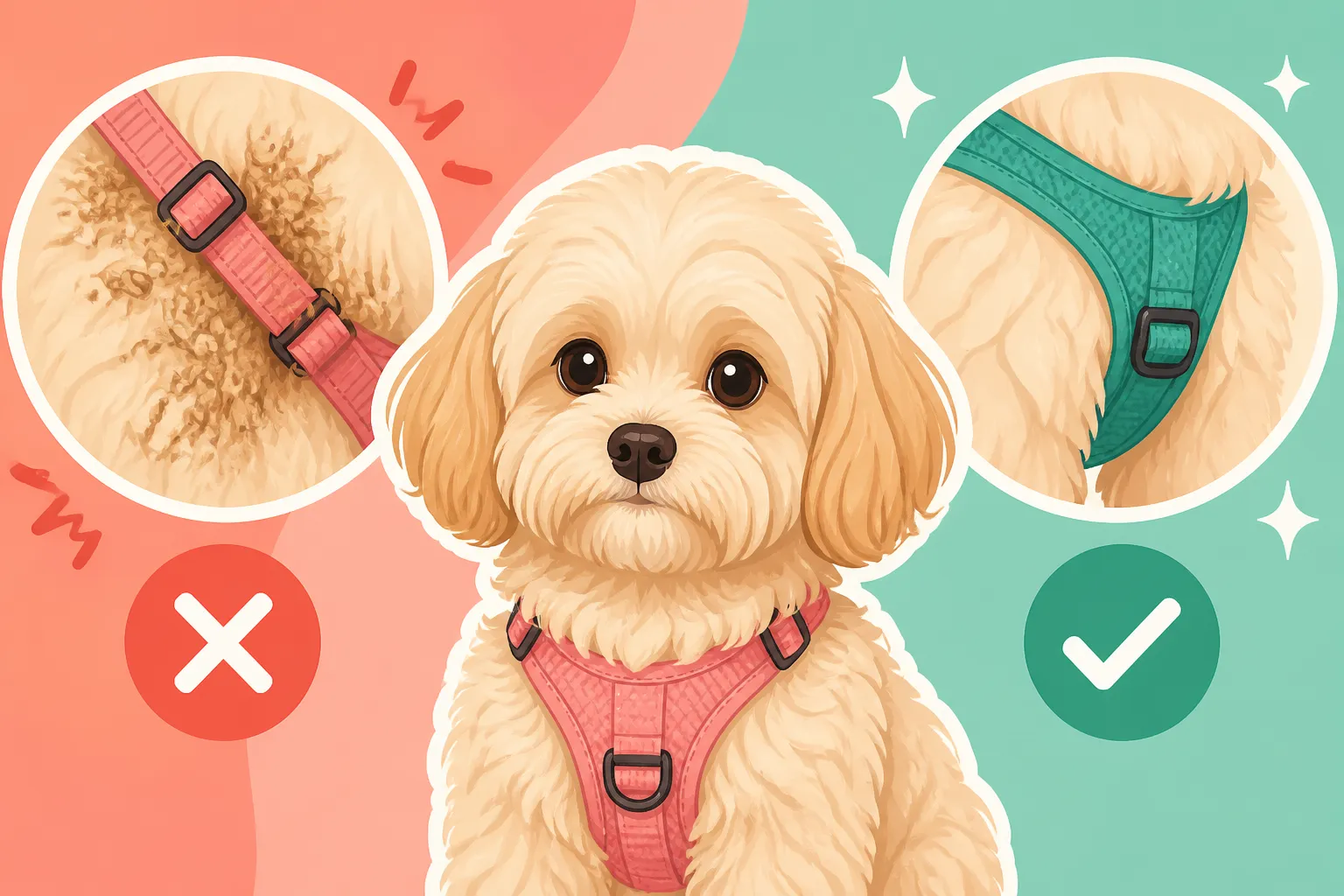
Whether a Harness Rubs a Maltipoo’s Coat Into Knots
Oh, the battle of the harness! It’s one of those things every Maltipoo parent grapples with, isn't it? You want to keep your little love safe and comfortable on walks, especially with their delicate windpipes, so a harness seems like the obvious choice. But then you take it off after a lovely stroll, and bam! – there's a matted patch, clinging to their beautiful, fluffy coat like a stubborn burr. It's incredibly frustrating to invest in what you think is best for your dog, only to find it's creating a whole new grooming headache. This guide is going to dive deep into why harnesses can indeed cause knots on your Maltipoo's coat, and more importantly, what practical steps you can take to minimize, manage, and prevent those dreaded mats.
Why a Harness Can Be a Maltipoo's Matting Nemesis
It’s not just your imagination, and you're certainly not doing anything wrong. Harnesses, while often a much safer and more comfortable option for a Maltipoo than a collar (especially with concerns like Collapsing Trachea in a Maltipoo's Neck), do have a notorious reputation for causing mats. Understanding why this happens is the first step in tackling the problem.
The Friction Factor: A Constant Rub
At the heart of the matting issue is friction. Every time your Maltipoo moves, walks, runs, or even just shifts its weight while wearing a harness, the harness material rubs against their fur. This constant rubbing creates friction, and friction is the enemy of a Maltipoo's delicate coat. Think about how static electricity builds up – it's a similar principle, but instead of just static, you're getting tangles.
Your Maltipoo's coat is designed to be soft, often wavy or curly, and non-shedding. This wonderful quality means that shed hairs don't fall out; instead, they get trapped within the existing coat. When friction from a harness is added to this equation, these trapped hairs, along with new ones, get worked into tight, painful knots. Areas where the harness straps are snug – under the armpits, across the chest, and sometimes along the back – become prime targets. These are high-movement zones where the fur is constantly being compressed and agitated by the harness. It’s a vicious cycle: the more they move, the more friction there is, and the more likely mats are to form. For Maltipoos with The Curly Maltipoo Coat, this friction can be even more pronounced, as their curls naturally intertwine more easily.
The Fine, Non-Shedding Coat: A Perfect Storm for Tangles
Maltipoos inherit their magnificent coats from both the Maltese and the Poodle, leading to The Coat a Maltipoo Gets From Two Non Shedding Parents. This desirable trait, however, comes with a trade-off: a high propensity for matting. Unlike dogs with shedding coats where loose hair falls out, a Maltipoo’s hair stays put, weaving itself into the surrounding strands.
The individual hairs on a Maltipoo are typically very fine and soft. While this makes them incredibly cuddly, it also means they tangle and felt together with remarkable ease. When a harness presses against this fine hair for an extended period, especially in areas like Where a Six Pound Maltipoo Mats First, it essentially 'felts' the hair together. Imagine trying to comb through tangled wool – that’s what a mat feels like to your dog, and it only gets tighter with pressure and movement. Humidity can also exacerbate this, making the hair even more prone to clumping. It’s a delicate balance; you want them to be able to enjoy their walks, but their fur often pays the price.
Moisture and Dirt: Accelerants for Matting
Beyond friction and coat type, external factors like moisture and dirt can significantly contribute to harness-induced matting. A damp coat is far more susceptible to matting than a dry one. If your Maltipoo wears a harness out in the rain, through dewy grass, or even just gets a bit sweaty from exercise on a warm day, that moisture will cause the hairs to clump together more readily under the pressure points of the harness.
Furthermore, dirt, dust, and tiny bits of debris picked up during a walk can get trapped within the coat, especially in the areas compressed by the harness. These foreign particles act like tiny anchors, giving the hairs something extra to cling to and knot around. When these elements combine – friction, fine hair, and moisture/dirt – you have the perfect recipe for those dreaded, tight mats that can be so painful to remove. It’s why even a short walk can sometimes result in significant tangles if the conditions are right.
Choosing the Right Harness to Minimize Matting
While you can't eliminate the risk of matting entirely when using a harness on a Maltipoo, you can significantly reduce it by being strategic about your choice of harness. It's not just about what looks cute; it's about material, fit, and design.
Material Matters: Smooth Over Rough
The material of the harness plays a huge role in how much friction it creates. Rough, coarse, or highly textured materials are going to be far more damaging to your Maltipoo's delicate coat than smooth ones.
- Avoid: Nylon webbing with exposed stitching, thick canvas, or harnesses with rough edges. These materials can be abrasive and snag hairs easily, leading to more knots.
- Look for: Silky, smooth fabrics like bamboo blends, satin-lined harnesses, or even certain soft neoprene options. These materials allow the fur to glide more easily against them, reducing the snagging and friction that cause matting. Some specialized harnesses even feature a fleece or faux-shearling lining on the interior straps, which can act as a buffer between the coat and the harness itself. Always feel the interior of the harness – if it feels rough to your hand, it will feel even rougher to your Maltipoo's fur. You can often find a good selection of these types of harnesses on platforms like Amazon or Chewy, where you can read reviews specific to small, long-haired breeds.
Fit is Fundamental: Snug, Not Tight or Loose
A poorly fitting harness, whether too tight or too loose, will invariably cause more matting.
- Too Tight: A harness that’s too tight will press the fur down excessively, increasing compression and friction, and quickly felting the hair together. It also restricts movement and can be very uncomfortable, digging into their sensitive skin, especially in the armpit area.
- Too Loose: On the other hand, a harness that’s too loose will shift and rub constantly against the coat with every step, creating excessive friction in different areas. The straps can slide around, catching and pulling hairs as they move.
The Goldilocks Fit: You're aiming for "just right." The harness should be snug enough that you can only fit two fingers comfortably underneath the straps at any point, but not so tight that it restricts breathing or movement. Pay particular attention to the area behind the front legs and across the chest. Always measure your Maltipoo carefully before purchasing, and check the manufacturer's sizing guide. Brands often have slightly different sizing, so don't assume a "small" from one company will be the same as a "small" from another. If you're buying online from a retailer like Chewy, check their return policy in case you need to try a different size.
Harness Design: Minimizing Contact Points
Different harness designs have varying impacts on matting. The goal is to choose a design that minimizes contact with dense fur areas and allows for maximum freedom of movement.
- "H" Style Harnesses: These often have minimal strapping across the shoulders and chest, with straps going around the neck and behind the front legs, connected by a strap along the back. This design can sometimes be better as it avoids broad chest plates that can press down on a lot of fur.
- Vest Harnesses: While they might seem softer because they cover a larger area, many vest harnesses made of thicker fabric can actually exacerbate matting by trapping more fur against the body and increasing overall friction points. If you opt for a vest, choose one made of a very lightweight, smooth, and breathable fabric, like a soft mesh.
- Step-In Harnesses: These are usually a good option for Maltipoos as they avoid going over the head, which can be stressful for some dogs. Many feature a simple design with straps around the neck and girth that are easy to adjust for a good fit.
Consider a harness that has minimal straps and hardware, and where the straps are relatively narrow. Broad, thick straps tend to cause more matting simply because they cover more surface area. Also, ensure any buckles, D-rings, or adjusters are smooth and don't have sharp edges that could snag fur.
Here’s a quick comparison of harness types and their matting potential:
| Harness Type | Description | Matting Potential (Maltipoo) | Pros | Cons |
|---|---|---|---|---|
| "H" Style | Straps around neck and girth, connected by back/chest straps. | Medium-Low | Less overall contact with fur; often good airflow. | Can rub under armpits if not fitted perfectly. |
| Vest Harness | Covers a larger area of the chest and back with fabric. | Medium-High | Distributes pressure broadly; can be very secure. | More fabric means more surface area for friction and heat retention. |
| Step-In Harness | Dog steps into two loops, then fastens over the back. | Low-Medium | Easy to put on; often simple, minimal strap design. | Can rub in armpit area if not properly sized. |
| Front Clip | Leash clips at the chest; usually part of an H-style or Y-style. | Medium | Can help reduce pulling; generally good fit. | Chest clip can cause friction on the front of the chest. |
Remember that even the "best" harness can cause mats if not used correctly and paired with a good grooming routine.
Grooming Strategies to Prevent Harness-Induced Mats
Choosing the right harness is only half the battle. The other, equally crucial part, is a proactive and consistent grooming routine. Maltipoos require dedication to keep their coats healthy and mat-free, and this is especially true when a harness is in the mix.
The Daily Ritual: Comb Before and After
This is perhaps the single most important step you can take. Your Maltipoo's coat needs daily attention, particularly in the areas where the harness sits.
- Before the Walk: Never put a harness on a tangled coat. Even small tangles will be exacerbated by the harness and quickly turn into painful mats. Before you clip on that harness, take a few minutes to gently brush and comb your Maltipoo's fur, especially under the armpits, across the chest, and along the back where the straps lie. Use a slicker brush to work through the top layer, then follow with a metal comb that can Combing a Maltipoo Down to the Skin. This ensures there are no existing tangles for the harness to pull into tighter knots.
- After the Walk: As soon as you remove the harness, give those same areas another thorough brushing and combing. Don't wait! Mats form quickly, and it's far easier to gently remove a loose tangle that's just started than to tackle a tight, felted mat a day or two later. If your Maltipoo has The Wavy Maltipoo Coat, you might find tangles appear even more readily. Be extra gentle around the delicate skin in the armpit area. If your dog got wet or dirty during the walk, ensure their coat is dry and clean before combing, or the dirt will make the tangles worse.
Remember, consistency is key. Even skipping a day can set you back significantly, turning minor tangles into serious problems. My personal rule of thumb is: if the harness goes on, the brush comes out before and after.
Conditioning Sprays: A Layer of Protection
Think of a conditioning spray as a shield for your Maltipoo's coat. A good leave-in conditioner or detangling spray can reduce friction and make the coat less prone to knotting.
Before putting the harness on, lightly mist the areas where the harness sits with a quality detangling spray. Gently work it into the fur with your fingers or a very soft brush. The conditioner helps to smooth the hair shaft, making it more slippery, so the harness slides over it rather than snagging. It also adds a protective barrier against external elements and makes it harder for shed hairs to stick to the live coat. Many pet supply stores, like Chewy, offer a wide range of detangling sprays specifically formulated for long-haired breeds. Look for ingredients like argan oil, silk protein, or botanical extracts that nourish the coat.
Regular Grooming Appointments: Professional Help
Even with diligent home care, regular professional grooming is essential for a Maltipoo. A professional groomer has the tools, techniques, and experience to keep your Maltipoo's coat in optimal condition, tackling those harder-to-reach or more stubborn areas.
- Frequency: Most Maltipoos need professional grooming every 4-6 weeks. During these sessions, the groomer will be able to thoroughly demat any developing tangles, give your dog a proper bath using conditioning shampoos and rinses (see Bathing and Drying a Six Pound Maltipoo), and trim the coat to a manageable length. A shorter "puppy cut" or "teddy bear trim" can significantly reduce matting issues by simply giving less hair to tangle.
- Communication: Talk to your groomer about your harness use. Show them where the mats tend to form. They can pay extra attention to those areas and offer specific advice tailored to your dog's coat type and lifestyle. They can also recommend The Kit Needed to Groom a Maltipoo at Home and demonstrate how to use them effectively. It’s also important for your Maltipoo to be accustomed to handling, which is crucial for grooming appointments. Start early with Teaching a Maltipoo to Be Handled Every Two Weeks to make these necessary visits stress-free.
Limiting Harness Wear: Only When Necessary
While a harness is vital for walks, try to limit how long your Maltipoo wears it. As soon as you get home from your The Walk a Six Pound Maltipoo Actually Needs, take the harness off. Don't leave it on for hours while they're lounging around the house. The longer the harness stays on, the more opportunities there are for friction to create mats.
Also, consider the type of activity. If you're just stepping into the yard for a quick potty break, a quick slip lead or a short leash attached to a flat collar (if your dog is well-trained and you have no tracheal concerns) might be sufficient for those few minutes, preventing the need for daily harness wear if you have multiple short outings. However, always prioritize safety; for actual walks, a harness is generally recommended.
Addressing Existing Harness Mats Safely
Despite your best efforts, sometimes a mat still manages to form. It happens! The key is to address them promptly and safely, without causing pain to your Maltipoo.
The Gentle Approach: Dematting Tools and Techniques
When you find a mat, resist the urge to pull at it or cut it out with scissors. This can be incredibly painful for your dog and can easily lead to accidental nicks or cuts on their delicate skin.
- Assess the Mat: Is it a small, loose tangle or a tight, felted mat?
- Gather Your Tools: You’ll need a slicker brush, a metal comb (preferably with both wide and fine teeth), a detangling spray, and potentially a mat splitter or dematting rake (use these with extreme caution!). You can find all these grooming essentials on Chewy or Amazon.
- Apply Detangler: Liberally spray the mat with a detangling spray. Work it in gently with your fingers. Let it sit for a minute or two to help loosen the hairs.
- Work from the Outside In: Never try to brush through the whole mat at once. Start at the very edge of the mat, closest to the hair that isn't tangled. Use the wide-toothed side of your comb or the corner of your slicker brush to gently tease apart small sections of the mat, one hair at a time.
- Hold the Base of the Hair: This is crucial! Place your fingers between the mat and your Maltipoo's skin. This prevents painful pulling on the skin as you work the mat out.
- Patience is Key: This process takes time and patience. If your Maltipoo gets stressed or uncomfortable, take a break and come back to it later. Never force it. If the mat is too stubborn, it’s time for professional help.
It’s a learned skill, and if you're not confident, it's always best to err on the side of caution. Remember that regular How Many Times a Week a Maltipoo Needs Combing can prevent these situations from getting out of hand.
When to Call the Pros: The Limits of Home Dematting
There are times when a mat is simply beyond safe home removal, and that’s perfectly okay. A professional groomer or veterinarian is equipped to handle severe matting without causing pain or injury to your dog.
- Tight, Skin-Deep Mats: If a mat is very tight and close to the skin, it can pull on the skin, cause bruising, and even restrict blood flow. Trying to cut these out at home is dangerous.
- Large, Extensive Matting: If there are multiple large mats, or if the matting covers a significant portion of the body where the harness sits, it’s best left to a professional.
- Matted Undercoat: Sometimes, the mats can be deep in the undercoat, which is very difficult to reach and demat without specialized tools.
A professional groomer will have high-quality clippers and blades that can safely shave underneath a mat, removing it cleanly. While it might mean your Maltipoo needs a very short haircut (sometimes called "pelting"), it's far better for their comfort and skin health than trying to painfully brush out a severe mat. They might also be able to offer advice on managing specific coat types, such as The Straight Coated Maltipoo, which can still mat despite appearing less curly.
If the matting is severe enough to cause skin irritation, sores, or infection, a vet visit is warranted. They can address any underlying skin issues and ensure the dematting process is as comfortable as possible, potentially even with mild sedation if necessary.
Disclaimer
This article is for general informational purposes only and does not constitute professional advice. Laws, prices and regulations vary by location and change over time. Consult a qualified professional for guidance on your specific situation.