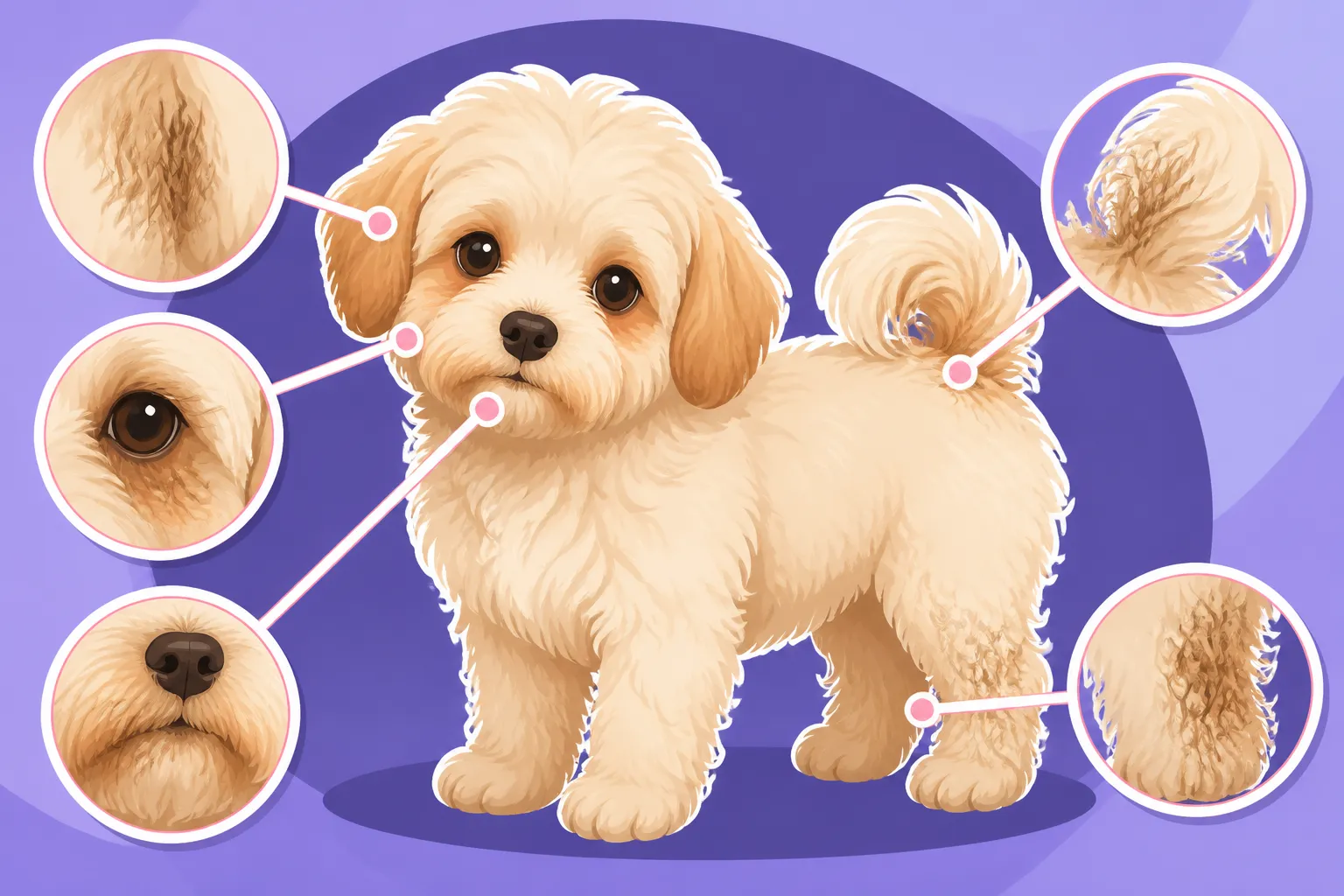
Where a Six Pound Maltipoo Mats First
If you're a Maltipoo parent, you know that their gorgeous, soft, luxurious coats are also notorious for one thing: matting. It's a constant battle, and it often feels like mats appear out of nowhere, especially on a delicate six-pound Maltipoo. This guide is here to shed light on exactly where these pesky tangles typically form first, why those spots are so prone, and most importantly, how you can prevent them to keep your little one's coat healthy and tangle-free.
Understanding the Maltipoo Coat: A Matting Magnet
The Maltipoo coat is a wonderful blend of its Maltese and Poodle parents, and while it’s prized for being low-shedding and wonderfully soft, it’s also a champion for matting. This isn't just bad luck; it's a direct result of its unique texture and continuous growth. Unlike dogs with coats that shed out old hair, the Maltipoo's hair holds onto it, which means any loose hairs get trapped within the growing coat, leading to tangles and knots if not meticulously maintained.
Imagine tiny Velcro fasteners all over your dog's body. That's essentially what those fine, soft hairs become when they get tangled. When friction is added – from walking, playing, or even just sleeping – these small tangles can quickly become tight, painful mats. On a six-pound Maltipoo, every ounce of their delicate fur is susceptible, and their small size means certain areas experience more rubbing and compression, making them matting hotspots. Understanding the mechanics of their coat is the first step in winning the battle against mats.
The Wavy vs. Curly vs. Straight Coat Factor
Not all Maltipoo coats are created equal, and the texture your particular pup inherited plays a huge role in how prone they are to matting. This is where the genetic "coin flip" of the Maltipoo really comes into play, as they can lean more towards the silky straightness of a Maltese or the tight curls of a Poodle, or land somewhere wonderfully wavy in between. Each coat type presents its own unique challenges when it comes to preventing mats.
A Maltipoo with a straighter, silkier coat, often more reminiscent of the Maltese, might seem less prone to mats at first glance. However, this finer hair can tangle incredibly easily, much like human hair, forming tight, flat mats close to the skin. These mats can be deceptive because they might not look bulky on the surface, but underneath, they can be dense and pull on the skin. On the other end of the spectrum, a Maltipoo with a very curly Poodle-like coat tends to develop thicker, more obvious mats. These curls love to intertwine, trapping shed hair quickly and forming tight, spongy knots that are hard to brush out once established. Then there are the wavy coats, which are perhaps the most common and often the most challenging. This delightful wave provides ample opportunity for hairs to hook onto each other, creating a perfect storm for mats to develop rapidly. The slight bend in each hair strand acts like a tiny hook, grabbing onto neighboring hairs and any shed fur, turning soft waves into stubborn tangles almost overnight.
No matter the texture, the key takeaway is that all Maltipoo coats require diligent care. The finer, straighter coats need gentle, thorough brushing to prevent those insidious flat mats, while the curlier and wavier coats demand more frequent and robust line brushing to get down to the skin and separate those intertwining strands. Understanding your specific Maltipoo's coat type will help you tailor your grooming approach and choose the right tools, whether that’s a fine-toothed comb for straighter hair or a slicker brush for curlier textures. Consistency is truly the name of the game, irrespective of how much wave or curl your little one possesses.
How the Coat Changes as Your Maltipoo Grows
Just when you think you've got a handle on your Maltipoo's coat, it throws you a curveball – it changes! This "coat change" or "blowing coat" period is a common phenomenon in Poodle and Poodle-mixes, and it typically occurs as a Maltipoo puppy transitions into adulthood. You might notice it somewhere between 6 to 18 months of age, though it can vary. During this time, their soft, fluffy puppy coat is gradually replaced by a denser, more adult coat, and it often feels like a daily struggle to keep mats at bay. Many owners describe it as their Maltipoo "knots overnight at ten months."
During this transitional phase, the shed puppy hair becomes deeply embedded in the emerging adult coat, creating a dense, tangled mess. It’s like trying to comb through two different textures of hair simultaneously, and without consistent, diligent grooming, large, felt-like mats can form incredibly quickly. What might have been a relatively easy grooming routine before can suddenly feel overwhelming. Owners often find themselves battling new mats daily, particularly in those areas of high friction that we'll discuss shortly. This is a critical period where neglecting daily brushing, even for a day or two, can lead to serious matting that requires professional intervention. It's during this time that you really start to understand The Month a Maltipoo Starts Matting Daily.
It's also important to remember that a Maltipoo's coat never truly stops growing; it’s more like human hair in that regard. This continuous growth, combined with the lack of shedding, means that the coat is constantly building upon itself, trapping loose hairs and dust particles. Even after the initial coat change, regular grooming is a lifelong commitment. The texture might settle, but the tendency to mat remains. If you're wondering Whether a Maltipoo's Coat Ever Stops Growing, the answer is functionally no, which means the grooming never stops either. This understanding helps prepare you for the ongoing commitment to brushing, bathing, and professional trims that are essential for a healthy, happy Maltipoo.
Prime Matting Real Estate: Where It Starts (and Why)
When it comes to matting, certain areas on a Maltipoo are like magnet zones – they just seem to attract tangles more than anywhere else. This isn't random; it's due to a combination of friction, moisture, and the delicate nature of the hair in those particular spots. For a six-pound Maltipoo, these areas are often exacerbated because their small size means these spots are constantly rubbing against floors, furniture, or even their own bodies. Knowing these prime matting real estate locations means you can give them extra attention during your daily grooming routine, heading off trouble before it even begins.
These aren't just minor tangles; left unchecked, mats in these sensitive areas can become incredibly painful, pulling on your dog's skin, restricting movement, and potentially leading to skin infections. It’s a common frustration for Maltipoo owners to feel like they just brushed their dog, only to find a new knot minutes later in one of these usual suspects. Let's delve into these specific hotspots and understand why they're so problematic.
Behind the Ears and Under the Chin
Ah, the dreaded ear mats! Almost every Maltipoo owner can tell you a tale of finding a stubborn, felt-like mat nestled right behind their pup's ears or tucked under their chin. These are hands-down some of the most common and persistent matting areas, and for good reason. The hair behind the ears is typically finer and softer than the rest of the body, making it incredibly prone to tangling. Think about how delicate human baby hair is; it’s similar for the hair in this region on your Maltipoo. This fine texture makes it much easier for individual strands to intertwine and knot.
Adding to the problem is the constant movement of the ears. Every shake of the head, every scratch, every time your Maltipoo plays or rubs against you, creates friction that encourages tangles. Furthermore, the skin behind the ears and under the chin can get slightly moist from natural oils, ear wax, or even just condensation from breathing, which acts like glue, binding those fine hairs together. These mats are often hidden until they become quite substantial, pulling on the delicate skin around the ears and making grooming incredibly painful if not addressed promptly. It's often where you'll find Mats Behind a Maltipoo's Ears first forming. If your Maltipoo wears a collar, the area under the chin where the collar might rub or collect moisture can also become a hotbed for mats. Daily, gentle combing and finger-checking of these areas are absolutely crucial to catch nascent tangles before they escalate into painful, difficult-to-remove mats.
The Armpits and Groin: Hidden Hotspots
The armpits and groin area are perhaps the most insidious matting hotspots because they are often out of sight, out of mind until it's too late. The hair in these regions is not only fine and delicate, much like behind the ears, but it also experiences constant friction from your Maltipoo's movement. Every step, every stretch, every time your little six-pound wonder walks or runs, their legs are rubbing against their body, effectively knotting the hair in these areas. It’s a constant, unavoidable source of friction, and if you don't actively work to prevent it, mats will form here with alarming speed.
What makes these areas particularly challenging is their hidden nature. It's easy to miss a mat developing deep within the armpit or along the inner thighs because you don't see them during casual petting. By the time you notice them, they're often already tight against the skin, forming hard, dense clumps that pull and restrict movement. These mats can be incredibly uncomfortable, even painful, for your Maltipoo, making them reluctant to walk, run, or even be touched in those areas. This is why many owners discover Why a Maltipoo Mats Where the Legs Meet the Body far too late.
To tackle these hidden hotspots, you need a proactive approach. During your daily grooming session, gently lift each leg to expose the armpit area and comb through the fur. Similarly, carefully check the groin and inner thigh areas. Be extra gentle, as the skin here is thin and sensitive. Using a good quality detangling spray before combing can make a world of difference, helping the comb glide through the hair without snagging. Don't be shy about checking here often; it's better to find a tiny tangle and resolve it than to find a massive mat that needs professional clipping.
Under the Harness and Collar Area
While harnesses are generally recommended over collars for Maltipoos to protect their delicate tracheas, they can inadvertently create another matting hazard. The constant rubbing and pressure from a harness, especially if it's not perfectly fitted, can cause friction that quickly turns soft fur into stubborn mats. This is particularly true for harnesses that have straps running across the chest, under the armpits (again, those tricky armpits!), and along the back. Even a well-fitting harness, if worn for extended periods, can contribute to matting.
The same goes for collars, though their impact is usually more localized to the neck area. If your Maltipoo wears a collar, especially one that's too tight or too loose, the constant movement and rubbing can create a ring of matted fur right around their neck. Any moisture, such as from drinking water or damp weather, can also get trapped under a collar, further accelerating the matting process. This highlights Whether a Harness Rubs a Maltipoo's Coat Into Knots and the importance of mindful accessory use. Many owners find their pups develop small, tight mats right where the harness straps lie, almost as if the harness itself is knitting the fur together.
To minimize matting from accessories, make sure your Maltipoo's harness and collar fit correctly – snug enough not to chafe, but loose enough to avoid digging in. Take off their harness when they are not on a walk, and make sure to brush out the areas it covers after every outing. Regular cleaning of the harness and collar can also help remove any accumulated dirt or oils that might contribute to tangles. Consider rotating between different harness styles or materials if you notice one particular type is causing more matting. This proactive approach helps ensure your Maltipoo can wear their gear comfortably without sacrificing their beautiful coat.
The Daily Battle: Preventing Mats Before They Form
Preventing mats in a Maltipoo, especially a tiny six-pounder, is less about a quick fix and more about consistent, dedicated daily care. It's a commitment, but one that pays dividends in comfort for your pup and less stress for you. Think of it as a small daily investment that saves you from larger, more painful, and more expensive problems down the line. A daily routine of prevention is far kinder to your Maltipoo than trying to detangle large mats, which can be an uncomfortable, even traumatic experience for them.
The goal is to interrupt the matting process before it even starts. This means regularly removing shed hair, preventing tangles from forming, and keeping the coat clean and well-conditioned. It's about being proactive rather than reactive. Many owners wonder How Many Times a Week a Maltipoo Needs Combing, and the honest answer for preventing mats is usually every day, especially during that challenging coat change phase. This section will walk you through the essential tools and techniques that form the backbone of a successful mat prevention strategy.
Brushing Techniques and Tools for Success
Effective brushing is the cornerstone of mat prevention for any Maltipoo. It's not just about running a brush over the top of the coat; it's about getting deep down to the skin to separate every strand and remove any trapped loose hair. For a six-pound Maltipoo, this requires patience, the right tools, and a gentle touch. Start by gathering your essentials: a pin brush, a slicker brush, and a good quality metal comb with both fine and wide teeth. You might find a good selection of these grooming tools on Amazon or Chewy. Additionally, a detangling spray designed for dogs can be a game-changer, helping to lubricate the hair and make brushing smoother.
The most effective technique for a Maltipoo's coat is called "line brushing." This involves parting the hair in small sections, typically starting from the bottom (legs or belly) and working your way up. You hold the brushed hair back with one hand and brush a small section from the skin outwards with the other. This ensures you're reaching the roots, where mats typically start. Use your slicker brush for overall coat management, focusing on lifting and separating the fur. Follow up with your pin brush, which is great for longer, softer sections and for general fluffing. Finally, and crucially, use your metal comb. The comb is your mat detector; if the comb can't pass smoothly through any section, you've found a tangle that needs gentle attention.
Consistency is paramount. A quick 10-15 minute session daily is far more effective than an hour-long marathon once a week, which often means battling existing mats rather than preventing them. Make brushing a positive experience for your Maltipoo by offering treats and praise. Starting this routine early in puppyhood helps them get used to it, making future grooming sessions much easier. Remember, a six-pound Maltipoo's coat, though small, is dense, and every strand needs attention.
The Role of Bathing and Drying in Prevention
While brushing is critical, bathing and drying play equally important roles in mat prevention, especially for a Maltipoo. You might think baths cause mats, but it's improper bathing and, more importantly, improper drying that creates the problem. When a Maltipoo's coat gets wet, any existing tangles tighten up significantly, becoming much harder, if not impossible, to brush out. This is why thorough brushing before the bath is non-negotiable. Get every single tangle out before your pup even touches the water.
Once brushed, use a good quality dog shampoo and conditioner. Conditioner is incredibly important for Maltipoo coats as it helps to smooth the hair cuticles, making them less prone to tangling and easier to comb through. Apply shampoo gently, focusing on massaging it into the skin rather than rubbing the hair in circles, which can cause tangles. Rinse thoroughly to remove all product, as residue can also lead to sticky, matted fur. After rinsing, gently squeeze excess water from the coat, and towel dry by blotting, not rubbing.
The most crucial step after bathing is thorough drying. You cannot let a Maltipoo's coat air dry. As the hair dries, it will clump and mat tighter than ever, especially for a six-pound dog whose fur is so close to the ground and constantly rubbing. Use a pet-specific force dryer or even a human hairdryer on a cool or low-heat setting, making sure to continuously brush the coat as you dry. Line brush your Maltipoo while drying, separating sections of hair and ensuring each strand is completely dry and straight before moving on. This process, while time-consuming, is essential. For many owners, mastering Bathing and Drying a Six Pound Maltipoo at home is a skill that saves countless trips to the groomer for dematting. Proper drying not only prevents mats but also leaves your Maltipoo's coat soft, fluffy, and beautiful.
Regular Trims: A Non-Negotiable Necessity
Even with the most diligent daily brushing and proper bathing, the continuously growing coat of a Maltipoo makes regular trims an absolute necessity. Think of it like a human getting regular haircuts to maintain health and manageability; the same applies to your furry friend. A longer coat simply has more hair to tangle, more surface area to collect debris, and more opportunities to rub against itself, leading to mats. For a six-pound Maltipoo, whose coat often seems to grow at an astonishing rate, professional grooming every 6-8 weeks is a minimum.
Regular trims help maintain a manageable length, especially in those notorious matting zones like behind the ears, armpits, and around the face and paws. Many owners opt for a "puppy cut" or a "teddy bear trim" for their Maltipoos, which keeps the coat relatively short all over, making it much easier to maintain at home. This short, even length significantly reduces the chances of tangles developing and makes daily brushing quicker and more effective. You'll want to communicate clearly with your groomer about The Trim a Maltipoo Owner Should Ask For to best suit your lifestyle and your dog's comfort.
Beyond professional trims, you'll likely need to do some touch-up trimming at home. This often includes keeping the hair around their eyes short to prevent irritation and staining, trimming paw pads to prevent slipping and debris accumulation, and tidying up sanitary areas. A small pair of blunt-nosed scissors or a quiet set of clippers can be useful for these tasks, which you can find readily available. The Two Week Face Trim a Maltipoo Needs is a perfect example of routine home maintenance that prevents mats and discomfort. While a professional groomer does wonders, regular home maintenance trimming in between appointments is crucial for keeping those fast-growing areas tidy and mat-free, making the professional groomer's job easier and more pleasant for your Maltipoo.
When Mats Happen: Dealing with Existing Tangles
Despite your best efforts, sometimes mats just happen. Maybe you missed a day of brushing, or your Maltipoo had an extra rambunctious play session, or perhaps they rolled in something particularly sticky. When you find an existing tangle on your six-pound Maltipoo, it's important not to panic and, most importantly, not to pull or yank at the fur. Mats can be painful, and a bad experience can make your pup dread future grooming. The approach to dealing with existing mats depends heavily on their size, location, and severity.
Remember, the smaller the mat, the easier it is to remove. This reinforces the need for daily vigilance and thorough checking, especially in those common matting areas. Trying to comb through a large, dense mat can not only hurt your dog but also damage their healthy coat, causing breakage and split ends. Always prioritize your Maltipoo's comfort and safety. If a mat is causing pain or is too difficult to handle at home, professional help is always the best option.
Gently Detangling Small Mats at Home
If you've caught a small mat early, before it's become too tight or large, you can often tackle it at home with patience and the right tools. First, gather your supplies: a good quality metal comb (ideally with both wide and fine teeth), a slicker brush, a detangling spray or conditioning spray, and a pair of blunt-nosed scissors (to be used only as a last resort, and with extreme caution). Never use sharp scissors near the skin if you can avoid it.
Start by liberally spraying the mat with a detangling spray. This helps to loosen the hair and reduce friction, making it easier to work through. Let it sit for a minute or two to penetrate. Then, using your fingers, try to gently tease apart the outer edges of the mat. The goal is to separate it into smaller sections, working from the outside in. Once you have a slightly looser section, use the wide-toothed end of your comb, gently picking at the very ends of the mat, one or two hairs at a time. Work slowly, patiently, and in very small increments, always pulling away from the skin, not towards it. Hold the base of the mat with your fingers, close to the skin, to prevent pulling on your Maltipoo's skin, which can be very painful. This technique is crucial when Working a Mat Out of a Maltipoo's Coat.
Once the mat starts to loosen, you can switch to the finer-toothed end of the comb or even a slicker brush to fully separate the strands. If you encounter a particularly stubborn, tiny mat that simply won't budge after several attempts with the comb, and it’s not too close to the skin, you might carefully use blunt-nosed scissors to snip into the mat lengthwise, effectively breaking it into smaller sections. However, this must be done with extreme caution. Always place the comb between the mat and the skin before snipping to ensure you don't cut your Maltipoo's skin. If you have any doubt, stop and consider professional help. Reward your Maltipoo with treats and praise throughout the process to keep them comfortable and willing to cooperate.
When to Call in the Professionals
There are times when a mat is simply too large, too tight, too close to the skin, or too painful for your Maltipoo to tackle at home. This is when it's absolutely essential to call a professional groomer or your veterinarian. Trying to force a comb through a severely matted coat can cause significant pain, skin irritation, cuts, and even trauma to your dog, leading to a lifelong fear of grooming. A professional groomer has specialized tools, techniques, and experience to handle even the most challenging mats with the least amount of discomfort for your Maltipoo.
When a Maltipoo is severely matted, especially a six-pounder where mats can quickly become a full-body issue, the safest and kindest option is often to shave the mats off. This is a common occurrence, and groomers are equipped to do this safely. While seeing your fluffy Maltipoo return with a very short haircut can be a shock, it's often the only way to alleviate pain and allow healthy new hair to grow. Many groomers refer to this as the "pelted" stage, and understanding Whether a Pelted Maltipoo Has Any Option but the Clippers can help manage expectations. It's a fresh start for the coat, and your Maltipoo will feel immense relief once those painful mats are gone.
Beyond just the discomfort, severe matting can hide underlying skin issues, such as infections, parasites, or hotspots, that require veterinary attention. If a mat has been tight against the skin for an extended period, the skin underneath might be bruised, inflamed, or infected. In such cases, your veterinarian may need to be involved to ensure proper healing. While professional grooming comes with a cost – and severe matting can incur additional fees – it's an investment in your Maltipoo's health and well-being. It's far better to pay for a professional shave and start fresh than to cause your beloved pet unnecessary pain and suffering.
Lifestyle Factors That Worsen Matting
Beyond the inherent nature of the Maltipoo coat and the routine grooming efforts, several external and lifestyle factors can significantly contribute to matting. Understanding these elements can help you create an environment and routine that further minimizes the risk of tangles for your six-pound companion. It's about looking at your Maltipoo's daily life and identifying potential friction points or sources of entanglement that might be working against your diligent brushing efforts.
From the environment they play in to the clothes they wear, almost anything can impact their delicate fur. Being aware of these common culprits allows you to make minor adjustments that can have a major positive impact on your Maltipoo's coat health.
Environmental Influences: Dirt, Moisture, and Debris
Your Maltipoo's environment plays a massive role in coat health and matting. A small, six-pound Maltipoo is naturally closer to the ground, meaning their long, flowing coat is more susceptible to picking up dirt, dust, leaves, twigs, and all sorts of outdoor debris. Even indoor environments aren't entirely innocent; dust bunnies, lint from carpets, and stray human hairs can easily get caught in their fine fur. These foreign particles act as anchors, grabbing onto individual hair strands and creating prime opportunities for tangles to form and tighten into mats.
Moisture is another significant environmental culprit. Whether it's rain, dew on the grass, a puddle splash, or even just high humidity, wet fur is much more prone to matting than dry fur. As hair dries, especially if it's left to air dry and isn't brushed through, it contracts and tangles tightly. This is particularly true after a walk on a damp day; those little droplets of water can make nascent tangles into full-blown mats in a remarkably short time. Similarly, if your Maltipoo gets into anything sticky – food spills, sap, or even certain lotions – these substances can quickly glue sections of hair together, forming incredibly difficult-to-remove mats.
To combat these environmental factors, a few simple practices can make a big difference. After every outdoor adventure, no matter how short, quickly check your Maltipoo's coat for any hitchhikers. Use a comb to gently remove any leaves, burrs, or dirt before they become embedded. Invest in quick-drying towels and immediately dry your Maltipoo after any encounter with water. Keeping your home clean and vacuumed can also reduce the amount of loose debris your pup picks up. Regular foot and sanitary trims, along with keeping their coat at a manageable length, will also reduce the amount of hair that comes into contact with the ground and various sticky substances.
Clothing, Collars, and Harnesses: Unintended Consequences
While we touched on harnesses creating mats, it's worth expanding on how any form of clothing or accessory can contribute to matting on your small Maltipoo. Owners often love to dress their adorable six-pound pups in cute sweaters, jackets, or even little bandanas. And for good reason – sometimes a sweater is necessary for Whether a Maltipoo Needs a Sweater Indoors or Whether a Maltipoo Needs a Coat Outdoors during colder weather, as they can shiver easily. However, these items, while practical or fashionable, are also sources of constant friction against your Maltipoo's coat.
The rubbing of fabric against fur, particularly in areas like the chest, armpits, and along the back, can quickly cause tangles and mats to form. This is especially true if the clothing isn't a perfect fit or if it's worn for extended periods. Materials like wool or fleece, while warm, can also be particularly prone to snagging fine dog hair. Similarly, collars, even if they fit correctly, create a consistent point of friction around the neck. Think about how your own hair might tangle if it's constantly rubbing against a scarf or a tight collar. It’s the same for your Maltipoo.
To minimize the unintended matting consequences of clothing and accessories, be mindful of how long your Maltipoo wears these items. Remove sweaters and harnesses as soon as they are no longer needed, and immediately brush out the areas that were covered. Regularly check the armpits and chest area for any new tangles. Opt for smooth, breathable fabrics when possible, and ensure all clothing and harnesses fit well, without being too tight or too loose. It's a balance between keeping your Maltipoo warm or stylish and protecting their delicate coat. A quick check and brush-through after removing any clothing can save you a lot of headache in the long run.
| Matting Hotspot | Why It's Prone | Prevention Strategies |
|---|---|---|
| Behind Ears & Under Chin | Fine hair, constant ear/head movement, moisture. | Daily finger check & combing, detangling spray. |
| Armpits & Groin | Fine hair, constant leg friction, hidden location. | Lift legs & comb daily, use detangling spray. |
| Under Harness/Collar | Consistent friction, pressure, potential moisture. | Remove when not needed, brush after use, ensure good fit. |
| Tail & Hocks | Movement, contact with ground/surfaces. | Regular combing, shorter trims if needed. |
| Face & Beard | Food/water residue, eye discharge, rubbing. | Daily face wipes, specific face trims, clean bowl. |
Disclaimer
This article is for general informational purposes only and does not constitute professional advice. Laws, prices and regulations vary by location and change over time. Consult a qualified professional for guidance on your specific situation.