Whether a Toddler Is Safe to Leave With a Maltipoo
Bringing a Maltipoo into a home with a toddler can feel like navigating a minefield. You adore your furry companion and your energetic little human equally, but the thought of their interactions often brings a wave of anxiety: What if the dog gets hurt? What if the child gets nipped? This guide is here to help you understand the unique challenges and provide realistic, actionable strategies to ensure that your Maltipoo and toddler can coexist safely and happily, minimizing stress for everyone involved.
Understanding the Maltipoo's Fragility and Temperament
Maltipoos are truly delightful companions, known for their affectionate nature and playful spirit. However, their small size and specific temperament traits mean they require a thoughtful approach, especially when sharing a home with a curious and often clumsy toddler. It’s crucial to remember that what might be a playful nudge from a larger dog can be a significant impact for a tiny Maltipoo.
Maltipoo Size and Vulnerability
Let's be honest, Maltipoos are often chosen for their adorable, compact size. They typically weigh between 5 and 10 pounds, with some "teacup" varieties being even smaller. This diminutive stature, while charming, makes them incredibly vulnerable to accidental injury. A toddler, still developing their balance and coordination, can easily trip over a small dog, or worse, fall on them. Their bones are delicate; a simple fall off a sofa or an unexpected drop can lead to serious fractures. We often see heartbreaking stories where a well-meaning but uncoordinated grab from a child results in a yelp and a trip to the emergency vet. It's not malice, it's simply the physics of a small, fragile creature interacting with a developing human. You might be surprised to learn that incidents like these are not uncommon, making it vital to understand Whether a Maltipoo Can Be Injured by a Fall.
Beyond the physical, their small size can also make them feel overwhelmed. Imagine being a tiny dog constantly navigating a world filled with giants who move unpredictably and make loud noises. This can be genuinely frightening for them, leading to anxiety or defensive behaviors. It's not just about avoiding physical harm; it's about protecting their emotional well-being too. We need to acknowledge that Whether a Maltipoo's Bones Are Thinner Than Normal is a very real concern for these dainty dogs.
The Maltipoo's Personality Traits
Maltipoos inherit a blend of traits from their Maltese and Poodle parents, which can create a unique and sometimes unpredictable personality. From the Maltese side, they often get their sweet, devoted, and sometimes stubborn nature. They love to be close to their people and thrive on attention. This can be lovely, but it also means they might seek proximity to a child, potentially putting themselves in harm's way. The Poodle side brings intelligence, trainability, and often a bit more energy and playfulness. This combination can result in a dog that is eager to please but also sensitive and prone to stress if interactions are too boisterous or unpredictable.
Some Maltipoos are naturally more tolerant and laid-back, taking everything in stride. Others are more reserved, easily startled, or possess a "flight" response, preferring to dart away from anything perceived as threatening. This individuality means you can't assume every Maltipoo will react the same way to a toddler. Understanding What the Maltese Puts Into a Maltipoo's Character can help you anticipate some behaviors, but observing your individual dog's cues is paramount. A Maltipoo that is used to a quiet, adult-centric home might find the sudden chaos of a toddler's presence deeply unsettling. They might initially hide, then, if feeling cornered or continually harassed, could resort to a defensive snap. This is not aggression in the traditional sense, but a desperate plea for space and safety from a small dog.
Toddlers: A Bundle of Unpredictable Energy
Just as we must understand our Maltipoo, we must also be realistic about the capabilities and limitations of toddlers. These tiny humans are in a whirlwind of rapid development, constantly exploring their world, and their actions are often driven by impulse and curiosity rather than malicious intent. Expecting a toddler to behave like a miniature adult around a dog is simply unfair and unrealistic.
The Developmental Stage of Toddlers
Toddlers, typically between one and three years old, are still mastering basic motor skills. They stumble, they fall, and their movements can be jerky and uncoordinated. They haven't yet developed fine motor control, which means their attempts to "pet" a dog might involve grabbing handfuls of fur, poking eyes, or slapping. Their grasp of cause and effect is rudimentary; they don't understand that pulling a tail hurts the dog, or that a loud shriek might scare it. They are in a phase of boundless curiosity and experimentation, which often involves testing boundaries and exploring objects with all their senses – including their hands and mouths.
Furthermore, toddlers are not always capable of empathy in the way an older child or adult is. They might see the dog as another toy, an object to interact with, rather than a living being with feelings and personal space. Their vocalizations can be loud and sudden, their play can be rambunctious, and their overall presence can be overwhelming for a small, sensitive dog. This isn't a criticism of toddlers; it's simply their stage of development. Understanding this is key to setting realistic expectations for interactions and knowing that your supervision is the primary safety net.
Common Toddler Behaviors That Can Stress a Dog
If you've spent any time around toddlers, you know their repertoire of "dog-stressing" behaviors is extensive, even if unintended. These can include:
- Loud Noises: Shrieking, crying, banging toys, or sudden bursts of laughter can be terrifying to a dog with sensitive hearing.
- Quick, Unpredictable Movements: A sudden dash across the room, an unexpected lunge, or flailing arms can trigger a Maltipoo's flight instinct or make them feel threatened.
- Inappropriate Touching: Grabbing fur, pulling tails or ears, poking eyes, or climbing on the dog. These actions are painful or startling, and a dog's natural reaction might be to escape, or if cornered, to snap.
- Invading Personal Space: Following the dog, cornering it, or preventing it from eating or sleeping can quickly escalate a dog's stress levels. A Maltipoo deserves a safe retreat where it knows it won't be bothered.
- Taking Toys or Food: Toddlers don't understand resource guarding. Attempting to take a dog's toy or food bowl can provoke a defensive reaction from even the most gentle dog.
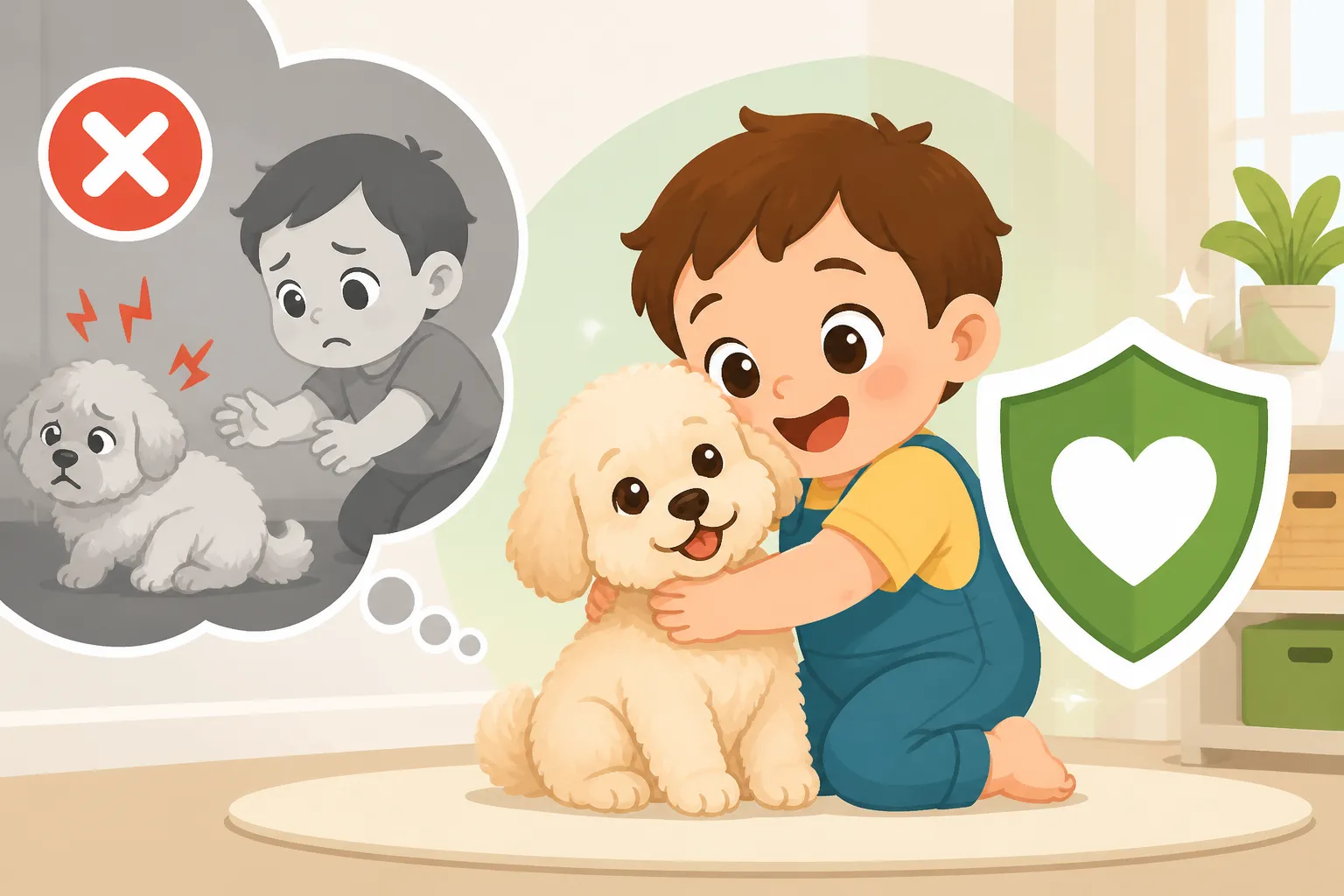
It's vital for you, as the adult, to be constantly aware of these potential triggers and to intervene before an issue arises. Remember, a Maltipoo's primary defense mechanism is often flight, but if that option is removed, they may feel they have no choice but to protect themselves. This is why Whether a Maltipoo Should Be Left With Children is a critical question that demands a firm answer.
Creating a Safe Environment for Both Child and Dog
The cornerstone of successful coexistence between a Maltipoo and a toddler is a well-structured and thoughtfully managed environment. You can't just hope for the best; you need to actively engineer safety. This involves physical barriers, designated safe zones, and clear rules for interaction. The goal is to prevent problematic situations rather than reacting to them.
Physical Barriers and Safe Spaces
One of the most effective tools in your arsenal is the use of physical barriers. Baby gates are your best friend! Installing sturdy baby gates in doorways allows you to create separate zones for your Maltipoo and your toddler. This means your dog can be in the living room while your toddler plays in the nursery, or vice-versa, without constant worry about unexpected encounters. You can find a wide variety of reliable gates on Amazon, from pressure-mounted options for temporary use to hardware-mounted gates for more permanent solutions in high-traffic areas. This separation isn't punitive; it's a necessary safety measure that provides both parties with peace of mind.
Beyond gates, every Maltipoo needs its own designated safe space – a sanctuary where it can retreat and be absolutely certain it won't be bothered. This might be a crate, a dog bed tucked away in a quiet corner, or even a playpen for your dog that the toddler cannot access. Teach your toddler that this is the dog's special place and they are never allowed to approach the dog when it's there. This concept is crucial for your Maltipoo's emotional health, allowing them to decompress and feel secure. This safe space should be consistently respected by all family members.
Managing Shared Spaces and Resources
When your Maltipoo and toddler are in the same room, even with supervision, you need strategies to manage their shared environment. This includes things like feeding, playtime, and resting. Never allow your toddler near your Maltipoo's food or water bowls. These are high-value resources for any dog, and even a gentle nudge from a child can trigger a defensive response. Feed your Maltipoo in its crate or a separate room to avoid any potential conflict. Similarly, ensure your Maltipoo has toys that are clearly distinct from your toddler's toys to prevent confusion and potential guarding issues.
Think about the general flow of your home. Are there areas where your Maltipoo can easily be cornered? Are there routes for escape if your Maltipoo feels uncomfortable? Design your space to allow your Maltipoo to move freely away from your toddler if needed. Sofa steps or ramps can also be incredibly helpful to prevent injuries, as Whether a Maltipoo Should Use Steps to the Sofa highlights, which is even more important when a small child might be present. Always ensure that the Maltipoo has an easy way to move away from the child. This creates a more relaxed atmosphere for both your dog and your child, reducing stress and the likelihood of negative interactions.
Supervision and Education: Your Most Powerful Tools
Even with the best environmental setup, hands-on intervention and constant vigilance from you, the adult, are irreplaceable. Nothing replaces vigilant, active supervision when a Maltipoo and a toddler are together. This isn't about sitting back and glancing; it's about being present and proactive.
Constant Adult Supervision
The golden rule in a home with a small dog and a toddler is simple: never leave them alone together, even for a second. This means if you need to answer the door, step away to the kitchen, or run to the bathroom, one of them needs to be securely separated. This isn't just about preventing bites; it's about preventing accidental injuries to your fragile Maltipoo. A quick tumble, a curious poke, or an unexpected grab can happen in the blink of an eye. This level of supervision can feel exhausting, and you might wonder if it’s even possible to maintain, but it’s absolutely non-negotiable for their safety.
Active supervision means you are constantly monitoring their body language. You should be able to read the subtle cues your Maltipoo gives when it's feeling uncomfortable: lip licking, yawning (when not tired), turning its head away, a stiff body posture, tucked tail, or trying to hide. These are all early warning signs that the dog is stressed and needs space. Simultaneously, you're watching your toddler for any impending "danger" behaviors like wind-ups to grab, loud noises, or rapid approaches. Your role is to be the mediator, protector, and educator, stepping in before a situation escalates.
Teaching Children How to Interact with Dogs
Education is a long-term strategy that pays dividends. As soon as your toddler is old enough to understand simple commands (and sometimes even before, through modeling), begin teaching them how to interact respectfully with dogs. Start with very simple rules, consistently reinforced:
- Gentle Hands: Show them how to stroke the dog gently on its back or shoulders, avoiding the face, ears, or tail. Use a soft voice and demonstrate with your own hand.
- "Be Still Like a Tree": Teach them to stand still and quiet if the dog approaches them, rather than running or screaming.
- "Let Sleeping Dogs Lie": Emphasize that the dog's bed or crate is its private space, and they should never bother the dog when it's resting.
- "Ask First": As they get a bit older, teach them to ask an adult before approaching any dog, including your own. This builds a foundation of respect for an animal's personal space.
Consistency is key here. Every time you see an inappropriate interaction, gently redirect your toddler and show them the right way. Praise them enthusiastically when they interact appropriately. Books and videos about respectful dog interaction can also be helpful tools to reinforce these lessons. Remember, you are Teaching a Child Where to Support a Maltipoo and other essential lessons that will serve them well with all animals.
Training Your Maltipoo for a Child-Friendly Home
While managing the environment and supervising interactions are critical, training your Maltipoo to be calm and confident around children is equally important. A well-trained dog is a safer, happier dog, especially in a bustling household. It’s not about making your dog tolerate a child, but equipping them with the skills to cope and thrive.
Desensitization and Counter-Conditioning
Since Maltipoos are often sensitive, direct exposure to a toddler's exuberance can be overwhelming. Instead, you'll want to use desensitization and counter-conditioning. This means gradually exposing your Maltipoo to toddler-related sights and sounds at a low intensity, pairing them with positive experiences. For example:
- Sounds: Play recordings of toddlers giggling or crying softly (easily found on YouTube or via apps) while giving your Maltipoo high-value treats or engaging in a favorite game. Gradually increase the volume over days or weeks.
- Sights: If your toddler is crawling, have your Maltipoo on a leash or behind a gate, giving them treats every time the toddler moves near (but not at) them.
- Proximity: Start with your Maltipoo and toddler in separate rooms, then gradually move them closer, always with a barrier in between and positive reinforcement for calm behavior.
The goal is for your Maltipoo to associate the presence of the toddler with good things – tasty treats, quiet praise, and comfort. If your Maltipoo shows any signs of stress, you've gone too fast. Retreat to a level where they are comfortable and try again more slowly. Online dog training platforms like BAXTER & Bella offer excellent modules on puppy socialization and managing multi-pet households, which can be adapted for child-dog introductions. They often have resources that detail step-by-step processes for desensitization.
Reinforcing Calm Behavior
Training isn't just about addressing unwanted behaviors; it's about actively rewarding the behaviors you do want to see. When your Maltipoo is calmly resting near your toddler (from a safe distance, of course), reward them! If your Maltipoo chooses to retreat to its safe space when your toddler gets too energetic, praise that decision. You want to make calm, appropriate behavior far more rewarding than any anxious or defensive reaction.
Teaching your Maltipoo a solid "settle" or "go to your mat" command is invaluable. Practice this in various environments, gradually introducing the sounds and sights of a busy home. This gives your dog a job and a place to go when things get overwhelming, empowering them to remove themselves from stressful situations rather than feeling trapped. Consistency from all family members is essential for this training to stick. Remember that Maltipoos, like Poodles, are intelligent and eager to learn, but they are also sensitive, so Whether Raising Your Voice Shuts a Maltipoo Down is a relevant consideration for your training approach. A calm, consistent, positive reinforcement-based strategy will yield the best results. You might also find it helpful to focus on Training the Two Halves of a Maltipoo Differently by considering both their Maltese sensitivity and Poodle intelligence in your methods.
| Toddler Action | Maltipoo Reaction (Potential) | Recommended Adult Response |
|---|---|---|
| Grabbing/Poking | Yelps, flinches, runs away, growls | Immediate gentle separation, redirect toddler, comfort dog |
| Loud Shrieks/Sudden Movements | Startles, trembles, hides | Calm child, provide dog with safe retreat, offer reassurance |
| Approaching Sleeping Dog | Startles awake, defensive snap | Block child's approach, teach "let sleeping dogs lie" |
| Taking Dog's Toy/Food | Guards, growls, snaps | Remove child, feed/play with dog in separate area |
| Following/Cornering Dog | Stress signals (lip lick, yawn) | Create escape route for dog, use gate to separate |
When Things Go Wrong: Recognizing and Addressing Issues
Despite your best efforts, sometimes things don't go as planned. It's important to be prepared for these moments, recognizing when your Maltipoo is distressed and knowing how to respond if an incident occurs. Proactive intervention and understanding dog behavior are crucial.
Signs of Stress in a Maltipoo
Your Maltipoo will almost always give warning signs before resorting to a nip or bite, even if those signs are subtle. Learning to read these signals is critical. Common stress signals include:
- Lip Licking and Yawning: Often out of context, not after eating or when tired.
- Turning Head or Body Away: A clear attempt to disengage from an interaction.
- Stiff Body Posture: A dog that looks "frozen" or tense, rather than relaxed and wiggly.
- Tucked Tail and Low Carriage: Indicates fear or submission.
- Panting (when not hot or exercised): A sign of anxiety.
- Showing the Whites of Their Eyes (Whale Eye): Indicates distress.
- Hiding or Trying to Escape: Retreating under furniture, behind legs, or attempting to leave the room.
- Growling: This is a clear warning signal. It's often misunderstood as aggression, but it's actually your dog communicating its discomfort and asking for space. It's a sign that you need to intervene immediately. Ignoring a growl or punishing your dog for it can teach them to skip this warning and go straight to a bite.
If you see any of these signs, even the subtle ones, it's your cue to step in and give your Maltipoo a break. Separate them from the toddler, provide a quiet space, and allow them to decompress. A Maltipoo typically does give a warning before it snaps, as in Whether a Maltipoo Warns Before It Snaps, so it's our job to heed those warnings.
What to Do If an Incident Occurs
If a nip or bite does happen, even a small one, it's a serious event that requires immediate attention and re-evaluation of your management strategy.
- Safety First: Immediately and calmly separate the dog and child. Secure the dog in its safe space. Check the child for injuries and provide comfort.
- Assess and Reflect: Once everyone is safe, take a breath. What happened? What were the circumstances leading up to the incident? Was the dog cornered? Was a warning sign missed? This isn't about blaming, but about understanding the trigger to prevent future occurrences.
- Seek Professional Help: Do not try to "fix" it yourself. This is the moment to contact a certified professional dog trainer or veterinary behaviorist. They can observe your dog's behavior, help you understand the dynamics, and create a tailored plan for behavior modification. Ignoring a bite, especially from a small dog, is a dangerous mistake that can lead to more serious incidents down the line. A professional can help you decipher the "why" and guide you on a path forward.
- Re-evaluate Management: A bite incident means your current management strategy is insufficient. This might mean increasing supervision, reinforcing boundaries with baby gates, or even considering more permanent separation if the risk remains too high. The safety of both your child and your Maltipoo is paramount.
While the idea of having A Maltipoo in a House With Children is lovely, the reality requires diligent effort and a deep commitment to understanding and managing both your adorable dog and your energetic toddler. It's a continuous learning process, but with the right approach, it is absolutely possible for them to share a loving home safely.
Disclaimer
This article is for general informational purposes only and does not constitute professional advice. Laws, prices and regulations vary by location and change over time. Consult a qualified professional for guidance on your specific situation.