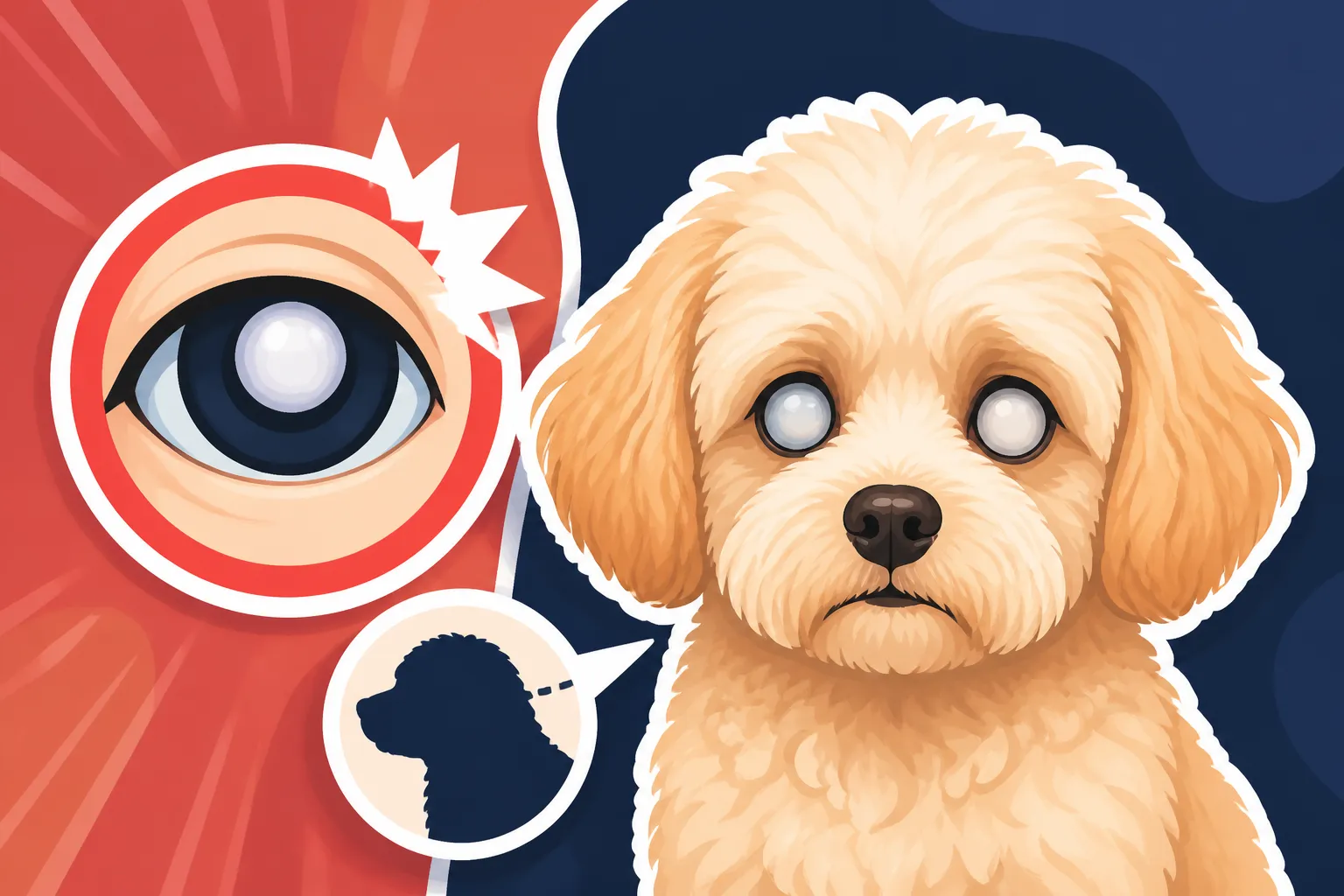
The Age prcd-PRA Takes a Maltipoo’s Sight
There's nothing quite as heartbreaking as noticing your beloved Maltipoo struggling with their vision. Many of us worry about our furry family members experiencing health challenges, and eye conditions that lead to blindness are a particularly difficult reality for many breeds, including our precious Maltipoos. This guide is here to shed light on a specific genetic eye disease called progressive rod-cone degeneration (prcd-PRA), detailing when it typically manifests, what to look for, and how to support your dog through this journey.
Understanding Progressive Retinal Atrophy prcd-PRA in Maltipoos
Progressive Retinal Atrophy (PRA) is a general term for a group of genetic diseases that cause the degeneration of the retina, ultimately leading to blindness. One specific form, prcd-PRA (progressive rod-cone degeneration), is a hereditary condition that can affect Maltipoos, primarily inherited from their Poodle lineage. It's not something that happens overnight, but rather a slow, relentless progression that can catch owners off guard if they don't know what to look for.
What is prcd-PRA and How Does It Affect a Maltipoo's Eyes
At its core, prcd-PRA is a genetic defect that impairs the function and eventual death of the photoreceptor cells in the retina. Think of the retina as the "film" in a camera – it's responsible for capturing light and sending signals to the brain to create an image. In dogs affected by prcd-PRA, the rod cells, which are crucial for vision in dim light, degenerate first. This means their night vision is the first to go. As the disease progresses, the cone cells, responsible for daytime and color vision, also begin to break down.
The genetic mutation responsible for prcd-PRA is well-identified. It's an autosomal recessive trait, meaning a Maltipoo must inherit two copies of the defective gene – one from each parent – to develop the condition. If they inherit only one copy, they are considered a "carrier" and won't develop the disease themselves, but can pass the gene on to their offspring. This is why understanding the parentage and genetic history of your Maltipoo is so incredibly important, especially when considering The Eyes a Maltipoo Gets From the Poodle. The Poodle side of the Maltipoo often carries this predisposition, making it a critical factor for breeders to test for.
The physical structure of the eye often appears normal in the early stages, making it tricky to diagnose without specialized equipment. There's no inflammation, no redness, no obvious outward signs of disease. The damage is happening at a microscopic, cellular level within the retina itself, slowly eroding the dog's ability to see.
Early Signs of Vision Loss in a Maltipoo
Detecting prcd-PRA early can be challenging because dogs are incredibly adaptive. They use their other senses – smell, hearing, and memory – to navigate their world, often masking subtle vision changes for quite some time. However, as an attentive owner, you might start to notice some behavioral shifts.
One of the earliest and most common signs is "night blindness." Your Maltipoo might become hesitant to enter dimly lit rooms, or perhaps they'll bump into furniture that's usually not a problem once the sun goes down. They might stumble or move more cautiously when transitioning from a bright area to a darker one, like going from a well-lit living room to a darker hallway or outside at dusk. Imagine going from a brightly lit grocery store into a poorly lit parking lot yourself; that initial disorientation can be what your dog experiences more consistently. They might also become more clingy at night, seeking out your presence for reassurance, or seem more startled by sudden sounds because they can't rely on their vision to confirm what they hear.
As the condition progresses and daytime vision begins to decline, you might notice more generalized clumsiness. They might misjudge distances, have trouble catching treats thrown to them, or be more hesitant to jump on or off furniture, even if they've always done so with ease. Their pupils might appear more dilated than usual, especially in normal lighting conditions, as their eyes try to gather every last bit of available light. You might also observe them bumping into things in familiar environments, particularly if something has been subtly moved, which a sighted dog would easily notice. It’s a heartbreaking progression to witness, and often, owners attribute these early signs to simple aging, which is why knowledge about conditions like prcd-PRA is so vital.
The Age of Onset for prcd-PRA in Maltipoos
This is often the most pressing question for Maltipoo owners: when does this dreaded condition usually strike? Unlike some congenital conditions that are apparent at birth, prcd-PRA typically manifests later in a dog's life, making its diagnosis all the more upsetting when it appears in a dog you've loved for years.
Typical Age Range for Symptom Appearance
For most Maltipoos affected by prcd-PRA, the first noticeable signs of vision loss usually begin to emerge between the ages of 3 and 6 years old. However, it's really important to understand that this isn't a hard and fast rule. Some dogs might show signs a little earlier, perhaps around 2 years, while others might not exhibit obvious symptoms until they are 7 or 8 years old. The term "progressive" is key here; it's a gradual process, not a sudden event.
Think of it like this: your Maltipoo might start having minor difficulties navigating familiar spaces in low light when they're four. You might initially shrug it off, thinking they're just tired or distracted. But over months, or even a year or two, these incidents become more frequent, more pronounced. It's rarely a puppyhood concern, which is a small relief, but it means you'll have likely formed a deep bond with your dog long before this challenge arises. The variation in onset can also be influenced by the specific genetic markers and individual physiology of the dog. While it's relatively uncommon for a Maltipoo under two pounds to be susceptible to different issues such as Hypoglycemia and the Teacup Maltipoo Puppy, prcd-PRA is not tied to size in the same way.
How prcd-PRA Progresses and Leads to Blindness
The journey from initial symptoms to complete blindness is a continuum, and its pace can vary from one Maltipoo to another. Generally, the progression can take anywhere from one to three years, though some dogs may experience a slower or slightly faster decline.
The first stage, as mentioned, is almost always the loss of rod cell function, resulting in night blindness. Your Maltipoo will struggle in dim light, at dusk, or in dark rooms. They might become hesitant to move around, bump into things, or seem disoriented in low-light conditions. This can be particularly confusing for them, and often for you, as their daytime vision remains relatively normal.
As the disease advances, typically over many months, the cone cells begin to degenerate. This is when daytime vision loss becomes apparent. You'll notice your Maltipoo bumping into objects in broad daylight, showing increased hesitation to move, or relying heavily on their sense of smell and hearing. Their pupils may stay more dilated, even in bright light, giving their eyes a "shiny" or reflective appearance, as their bodies try to capture maximum light, which their dying photoreceptors can no longer process effectively. Eventually, both rod and cone cells cease to function, leading to complete and irreversible blindness. This condition is almost always bilateral, meaning it affects both eyes.
It’s crucial to remember that prcd-PRA is not painful for your dog. The degeneration of cells doesn't cause physical discomfort, but the loss of a primary sense can certainly lead to confusion, anxiety, and a sense of vulnerability for your Maltipoo. Your role then shifts from prevention (if you chose a tested puppy) to compassionate support.
Here’s a simplified breakdown of the progression:
| Stage | Typical Age of Onset | Key Symptoms | Impact on Dog's Life |
|---|---|---|---|
| Early Stage | 3-6 years | Night blindness, hesitation in dim light, minor clumsiness in darkness | Reduced confidence in low-light environments |
| Mid Stage | 4-7 years (variable) | Increased night blindness, some daytime vision loss, bumping into furniture, dilated pupils | Greater reliance on other senses, caution in new surroundings |
| Advanced Stage | 5-8 years (variable) | Significant daytime vision loss, possible complete blindness | Requires environmental adjustments, increased owner support |
| End Stage | Varies | Complete and irreversible blindness | Navigates entirely by smell, hearing, and touch |
Managing Life with a Sight-Impaired Maltipoo
Learning that your Maltipoo is losing their sight is a tough pill to swallow. It brings with it a whole host of questions and concerns about their quality of life. The good news is that dogs are incredibly resilient, and with your help, a blind Maltipoo can still live a full, happy, and contented life. It requires patience, consistency, and a little extra effort on your part, but the bond you share will only deepen.
Creating a Safe and Predictable Environment
One of the most important things you can do for a sight-impaired Maltipoo is to maintain a stable, predictable environment. Sudden changes can cause immense stress and disorientation.
- No Rearranging Furniture: This is rule number one. Once your dog has mapped out your home in their mind, moving objects will throw them off completely. If you absolutely must move something, do it gradually and guide your dog around the new placement repeatedly.
- Consistent Routines: Dogs thrive on routine, but for a blind dog, it's paramount. Feed them at the same time, take them out for potty breaks in the same spot, and establish a clear daily schedule. This predictability helps them anticipate events and reduces anxiety. Consistency also helps with The Daily Routine a Maltipoo Needs for overall well-being.
- Safety Gates and Barriers: Use baby gates to block off stairs or areas that might be dangerous. A blind dog might accidentally wander into a precarious situation, so creating safe zones is essential.
- Tactile Cues: Consider placing different textured mats or rugs near doorways, stairs, or feeding areas. These can act as subtle tactile markers, helping your Maltipoo know where they are in the house. For example, a soft rug by their bed, a rougher mat by the back door for potty breaks, and a specific scented mat by their food bowl.
- Scent Markers: Dogs have an incredible sense of smell. You can use distinctive scents (like a drop of vanilla extract on a doorframe, or a specific essential oil on a rug – diluted and animal-safe, of course) to mark important areas like their food bowl, water dish, or the entrance to their crate.
These measures might seem extensive at first, but they quickly become second nature. You'll be amazed at how quickly your Maltipoo adapts once they have a consistent and safe environment to navigate.
Supporting Your Maltipoo Emotionally and Physically
Beyond environmental adjustments, emotional and physical support are crucial for a blind Maltipoo.
- Verbal Cues and Communication: Rely heavily on your voice. Talk to your Maltipoo frequently, even when you're just moving around the house. Use clear verbal cues for approaching them ("Mommy's coming!"), for stairs ("step up," "step down"), or for obstacles ("stop," "caution"). A consistent vocabulary will become their guide. Remember, their hearing becomes their eyes, so An Old Maltipoo That Will Not Settle at Night might benefit from soothing sounds or white noise to reduce anxiety.
- Touch and Reassurance: Physical touch is incredibly important. Gentle petting, reassuring strokes, and consistent handling will maintain their confidence and remind them of your presence. Always approach them slowly and announce yourself verbally before touching them to avoid startling them.
- Keep Them Active: Blindness doesn't mean the end of play or walks. Adjust their exercise routine. Shorter, more frequent walks in familiar, safe areas (like a fenced yard) can still provide mental and physical stimulation. Interactive toys that make noise or dispense treats can be great for playtime.
- Regular Vet Check-ups: Continue with regular veterinary visits to monitor their overall health. While prcd-PRA itself isn't treatable, ensuring they are otherwise healthy is vital. Discuss any changes in behavior, appetite, or energy levels. Your vet can also recommend supplements that might support general eye health, though they won't reverse the prcd-PRA progression. When facing such conditions, having comprehensive pet insurance, like a policy from a provider like Healthy Paws, can be invaluable for diagnostics, managing secondary health concerns, and general peace of mind, much like when considering Insuring a Maltipoo Before Its Knees Go. It helps ensure you can always provide the best care without financial strain being the deciding factor.
Table for adapting your home:
| Area of Life | Adaptation Strategy | Example |
|---|---|---|
| Navigation | Maintain consistent layout; use tactile/scent markers | Never move furniture; place textured mat by water bowl |
| Safety | Block off hazardous areas; remove tripping hazards | Install baby gates at top/bottom of stairs; keep floors clear |
| Communication | Use consistent verbal cues and gentle touch | Say "coming" before approaching; use "step up/down" for transitions |
| Exercise | Adjust walks to safe, familiar environments; use sound-based toys | Walk in fenced yard; use jingling balls for fetch |
| Comfort/Routine | Establish predictable feeding, potty, and sleep schedules; provide comforting items | Feed at exact times; keep bed in same spot; use familiar blankets |
The Importance of Genetic Testing and Responsible Breeding
While you can manage and support a Maltipoo affected by prcd-PRA, the ultimate goal should be to prevent it from happening in the first place. This is where responsible breeding practices and genetic testing come into play, offering a beacon of hope for future generations of Maltipoos.
Why Genetic Testing for prcd-PRA is Crucial
Genetic testing is the single most effective tool for eradicating hereditary diseases like prcd-PRA. Reputable breeders will screen their breeding stock for this specific gene mutation. The test identifies three possible genetic statuses for a dog:
- Clear: The dog has two normal copies of the gene and cannot develop prcd-PRA or pass it on to offspring.
- Carrier: The dog has one normal copy and one mutated copy. They will not develop the disease but can pass the mutated gene to 50% of their offspring.
- Affected: The dog has two mutated copies of the gene. They will develop prcd-PRA and will pass the mutated gene to all of their offspring.
By knowing the genetic status of both parent dogs, a responsible breeder can make informed decisions to prevent producing affected puppies. For instance, breeding a "Clear" dog with a "Carrier" dog will result in a litter where some puppies might be "Clear" and some might be "Carriers," but none will be "Affected." Breeding two "Carrier" dogs, however, carries a 25% chance of producing "Affected" puppies, a 50% chance of "Carriers," and a 25% chance of "Clear" puppies. This is a risk that responsible breeders will avoid.
This proactive approach to genetic health ensures that potential Maltipoo puppies are born without the genetic predisposition to this devastating form of blindness. It's a fundamental part of ethical breeding and something every prospective owner should inquire about.
Choosing a Maltipoo from Health-Tested Parents
When you're looking for a Maltipoo puppy, it's absolutely vital to choose a breeder who prioritizes health testing. Don't be afraid to ask direct questions and request to see verifiable results for both parent dogs. A reputable breeder will be transparent and proud to share this information. This goes beyond just prcd-PRA; they should also be testing for other common conditions in the parent breeds, such as Slipping Kneecaps in a Maltipoo or The Liver Shunt a Maltipoo Can Inherit From the Maltese.
Here's what you should look for and ask for:
- Proof of DNA Testing for prcd-PRA: Ask for copies of the genetic test results from a certified veterinary laboratory. These results should clearly state whether each parent is "Clear," "Carrier," or "Affected."
- OFA Eye Clearances: While genetic tests confirm the presence of the gene, the Orthopedic Foundation for Animals (OFA) also offers eye examinations by board-certified veterinary ophthalmologists. These exams screen for a range of eye conditions, including clinical signs of PRA. Ask to see current OFA eye certifications for both parents.
- Breeder's Transparency: A good breeder will educate you about potential health issues in the breed and explain how they work to minimize these risks. If a breeder is vague, dismissive, or refuses to provide health documentation, it should be a major red flag.
- Health Guarantees: Understand the breeder's health guarantee. While it may not cover every single eventuality, a responsible breeder often offers a guarantee against severe genetic conditions, providing some peace of mind.
Investing in a Maltipoo from health-tested parents isn't just about protecting your investment; it's about making an ethical choice that supports the overall health and well-being of the breed. It can save you from the emotional and financial strain that comes with managing a chronic, progressive condition later in your dog's life. Considering the long and wonderful life The Twelve to Fifteen Years a Maltipoo Lives can offer, ensuring their health from the start is truly priceless.
Disclaimer
The information provided in this guide is for general educational purposes only and should not be considered a substitute for professional veterinary advice. Always consult with a qualified veterinarian for any health concerns or before making any decisions related to your Maltipoo's care.