Legg Calve Perthes in a Maltipoo
Your seven-month-old Maltipoo has started holding up a back leg after naps, then walking it off. A week later the limp is worse, and he yelps when you lift him by the hindquarters. Your vet mentions Legg-Calvé-Perthes disease, and suddenly you are reading about bone death and hip surgery. This guide explains what the condition is, how it is diagnosed and treated, and what recovery really looks like.
What Legg Calve Perthes Disease Is
Legg-Calvé-Perthes disease, often shortened to LCP or Perthes, is a hip condition that affects small and toy breed dogs while they are still growing. It is not a disease of old age or of overweight dogs, and it is not caused by something the owner did. Understanding what is going on inside the hip makes the treatment choices much easier to follow.
What Happens Inside the Hip
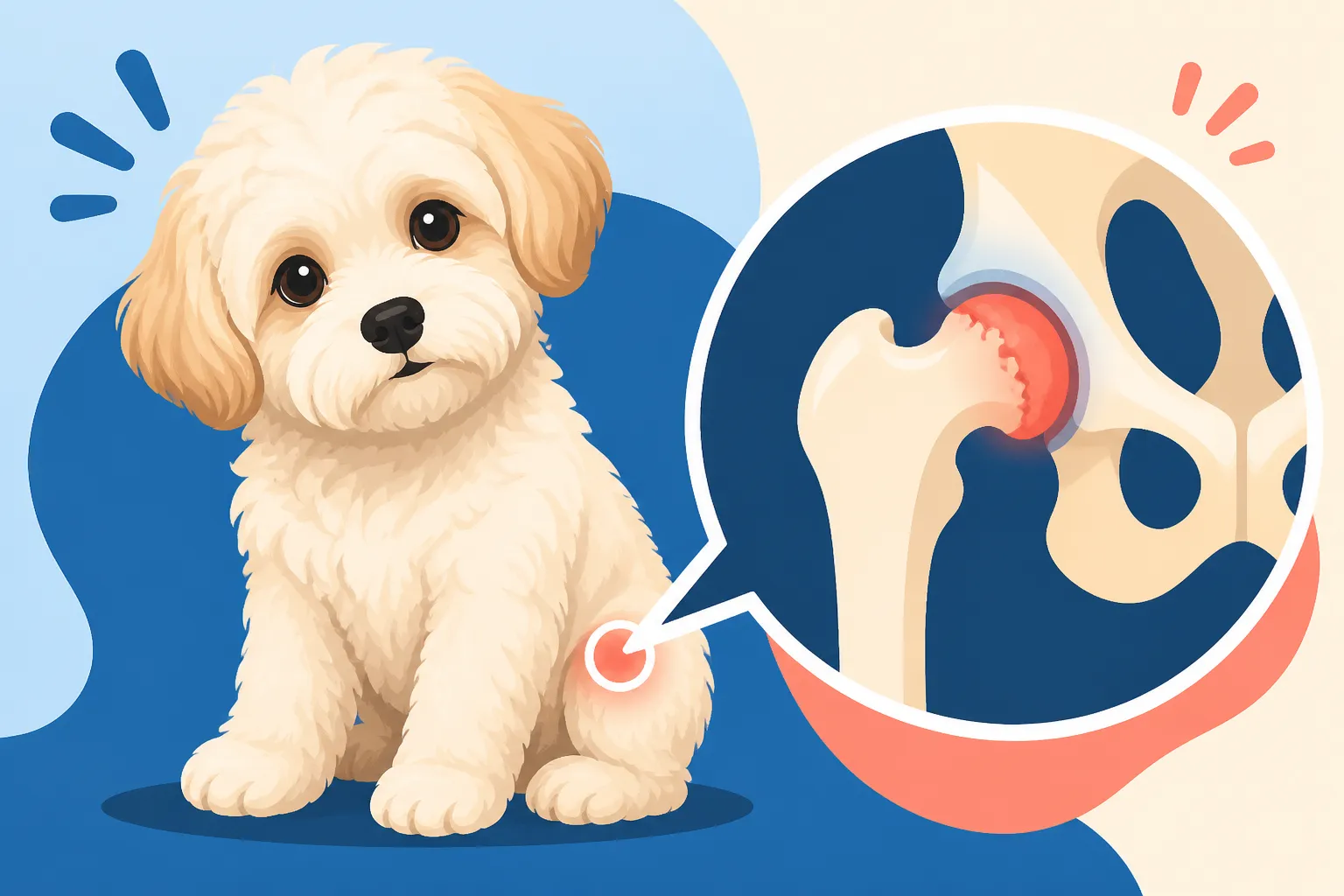
The hip is a ball-and-socket joint. The ball is the femoral head, the rounded top of the thigh bone, and it sits in the socket of the pelvis. In a dog with LCP, the blood supply to the femoral head is disrupted while the bone is still developing. Without that blood supply, the bone tissue in the femoral head begins to die, a process vets call avascular necrosis.
As the bone weakens, the femoral head starts to collapse and lose its smooth, round shape. Over time the body tries to repair it, but the new bone does not rebuild the head into a smooth ball. The result is a flattened, irregular femoral head that grinds in the socket instead of gliding. That is painful, and it leads to arthritis in the joint.
Why Maltipoos Are at Risk
LCP is seen most often in small breeds, and the toy poodle is one of the breeds most commonly affected. Because a Maltipoo is a cross between a Maltese and a toy or miniature poodle, it can inherit that predisposition. The exact cause is not fully understood, but a hereditary component is strongly suspected, which is why responsible breeders track it in their lines. Size plays a role too; LCP is rare in large breeds and common in dogs under about twenty pounds.
One Hip or Both
In most dogs, LCP affects only one hip. A smaller share of dogs develop it in both hips, either at the same time or one after the other. If your Maltipoo has been diagnosed in one hip, your vet will usually check the other hip on X-rays too, because finding a second affected hip early changes the treatment plan.
Recognizing the Signs Early
The signs of LCP usually appear when a puppy is somewhere between about four and twelve months old, with many dogs showing symptoms around six to eight months. Whether Legg Calve Perthes Shows Before a Maltipoo Is One covers the timing in more detail. The trouble is that the early signs look like a lot of other things that can make a small dog limp.
The Limp and How It Changes
The most common sign is lameness in one hind leg. At first it may come and go. Your puppy might limp after getting up from a nap or after a long play session, then seem fine an hour later. Over weeks the limp tends to get worse and more constant. Some dogs carry the leg completely off the ground. Others touch it down lightly with each step, a so-called toe-touching gait.
Here are the signs owners most often notice:
- A hind leg limp that gets gradually worse over several weeks.
- Reluctance to jump onto the sofa, climb stairs or go for walks.
- Yelping or flinching when the hip is touched or the leg is moved backwards.
- Chewing or licking at the hip or thigh.
- Loss of muscle on the affected thigh, which makes that leg look thinner than the other.
- In longstanding cases, the affected leg may look slightly shorter.
Why It Gets Confused With Other Problems
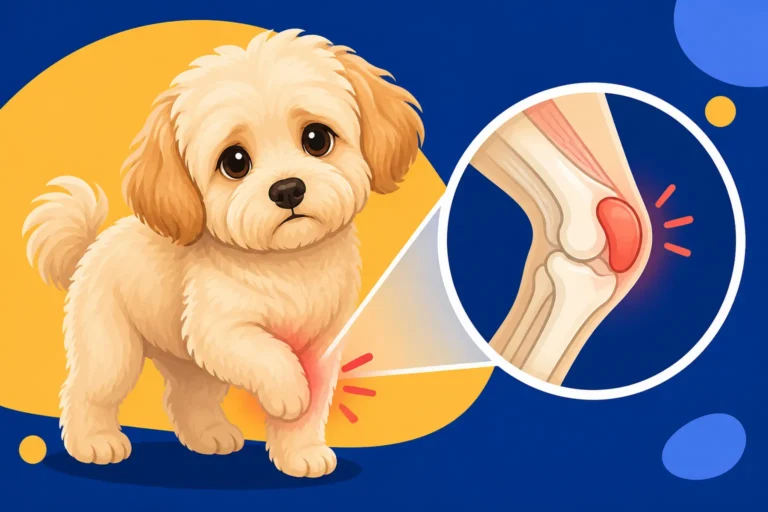
Two other conditions cause similar signs in Maltipoos. Patellar luxation, where the kneecap slips out of place, is very common in the breed and causes a hind leg skip or limp. The Skip in a Maltipoo’s Walk That Means a Patella explains what a kneecap problem usually looks like. Hip dysplasia is the other condition owners ask about, although it is less common in toy breeds than in large ones. Whether a Maltipoo Gets Hip Dysplasia goes into the difference.
Some dogs have both LCP and a slipping kneecap at the same time, which can confuse the picture. A soft tissue injury from a fall or a rough play session can also look similar at first. That is why a vet examination and X-rays matter, rather than waiting to see if a limp settles down on its own.
When to See the Vet
See your vet if your Maltipoo’s limp lasts more than a day or two, if it keeps coming back, or if your puppy is clearly in pain. Do not give human painkillers; many are toxic to dogs. If your dog suddenly cannot bear weight on a leg at all, or is crying and shaking, treat it as urgent. What to Do When a Maltipoo Goes Limp covers the first steps.
How Vets Diagnose LCP
Diagnosis usually starts with a physical examination and is confirmed with X-rays. The process is straightforward, but early cases can be tricky, and sometimes a second set of X-rays a few weeks later is needed.
The Physical Examination
Your vet will watch your Maltipoo walk and trot, then examine each leg in turn. In a dog with LCP, extending the hip, which means moving the leg backwards, is often painful. The vet may also feel for muscle loss on the thigh by comparing the two legs side by side, and check the kneecaps to rule out patellar luxation. Many dogs with LCP show a clear pain response when the hip is manipulated, even if they seem cheerful otherwise.
X-Rays and What They Show
X-rays are the main tool for confirming LCP. Your vet will usually take views of the pelvis with the legs extended, which often requires sedation so the dog lies still and the positioning is accurate. Whether a Limping Maltipoo Needs X Rays explains why sedation is often recommended.
On the X-ray, a vet looks for changes in the femoral head: a mottled or moth-eaten appearance in the bone, flattening of the ball, and widening of the joint space. In more advanced cases the femoral head may look clearly collapsed, with arthritis around the joint. Very early in the disease, X-rays may look almost normal. If your vet suspects LCP but the X-rays are inconclusive, they may suggest repeating them in a few weeks or referring you to a specialist.
Questions to Ask at the Appointment
It helps to go into the appointment prepared. These questions cover what most owners want to know:
- Is the problem in the hip, the knee or both?
- Is one hip affected or both?
- How advanced are the changes on the X-ray?
- Do you recommend surgery or a period of conservative management first?
- Would you do the surgery, or should we see a specialist?
- What pain relief should my dog have until treatment?
- What will recovery and physiotherapy involve?
Treatment Options Compared
Once LCP is confirmed, the main decision is how to treat it. For most Maltipoos, surgery offers the best long-term result, but there are situations where conservative management is tried first. Here is how the options compare.
| Option | What it involves | When it is used | Typical outcome | Rough cost range |
|---|---|---|---|---|
| Conservative management | Strict rest, pain relief and controlled exercise | Very early cases with minimal bone changes | Works in a minority of dogs; many still need surgery later | Low, mainly medication and rechecks |
| Femoral head and neck ostectomy | Surgical removal of the damaged femoral head and neck | Most confirmed cases | Good to excellent function in most small dogs after rehab | Low thousands of dollars at a general practice, more at a specialist |
| Total hip replacement | Replacement of the joint with an implant | Selected cases at specialist centres | Can restore near-normal hip function | Much higher than an FHO, specialist only |
Conservative Management
In a very early case, some vets try strict rest, pain relief and gradually increasing controlled exercise to see if the hip can heal with less damage. This approach works in only a minority of dogs. Many dogs managed this way still end up needing surgery because the femoral head continues to collapse and the pain persists. If your vet suggests it, ask how long the trial will last and what signs will mean it is time to move to surgery.
Femoral Head and Neck Ostectomy
The standard treatment for LCP is a femoral head and neck ostectomy, usually called an FHO. In this operation the surgeon removes the damaged femoral head and the neck of the femur. That sounds alarming, but in small dogs it works very well. Without the painful, damaged bone grinding in the socket, the body forms a false joint made of scar tissue, held in place by the surrounding muscles. Small, light dogs like Maltipoos usually do very well after an FHO, often regaining near-normal use of the leg.
Many general practice vets perform FHO surgery, but some owners choose a veterinary surgeon, especially if both hips are affected or the dog has other orthopedic problems such as a slipping kneecap. The cost varies with the practice, the region and whether one or both hips are treated, so ask for a written estimate that includes X-rays, anaesthesia, pain relief, the hospital stay and follow-up visits.
Total Hip Replacement
In some specialist centres, a total hip replacement using a small implant is an option for toy breeds. It can give excellent results but is more expensive, needs a specialist surgeon and carries its own risks, such as implant problems. For most Maltipoos, an FHO followed by good rehabilitation gives a comparable quality of life at a much lower cost, which is why it remains the standard choice.
Preparing Your Home Before Surgery
The days before surgery are a good time to set up your home for recovery. A Maltipoo that has just had hip surgery cannot be trusted to make sensible decisions about jumping, and most of the setbacks vets see after an FHO happen at home, not at the clinic.
Setting Up a Recovery Space
Choose a small, quiet area where your dog can rest without being tempted to run or jump. An exercise pen or a large crate with a soft, washable bed works well. Put down rugs or yoga mats over slippery floors in the rooms your dog will walk through, because sliding on tiles or wooden floors puts sudden strain on the healing hip. Block access to stairs with a baby gate, and move anything your dog normally jumps onto, or put a ramp in place if your vet approves.
Keep water, a few safe chew toys and a familiar blanket in the recovery space. Most Maltipoos are happier resting near their people, so place the pen in a room where the family spends time rather than shutting the dog away on its own.
Getting the Whole Household on Board
Recovery goes much better when everyone in the house follows the same rules. Children in particular need clear instructions: no picking the dog up without an adult, no chasing games and no encouraging jumping onto the sofa. Agree in advance who will do the home exercises and when, and keep a simple log of walks, medication and any concerns to bring to recheck appointments. Visitors and other pets should be introduced calmly while the dog is on a lead, at least for the first few weeks.
Recovery, Rehab and Long-Term Life
Surgery is only half of the treatment. What happens in the weeks afterwards makes the biggest difference to how well your Maltipoo uses the leg. Rehabilitation is not optional after an FHO; it is the part that builds the muscle that holds the new false joint in place.
The First Weeks After Surgery
Right after surgery, your Maltipoo will have pain relief and will likely be reluctant to use the leg. Most dogs start to touch the leg down within days to a couple of weeks. Your vet will give you instructions on exercise, which usually start with short, controlled walks on a lead and gentle range-of-motion exercises at home. Keep your dog off slippery floors, away from stairs and off furniture during this period. Whether a Maltipoo Should Be Carried Downstairs covers how to handle stairs safely.
Physiotherapy and Building Muscle
Physiotherapy speeds recovery and improves the final result. A rehab vet or certified canine physiotherapist may use underwater treadmill sessions, controlled exercises and massage to rebuild the thigh muscles. Many owners also do daily exercises at home under the therapist’s guidance. Most dogs make strong progress over six to eight weeks, and many continue to improve for several months. What Physiotherapy After Maltipoo Knee Surgery Costs gives a sense of what rehab sessions typically involve and cost, and the structure is similar after hip surgery.
Here is a typical home routine many vets recommend after an FHO, adjusted for each dog:
- Gentle passive range-of-motion exercises, moving the hip through its full range several times a day.
- Short lead walks on a non-slip surface, increasing gradually each week.
- Sit-to-stand exercises to strengthen the hind legs once the vet approves.
- Slow walks up gentle slopes to build thigh muscle.
- Swimming or underwater treadmill sessions if a rehab clinic is available.
Weight Control and Long-Term Comfort
Keeping your Maltipoo lean is one of the most important things you can do for long-term comfort. Extra weight puts more load on the false joint and the other legs. Even a pound matters on a small dog. Getting a Pound Off an Overweight Maltipoo has practical advice. Most dogs who recover well from an FHO live full, active lives, but some develop mild stiffness in cold weather or after a big day out. Your vet can suggest joint supplements or pain relief if that happens.
Insurance and Planning for Costs
LCP is one of the reasons many vets recommend insuring a toy breed puppy early. Because the disease usually appears in the first year, the timing of your policy matters. Most pet insurers, including Healthy Paws, do not cover conditions that showed signs before the policy started or during its waiting period. If your Maltipoo is insured before any limp appears, hereditary conditions like LCP may be covered under an accident and illness plan. Whether you choose Healthy Paws or another insurer, check the policy wording carefully on the insurer’s own site, including how it treats hip conditions and bilateral problems.
If your Maltipoo has LCP in one hip and later develops it in the other, some insurers may treat the second hip as part of the same pre-existing condition. That is worth asking about before you buy, especially for a young puppy of a breed known for orthopedic problems. Whether Pet Insurance Pays Off on a Maltipoo explores the costs and benefits. Healthy Paws and other providers publish their exclusions and waiting periods, so compare those details rather than focusing only on the monthly premium.
What It Means for Breeding
Because LCP is believed to be hereditary, affected dogs should not be bred, and their parents and littermates deserve careful consideration too. If your Maltipoo is diagnosed, let your breeder know. A responsible breeder will want to know so they can adjust their breeding plans. If you are choosing a puppy, ask whether the breeder screens for orthopedic problems, including LCP and patellar luxation, in the parents. The Four Certificates a Maltipoo Breeder Should Show explains the health clearances worth asking about.
A diagnosis of LCP is frightening, but it is one of the most treatable orthopedic problems in small dogs. With a prompt diagnosis, good surgery and committed rehab, most Maltipoos return to running, playing and climbing onto your lap, often with only a faint reminder of the trouble they had as a puppy.
Disclaimer
This article is for general informational purposes only and does not constitute professional advice. Laws, prices and regulations vary by location and change over time. Consult a qualified professional for guidance on your specific situation.