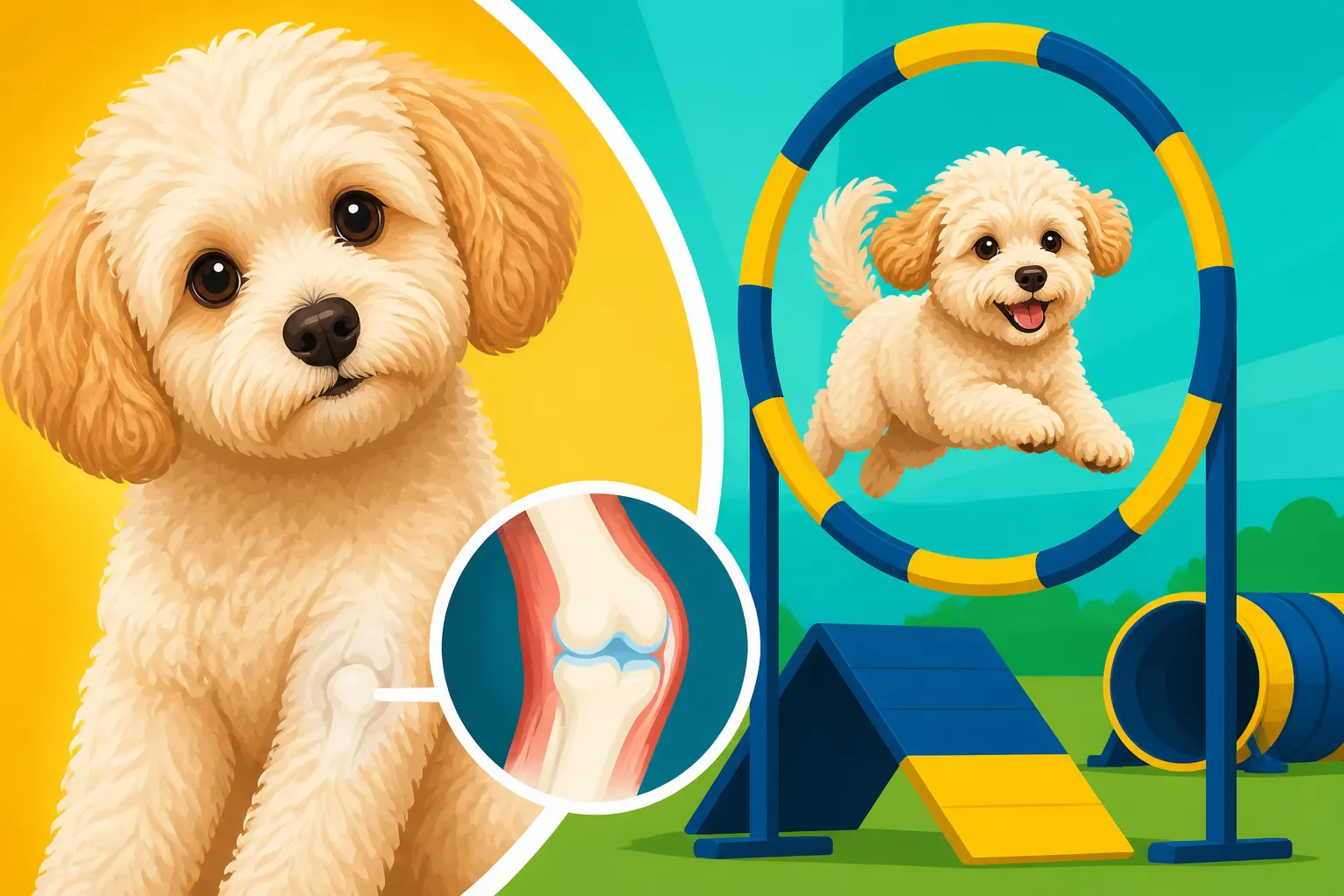
Whether a Maltipoo’s Knees Allow Agility
It's completely natural to see those amazing agility dogs leaping and weaving through courses and wonder if your spunky Maltipoo could do the same. You see their energy, their intelligence, and that spark in their eye, and you think, "My little guy or gal could totally rock that!" But then a tiny whisper of worry creeps in, often about their delicate build. This guide is here to unravel whether agility is a realistic, safe, and fulfilling path for your beloved Maltipoo, especially when considering their unique physical predispositions.
Understanding Your Maltipoo's Structure and Agility Potential
Maltipoos are charming little bundles of joy, a mix of the spirited Maltese and the intelligent Poodle. While they inherit many wonderful traits like a non-shedding coat and a keen mind, they also inherit certain physical characteristics that demand careful consideration when it comes to high-impact activities like competitive agility. Their small stature, while endearing, means their skeletal system is different from larger, more robust breeds.
The Delicate Nature of Maltipoo Joints
Think about the difference between a delicate teacup and a sturdy ceramic mug. Your Maltipoo's bones and joints are more akin to that teacup – finely made and perfectly functional for their intended purpose, but not designed for heavy impacts or extreme forces. Their small joints, particularly in their legs, are simply not built to withstand the repetitive jarring, twisting, and sudden stops and starts that are inherent in many agility obstacles. This isn't a flaw in their design, but rather a characteristic of their size that needs to be respected.
When we talk about the "delicate nature," it's about physics. A smaller dog has less bone mass and smaller joint surfaces to absorb shock. Imagine a human trying to jump off a high platform versus a small child; the child is more prone to injury simply because their developing bones and smaller frame are less equipped to handle the impact. The same principle applies here, and it’s why owners of small breeds need to be particularly mindful of the physical demands they place on their pets. This doesn't mean they can't be active, but rather that their activities need to be carefully chosen and scaled.
Common Orthopedic Issues in Maltipoos
Unfortunately, many small breeds, including Maltipoos, are predisposed to certain orthopedic conditions that can be significantly worsened by high-impact activities. The most common concern, and one that absolutely needs to be at the forefront of any discussion about agility, is patellar luxation, more commonly known as Slipping Kneecaps in a Maltipoo. This is where the kneecap (patella) slips out of its groove in the thigh bone, causing pain and lameness.
There are varying degrees of patellar luxation, often classified into The Four Patella Grades and Where a Maltipoo Lands. Even a mild grade that doesn't cause constant lameness can be exacerbated by the sudden twists and turns of an agility course. Imagine a knee joint that's already a bit unstable being asked to absorb the force of a jump or a quick weave pole run – it's a recipe for increased pain, further damage, and potentially the need for surgery. Similarly, while less common than patellar luxation, some small breeds can be prone to Legg Calve Perthes in a Maltipoo, a condition affecting the hip joint that causes degeneration of the femoral head. Any activity that puts stress on these vulnerable joints could lead to lifelong issues.
Beyond specific conditions, the general fragility of their bones is a consideration. While a Maltipoo might not literally "break a leg jumping off a sofa," as some might fear, their smaller, more slender bones are certainly more susceptible to injury than those of a larger, heavier-boned dog. Owners need to understand that Whether a Maltipoo's Bones Are Thinner Than Normal isn't just an anecdotal concern, but a genuine anatomical reality for many toy breeds.
Agility Training: Benefits and Risks for a Maltipoo
Agility can be an incredibly rewarding sport, building a fantastic bond between dog and owner and providing excellent mental and physical exercise. For a Maltipoo, there are indeed benefits to engaging in controlled, modified versions of agility, but the traditional, high-impact competitive circuits often pose significant risks to their joint health. It's about finding the right balance and recognizing limitations.
The Positive Aspects of Agility for Small Dogs
Even with their delicate structure, Maltipoos are often intelligent and eager to please, inheriting a good dose of smarts from their Poodle lineage. This makes them highly trainable and receptive to learning new commands and sequences. Modified agility, focusing on mental stimulation and light physical challenges, can be a fantastic way to harness their energy and build confidence. It’s not just about speed and height; it's about problem-solving, coordination, and teamwork.
The mental engagement involved in learning an agility course, even a simplified one, is incredibly beneficial. It prevents boredom, which can often lead to undesirable behaviors. Furthermore, working together on a course, navigating obstacles, and celebrating successes strengthens the bond between you and your Maltipoo. This shared activity creates a deeper understanding and trust, turning training into a fun and enriching experience for both of you. It's about engagement, not just intense physical exertion. Many Maltipoos truly enjoy having a "job" to do, and even simple tunnels and low bar jumps can provide that satisfaction.
Why High-Impact Agility Can Be Problematic
The primary concern with traditional, high-impact agility for a Maltipoo lies in the potential for joint damage. Consider the typical agility course: dogs are expected to clear jumps, weave through poles at speed, navigate A-frames and dog walks, and perform tight turns. These actions involve:
- Jumping: Repeated high jumps put immense strain on the knees, hips, and spine. For a Maltipoo, whose kneecaps might already be prone to luxation, this can be incredibly damaging. The force of landing, especially on a hard surface, can cause micro-traumas or even acute injuries.
- Weaving: The rapid, lateral movements required for weave poles involve twisting and turning of the hocks and knees, potentially causing stress on ligaments and cartilage.
- Sharp Turns and Stops: Sudden changes in direction, common when navigating a course, place significant torque on all leg joints, from the shoulders and elbows down to the hocks and paws.
These activities, while thrilling to watch, are designed for dogs with robust builds and often specific athletic conformation. A Maltipoo's smaller, more delicate joints are simply not built to sustain this kind of repetitive, high-stress impact over time. It's not usually about a single catastrophic injury, but rather the cumulative wear and tear that can lead to chronic pain, arthritis, and the need for expensive veterinary interventions down the line. We all want our pups to live long, healthy lives, and sometimes that means making choices that prioritize their long-term well-being over pushing them into sports that aren't ideal for their physical makeup.
Modifying Agility for Maltipoo Safety
If your Maltipoo genuinely loves navigating obstacles and showing off their smarts, there are absolutely ways to enjoy agility safely by modifying the equipment and approach. The key is to eliminate or significantly reduce the high-impact elements. This isn't about compromising the fun, but about tailoring the activity to your dog's physical capabilities.
Here are some modifications to consider:
- Lower Jumps: Instead of standard jump heights, set bars at the lowest possible level, or even just use jump standards without a bar for them to walk over. The focus becomes footwork and precision, not height. Many companies offer adjustable agility sets on platforms like Amazon, allowing you to customize the height perfectly for your small companion.
- Slower Speeds: Encourage a steady, controlled pace rather than breakneck speed. This reduces the force on their joints during turns and landings. The goal is enjoyment and mental stimulation, not winning a timed competition.
- Focus on Ground Obstacles: Tunnels, weave poles (at a slower, controlled pace), and pause tables are generally much safer than high jumps. They still require coordination and understanding but minimize impact. Consider weave poles that are wider spaced initially, or even "channel weaves" that guide them before narrowing the path.
- Soft Surfaces: Always practice on grass or padded mats to provide maximum shock absorption. Avoid concrete or asphalt entirely.
Remember, the goal is enriching your Maltipoo's life, not pushing them beyond their physical limits. Many online training platforms, such as BAXTER & Bella, offer foundational obedience courses and trick training that can be easily adapted to include "mini agility" elements without the risk. This provides all the benefits of engagement without the dangers of traditional competitive courses.
Preparing Your Maltipoo for Any Activity
Before diving into any new physical activity with your Maltipoo, especially one that involves movement and coordination, a thorough preparation phase is crucial. This isn't just about getting them excited; it's about ensuring their body is ready and that you, as their owner, are informed and proactive. Rushing into things is where problems often arise.
Consulting Your Veterinarian
This is non-negotiable. Before you even think about setting up a tiny jump or ordering an agility tunnel, your Maltipoo needs a comprehensive physical examination by a trusted veterinarian. You need to discuss your aspirations for agility or any new active hobby. Be explicit about the types of movements involved. Your vet will pay particular attention to their joints, especially checking for early signs of conditions like patellar luxation. This examination can identify potential issues before they become serious problems.
A vet visit isn't just about a one-time clearance, either. It’s an ongoing conversation. If your Maltipoo is showing any signs of discomfort after an activity – a slight limp, reluctance to jump, or an unusual stiffness – your vet needs to be your first call. Early detection and intervention can make a huge difference in managing any emerging orthopedic issues. They can also advise on things like Whether Supplements Do Anything for a Maltipoo's Knees, discussing options that might support joint health as a preventative measure or for management. Remember, prevention is always better than cure, and your vet is your best partner in this.
Building Foundational Strength
Just like human athletes, dogs need to build a strong foundation before engaging in more demanding sports. For a Maltipoo, this means focusing on controlled exercise and core strength, rather than just letting them zoom around haphazardly. Think of it as preparing their body for movement in a gentle, supportive way. Regular, moderate walks on varied, soft terrain can help build muscle tone in their legs and back without excessive impact. This helps to support their joints naturally.
Consider activities that promote balance and body awareness. Gentle stretches, slow walks up and down very shallow inclines, or even carefully supervised playtime on unstable surfaces (like a wobble board designed for small dogs) can engage core muscles and improve proprioception – their sense of where their body is in space. These aren't about speed or height; they are about controlled, thoughtful movement. Even basic obedience training, like teaching a solid "stay" or "down," contributes to their physical control and ability to follow directions accurately, which is crucial for any structured activity.
Gradual Introduction and Observation
Once you have vet clearance and your Maltipoo has a good physical foundation, the next step is a very gradual introduction to any new activity. Start incredibly small. Don't set up a full course on day one. Begin with just one or two simple obstacles, like a low walk-through bar or a short tunnel, and keep sessions very brief – a few minutes at most. The key is to make it fun and positive, ending before your dog gets tired or bored.
After each session, carefully observe your Maltipoo for any changes in their gait, any signs of pain, or reluctance to move normally. Are they holding a leg up? Are they favoring one side? Are they sleeping more than usual or reluctant to engage in their regular playtime? The Skip in a Maltipoo's Walk That Means a Patella is a classic sign to watch for. It might be subtle at first, just a momentary hop, but it's a clear signal that something isn't right. If you notice anything concerning, stop the activity immediately and consult your vet again. This careful observation is paramount, especially for small breeds who might hide discomfort until it becomes significant.
Alternative Activities for Your Active Maltipoo
If traditional agility proves to be too much for your Maltipoo's joints, or if you simply want to explore other avenues of enrichment, there are a plethora of fantastic activities that can satisfy their intelligent minds and active spirits without putting undue stress on their delicate bodies. The world of dog sports and activities is incredibly diverse!
Exploring Low-Impact Dog Sports
Many dog sports offer mental challenge and fun without the high jumps and intense physical demands of competitive agility. These are often a perfect fit for a Maltipoo, allowing them to excel and build confidence while staying safe.
- Scent Work/Nose Work: This is an incredible sport for any dog, and Maltipoos with their keen sense of smell can absolutely thrive. Dogs are trained to find specific scents (like essential oils) hidden in various environments. It’s mentally exhausting, incredibly engaging, and requires almost no physical impact. It builds confidence and focus, and it's something you can easily practice at home.
- Obedience and Rally Obedience: These sports focus on precision and teamwork. While rally involves moving through a course, the movements are controlled, and there are no jumps or high-impact elements. It's about following commands, staying focused, and working together. This is a wonderful way to showcase your Maltipoo's intelligence and responsiveness. BAXTER & Bella offers excellent online courses that can get you started on a strong obedience foundation, which is crucial for these sports.
- Trick Training: Your Maltipoo's Poodle genes make them natural tricksters! Teaching them a repertoire of tricks, from simple "shake a paw" to more complex routines, is wonderful for mental stimulation and strengthens your bond. It's also a fantastic way to impress friends and family. Trick Training a Maltipoo With the Poodle Half is a topic in itself, offering endless possibilities for fun and engagement.
- Canine Freestyle/Musical Canine Freestyle: Think of this as dancing with your dog. It combines obedience, tricks, and choreography set to music. The movements are tailored to your dog's abilities, meaning you can keep it low-impact while still being incredibly impressive and fun.
Everyday Engagement and Mental Enrichment
You don't need formal dog sports to keep your Maltipoo happy and healthy. There are many ways to weave mental and physical enrichment into their daily lives that are perfectly suited to their size and build. A regular The Daily Routine a Maltipoo Needs is vital, and within that, there are countless opportunities for engagement.
- Puzzle Toys: These are fantastic for challenging your Maltipoo's brain and satisfying their natural foraging instincts. You can find a huge variety of puzzle toys on Amazon, from simple treat-dispensing balls to more complex sniff mats and interactive feeders. Whether a Maltipoo Enjoys Puzzle Toys is usually a resounding yes, as they love figuring things out, especially when there's a tasty reward involved.
- Interactive Play: Short, engaging play sessions with appropriate toys are wonderful. Fetch (with soft toys and on soft surfaces, avoiding high jumps), gentle tug-of-war (teaching a "drop it" command is crucial), or hide-and-seek with you or a favorite toy can be incredibly fun. Just keep it low-impact and focused on short bursts of activity rather than prolonged, strenuous play.
- Structured Walks: While a Maltipoo doesn't need miles of hiking, a daily walk provides sensory enrichment and gentle exercise. Let them sniff! Sniffing is incredibly mentally stimulating for dogs. Explore new routes or even let them leisurely explore a safe, fenced yard. The focus is on discovery and engagement, not covering distance.
- Training Games: Turn everyday training into games. Practice "come" in different rooms, or "stay" with increasing distractions. Hide treats around the house for them to find. Teaching a Maltipoo to Come When Called becomes much more reliable when it's a fun game rather than a chore. These little moments add up to a well-exercised mind and a happy, well-adjusted companion, all without risking those precious little knees.
Disclaimer
This article is for general informational purposes only and does not constitute professional advice. Laws, prices and regulations vary by location and change over time. Consult a qualified professional for guidance on your specific situation.