The Skip in a Maltipoo’s Walk That Means a Patella
It’s a heart-stopping moment for any Maltipoo parent: you’re watching your sweet companion prance across the living room, and then suddenly, there's an odd little skip, a momentary hitch in their step, as if one leg just isn't quite cooperating. This isn't just a quirky gait; often, this tell-tale sign points to a common orthopedic issue in small breeds like our beloved Maltipoos: patellar luxation. This comprehensive guide will walk you through what this condition means, how to spot it, and what steps you can take to ensure your Maltipoo remains as sprightly and comfortable as possible.
Understanding Patellar Luxation in Maltipoos
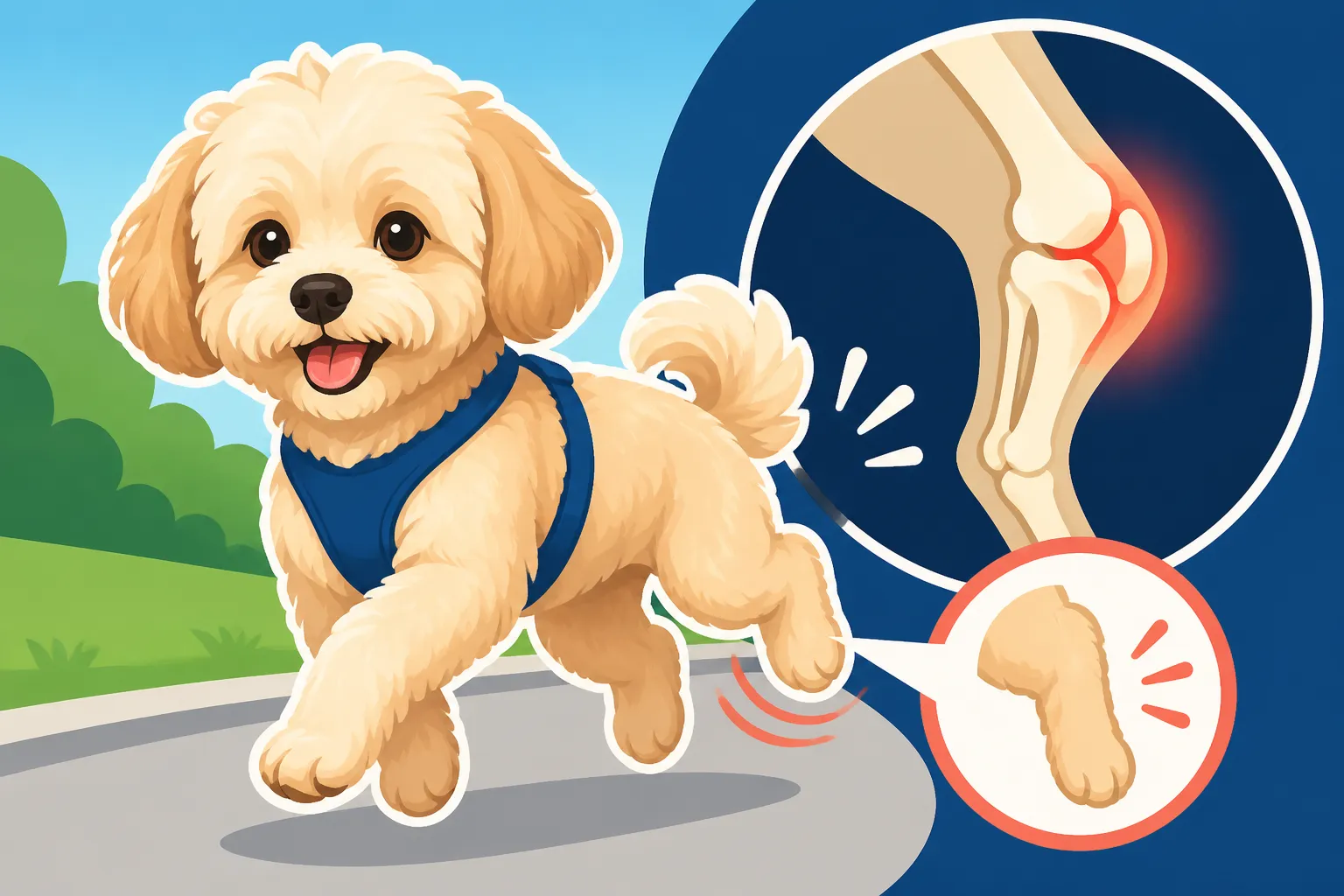
When you see that peculiar skip, it's easy to jump to conclusions and imagine the worst. But by understanding the mechanics behind it, you can better grasp what's happening with your furry friend and approach the situation with informed confidence. Patellar luxation, often simply called a "slipped kneecap," is a condition where the patella, or kneecap, dislocates or moves out of its normal groove in the femur (thigh bone).
What is a Luxating Patella?
Imagine your own kneecap. It sits in a shallow groove at the end of your thigh bone, held in place by ligaments and tendons, allowing your knee to bend smoothly. In a dog, the anatomy is similar. The patella is a small, triangular bone encased within the patellar tendon, which connects the quadriceps muscle to the shin bone (tibia). Its job is crucial: it acts as a pulley, giving the quadriceps muscle leverage to extend the leg.
When we talk about a luxating patella, it means this little kneecap isn't staying put. It slips either to the inside of the leg (medial luxation, which is far more common in small breeds like Maltipoos) or to the outside (lateral luxation). This dislocation can happen intermittently, snapping back into place on its own, or it can be a persistent issue. When the kneecap slips out, it causes the leg to lock up momentarily, making your Maltipoo unable to put weight on it, hence that characteristic skip or bunny-hopping gait you might observe. The constant friction and abnormal movement can lead to pain, inflammation, and over time, degenerative joint disease, like arthritis, in the affected knee. It's a progressive condition, meaning it tends to worsen over time if not managed.
Why Maltipoos Are Prone to This Condition
It's truly unfair that some of the sweetest, most charming breeds are often predisposed to certain health challenges, and patellar luxation is definitely one that small dogs like Maltipoos frequently face. This predisposition is largely genetic and tied to their small stature. The specific conformation of their bones and joints can be a primary factor.
For many small breeds, the trochlear groove – that very groove where the kneecap is supposed to glide – can be too shallow or misshapen, allowing the patella to pop out easily. Additionally, the alignment of the bones in the leg (femur and tibia) can be slightly off, pulling the patella out of line. These structural issues are often inherited, meaning if a Maltipoo’s parents or grandparents had luxating patellas, there's a higher chance their offspring will too. This is why careful breeding practices are so important, as outlined in discussions about What Breeding Smaller Costs a Maltipoo. While the Poodle and Maltese parents both contribute to the Maltipoo's genetic makeup, the smaller size often inherited from the Maltese side, and certainly amplified in "teacup" or "toy" variations, can unfortunately increase the risk of skeletal issues like this. It’s not just about tiny bones being more delicate; it’s about how those bones are formed and aligned. Environmental factors, like sudden impacts or injuries, can exacerbate an existing predisposition, but the root cause is usually structural and genetic.
Recognizing the Signs: Beyond the Skip
As a Maltipoo owner, you become attuned to every little nuance of your dog's behavior and movement. That's why spotting the initial signs of patellar luxation, even subtle ones, is so important. It's more than just a funny walk; it's your dog trying to tell you something isn't right.
The Classic Skip and Its Variations
The most common and often first noticed sign of a luxating patella is precisely that intermittent "skip" in your Maltipoo's walk. It's distinctive: your dog will be walking normally, then suddenly lift one hind leg for a step or two, holding it up for a moment before placing it back down and resuming their normal gait. It looks like they're just skipping or hopping, sometimes described as a "bunny hop" when both back legs move together for a brief moment. This usually happens when the kneecap slips out of its groove. When the leg is lifted, the quadriceps muscle often pulls the patella back into place, and your dog can then use the leg again.
The frequency of this skip can vary wildly. Some dogs might do it only occasionally, perhaps after a burst of activity, while others might do it several times during a short walk. You might also notice it more when they're running, playing, or navigating uneven terrain. For some Maltipoos, especially in the earlier stages, the skip might be so subtle you barely notice it, or you might dismiss it as them being clumsy or playful. However, as the condition progresses, the luxation can become more frequent, last longer, or even become constant, leading to more obvious lameness. It's worth remembering that The Age a Maltipoo's Kneecap First Slips can vary, so stay vigilant even with young puppies.
Other Telltale Symptoms and Behavior Changes
Beyond the skip, there are other crucial indicators that your Maltipoo might be struggling with a luxating patella. These symptoms often reflect pain or discomfort, or your dog's attempt to compensate for the instability in their knee.
- Intermittent Lameness: Your Maltipoo might exhibit a consistent limp or refusal to put weight on the affected leg, especially after strenuous exercise. This differs from the skip in that the leg stays lame for a longer period.
- Pain Response: While not always overtly painful in the early stages, a luxating patella can cause discomfort. You might notice your Maltipoo yelping if you touch their knee or manipulate their leg. They might also become more withdrawn or reluctant to engage in activities they once loved due to general discomfort.
- Reluctance to Jump or Use Stairs: If your Maltipoo usually leaps onto the sofa or tackles stairs with gusto, a sudden hesitation or complete avoidance could signal knee pain. They might stand at the bottom of the stairs whimpering or look to you for help getting onto furniture. This is why providing solutions like ramps or steps can be beneficial, as discussed in Whether a Maltipoo Should Use Steps to the Sofa, to prevent further strain or injury, even if the primary issue isn't a broken bone, as explored in Whether Jumping Off a Bed Hurts a Maltipoo.
- Stiffness After Rest: After a long nap or waking up in the morning, your Maltipoo might appear stiff, taking a few moments to "warm up" their joints. This is a classic sign of arthritis developing, which can be a secondary complication of patellar luxation.
- Abnormal Leg Position: In more severe cases, or if the luxation is permanent, the leg might appear bowed or abnormally angled because the kneecap is continuously out of place. You might also notice a slight swelling around the knee joint.
If you observe any of these signs, even if they're subtle, it’s always best to consult your veterinarian. Early detection and intervention can make a significant difference in managing the condition and maintaining your Maltipoo's quality of life.
Diagnosing and Grading a Luxating Patella
Once you've noticed something amiss with your Maltipoo's gait, the next crucial step is getting a professional diagnosis. Your veterinarian is the best person to accurately assess the situation and determine the severity of the patellar luxation.
The Veterinary Examination
When you bring your Maltipoo in for that tell-tale skip, your vet will perform a thorough orthopedic examination. This isn't just a quick look; it's a hands-on assessment designed to pinpoint the exact issue. First, they'll observe your Maltipoo walking and trotting to confirm the characteristic skip or lameness you described. They might encourage your dog to move around, perhaps even going up and down a small step, to see the leg in action.
The most critical part of the examination involves palpating, or gently feeling, your Maltipoo's knee joints. While your dog is standing and then lying down, your vet will carefully manipulate the kneecap, attempting to gently push it out of its groove. They’ll also flex and extend the knee, rotating the lower leg to see if the patella luxates and, if so, how easily. They'll assess how much force is required to move the kneecap, whether it stays luxated, and if it returns to its normal position spontaneously or with manipulation. The ease with which the patella moves and its location during these maneuvers help the vet assign a grade to the luxation, which is essential for determining the appropriate course of action. In some cases, X-rays might be recommended, not necessarily to diagnose the luxation itself (as it's often a dynamic issue best felt), but to assess the degree of any associated arthritis or to check for other skeletal abnormalities that might be contributing to the problem.
Understanding the Patella Grades
After the examination, your vet will typically assign a grade to your Maltipoo's patellar luxation. This grading system, ranging from 1 to 4, helps to describe the severity of the condition and guides treatment recommendations. It's a standard classification that helps everyone understand where your dog falls on the spectrum. You can read more about these classifications in detail in The Four Patella Grades and Where a Maltipoo Lands.
Here's a breakdown of what each grade means:
| Grade | Description | Clinical Signs |
|---|---|---|
| Grade 1 | The patella can be manually luxated (pushed out of the groove) but immediately returns to its normal position when released. | Often asymptomatic or very mild, occasional skip in gait. May not cause pain. Owners might not even notice a problem unless specifically looking for it or during a routine vet check. |
| Grade 2 | The patella luxates spontaneously or can be manually luxated. It remains luxated for a short period, and sometimes requires manipulation or extension of the stifle (knee) to return to normal. | More frequent skips, bunny-hopping, or intermittent lameness. May experience pain during luxation. Over time, this can lead to increasing discomfort and the onset of arthritis. |
| Grade 3 | The patella is permanently luxated but can be manually reduced (put back into the groove). It will reluxate (slip out) again once released. | Persistent lameness, abnormal gait, bowed legs. Dogs with Grade 3 often appear uncomfortable and their quality of life can be significantly impacted without intervention. |
| Grade 4 | The patella is permanently luxated and cannot be manually reduced. The trochlear groove is often absent or very shallow, and there may be severe skeletal deformities. | Severe, constant lameness, often unable to bear weight normally on the affected leg. Significant pain and often severe deformity of the limb. Surgery is almost always recommended for these severe cases. |
Understanding your Maltipoo's grade is crucial because it directly influences the treatment plan. A Grade 1 might be managed conservatively, while a Grade 3 or 4 almost always requires surgical intervention. Knowing Which Patella Grade Needs Surgery in a Maltipoo is a critical discussion point with your vet.
Treatment Options and Management for Maltipoos
Discovering your Maltipoo has a luxating patella can feel overwhelming, but the good news is that there are various treatment and management options available. The approach will largely depend on the grade of the luxation, your dog's age, overall health, and your veterinarian's recommendations.
Non-Surgical Approaches
For Maltipoos with lower-grade luxations (typically Grade 1 and sometimes Grade 2), or for those whose owners opt against surgery, conservative management can play a significant role in improving comfort and slowing progression.
- Weight Management: This is incredibly important for any dog with joint issues, and especially for small breeds. Excess weight puts additional strain on the knee joints, exacerbating the problem and potentially increasing pain. Keeping your Maltipoo at a lean, healthy weight can significantly reduce stress on their knees and improve their mobility. Your vet can help you determine an ideal weight and suggest a feeding plan.
- Joint Supplements: While supplements aren't a cure, they can be a helpful component of a non-surgical management plan. Ingredients like glucosamine, chondroitin, and MSM are commonly used to support cartilage health and reduce inflammation. Omega-3 fatty acids, often found in fish oil, are also beneficial for their anti-inflammatory properties. When considering these options, you might wonder Whether Supplements Do Anything for a Maltipoo's Knees, and the consensus is that they can contribute to joint health, though they won't fix a structural issue. Always discuss specific supplements and dosages with your vet.
- Controlled Exercise and Physiotherapy: While jumping and high-impact activities should be limited, maintaining appropriate muscle strength is vital. Gentle, controlled exercise, such as short leash walks on even surfaces, can help strengthen the muscles surrounding the knee, which in turn can provide better support for the joint. Swimming can also be an excellent low-impact option. A certified canine rehabilitation therapist can develop a tailored physiotherapy program that includes specific exercises, massage, and modalities like laser therapy to reduce pain and improve mobility.
- Anti-inflammatory Medications: For periods of increased pain or inflammation, your vet might prescribe non-steroidal anti-inflammatory drugs (NSAIDs) to help manage discomfort. These are typically used short-term or on an as-needed basis.
When Surgery Becomes Necessary
For Maltipoos with higher-grade luxations (Grade 2 that causes significant pain, or Grade 3 and 4), or those that don't respond well to conservative management, surgical intervention is often the most effective way to restore proper knee function and prevent further damage. The goal of surgery is to deepen the trochlear groove and realign the patella so it stays in place.
Common surgical procedures include:
- Trochlear Wedge Recession (or Trochleoplasty): This procedure involves deepening the groove in the femur where the kneecap sits. A wedge or block of cartilage and bone is carefully removed from the groove, then replaced in a deeper position, creating a more stable channel for the patella.
- Tibial Crest Transposition: The tibial crest is the bony prominence on the shin bone (tibia) where the patellar tendon attaches. If the tendon is pulling the patella out of alignment, this crest can be cut and reattached in a more appropriate position with pins, correcting the angle of pull.
- Capsular Overlap: The joint capsule surrounding the knee can be tightened on one side and loosened on the other to help stabilize the patella.
- Femoral Osteotomy: In severe cases where there's significant bowing or angulation of the femur, a section of the bone might be removed and re-plated to correct the overall limb alignment.
These surgeries are often performed in combination to achieve the best possible outcome. Understanding What a Surgeon Does to a Maltipoo's Kneecap can help you feel more prepared for the process. While the thought of surgery for your small dog can be daunting, these procedures have a high success rate in improving comfort and function.
Living with and Preventing Patellar Luxation in Your Maltipoo
The journey with a Maltipoo diagnosed with patellar luxation doesn't end with diagnosis or even surgery. It's a long-term commitment to care, management, and proactive measures to ensure your furry friend lives their happiest, most comfortable life.
Post-Surgery Care and Recovery
If your Maltipoo undergoes surgery for a luxating patella, the recovery period is a critical phase that requires dedication and patience. Immediately after surgery, your dog will need strict rest and activity restriction. This usually means kennel rest or confinement to a small, safe area for several weeks to allow the surgical site to heal properly. Your vet will provide specific instructions regarding pain management, wound care, and follow-up appointments.
Rehabilitation often begins with gentle, controlled passive range of motion exercises, slowly progressing to short, supervised walks on a leash. The goal is to gradually rebuild muscle strength, improve joint flexibility, and restore normal gait without stressing the healing tissues. This can take several weeks to a few months. Consistent adherence to the rehabilitation plan is key to a successful outcome. Many owners wonder Whether a Maltipoo Recovers Fully From Knee Surgery, and while most dogs experience significant improvement and return to a good quality of life, full recovery can depend on the severity of the luxation before surgery, the presence of arthritis, and the consistency of post-operative care. Long-term management might still involve joint supplements and maintaining a healthy weight to prevent future issues.
Proactive Prevention and Support
While genetics play a significant role in patellar luxation, there are steps you can take to support your Maltipoo's joint health and potentially mitigate the effects of the condition.
- Responsible Breeding: The most impactful preventative measure starts before you even bring your puppy home. Choose a reputable breeder who screens their breeding dogs for patellar luxation and can provide health clearances for generations. They should be able to show documentation from a veterinary orthopedic specialist for both parent dogs, indicating clear knees. This responsible approach significantly reduces the likelihood of passing on genetic predispositions.
- Environmental Modifications: For a small dog like a Maltipoo, jumps from furniture or stairs can put undue stress on their knees. Providing ramps or pet steps to allow easy access to sofas and beds can minimize impact and protect their joints over time. Keep their environment safe and prevent them from engaging in high-impact activities, especially during their puppyhood when bones and joints are still developing.
- Maintain a Healthy Weight: As mentioned, keeping your Maltipoo at an ideal body weight is paramount. Even a few extra ounces can mean extra strain on those tiny joints. Work with your vet to establish a healthy diet and exercise routine.
- Regular Veterinary Check-ups: Routine vet visits allow your veterinarian to monitor your Maltipoo's joint health, identify any subtle changes early, and make recommendations for ongoing care.
- Pet Insurance: This can be a real lifeline. Orthopedic surgeries, including those for patellar luxation, can be expensive. A comprehensive pet insurance policy can help cover a significant portion of these costs, making it easier to provide your Maltipoo with the best possible care without financial stress. Companies like Healthy Paws offer robust coverage options that can ease the burden of unexpected veterinary bills. It’s smart to look into plans and understand their terms, especially concerning pre-existing conditions. For example, understanding Whether Patella Trouble Is Excluded on a Maltipoo Policy is a crucial question to ask when comparing providers, as some policies may have waiting periods or exclusions. While What Patella Surgery Costs on a Six Pound Maltipoo can be a significant concern, having insurance from a company like Healthy Paws can give you peace of mind that you won't have to compromise on treatment due to cost. Consider insuring your Maltipoo when they are young, ideally before any signs of patellar issues appear, as discussed in Insuring a Maltipoo Before Its Knees Go, to ensure the condition is covered if it develops later.
By combining diligent care, proactive measures, and a strong partnership with your veterinarian, you can help your Maltipoo navigate patellar luxation with the best possible comfort and mobility, ensuring many happy, skip-free years together.
Disclaimer
The information provided in this article is for general informational purposes only and is not intended as a substitute for professional veterinary advice, diagnosis, or treatment. Always seek the advice of your veterinarian or other qualified health provider with any questions you may have regarding a medical condition.