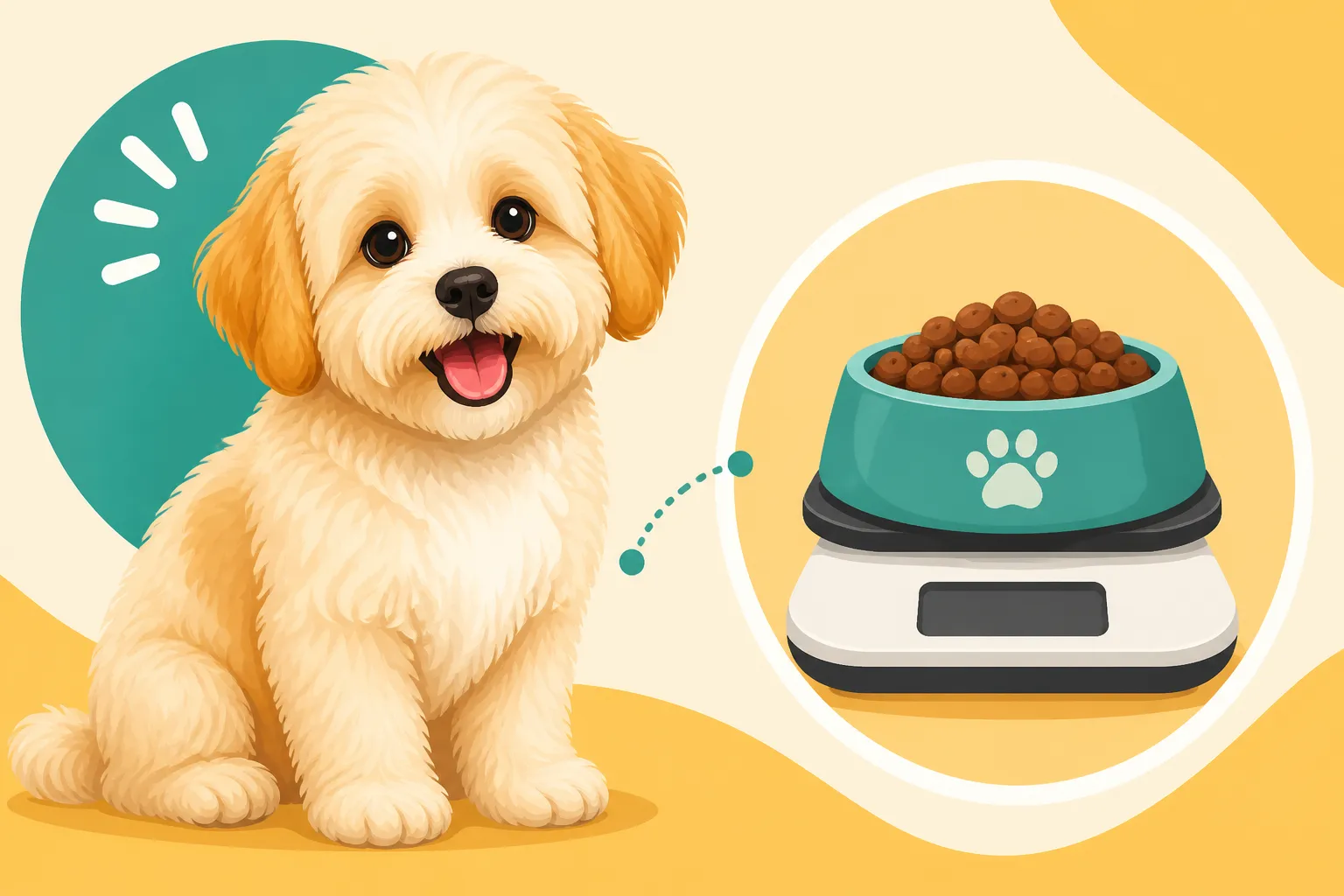
Feeding a Ten Pound Maltipoo by Weight
It’s a common frustration for Maltipoo parents: you scoop out what you think is the right amount of kibble, but your furry friend seems to be either gaining a little too much weight or perhaps isn't as energetic as they should be. Feeding a ten-pound Maltipoo isn't as simple as just filling a bowl; their small size and specific needs mean that precision is paramount. This guide will walk you through why feeding by weight, rather than by volume, is essential for your ten-pound Maltipoo's health and how to implement it effectively.
Why Feeding by Weight is Crucial for Your Ten-Pound Maltipoo’s Health
When you have a small dog like a Maltipoo, especially one hovering around the ten-pound mark, every calorie counts. Unlike larger breeds where a slight overestimation in food quantity might go unnoticed, for a smaller dog, even a small difference can have a significant impact on their weight, energy levels, and overall health. Standard measuring cups, the kind you likely have in your kitchen or that come with dog food bags, are notoriously inaccurate when it comes to dog food. They're designed for volume, not weight, and the density of kibble can vary wildly from one brand to another, and even within the same bag due to manufacturing processes.
Think about it: a "half cup" of one kibble might weigh significantly more or less than a "half cup" of another. This inconsistency makes it incredibly difficult to truly know how much your Maltipoo is consuming. For a dog that might only need a few ounces of food a day, being off by even half an ounce can translate to hundreds of extra calories over time, leading to unhealthy weight gain. Conversely, underfeeding can lead to a lack of essential nutrients and energy, leaving your active Maltipoo feeling sluggish or even risking serious health issues like Hypoglycemia and the Teacup Maltipoo Puppy if they're particularly small or active.
Furthermore, maintaining an ideal weight is absolutely critical for the long-term health of small breeds. Overweight Maltipoos are at a higher risk for a myriad of health problems, including conditions like Slipping Kneecaps in a Maltipoo, which can be exacerbated by excess strain on their joints. Diabetes, heart disease, and even respiratory issues can also be linked to obesity in dogs. By feeding by weight, you're taking the guesswork out of mealtime, ensuring your beloved companion gets precisely what they need, no more and no less. It’s about providing consistent, optimal nutrition, which is truly an act of love for your pint-sized pal.
The Inaccuracy of Volumetric Scoops for Small Dogs
Let's dive a bit deeper into why those cute little scoops just don't cut it. Imagine trying to bake a delicate cake, but instead of using a kitchen scale for flour, you just grab a measuring cup and pack it differently each time. The result would be wildly inconsistent, right? The same principle applies to dog food, especially for a ten-pound Maltipoo. The way you scoop—whether you pack it down, leave it loose, or how level the top is—can drastically change the actual amount of food in the cup. This variability can be magnified by the kibble's shape, size, and even the amount of air trapped between the pieces.
For a dog whose entire daily allowance might be less than a cup, these small variations add up fast. Over the course of a week or a month, consistently scooping just a tiny bit extra can mean hundreds of surplus calories, gently pushing your Maltipoo towards an unhealthy weight. Conversely, if you're consistently under-scooping, your Maltipoo might not be getting the necessary fuel for their playful antics and energetic bursts. This isn't just about weight; it's about providing the consistent energy and nutrient intake needed for their organs to function correctly, their coat to stay shiny, and their immune system to remain strong.
The Link Between Weight and Maltipoo Health Issues
The weight of your Maltipoo isn't just about aesthetics; it's a direct indicator of their potential for a healthy life. For a small breed, being even a pound or two over their ideal weight can put significant stress on their delicate skeletal structure and internal organs. We already mentioned conditions like patellar luxation, or "slipping kneecaps." When a Maltipoo carries extra weight, the stress on those small knee joints intensifies, making them more prone to luxation or worsening an existing condition. This can lead to pain, limping, and potentially expensive surgeries.
Beyond orthopedic issues, obesity can increase the risk of heart disease, respiratory problems, and metabolic disorders. An overweight Maltipoo might pant more easily, struggle with exercise, or become lethargic. Their immune system can be compromised, and they might even have a shorter lifespan. It’s a sobering thought, but one that highlights why precise feeding is so crucial. By keeping your Maltipoo at their ideal weight through accurate, weighed feeding, you're not just preventing problems; you're actively promoting their vitality and ensuring they can enjoy those The Twelve to Fifteen Years a Maltipoo Lives to the fullest, free from preventable health burdens. It truly makes a world of difference.
Calculating Your Maltipoo's Daily Calorie Needs
Now that we understand why feeding by weight is so important, let's get into the how. The first step is to figure out approximately how many calories your ten-pound Maltipoo needs each day. This isn't a one-size-fits-all answer, as calorie requirements can vary based on age, activity level, metabolism, and whether they're spayed or neutered. Think of this as a starting point, a scientific estimate that you'll fine-tune based on your dog's individual response.
To get a good baseline, we often use a calculation based on Resting Energy Requirement (RER), which is the energy required by a dog at rest, in a thermo-neutral environment, without any digestion of food. Then, we adjust this based on their activity and life stage. It sounds complicated, but I'll break it down for you. This foundational understanding is key, as simply looking at the back of a food bag can sometimes lead to over or underfeeding, since those guidelines are very general.
Understanding Resting Energy Requirement (RER)
The RER is the basic metabolic rate your Maltipoo needs just to exist – to breathe, for their heart to pump, to maintain body temperature. For a dog, RER is generally calculated using a formula: 70 x (body weight in kg)^0.75.
Let’s break it down for your ten-pound Maltipoo:
- Convert pounds to kilograms: Your ten-pound Maltipoo is about 4.54 kg (10 lbs / 2.2 lbs/kg).
- Calculate RER: So, it's 70 x (4.54)^0.75.
- (4.54)^0.75 is approximately 3.09.
- 70 x 3.09 = 216.3 calories.
So, your ten-pound Maltipoo's RER is roughly 216 calories per day. This is the absolute minimum, the energy needed just to sustain basic life functions. However, your Maltipoo isn't just lying still all day! They walk, play, and interact, which means they need more than their RER. This is where the next step comes in, adjusting for activity. Keep in mind this is an estimate; your vet can help you determine the most accurate RER for your specific dog, especially if they have any underlying health conditions.
Adjusting for Activity and Life Stage
Once you have the RER, you'll multiply it by an "energy factor" (EF) that accounts for your Maltipoo's activity level and life stage. This is where you really personalize the feeding plan.
Here are some common energy factors:
| Life Stage/Activity Level | Energy Factor (EF) | Daily Calorie Calculation |
|---|---|---|
| Neutered/Spayed Adult | 1.6 | RER x 1.6 |
| Intact Adult | 1.8 | RER x 1.8 |
| Weight Loss | 1.0 – 1.2 | RER x 1.0 to 1.2 (under vet guidance) |
| Weight Gain | 1.8 | RER x 1.8 |
| Active Adult | 2.0 – 5.0 | RER x 2.0 to 5.0 (depending on intensity) |
| Puppy (0-4 months) | 3.0 | RER x 3.0 |
| Puppy (4 months – adult) | 2.0 – 2.5 | RER x 2.0 to 2.5 |
| Senior/Less Active Adult | 1.2 – 1.4 | RER x 1.2 to 1.4 |
Let’s assume your ten-pound Maltipoo is a typical spayed adult, moderately active.
- RER: 216 calories
- EF for spayed adult: 1.6
- Daily Calorie Needs: 216 x 1.6 = 345.6 calories per day.
If your Maltipoo is a lively youngster who's always zipping around, they might need an EF closer to 1.8 or even 2.0. If they're a senior dog who prefers naps to long walks, their EF might be lower, around 1.2 or 1.4, as discussed in Cutting an Old Maltipoo's Portions as It Slows. It's a balance. Always consult your veterinarian to help determine the best energy factor for your specific Maltipoo. They can assess your dog's body condition, discuss their activity, and help you arrive at the most accurate daily calorie target. This personalized approach is far more effective than generic feeding charts, especially for managing How Many Calories a Six Pound Maltipoo Needs and ensuring optimal health.
Putting It Into Practice: Weighing Your Maltipoo's Food
Once you have a target daily calorie count, the real work begins: accurately measuring your Maltipoo’s food. This is where the kitchen scale truly becomes your best friend. Forget the scoops; we're going for precision now. This step is about consistency and making sure that the carefully calculated calorie goal translates directly into the food your Maltipoo actually consumes. It’s simpler than it sounds, and once you get into the routine, it takes no more time than scooping, but offers immense benefits for your dog's health.
Investing in a Reliable Digital Kitchen Scale
The first, and arguably most important, step is to get yourself a good quality digital kitchen scale. You don't need anything fancy or expensive, just one that measures in grams (or ounces, but grams are more precise for small quantities). Look for a scale that has a "tare" function, which allows you to zero out the weight of the bowl, so you're only measuring the food. You can find excellent options on sites like Chewy or Amazon, often for very reasonable prices.
Here's why this is an absolute must:
- Precision: Digital scales offer accuracy down to the gram, ensuring your Maltipoo gets exactly the right amount of food.
- Consistency: Every meal will be identical in quantity, removing the guesswork and variations that come with volumetric scoops.
- Ease of Use: Most digital scales are straightforward to operate, making daily feeding quick and simple once you get the hang of it.
Think of it as a small investment in your Maltipoo's long-term health. Whether a Maltipoo Should Be Fed on a Kitchen Scale is a resounding yes from me, as it’s the most reliable way to prevent under or overfeeding, which, as we've discussed, can have serious consequences for a small dog.
Finding the Calorie Density of Your Dog’s Food
Before you can weigh out the right amount, you need to know how many calories are in your specific dog food. This information is usually found on the food packaging itself, often listed as "kcal/kg" (kilocalories per kilogram) or "kcal/cup" (though we'll ignore the cup measurement for weighing). If you can't find it on the bag, check the manufacturer's website; they almost always publish this data.
For example, let's say your Maltipoo's kibble has a calorie density of 3,500 kcal/kg. This means there are 3,500 kilocalories (the same as "calories" for pet food) in every kilogram of that food.
Now, we can use this information to determine how much food (by weight) your Maltipoo needs. Let's stick with our example of a spayed ten-pound Maltipoo needing approximately 345.6 calories per day.
- Desired calories per day: 345.6 kcal
- Food's calorie density: 3,500 kcal/kg
- Convert kcal/kg to kcal/gram: 3,500 kcal / 1,000 grams = 3.5 kcal/gram.
- Calculate daily food weight: 345.6 kcal / 3.5 kcal/gram = 98.74 grams.
So, your Maltipoo needs approximately 99 grams of this particular food per day. If you feed twice a day, that would be about 49.5 grams per meal. This level of precision is virtually impossible with a measuring cup, but incredibly easy with a digital scale.
This method works for all types of food, whether you're feeding traditional kibble, a wet food from a brand like Ollie, or a combination. Just make sure you calculate the calorie density for each component of their meal plan. This attention to detail can prevent issues like Getting a Pound Off an Overweight Maltipoo later on.
Weighing Out Daily Portions Accurately
Now for the practical application! Here’s a step-by-step guide to weighing your Maltipoo’s food:
- Place the empty bowl on the scale: Turn on your digital kitchen scale and place your Maltipoo's empty food bowl on it.
- Tare the scale: Press the "tare" or "zero" button. This will reset the scale to zero, so it only measures the food you add, not the bowl itself.
- Add the food: Slowly add your Maltipoo's kibble (or wet food) into the bowl until the scale reads the exact weight you calculated (e.g., 99 grams for the entire day, or 49.5 grams for a single meal if you feed twice daily).
- Divide if necessary: If you're feeding multiple meals a day, which is highly recommended for small breeds like Maltipoos to help maintain steady blood sugar levels and prevent Why a Maltipoo Cannot Wait Twelve Hours to Eat, divide the total daily weight by the number of meals. So, for 99 grams total and two meals, you'd aim for 49.5 grams per meal. For puppies or very small adult Maltipoos, even three or four small meals can be beneficial, as discussed in How Much a Maltipoo Puppy Eats at Twelve Weeks.
It’s truly that simple! You'll quickly get accustomed to the precise amount, and it will become second nature. You can even weigh out several days' worth of food into individual containers or baggies if that helps your routine, especially if you have a busy schedule. This method ensures your ten-pound Maltipoo receives the consistent nutrition they need, fostering a healthy weight and overall well-being.
Beyond the Scale: Monitoring Your Maltipoo’s Condition
While feeding by weight provides incredible precision, it's still just one piece of the puzzle. Dogs are individuals, and their calorie needs can fluctuate based on a multitude of factors that no static calculation can perfectly capture. Therefore, continuously monitoring your Maltipoo's body condition and adjusting their food intake as needed is just as vital as the initial calculation and precise weighing. This holistic approach ensures their dietary plan evolves with them, keeping them healthy and happy throughout their life.
Regular Body Condition Scoring
Body Condition Scoring (BCS) is a simple, hands-on way to assess if your Maltipoo is at a healthy weight. Vets use a scale, often 1-9 (with 4 or 5 being ideal), or 1-5 (with 3 being ideal). You can do a simplified version at home:
- Feel the ribs: Gently run your hands along your Maltipoo’s side. You should be able to easily feel their ribs, but not see them prominently. If you can’t feel them without pressing, your dog is likely overweight. If they’re very visible and feel sharp, your dog might be too thin.
- Check the waist: Look at your Maltipoo from above. They should have a noticeable "waist" indentation behind their ribs. If they look like a straight block from ribs to hips, they're likely overweight.
- Observe the tuck: From the side, your Maltipoo’s belly should tuck up slightly from their chest to their hind legs, not hang low or be straight across.
Aim for a balance where you can feel the ribs, see a waist, and have a slight abdominal tuck. This is the sweet spot for a ten-pound Maltipoo. If you're concerned about Whether a Maltipoo Is a Fussy Eater and if they're eating enough, regular body condition checks are key. If you notice significant changes, it's always best to consult your vet.
Adjusting for Changes in Activity, Age, and Health
Life is dynamic, and your Maltipoo's needs will change over time.
- Activity Level: Is your Maltipoo suddenly more active, maybe due to new park visits or longer walks? They might need a slight increase in calories. Conversely, if they've become less active due to an injury or slowing down with age, you'll need to reduce their intake to prevent weight gain. Remember, even small changes in activity for a ten-pound dog can make a difference.
- Age: As Maltipoos enter their senior years, their metabolism can slow down, and their activity often decreases. This is when you'll need to slowly decrease their calorie intake to maintain an ideal weight, as we touched upon in Cutting an Old Maltipoo's Portions as It Slows. Puppies, on the other hand, require significantly more calories for growth and boundless energy.
- Health Status: Certain health conditions, medications, or even recovery from surgery can impact a Maltipoo’s appetite and metabolic rate. Always discuss any dietary adjustments with your veterinarian if your Maltipoo is dealing with a health issue or if you’re concerned about their weight. They can guide you, especially if it relates to The Yearly Checks a Maltipoo Should Get which often includes a weight assessment.
Monitoring treats is also critical. Even small treats add up for a ten-pound dog. Factor treats into their daily calorie allowance, or opt for low-calorie alternatives. Many pet parents find it easier to buy dog food and treats online from retailers like Chewy, which makes it simple to check calorie counts on product pages. By staying vigilant and making thoughtful adjustments, you'll ensure your ten-pound Maltipoo remains at their peak health and happiness, enjoying every precious moment by your side.
Disclaimer
This article is for general informational purposes only and does not constitute professional advice. Laws, prices and regulations vary by location and change over time. Consult a qualified professional for guidance on your specific situation.