Teaching a Child Where to Support a Maltipoo
It’s a truly heartwarming sight to see a child eager to interact with your sweet Maltipoo, full of innocent enthusiasm. But let's be real, the sheer exuberance of a child and the delicate nature of a tiny Maltipoo can be a recipe for accidental bumps, drops, or even serious injuries. This guide is here to walk you through exactly how to teach children, from toddlers to teens, the crucial art of supporting a Maltipoo safely and gently, ensuring happy and healthy interactions for everyone involved.
Why Proper Handling is Non-Negotiable for a Maltipoo
Bringing a Maltipoo into a home with children, or having children visit, means immediately addressing how everyone will interact with this small, often fragile, family member. It’s not about stifling joy, but about cultivating a safe environment where your Maltipoo feels secure and loved, and your children learn empathy and responsibility. Ignoring proper handling can lead to heartbreaking consequences, and it's a frustration many small dog owners grapple with.
The Fragile Reality of Small Breeds
Let’s talk frankly about the physical reality of a small dog like a Maltipoo. They are not built like a sturdy Labrador. Their bones are tiny, their joints are delicate, and their entire physical structure is simply more susceptible to injury. A fall from even a short distance – like off a sofa, or worse, out of a child's arms – can result in a broken leg, a fractured skull, or internal injuries that are costly to treat and devastating for the dog. We often hear stories that start with "they just wanted to hug her," and end with an emergency vet visit. It's a stark reminder that what seems like a small tumble for a person can be catastrophic for a tiny dog. Many owners worry constantly about Whether a Maltipoo Can Be Injured by a Fall.
Maltipoo Specific Vulnerabilities
Beyond general small breed fragility, Maltipoos can inherit certain predispositions that make safe handling even more critical. One common concern is Slipping Kneecaps in a Maltipoo, also known as luxating patella. This is where the kneecap dislocates from its groove. Even a perfectly healthy Maltipoo can experience this if they land awkwardly or if their leg is twisted. For a dog already predisposed to this condition, improper handling, such as twisting their legs or dropping them, can either trigger an episode or worsen an existing condition. The idea of tiny joints giving way under pressure is terrifying, and it's a valid concern for any Maltipoo owner. Furthermore, small Maltipoos are prone to Hypoglycemia and the Teacup Maltipoo Puppy, where stress or missed meals can cause a dangerous drop in blood sugar. Rough handling, even if unintentional, can cause extreme stress, potentially triggering a hypoglycemic episode, especially in puppies.
Teaching the Fundamentals of Safe Interaction
Okay, so we understand the why. Now for the how. Teaching safe interaction isn't just about telling children "be gentle." It requires demonstrating, practicing, and setting clear, consistent boundaries. It’s a process that builds over time, much like any other training.
The "Scoop and Support" Method
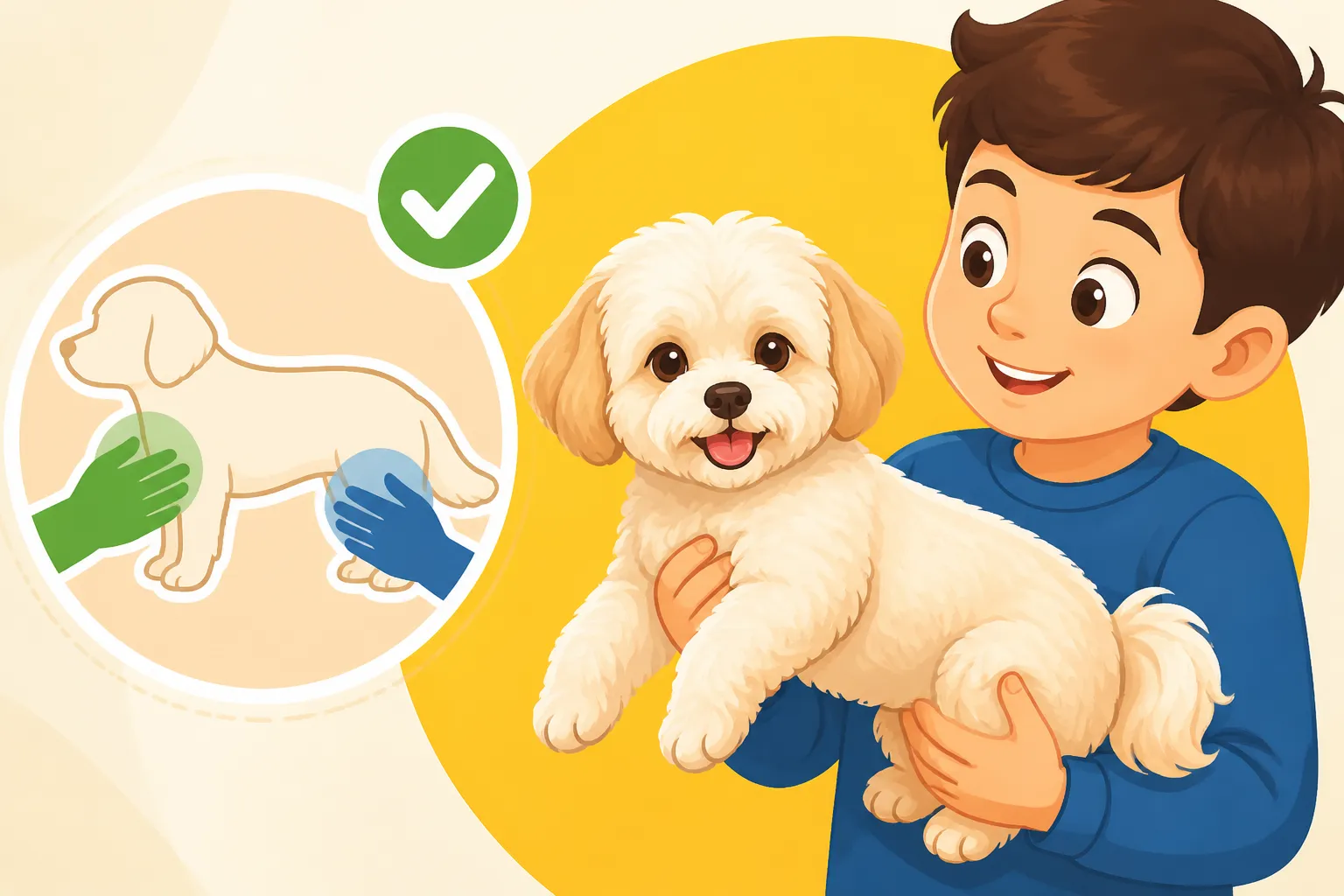
This is the golden rule for picking up and holding a Maltipoo. It’s all about providing full, unwavering support for their delicate body.
- Approach Calmly: First, teach children to approach the Maltipoo calmly, speaking in a soft voice. Rushing or sudden movements can startle a small dog, making them more likely to squirm or jump.
- One Hand Under the Chest: Explain that one hand needs to gently scoop under the Maltipoo's chest, right behind their front legs. This supports their upper body and vital organs.
- Other Hand Under the Hindquarters: The second hand is equally important. It must support their bottom and back legs. This prevents their hindquarters from dangling, which can put strain on their spine and knees, especially if they have a condition like luxating patella.
- Lift Evenly and Close to the Body: Emphasize lifting with both hands simultaneously, keeping the dog level and close to the child's body. This minimizes swinging or accidental drops.
- Hold Securely, Not Tightly: The grip should be firm enough to be secure, but never so tight that it restricts breathing or causes discomfort. A relaxed, confident hold is key.
- Lap or Sofa Support: Once held, encourage children to sit down and rest the Maltipoo on their lap or on a sofa, rather than carrying them around the house, especially for longer periods. This reduces the risk of dropping and allows the child to focus on gentle petting.
It really helps to visualize this. Imagine holding a very delicate piece of art – you wouldn't grab it by one corner! You'd cradle it, supporting its weight evenly. You can find helpful visual guides or even specific harnesses that can assist with handling on platforms like Amazon.
Ground Rules for Playtime
Playtime is crucial for a Maltipoo's well-being, but it needs to be the right kind of play when children are involved.
- No Roughhousing: This is paramount. No tug-of-war where the dog is lifted, no wrestling, no chasing games where the dog is darting around unpredictably. These activities can easily lead to injuries. Explain that Maltipoos love to play, but their play is gentler.
- Approved Toys Only: Stick to soft, appropriate toys that can't be swallowed. Small plush toys, soft balls, or puzzle toys are ideal. Avoid hard chew toys that could damage their tiny teeth, or toys with small detachable parts.
- Play at Ground Level: Encourage children to get down on the floor to play with the Maltipoo. This eliminates the risk of drops and puts everyone on a more equal footing, physically and psychologically.
- Recognizing Stress Signals: Teach children to read their Maltipoo's body language. Signs of stress include yawning, lip licking, turning their head away, cowering, a tucked tail, or trying to move away. If the Maltipoo exhibits any of these, playtime should immediately cease, and the dog should be given space. This is a vital lesson in respecting an animal's boundaries. Understanding What the Maltese Puts Into a Maltipoo's Character can sometimes offer clues to their sensitivity.
Practicing Gentle Touch
A gentle touch is a learned skill, both for the child and for the dog.
- The "Two-Finger" Rule: For very young children, start by teaching them to pet with just two fingers, softly stroking the back or chest. This limits the pressure they can apply.
- Approved Petting Zones: Designate areas where it's always okay to pet: the back, the chest, the sides. Teach them to avoid sensitive areas like the top of the head (which can feel dominant or threatening), the ears, the tail, and especially the face around the eyes and mouth.
- Slow and Steady Strokes: Emphasize slow, calm strokes rather than quick, choppy pats. This is more relaxing for the dog and less likely to startle them.
- Positive Reinforcement: When a child pets gently, praise both the child and the dog. The dog learns that gentle interaction brings positive attention, and the child learns that their actions are appropriate. A treat for the Maltipoo can reinforce their comfort with being touched.
- Handling Practice: Integrate short, positive handling sessions into the daily routine. This can include light brushing or checking paws, which helps both the child and dog get used to being touched in various ways. This can also tie into Teaching a Maltipoo to Be Handled Every Two Weeks for grooming.
Age-Appropriate Lessons and Supervision
The way you teach and the level of supervision needed will naturally evolve with a child's age and maturity. There's no one-size-fits-all approach, and it requires patience and adaptability on your part.
For Toddlers and Preschoolers
This age group presents the biggest challenge, as their motor skills are still developing, and their understanding of consequence is limited. It's often debated Whether a Maltipoo Is Too Fragile for a Toddler, and the answer really lies in constant supervision.
- Constant Supervision is Key: Never, ever leave a toddler or preschooler unsupervised with a Maltipoo. Accidents happen in a split second, even with the best intentions. You must be an active participant in every interaction.
- "Look, Don't Touch" First: Start by teaching observation. Point out the Maltipoo's gentle actions, like sniffing or wagging its tail, from a safe distance. "Look how soft Penny's fur is, let's watch her play!"
- Designated "No-Go" Zones: Implement physical barriers if needed, such as baby gates or playpens, to create separate safe spaces for both the child and the dog. This prevents accidental encounters when you can't be right there.
- One-Hand, Supervised Petting: When interactions are allowed, guide the child's hand with your own, showing them how to gently stroke the dog's back with an open palm. Keep interactions very short – just a few seconds – and end on a positive note.
- Role-Playing with Stuffed Animals: Use a stuffed animal to practice gentle petting and holding techniques. This allows the child to learn the motions without any risk to the actual dog.
It’s often a difficult but necessary conversation to have with young children, and it's something parents often underestimate. The phrase "gentle hands" will become your mantra.
For Elementary School Age Children
Children in this age range (roughly 5-10 years old) are often more capable of understanding rules and consequences, and can begin to take a more active role in safe interactions.
- Active Demonstration: Show them exactly how to pick up and hold the Maltipoo using the "scoop and support" method. Have them practice with you right there, guiding their hands.
- Role-Playing and "What If" Scenarios: Engage them in discussions. "What if Penny tries to jump? What should you do?" "What if she licks your face? Is that okay?" This helps them think critically about safety.
- Involve Them in Care: Allow them to help with non-contact aspects of care, such as filling the food bowl (supervised, of course, as portion control is key for Maltipoos), or helping to pick up toys. This fosters a sense of responsibility without direct physical risk.
- Respecting the Dog's Space: Teach them that sometimes the Maltipoo just wants to be left alone. If the dog goes to its bed or turns away, it means "no more interaction right now." This is a crucial lesson in canine communication. Consider reading up on A Maltipoo in a House With Children for broader context.
For Older Children and Teens
By now, older children should be able to grasp the nuances of canine behavior and the responsibility that comes with interacting with a small dog.
- Becoming a "Maltipoo Advocate": Encourage them to be guardians for the Maltipoo, especially around younger children or visitors. They can help remind others of the rules and ensure the dog's safety.
- Understanding Canine Body Language: Go deeper into dog behavior. Discuss calming signals, signs of fear, and how to tell if the Maltipoo is genuinely enjoying an interaction versus tolerating it.
- Advanced Handling (Supervised): Under your close supervision, they can practice carrying the Maltipoo for short distances or helping with grooming tasks like gentle brushing, further reinforcing safe handling.
- Emphasize Consistency: Remind them that consistency in rules and handling is vital for the Maltipoo's comfort and confidence. Dogs thrive on routine and predictability.
Tools and Resources to Aid in Training
Teaching children and dogs to interact safely isn't always easy, and it's okay to lean on external resources to help. You're not alone in this journey!
Visual Aids and Storybooks
Children, especially younger ones, often learn best through visual cues and stories.
- Illustrated Books: Seek out children's books that specifically teach safe dog interaction. Many fantastic resources exist that use engaging characters and simple language to explain how to be gentle, where to pet, and when to give a dog space.
- "Maltipoo Rules" Chart: Create a visual chart with simple pictures illustrating key rules: "Gentle Hands," "Scoop and Support," "No Pulling Tail." Hang it at a child's eye level as a constant reminder.
- Videos and Online Resources: There are many educational videos available online, including those from veterinary associations or professional dog trainers, that demonstrate safe handling techniques. Websites like YouTube can be a great resource for age-appropriate content.
Positive Reinforcement and Practice
Just as we train our Maltipoos with positive reinforcement, the same principles apply to teaching children.
- Reward Good Behavior: When a child demonstrates correct handling or respects the Maltipoo's space, offer immediate verbal praise, a high-five, or a small, non-food reward (like a sticker). This reinforces their positive actions.
- Consistent Practice: Short, frequent practice sessions are more effective than long, infrequent ones. Five minutes of supervised gentle petting practice each day will yield better results than a frantic half-hour once a week.
- Make it a Game: For younger children, turn learning into a game. "Let's see who can give Penny the softest pet!" or "Can you show me the 'Maltipoo pickup'?"
- Professional Guidance: If you're struggling, don't hesitate to consult a certified professional dog trainer or a family dog mediator. They can offer tailored advice and techniques for your specific family dynamics. Many excellent online training platforms, such as BAXTER & Bella, offer resources and courses that address safe family integration and gentle handling for all ages.
Safe Zones and Retreats for Your Maltipoo
Even with the best training, every dog needs a safe space where they can retreat and be undisturbed.
- Designated "Quiet Zone": This could be a crate, a dog bed in a quiet corner, or a playpen. Teach children that when the Maltipoo is in this space, they are off-limits. No touching, no talking, just quiet respect.
- Elevated Beds or Sofas: Sometimes, a slightly elevated bed or a designated spot on a sofa (with Whether a Maltipoo Should Use Steps to the Sofa to protect their joints) can give your Maltipoo a sense of security, allowing them to observe the household from a safe vantage point without being constantly accessible.
- Crate Training: A crate, used positively, can be an invaluable tool. It provides a den-like sanctuary where your Maltipoo can feel secure and relax without fear of accidental disturbance. You can cover part of the crate with a blanket to enhance the feeling of privacy. The First Days With a Maltipoo Puppy are often greatly eased by positive crate introduction.
- Respecting Naptime: Teach everyone in the family to respect the Maltipoo’s need for sleep. Disturbing a sleeping dog can lead to startling and potentially reactive behavior.
Remember, the goal is not just to prevent injury, but to build a foundation of mutual respect and trust between your children and your precious Maltipoo. It takes consistency, patience, and a whole lot of love from everyone in the household.
Disclaimer
This article is for general informational purposes only and does not constitute professional advice. Laws, prices and regulations vary by location and change over time. Consult a qualified professional for guidance on your specific situation.