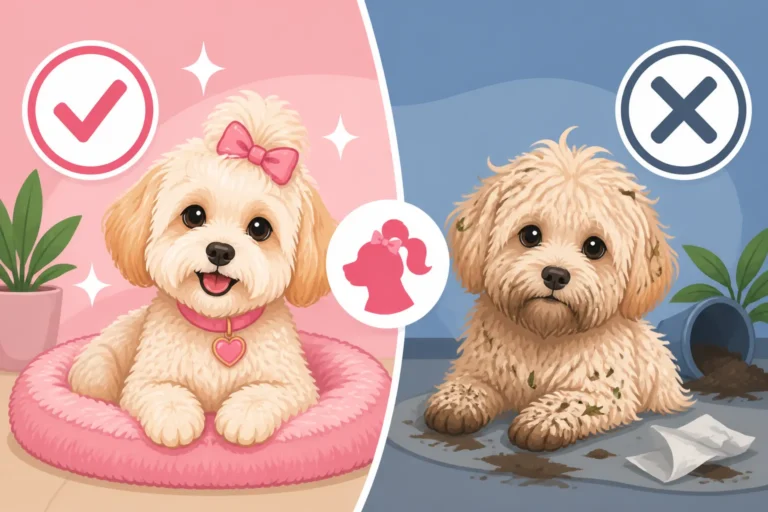
The Coin Flip Inside Every Maltipoo Puppy
Bringing home a Maltipoo puppy is often filled with dreams of a perfectly cuddly, intelligent, and easy-to-train companion. However, many new owners quickly discover a delightful but sometimes perplexing reality: the inherent genetic "coin flip" that makes each Maltipoo truly unique. This guide will explore the fascinating blend of Maltese and Poodle traits that shape your Maltipoo’s personality and behavior, offering insights into understanding, anticipating, and lovingly navigating the delightful unpredictability that comes with this wonderful crossbreed.
The Genetic Roulette: Understanding the Maltipoo's Blend
When you welcome a Maltipoo into your life, you’re not just getting a cute, fluffy face; you’re embracing a genetic lottery. This isn't a purebred dog with centuries of predictable traits; it's a carefully selected mix, designed to bring out some of the best qualities of two beloved breeds: the Maltese and the Poodle. But here’s the rub – you never quite know which parent's traits will take center stage, and to what degree. It’s like a delicious recipe where the exact proportion of each ingredient varies slightly with every batch, making each result subtly different, yet equally charming.
The Unpredictability of Hybrid Vigor
The term "hybrid vigor" often refers to the increased health and vitality seen in crossbred animals, but it also applies to the delightful unpredictability of their temperaments. While a purebred Maltese puppy will almost certainly grow up to display classic Maltese characteristics, and a purebred Poodle puppy will show classic Poodle traits, a Maltipoo is a beautiful question mark. Will they be more outgoing and clever like a Poodle, or more demure and dedicated to one person like a Maltese? This is the core of the coin flip. It’s not just about physical appearance, but deep-seated personality traits, learning styles, and energy levels.
Picture a litter of Maltipoo puppies. One might be the spitting image of a miniature Poodle, with tight curls and a confident strut, while its sibling could have the silky, flowing coat and delicate demeanor of a Maltese. These physical differences often hint at underlying personality variations. You might find one puppy quick to pick up new commands and eager for mental challenges, while another prefers to be a cozy lap ornament, more interested in cuddles than complex tricks. Understanding that this spectrum exists from the very beginning can help you set realistic expectations and adjust your training approach.
Nature vs. Nurture in Maltipoo Personalities
While genetics lay the foundation, environment and early experiences are crucial in shaping your Maltipoo. A puppy with a genetic predisposition for a Poodle's high energy might become restless and mischievous if not given enough mental and physical stimulation, or they could blossom into an agile, quick-witted companion with consistent training and enrichment. Similarly, a Maltipoo leaning towards the Maltese's more sensitive side could become timid if not properly socialized, or incredibly confident and friendly if exposed to a variety of positive experiences early on.
It's a delicate dance between what your Maltipoo is born with and what you, as their owner, provide. This means that even if your puppy seems to be exhibiting strong traits from one parent, consistent, positive reinforcement, socialization, and exposure to different stimuli can help temper less desirable traits and enhance the best ones. It’s why early puppy classes are so invaluable, regardless of their genetic leaning. You’re not just training a dog; you’re helping to sculpt a personality.
The Maltese Influence: Charm and Challenges
The Maltese parent brings a rich tapestry of traits to the Maltipoo, many of which are highly sought after. Their historical role as pampered companions has ingrained certain characteristics that can make them incredibly endearing, but also present unique training considerations.
The Lapdog Extraordinaire and the Need for Affection
One of the most defining characteristics the Maltese contributes is an undeniable desire for companionship and affection. These are dogs bred to be close to their humans, to sit on laps, and to be the center of attention. When this trait manifests strongly in a Maltipoo, you get an incredibly loving, devoted, and cuddly dog that thrives on being part of every family activity. They’ll follow you from room to room, settle sweetly beside you on the sofa, and make eye contact with a soulful gaze that melts your heart. This deep bond is truly one of the greatest joys of owning such a dog.
However, this intense need for connection can sometimes tip into over-reliance, leading to separation anxiety if not managed properly. A Maltipoo heavily influenced by its Maltese side might struggle when left alone, even for short periods. They might cry, bark, or engage in destructive behaviors. It’s vital to teach independence from a young age, starting with very short periods of alone time and gradually increasing them. Providing a comfortable, safe den (like a crate) with engaging toys can make a huge difference. You'll want to read up on Whether a Maltipoo Copes With an Empty House to prepare properly.
The "Slightly Stubborn" Streak and Selective Hearing
While affectionate, the Maltese is also known for a certain charming stubbornness. They are not always as eager to please as a Poodle and can sometimes decide that your agenda isn't quite as interesting as theirs. This isn't defiance; it's more often a strong sense of self and a preference for comfort or routine. If your Maltipoo leans into this Maltese trait, you might find house training takes a little longer, or that they suddenly develop "selective hearing" when a walk is interrupted by a sudden rain shower. They might decide a particular command just isn’t worth their effort at that moment.
When encountering this stubborn streak, patience and positive reinforcement are your greatest allies. Harsh corrections tend to shut down a Maltese-influenced Maltipoo, making them even less cooperative. Instead, focus on making training sessions fun, rewarding, and short. High-value treats and enthusiastic praise can work wonders. If they refuse to go out in the rain, don’t force it; try a covered potty area or an indoor solution for bad weather days. This gentle, consistent approach will build trust and make them more willing partners. It helps to understand What the Maltese Puts Into a Maltipoo's Character.
The Poodle Influence: Brains and Biddability
On the other side of the genetic coin, we have the Poodle, a breed renowned for its intelligence, athleticism, and eagerness to please. These traits can profoundly impact a Maltipoo’s trainability, energy levels, and overall demeanor.
The Clever Canine and the Joy of Learning
Poodles are exceptionally intelligent dogs, consistently ranking among the smartest breeds. When this Poodle brain power comes through strongly in your Maltipoo, you'll have a quick learner on your hands. These are the Maltipoos that seem to pick up new commands in just a few repetitions, eagerly engage in puzzle toys, and might even try to outsmart you for a treat. They thrive on mental stimulation and enjoy having a "job" to do, whether it's learning a new trick or participating in canine sports like obedience or scent work. This intelligence makes them incredibly rewarding to train and interact with.
However, this sharp intellect also means that a Poodle-brained Maltipoo can get bored easily. A bored Poodle-type dog can quickly become a destructive one, turning their cleverness towards chewing furniture, opening cabinets, or finding other "jobs" you didn't assign. It's crucial to provide plenty of enrichment, from interactive toys (you can find a great selection on Amazon) to regular training sessions. These dogs benefit immensely from structured learning and consistency, which can be found in online programs like those offered by BAXTER & Bella, helping you keep their minds engaged. You might be surprised to learn Whether a Maltipoo Is as Smart as a Poodle.
Energy Levels and the Need for Activity
Beyond intelligence, Poodles contribute a natural athleticism and higher energy level compared to the more sedentary Maltese. A Maltipoo that leans heavily into its Poodle heritage will likely be more active, playful, and require more physical exercise. These are the dogs that enjoy longer walks, love to play fetch in the yard, and are always up for an adventure. They might have a spring in their step and an endless curiosity about the world around them. This energy, when channeled positively, makes them fantastic companions for active individuals or families.
If your Maltipoo is more Poodle-like in its energy, simply being a lapdog won't be enough. They need opportunities to run, explore, and burn off steam. Without adequate exercise, this pent-up energy can manifest as hyperactivity indoors, excessive barking, or even anxiety. Daily walks, playtime in a secure yard, and perhaps even doggy daycare can be beneficial. Remember, a tired dog is a well-behaved dog. It’s also important to understand What the Poodle Puts Into a Maltipoo's Character for a more complete picture.
Genetics and Generations: Why It's Never a Guarantee
The "coin flip" phenomenon is further complicated by the various generations of Maltipoos, each with slightly different genetic compositions. Understanding these distinctions can give you a clearer (though still not guaranteed) picture of what to expect, but never truly removes the element of surprise.
F1, F1b, and Multigen: A Spectrum of Traits
When we talk about Maltipoo generations, we often refer to F1, F1b, and multigen crosses.
- F1 Maltipoo: This is a first-generation cross, meaning one parent is a purebred Maltese and the other is a purebred Poodle. This is where the "coin flip" is most pronounced. You have a 50/50 genetic split, meaning any trait from either parent could show up. Some F1s might be mostly Maltese in temperament, others mostly Poodle, and many a delightful mix. This is why Whether an F1 Maltipoo's Temperament Is Predictable is such a common question – and the answer is usually "not entirely."
- F1b Maltipoo: This is a backcross, typically an F1 Maltipoo bred back to a purebred Poodle (though sometimes back to a Maltese, but Poodle is more common for coat reasons). The "b" stands for backcross. This generation tends to have a higher percentage of Poodle genetics (around 75%), which often results in a more Poodle-like temperament and coat. You might find these dogs generally more intelligent, biddable, and energetic. This makes Whether an F1b Maltipoo Is More Biddable a common characteristic.
- Multigen Maltipoo: These are Maltipoos bred from two Maltipoo parents (F1 x F1, F1b x F1, etc.) or later generations. While breeders aim for more consistency in multigen lines, it's still not a purebred, and the genetic recombination can still produce a range of traits. The goal is often to stabilize desired qualities like coat type and temperament, but true predictability remains elusive.
The Challenge of Predicting Adult Temperament from a Puppy
It's tempting to try and predict your Maltipoo's adult personality based on their puppy antics. However, a lot can change as they mature. A boisterous puppy might settle into a calm adult, while a shy pup could blossom into an outgoing companion. The first few months are a critical developmental window, and consistent socialization, training, and exposure to new experiences will heavily influence their developing personality.
A puppy's character often starts to show hints around 8-12 weeks, but it's still very much in flux. Breeders can give you an idea of the parents' temperaments and the general tendencies of the litter, but it’s impossible to guarantee exactly how each individual puppy will turn out. Focus on providing a stable, loving, and stimulating environment, and be prepared to adapt your approach as your Maltipoo grows and reveals their unique personality. You can learn more about Whether a Maltipoo Puppy's Character Shows at Eight Weeks.
Navigating the Early Weeks: Spotting Tendencies
The first few weeks with your Maltipoo puppy are a critical time, not just for bonding, but for observing and starting to shape their emerging personality. Even with the "coin flip" in play, you can start to spot leans towards one parent's traits.
Observing Puppy Play and Interaction Styles
Pay close attention to how your Maltipoo puppy interacts with you, with other family members, and with new environments.
- Maltese-leaning puppies: You might notice they are quick to seek out cuddles, prefer to sit on your lap rather than play independently, and might be more cautious or sensitive to loud noises. They might be slower to engage with new toys and prefer familiar comforts. They might show a strong preference for one person, following them everywhere.
- Poodle-leaning puppies: These pups often display a higher drive for play, are more exploratory, and might be quicker to investigate new sounds and smells. They often show a keen interest in toys, especially those they can chase or manipulate. They might try to problem-solve to get a treat or figure out how a gate opens. They are often less clingy and more independent in play.
These observations aren't definitive, but they provide valuable clues. For example, if your puppy seems more reserved, ensure they have plenty of positive, calm interactions with a variety of people and places to build their confidence. If they're a little whirlwind, make sure you're providing ample appropriate outlets for their energy, like designated chew toys and short, engaging play sessions. It's truly about Surviving the First Week With a Maltipoo Puppy.
Socialization and Exposure: Building a Well-Adjusted Dog
Regardless of whether your Maltipoo leans Maltese or Poodle, early and extensive socialization is non-negotiable. This means exposing them to a wide variety of sights, sounds, people, and other friendly, vaccinated dogs in a positive and controlled manner during their critical socialization window (roughly 8 to 16 weeks).
- For a Maltese-leaning Maltipoo: Focus on gentle introductions. Don't overwhelm them with too much at once. Let them approach new things at their own pace, rewarding their bravery. Carrying them in a sling or carrier (easily found on Amazon) can help them observe the world safely from your comforting presence.
- For a Poodle-leaning Maltipoo: Channel their curiosity. Introduce them to novel experiences and environments, turning every outing into a learning opportunity. Engage them with puzzle toys and short training exercises while out and about to keep their minds stimulated.
The goal is to help your Maltipoo grow into a confident, adaptable adult, no matter which genetic dice roll they received. This proactive approach during The First Days With a Maltipoo Puppy will lay a strong foundation for a well-adjusted companion.
Training for the Unknown: Strategies for Success
Since you can't perfectly predict your Maltipoo's exact temperament, a flexible, positive, and consistent training approach is essential. Be prepared to adapt to their individual learning style and needs.
Positive Reinforcement: The Universal Language
For any Maltipoo, regardless of their genetic makeup, positive reinforcement is the most effective and humane training method. This means rewarding desired behaviors with high-value treats, praise, or favored toys. Avoid punishment, yelling, or harsh corrections, as these can easily damage the trust bond with a sensitive Maltipoo and make them shut down or become fearful. Whether a Maltipoo Is Too Soft for Correction is a common question, and the answer is usually yes – they respond best to gentle guidance.
Think of it as building a positive association with learning. If your Maltipoo enjoys training, they'll be more likely to offer behaviors you want. This approach works equally well for the eager-to-please Poodle-brained dog and the more discerning Maltese-influenced pup. For the latter, it might just take a bit more patience and higher-value rewards to convince them that doing what you ask is indeed worth their effort.
Tailoring Training to Their Pace and Focus
One of the biggest challenges with the Maltipoo "coin flip" is their attention span and how quickly they grasp concepts.
- Poodle-influenced: These dogs often learn rapidly, but can also get bored if repetitions are too long or sessions aren't varied enough. Keep sessions short, fun, and introduce new challenges regularly. They might enjoy trick training or more complex obedience exercises. You'll probably find How Long a Maltipoo Works Before It Wanders Off is quite long compared to some other small breeds.
- Maltese-influenced: These pups might need more patience and shorter, more frequent training sessions. They might require more repetitions to solidify a command, and you might need to find what truly motivates them – perhaps a special treat or a favorite game. Break down commands into smaller, easier steps.
Regardless of their leaning, remember that consistency is key. Everyone in the household should use the same commands and rewards. Enrolling in an online puppy class, like those offered by BAXTER & Bella, can be incredibly helpful. Their structured, step-by-step approach allows you to progress at your Maltipoo's unique pace, addressing specific challenges as they arise from the comfort of your home.
Crate Training and House Training: Setting Them Up for Success
These foundational skills are crucial for any puppy but can have different nuances for a Maltipoo due to their varied traits.
- House Training: A Maltese-influenced Maltipoo might take longer to house train due to a potential stubborn streak or a smaller bladder, especially if they are a "teacup" size. Be prepared for frequent potty breaks – as often as every 1-2 hours for young puppies – and reward every success enthusiastically. You may want to look into How Many Months Before a Maltipoo Stops Having Accidents.
- Crate Training: A crate can be a wonderful tool, providing a safe den and aiding in house training. For a Maltese-leaning Maltipoo, who desires close proximity, the crate might initially feel like isolation. Make it a positive place with soft bedding and special toys. For a Poodle-influenced Maltipoo, who might be more independent, the crate can become a comfortable retreat. Introduce the crate gradually, never using it for punishment.
| Trait Category | Predominant Maltese Influence (Potential) | Predominant Poodle Influence (Potential) | Training Approach |
|---|---|---|---|
| Affection/Independence | Highly affectionate, prone to separation anxiety, clingy | Affectionate but more independent, enjoys personal space | Teach independence early, positive crate training, focus on short alone times. |
| Intelligence/Biddability | Can be stubborn, selective hearing, less eager to please | Highly intelligent, eager to please, quick learner | Patience, high-value rewards for Maltese side; mental stimulation, varied tasks for Poodle side. |
| Energy Level | Lower energy, content as lapdog, sensitive to weather | Higher energy, playful, needs more physical/mental exercise | Ensure adequate outdoor exercise for Poodle side; respect comfort for Maltese side (e.g., covered potty). |
| Vocalization | Can be prone to barking (alert, attention-seeking) | Can be prone to barking (alert, excitement, boredom) | Address triggers, consistent training for 'quiet' command, ensure needs are met. |
| Socialization | Can be timid or cautious, needs gentle exposure | Generally more outgoing, curious, thrives on varied experiences | Gradual, positive introductions for timid; structured exposure for curious. |
Embracing the Blend: The Joy of a Maltipoo
Ultimately, the "coin flip" isn't something to fear; it's what makes your Maltipoo uniquely them. Embracing this blend of characteristics is key to a happy and fulfilling relationship with your companion.
Celebrating the Individuality
No two Maltipoos are exactly alike, and that's truly part of their charm. One day, your Maltipoo might be a cuddly lap ornament, demanding belly rubs with a Maltese-like insistence. The next, they might be zooming around the living room, retrieving a toy with the boundless energy and focus of a Poodle. They might surprise you with a burst of Poodle intelligence, figuring out a complex puzzle toy, only to later demonstrate a Maltese stubbornness about going outside in a drizzle.
These shifts, these moments of pure Maltese charm or Poodle brilliance, are what make life with a Maltipoo so engaging. Instead of trying to force them into a predefined mold, celebrate the individual they are. Learn to speak their language, understand their preferences, and appreciate the quirky, delightful combination of traits they embody. This is the essence of why The Coin Flip Inside Every Maltipoo Puppy is so fascinating.
Consistency and Love: The Keys to a Happy Maltipoo
Regardless of which way the coin lands, consistency in routine, training, and affection is paramount.
- Routine: Maltipoos, like most dogs, thrive on routine. Predictable feeding times, potty breaks, and exercise sessions provide security and reduce anxiety.
- Training: Maintain ongoing positive reinforcement training throughout their lives. This keeps their minds active and reinforces good behavior. Programs like BAXTER & Bella’s often offer lifetime support, which can be invaluable as your dog develops.
- Affection: Lavish them with love and attention. These are companion dogs through and through, and their greatest joy comes from being with you. Regular grooming, gentle play, and quiet cuddle sessions will strengthen your bond.
Remember, the Maltipoo is a testament to the fact that sometimes, the most wonderful things in life are a beautiful, unpredictable blend. By understanding their potential genetic heritage and committing to consistent, loving care, you'll find immense joy in the unique companion you've been so fortunate to welcome into your home.
Disclaimer
This article is for general informational purposes only and does not constitute professional advice. Laws, prices and regulations vary by location and change over time. Consult a qualified professional for guidance on your specific situation.